
Molecular Orbitals in Diels-Alder and Other Cycloaddition Reactions
Practice
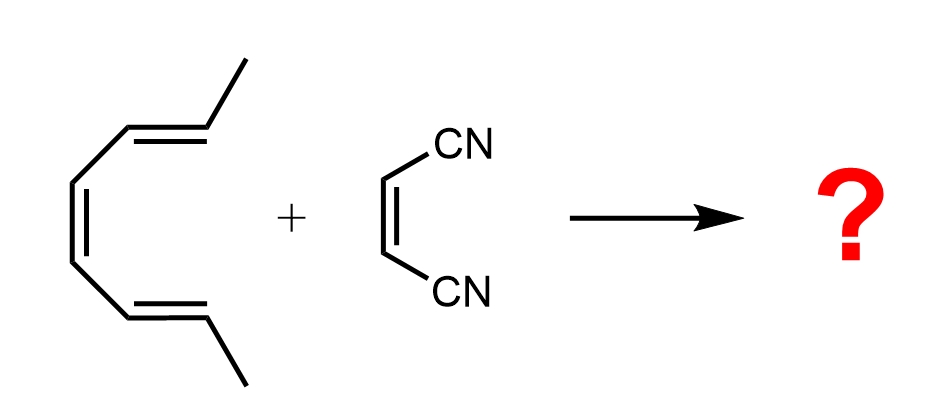
There are several ways the following triene can react with maleonitrile. Show the relevant HOMO and LUMO interactions to explain why the [6+2] cycloaddition is thermally forbidden but photochemically allowed.
Determine whether a [4+2] cycloaddition is thermally allowed, and draw the possible product of that reaction:
This content is for registered users only.
By joining Chemistry Steps, you will gain instant access to the answers and solutions for all the Practice Problems, including over 40 hours of problem-solving videos, Multiple-Choice Quizzes, Puzzles, Reaction Maps, and the powerful set of Organic Chemistry 1 and 2 Summary Study Guides.
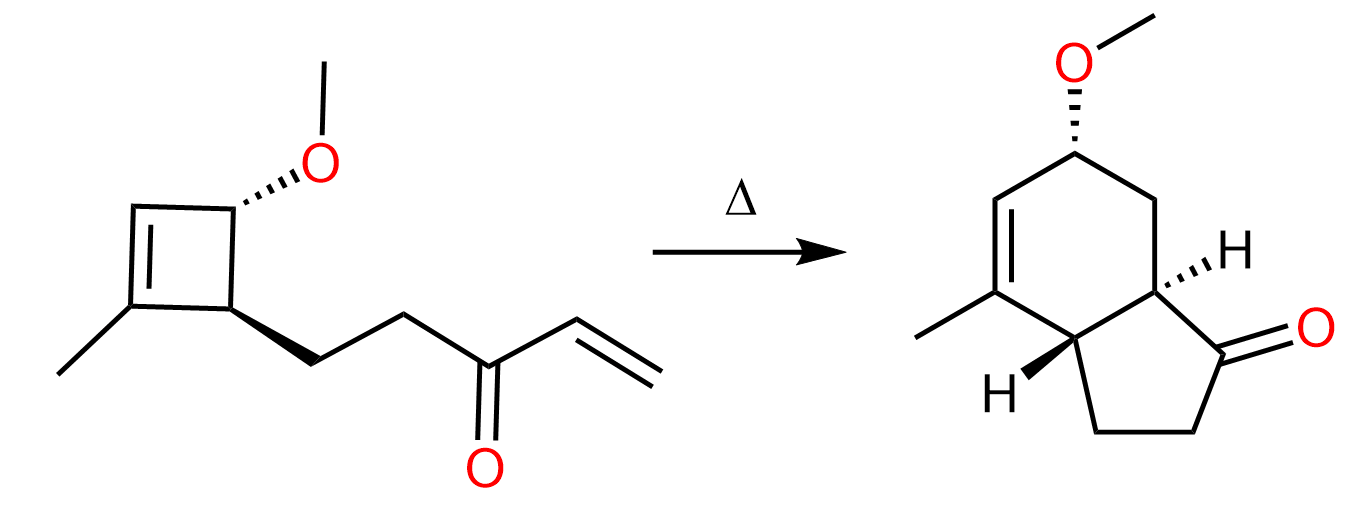
Draw a curved-arrow mechanism to explain the following reaction and address all the relevant stereochemistry:
This content is for registered users only.
By joining Chemistry Steps, you will gain instant access to the answers and solutions for all the Practice Problems, including over 40 hours of problem-solving videos, Multiple-Choice Quizzes, Puzzles, Reaction Maps, and the powerful set of Organic Chemistry 1 and 2 Summary Study Guides.
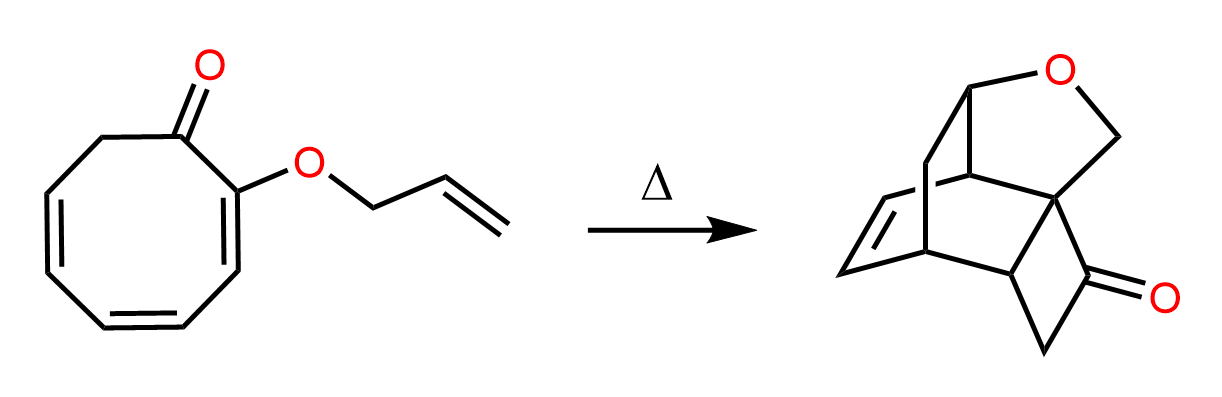
Draw a curved-arrow mechanism for the following reaction:
This content is for registered users only.
By joining Chemistry Steps, you will gain instant access to the answers and solutions for all the Practice Problems, including over 40 hours of problem-solving videos, Multiple-Choice Quizzes, Puzzles, Reaction Maps, and the powerful set of Organic Chemistry 1 and 2 Summary Study Guides.
Explain why only one of the following reactions occurs under thermal conditions:
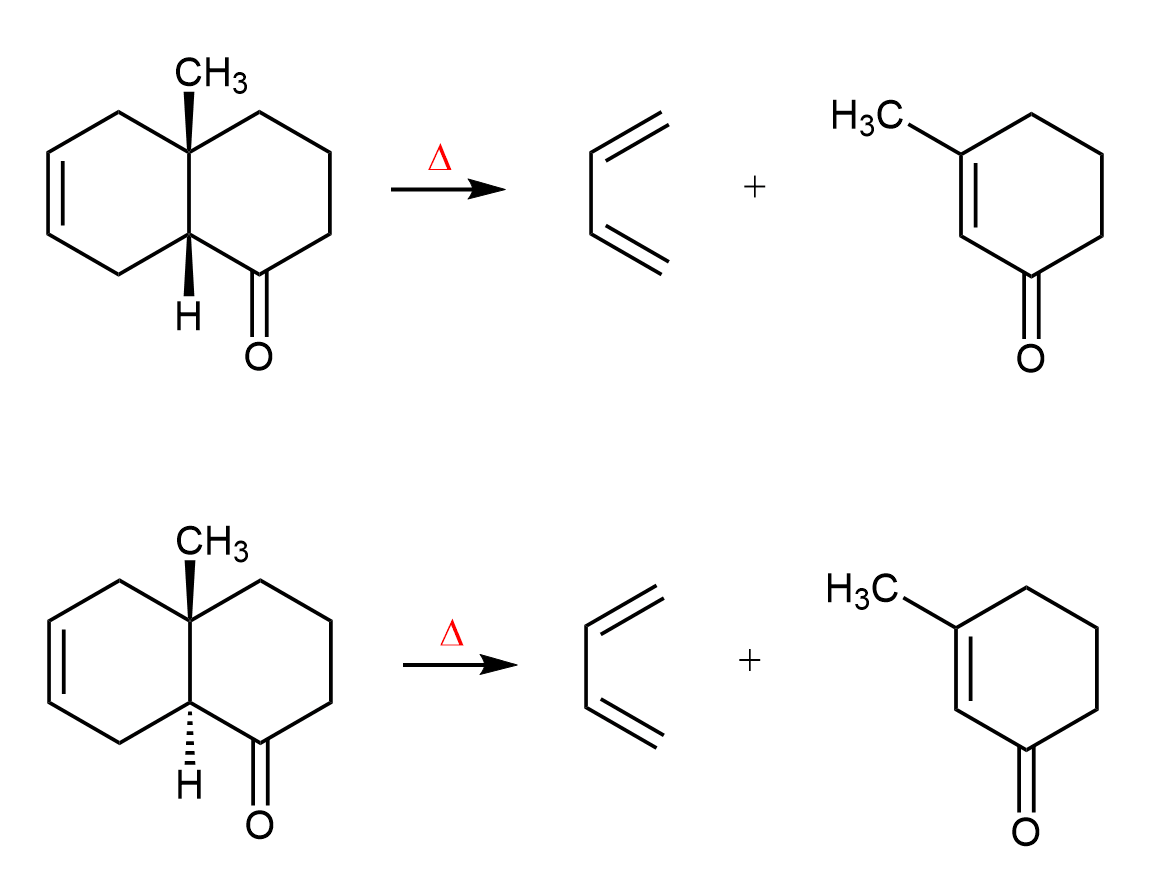
Both reactions are retro-Diels-Alder reactions, which are reverse cycloadditions. The important thing to remember is that the rules for regular cycloadditions, and pericyclic reactions in general, often apply to the reverse reactions as well.
If we look at these reactions retrosynthetically, we can treat them as 6-electron (4n + 2) reactions. Under thermal conditions, these reactions favor a suprafacial mechanism. Therefore, the reverse reactions should follow the same rules and proceed through a suprafacial transition state.
The cis isomer fits this requirement perfectly because the HOMO of the diene and the LUMO of the dienophile interact constructively:
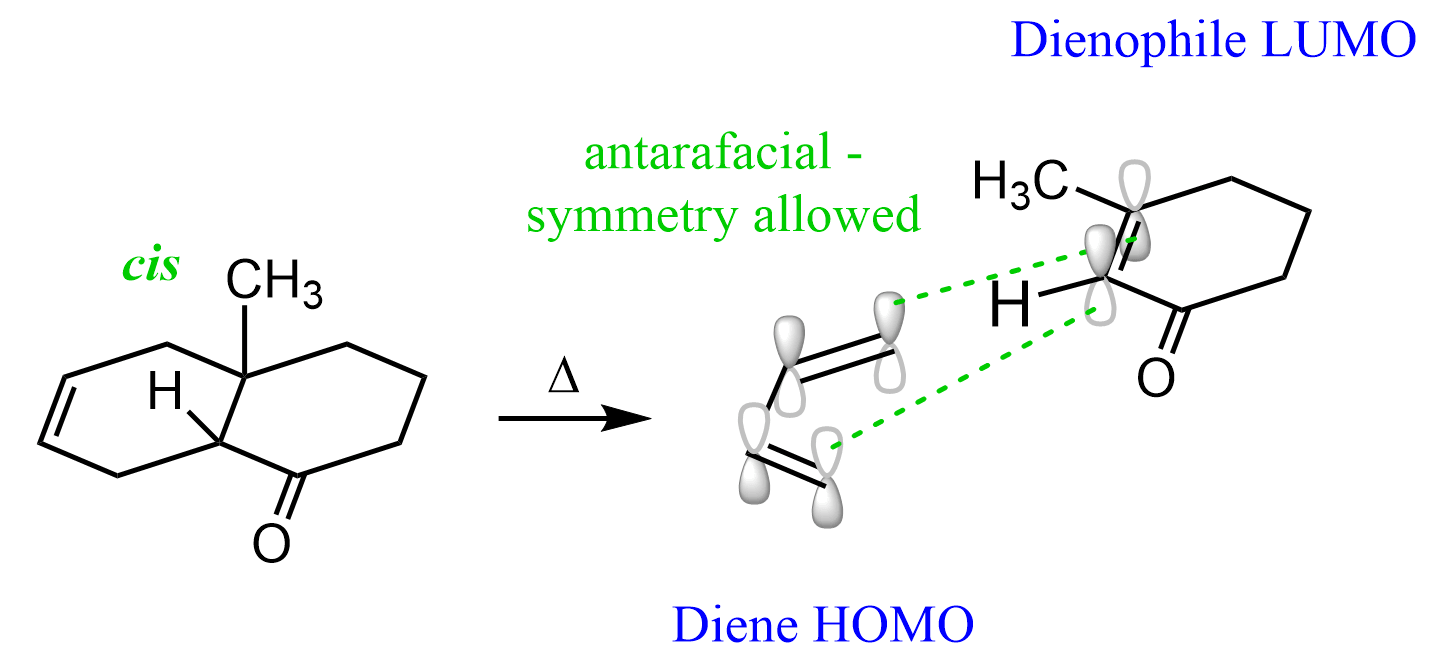
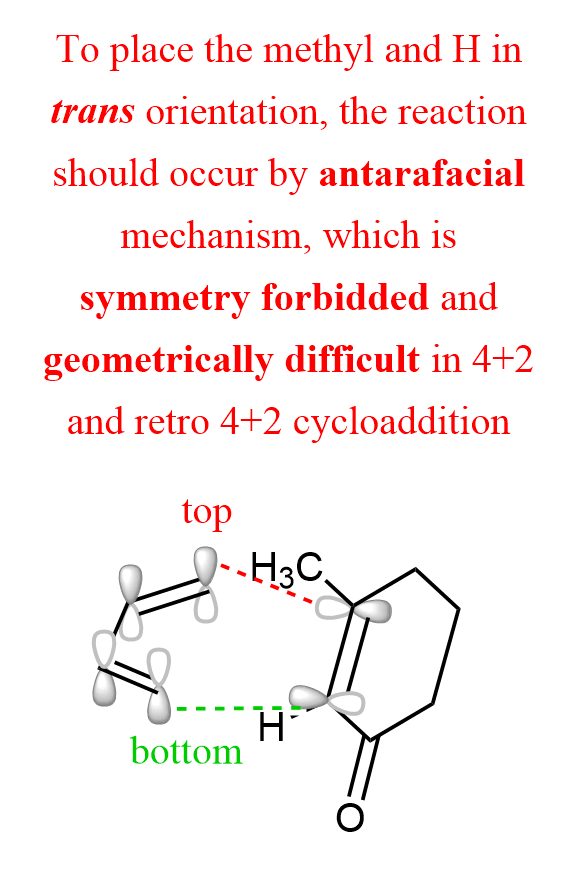
However, the retro-Diels-Alder reaction of the trans isomer would require an antarafacial transition state to place the methyl group and hydrogen in a trans orientation. This pathway is symmetry-forbidden because the HOMO of the diene and the LUMO of the dienophile interact destructively. In addition, an antarafacial arrangement is geometrically difficult to achieve in a 4+2 cycloaddition:
Check Also
- Diels-Alder Reaction: Dienes and Dienophiles
- Predict the Products of the Diels-Alder Reaction with Practice Problems
- Diels-Alder Reactions of Cyclic Dienes and Dienophiles
- Endo and Exo Products of Diels-Alder Reaction with Practice Problems
- Regiochemistry of the Diels–Alder Reaction with Practice Problems
- The Retro Diels-Alder Reaction
- Diels-Alder Reaction Practice Problem
- Diels-Alder Reaction in Organic Synthesis Practice Problems
- Molecular Orbitals Made Easy
- Molecular Hydrogen Ions
- Molecular Orbitals of Li₂
- MO diagrams of Heteronuclear Diatomic Molecules
- s-p Mixing in Molecular Orbital Diagrams
- The g and u Notation in MO Diagrams
- The Molecular Orbital Theory of Organic Molecules
- The Molecular Orbital of Acetylene
- The Molecular Orbitals of Carbonyls
- Orbital Coefficients, HOMO-LUMO Interactions, and Reactivity
- Hard and Soft Acids and Bases
- Molecular Orbitals and UV-Vis Spectroscopy
- Molecular Orbitals of 1,3-Butadiene
- 1,3,5-Hexatriene Pi Molecular Orbitals
- The Molecular Orbitals of Allylic Systems
- The Molecular Orbitals of Benzene
- Molecular Orbitals in Diels-Alder and Other Cycloaddition Reactions
- Diels-Alder Reactions: EWG, EDG, and MO Interactions
- Pericyclic Reactions
- Electrocyclic Reactions
- Claisen and Cope Rearrangements
- Sigmatropic Hydrogen Shifts
- Pericyclic Reactions Practice Problems