We know from the earlier chapters of organic chemistry that alkenes are unsaturated hydrocarbons and therefore are capable of undergoing various electrophilic addition reactions, which transform the sp2 carbons of the double bond into the sp3 hybridization state.
Another important reaction of alkenes is the addition of hydrogen in the presence of a transition metal catalyst such as palladium (Pd), platinum (Pt), nickel (Ni), or Rhodium (Rh). This reaction converts the carbon-carbon double bond into a single bond and is known as catalytic hydrogenation.
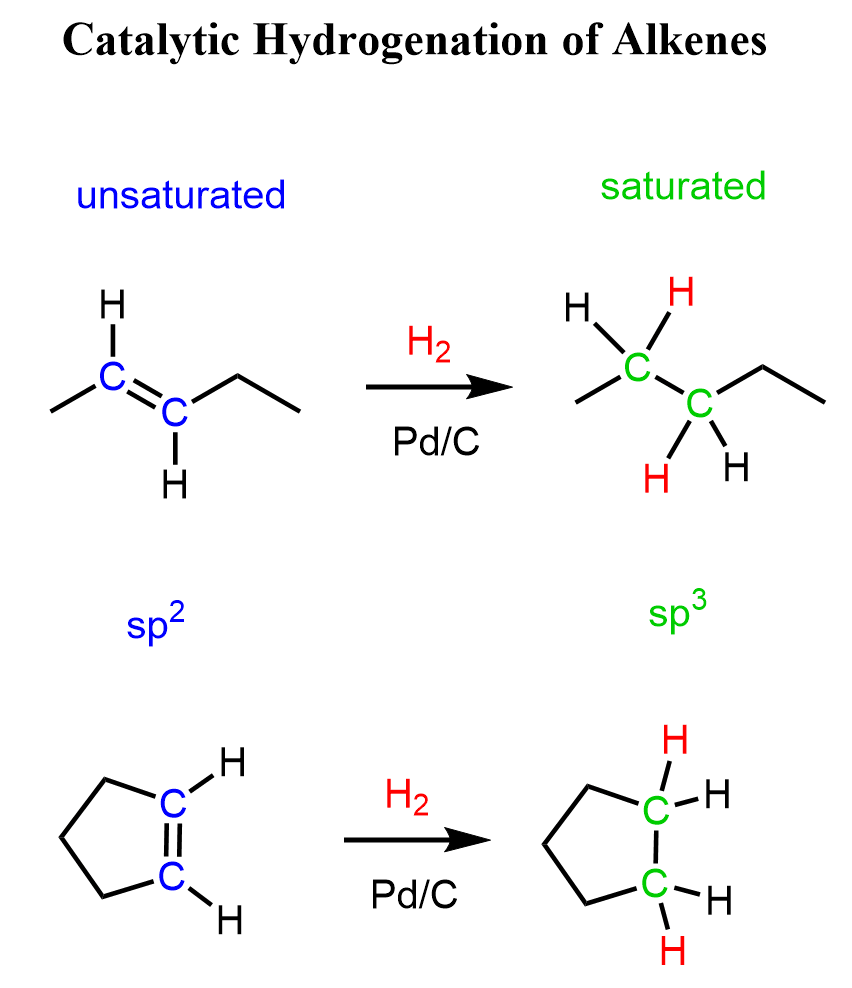
This reduction is called catalytic hydrogenation because it is carried out using transition-metal catalysts. Aside from the catalyst, a small pressure of 2–3 atm is also needed, often achieved with a hydrogen-filled balloon.
So, what does the metal do – how does it catalyze the hydrogenation of the alkene?
The metal is like the meeting place of the alkene and hydrogen – it brings them together and facilitates the addition of hydrogen atoms to the double bond.
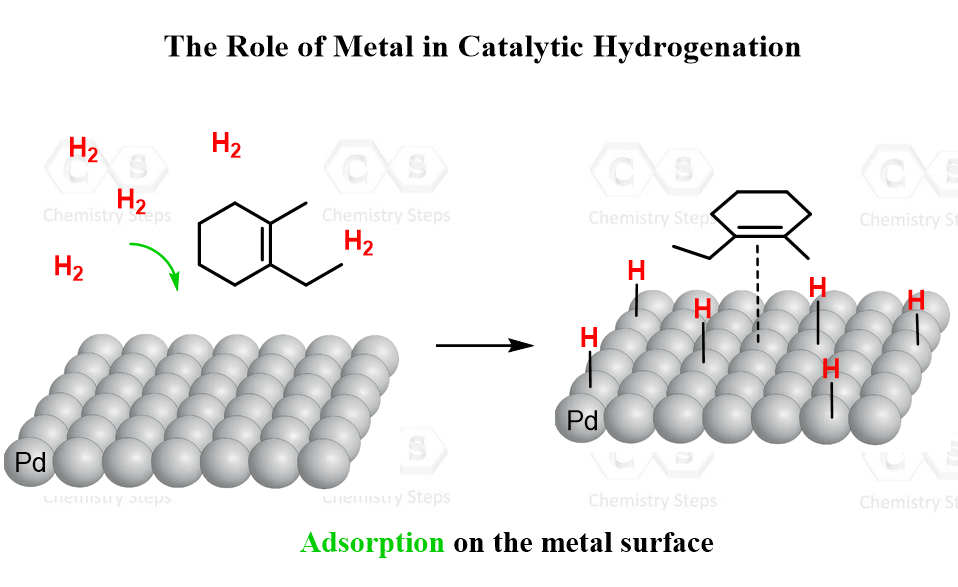
In the case of palladium, it is often used as palladium on carbon (Pd/C), where finely divided palladium is dispersed on an inert carbon support. This increases the surface area of the metal, making hydrogen adsorption and transfer to the substrate more efficient.
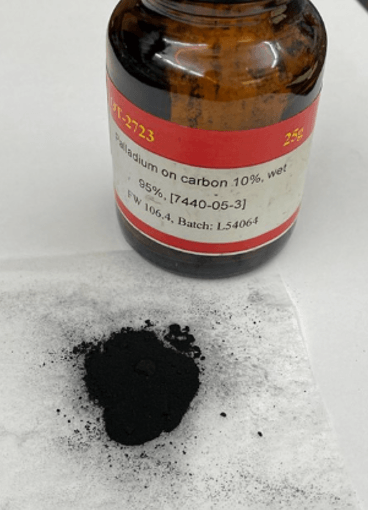
image from wiki
There is no conventional curved-arrow mechanism for this reduction. Instead, we understand that the metal surface adsorbs hydrogen in the form of hydrogen atoms (somewhat like hydride donors) and also coordinates the alkene. Nonetheless, we can show it as a concerted mechanism where hydride attack facilitates the overall syn addition of the two hydrogens.
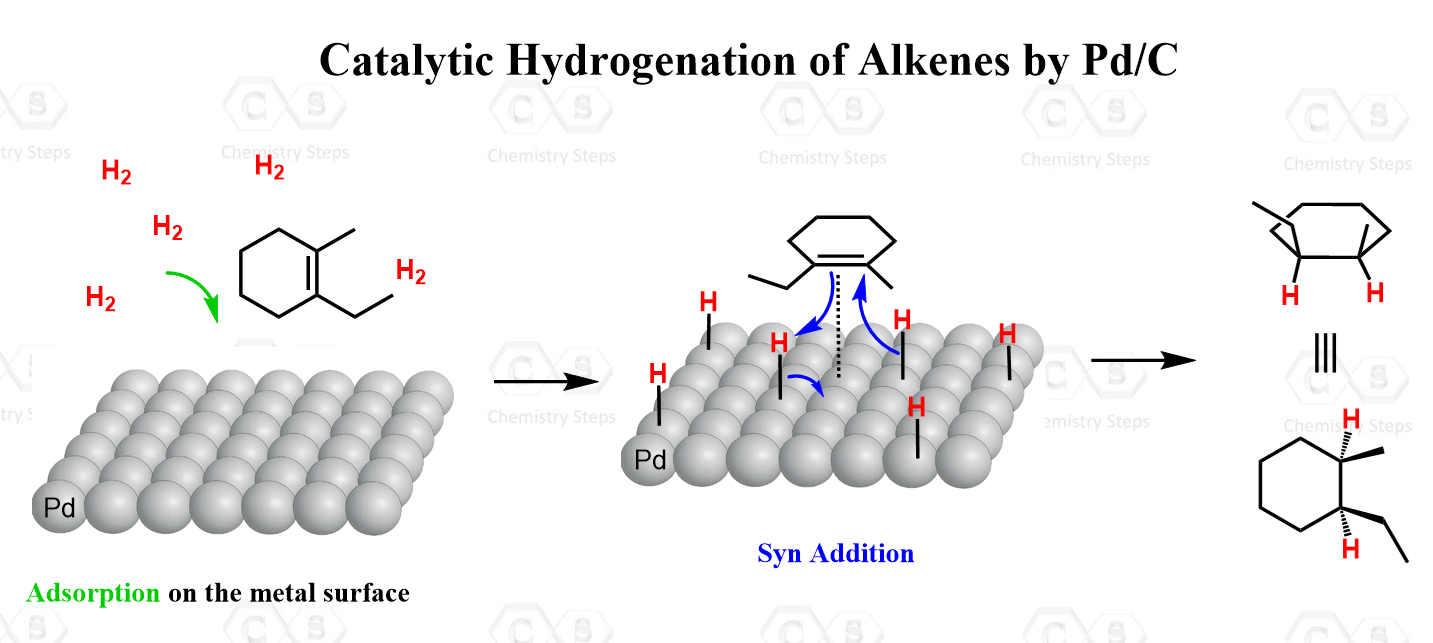
What is important here is the fact that both hydrogens add to the double bond from the same face, which means we have a syn addition, which means both hydrogens end up on the same face of the resulting alkane.
Recall the hydroboration-oxidation as well as the syn dihydroxylation of alkenes:
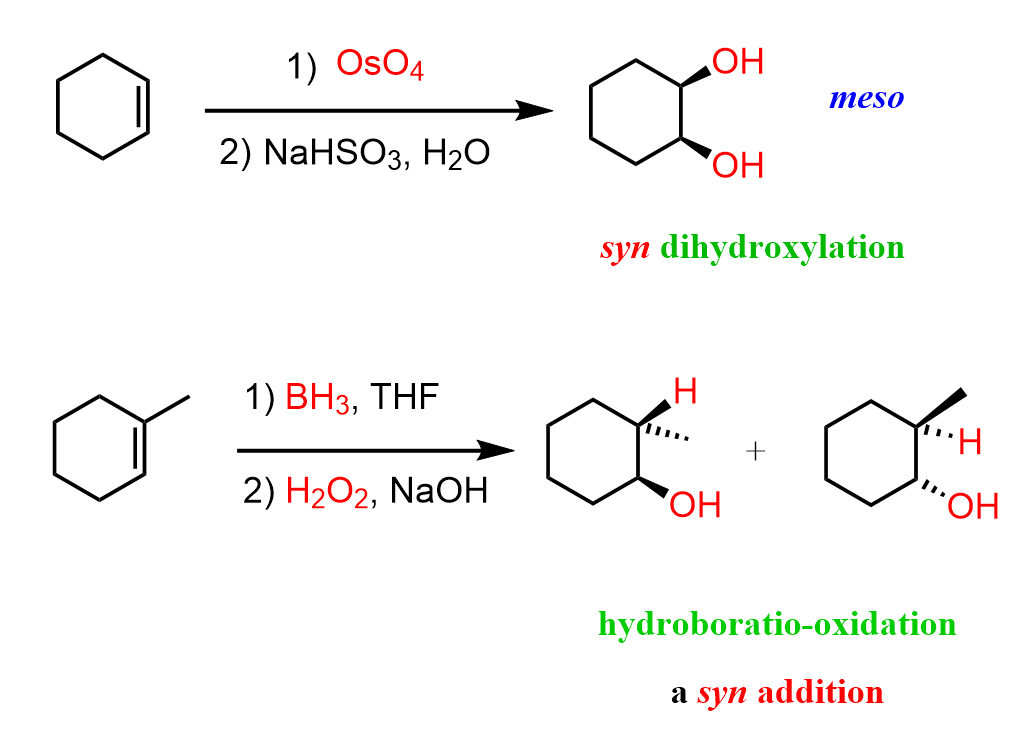
Let’s talk about this feature in a little more detail, as it defines the stereochemistry of the product.
The Stereochemistry of Catalytic Hydrogenation
For certain unsymmetrical alkenes, catalytic hydrogenation leads to the formation of a pair of enantiomers. For example, the catalytic hydrogenation of 1-ethyl-2-methylcyclohex-1-ene produces a pair of enantiomers – (1S,2R)-1-ethyl-2-methylcyclohexane and (1R,2S)-1-ethyl-2-methylcyclohexane because the coordination occurs on both faces of the double bond, and so does the syn addition of the hydrogen (Reaction 1):
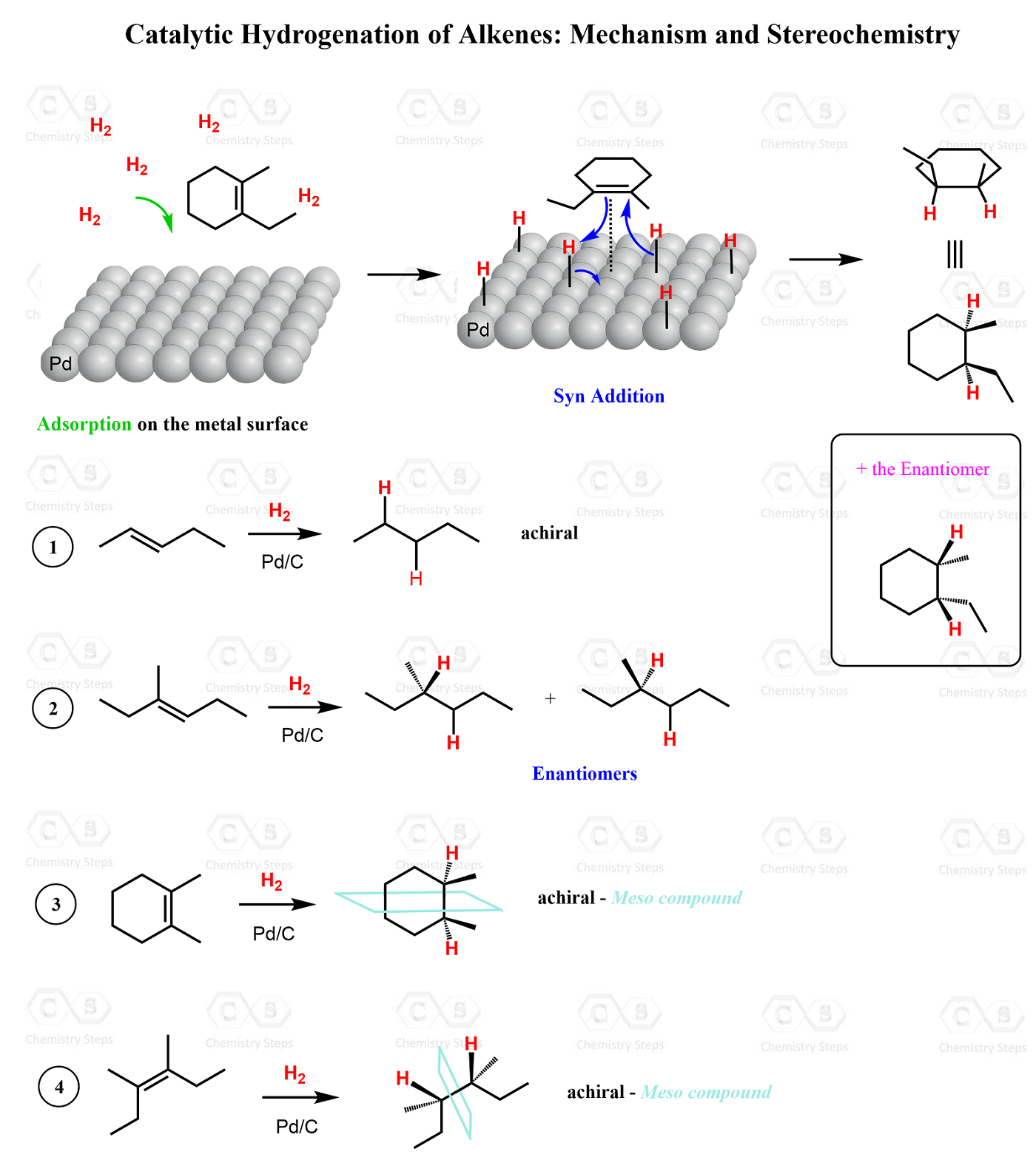
As a comparison, consider the hydrogenation of symmetrical alkenes such as (E)-pent-2-ene (Reaction 1). No chiral centers are formed, and therefore, stereochemistry is not a consideration for the product.
Watch out for meso compounds too. Remember, these do contain chiral centers, but because of an internal plane of symmetry, they are achiral. The last two entries above represent the formation of meso compounds during catalytic hydrogenation.
Catalytic Hydrogenation of Other Functional Groups
Although alkenes are the classic example for illustrating the principles of catalytic hydrogenation, they are not the only group of molecules undergoing such reduction.
Alkynes are also reduced by catalytic hydrogenation, typically forming alkanes upon complete hydrogenation. Partial hydrogenation can give alkenes under controlled conditions; however, it is often difficult to stop the reaction at the alkene stage, so alkanes are generally the final products of the reaction:

More “advanced” functional groups, such as aldehydes, ketones, nitriles, nitro compounds, and azides, also undergo catalytic hydrogenation, producing alcohols and amines, respectively.
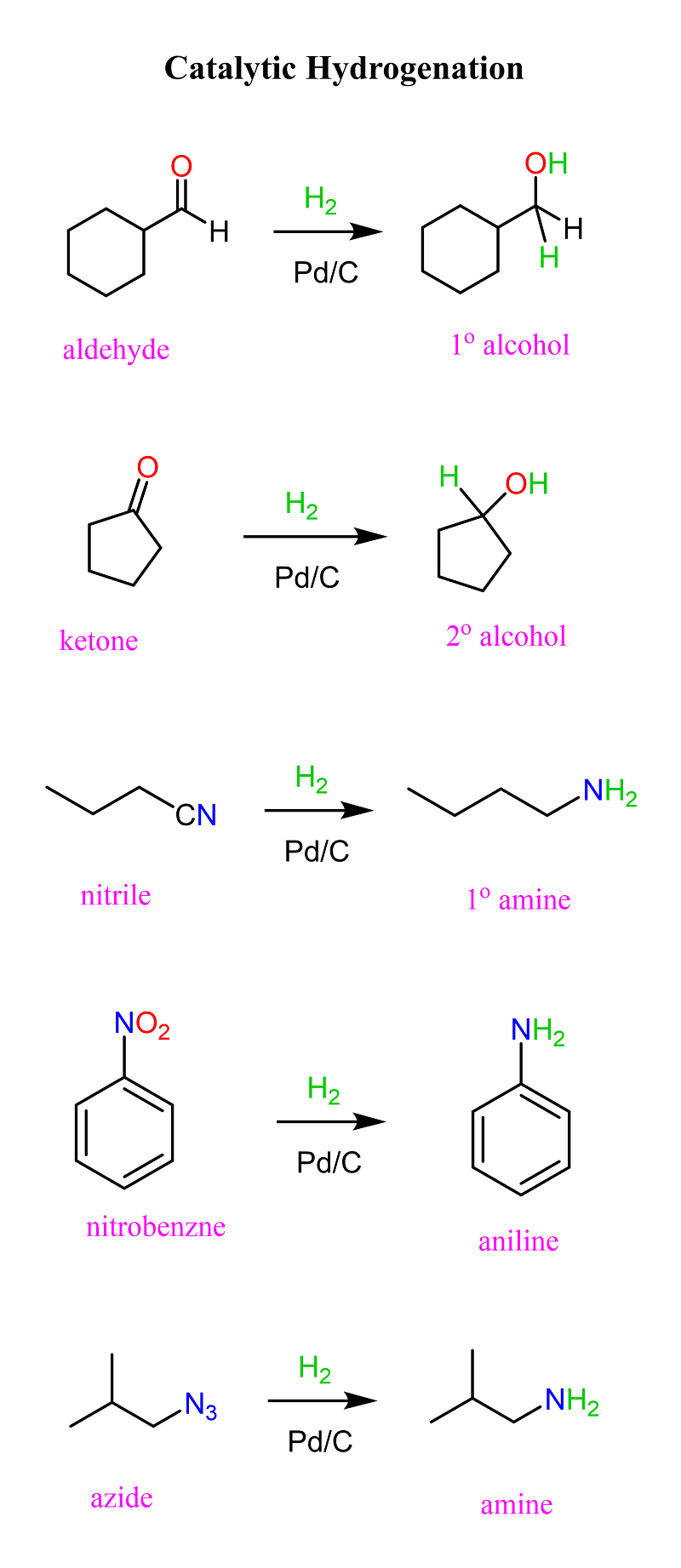
❓ How well do you know the structures of functional groups? Why are the nitro, azide, and nitrile unsaturated?
There are certainly other ways of reducing carbonyl and other similar unsaturated compounds, such as the use of lithium aluminum hydride (LiAlH4), sodium borohydride (NaBH4), DIBAL, etc.
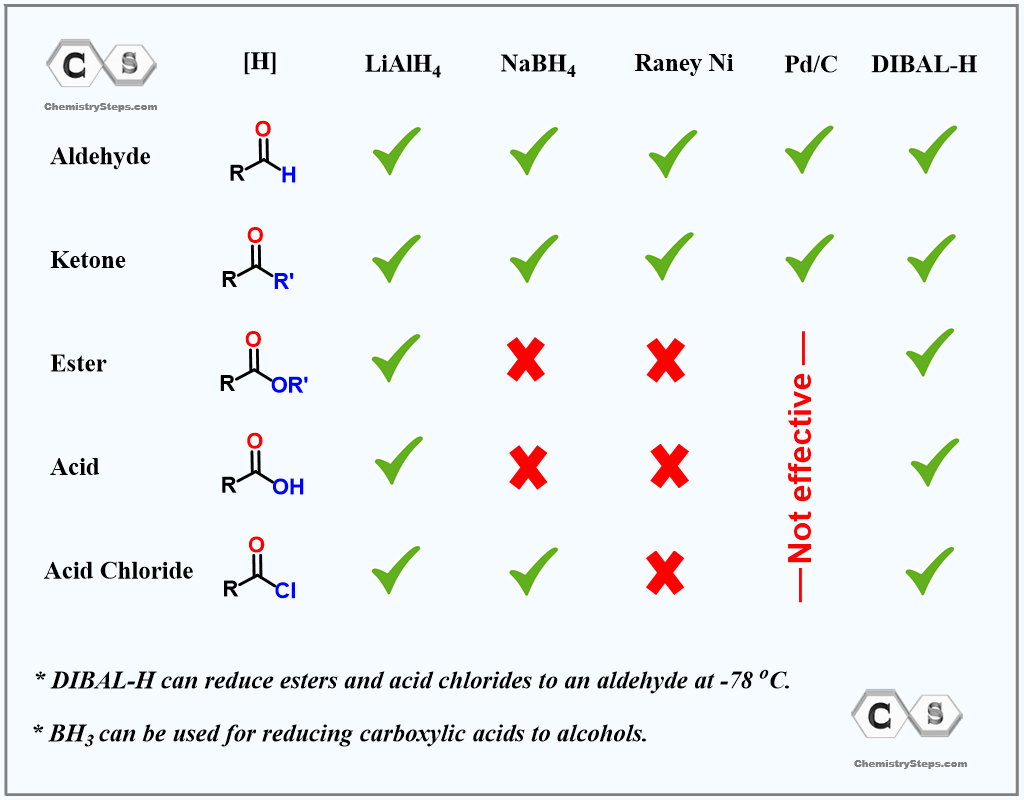
It is often possible to reduce a C=C double bond in the presence of a C=O double bond because the former is generally weaker. For example, the flavoring compound known as raspberry ketone can be prepared by selective hydrogenation of an alkene without reducing the carbonyl group.
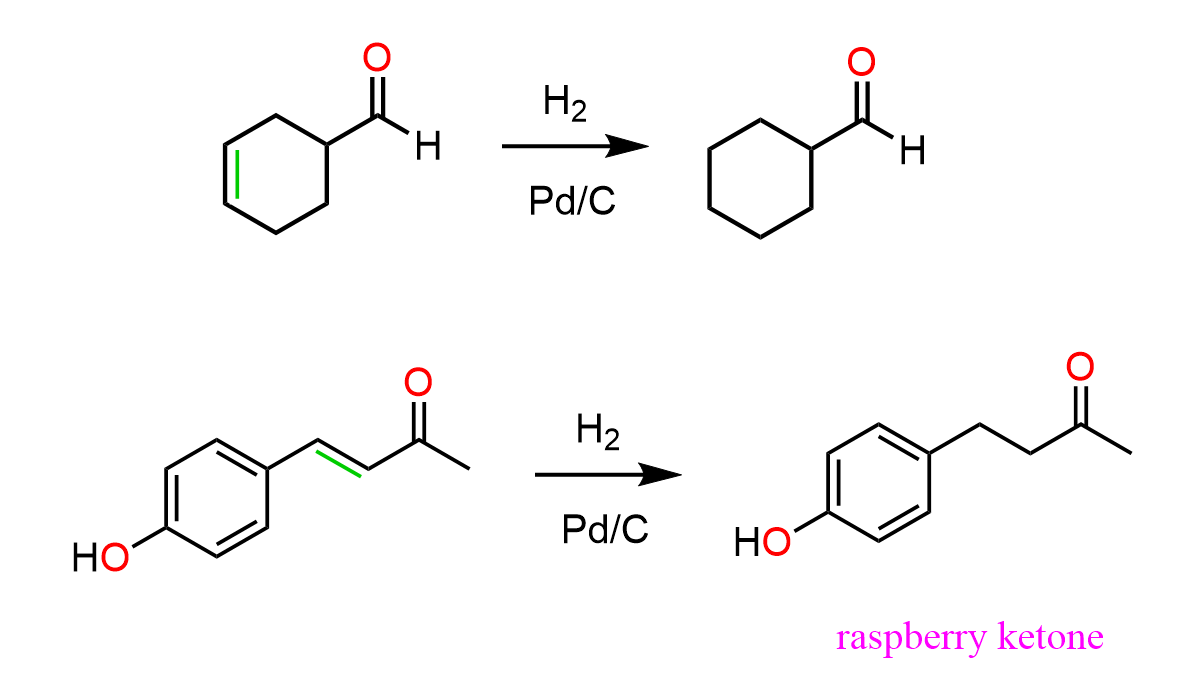
In general, carbonyl compounds are more resistant to catalytic hydrogenation than alkenes, and among them, esters are particularly reluctant to undergo hydrogenation.
We will discuss these later in the chapters on alcohols and carbonyl-containing functional groups.
Organic Chemistry Reaction Maps
Never struggle again to figure out how to convert an alkyl halide to an alcohol, an alkene to an alkyne, a nitrile to a ketone, a ketone to an aldehyde, and more! The comprehensive, powerful Reaction Maps of organic functional group transformations are here!