
In the previous post about the Simmons-Smith reaction, we briefly discussed carbenes, which are reactive intermediates containing a carbon atom with two bonds and two nonbonding electrons:
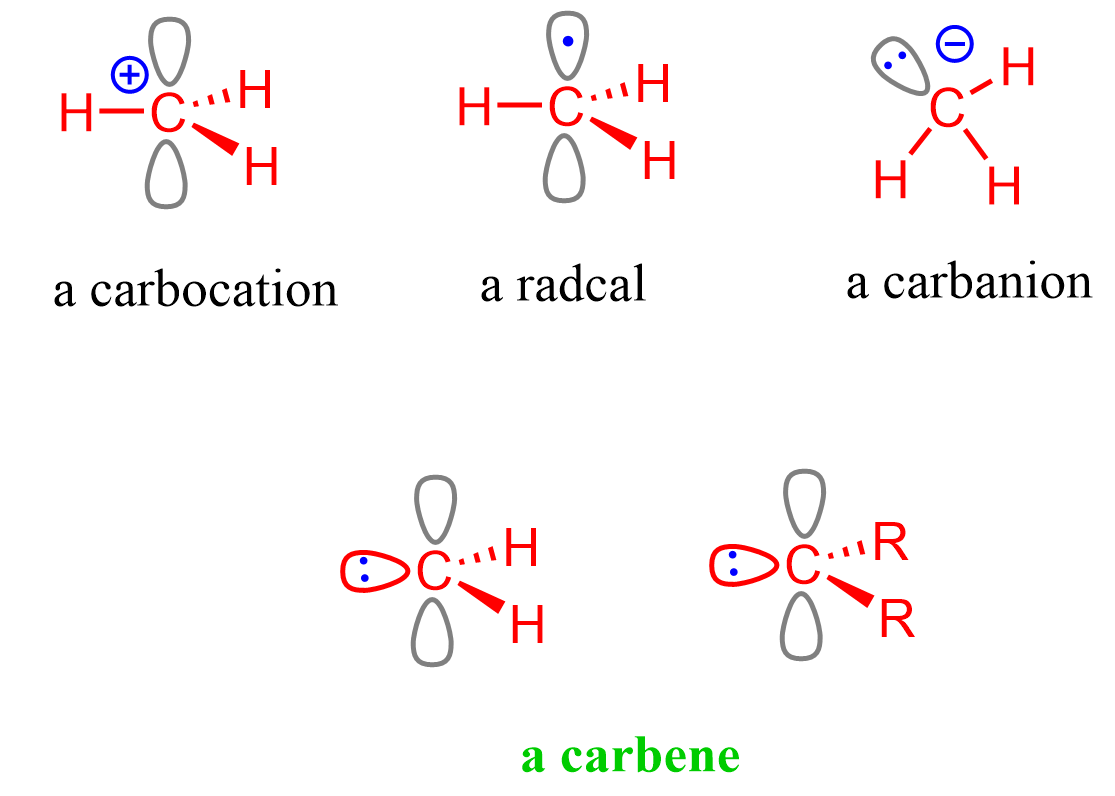
Let’s now go into more detail on the structure of carbenes, the common methods for preparing them, and some of their reactions.
The Structure of Carbenes
The hybridization of carbon in a carbene is generally described as sp2, with the lone pair occupying an sp2 orbital and the p orbital remaining empty. This is what we call a singlet carbene. Interestingly, in some carbenes, one of the electrons from the sp2 orbital occupies the p orbital, and these are called triplet carbenes:
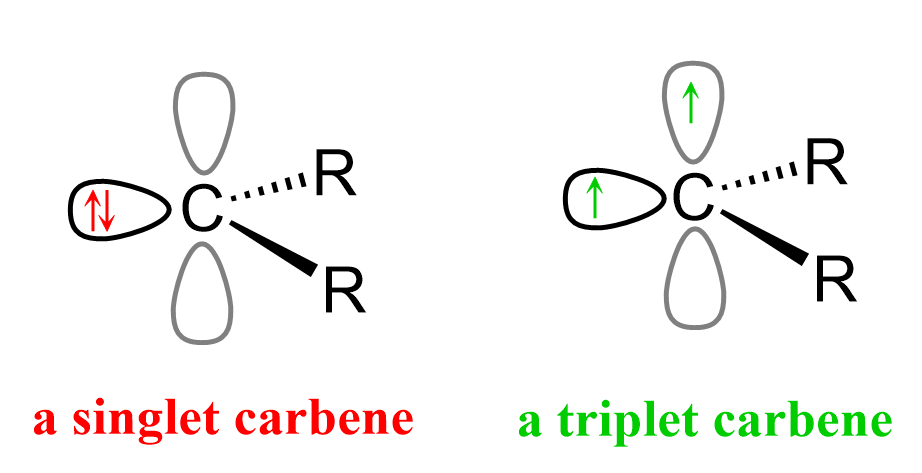
Let’s first explain what singlet and triplet states mean.
Singlet and Triplet States
Remember from general chemistry that electrons have spin quantum numbers of +1/2 and −1/2. When two electrons occupy the same orbital with opposite spins, their spin angular momenta cancel, and the total spin angular momentum is zero.
So, why do we call it a singlet state?
The number of possible orientations of the total spin angular momentum in an external magnetic field is called the multiplicity of the state and is calculated using the equation 2S + 1, where S is the total spin quantum number. Most organic molecules have a total electron spin of (S = 0) in their ground electronic state. Therefore, their spin multiplicity is (2S+1=1), meaning they are in a singlet state.
Spin multiplicity = 2S+1 = 2 x 0 + 1 = 1
where S is the total spin quantum number
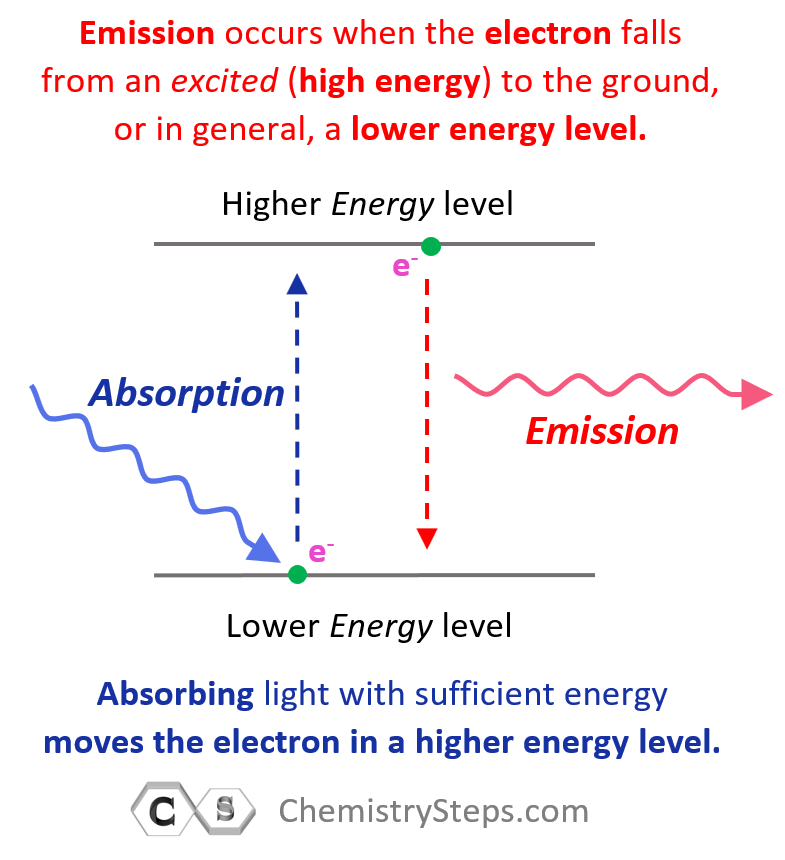
Let’s also look at what a triplet state is. Recall that when a molecule absorbs light of appropriate energy, one or more electrons can be promoted from a lower-energy orbital to a higher-energy orbital (typically a HOMO-LUMO transition). This results in an excited state, in which the molecule has higher energy than its ground state:
When an electron is promoted to a higher, previously unoccupied molecular orbital, it usually retains its original spin; therefore, a singlet molecule is also singlet in the excited state:
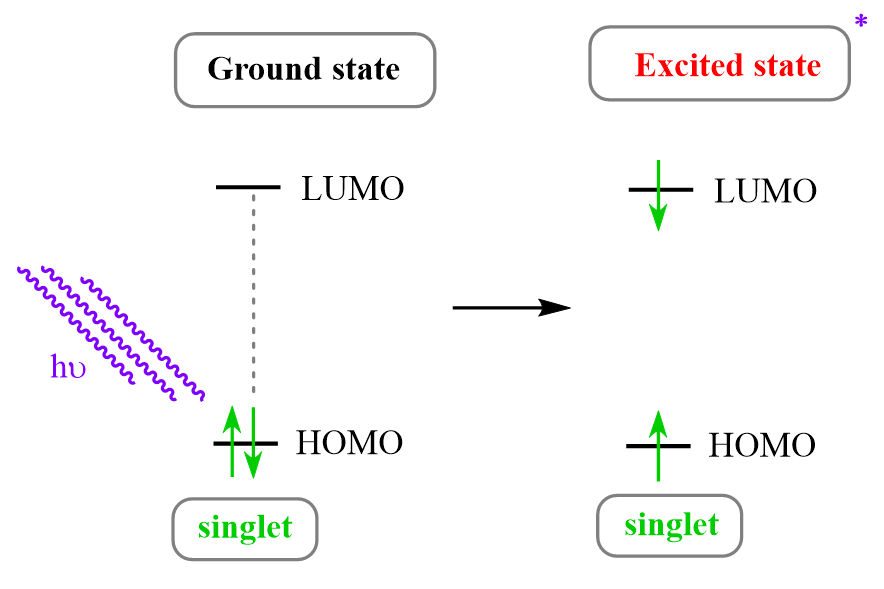
However, in the excited state, the electrons are now in different orbitals, which means they can have parallel spins (any electron in the excited state can change its orientation). Two electrons with parallel spins in different orbitals give a net spin of S = 1, corresponding to a triplet state. Hence, the multiplicity of the triplet state is equal to three (2 × 1 + 1 = 3).
Spin multiplicity = 2S+1 = 2 × 1 + 1 = 3
This conversion between the singlet and triplet states is called intersystem crossing, which can be illustrated using a Jablonski diagram. A Jablonski diagram shows the electronic energy levels of a molecule and the transitions between them, including absorption of light, fluorescence, phosphorescence, and nonradiative transitions such as intersystem crossing:
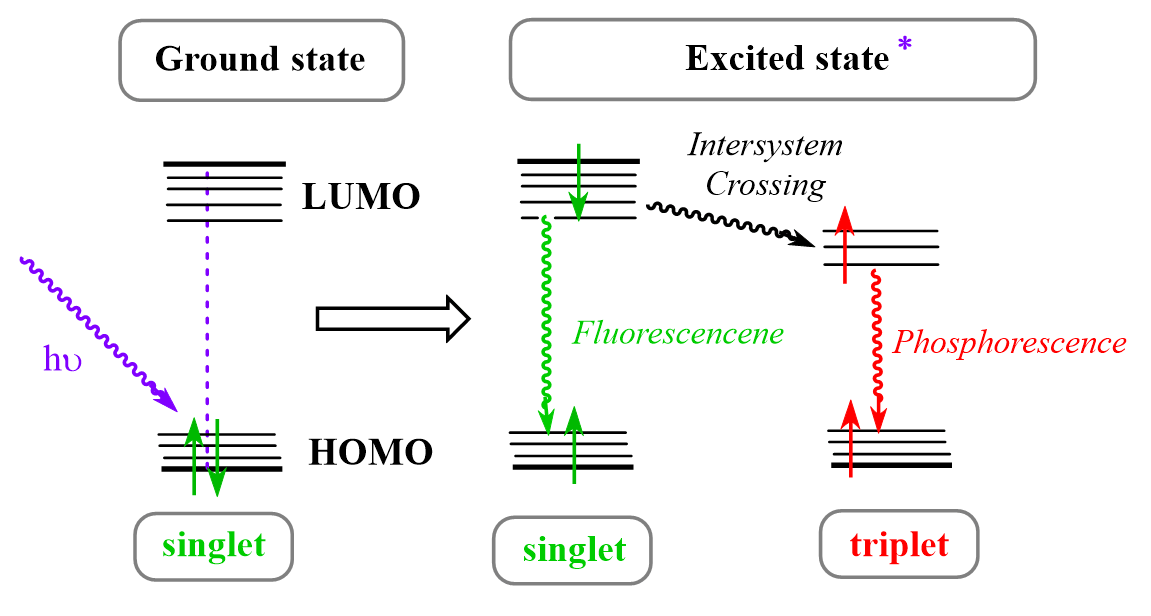
The term nonradiative means that no light is emitted during the process, as energy is transferred without the release of a photon. Unlike intersystem crossing, fluorescence and phosphorescence are radiative processes, meaning that energy is released in the form of light. Fluorescence occurs when a molecule returns from an excited singlet state to the ground state, whereas phosphorescence occurs when it returns from an excited triplet state.
Notice also that the light absorbed initially is higher in energy than the light emitted during fluorescence, which in turn is higher in energy than the photons emitted during phosphorescence. Recall that the energy of visible light decreases in the order violet > blue > green > red.
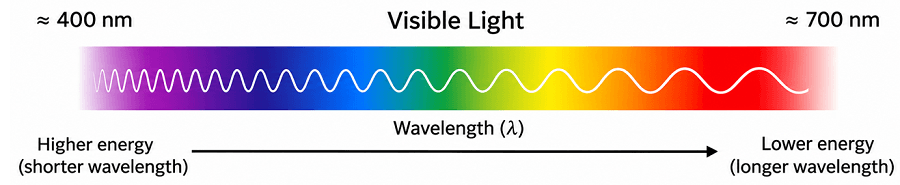
Regardless of whether fluorescence or phosphorescence occurs, the emitted light generally has lower energy (and therefore a longer wavelength) than the absorbed light because some of the absorbed energy is lost through nonradiative processes, such as vibrational relaxation, intersystem crossing, and transfer of energy to the surroundings as heat, before photon emission occurs.
The Stability of Singlet and Triplet States
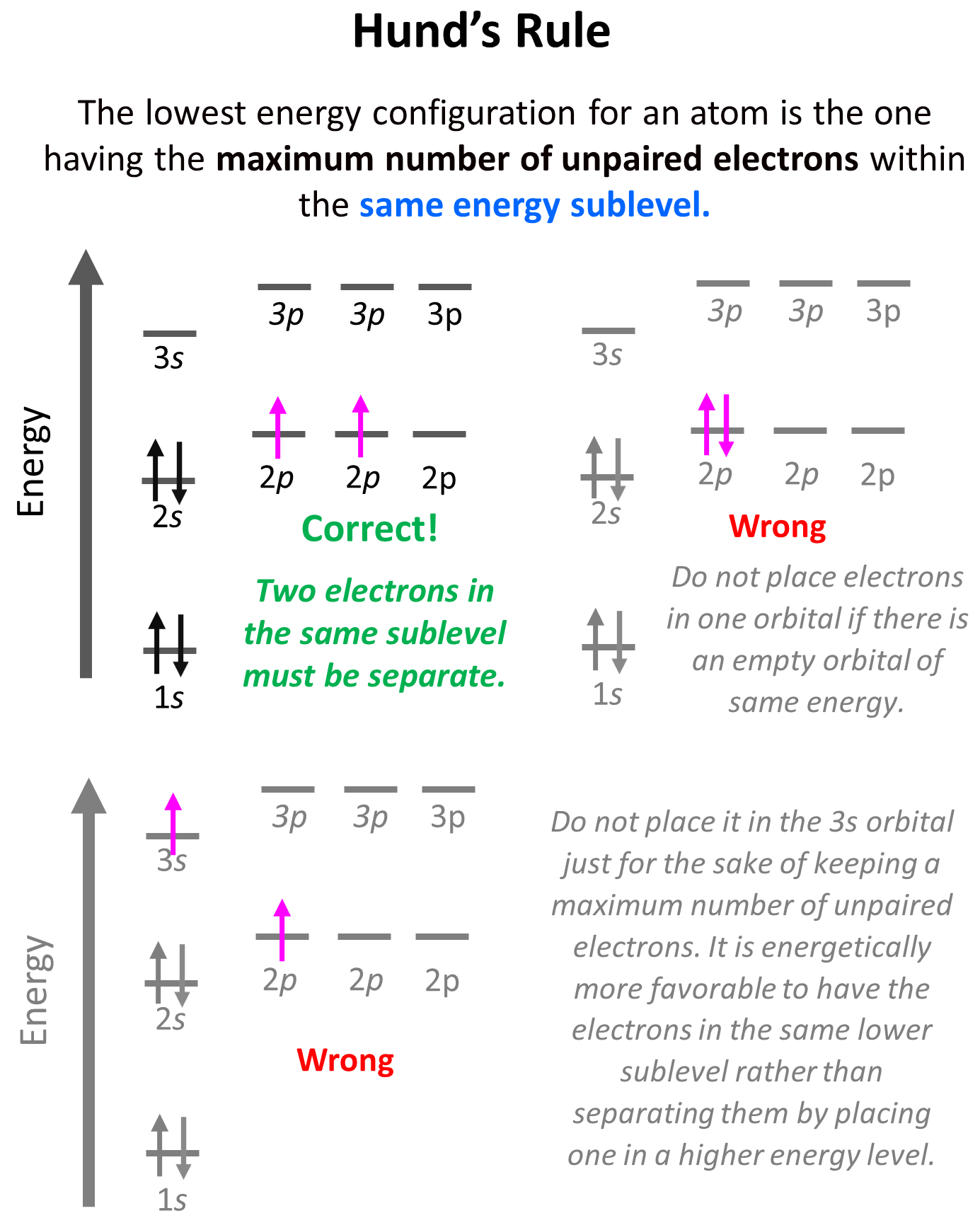
The next question we need to address is the relative stability of singlet and triplet states. Although there is no universal rule determining which state is more stable, as this depends on the electronic structure of the molecule, triplet states are generally lower in energy than the corresponding excited singlet states. This is because, in a triplet state, electrons occupy different orbitals with parallel spins, reducing electron-electron repulsion compared with pairing them in the same orbital. As a result, triplet states are often energetically more favorable than their corresponding singlet states. Remember also Hund’s rule, which states that electrons occupy degenerate orbitals singly, with parallel spins, before pairing, resulting in the lowest-energy arrangement:
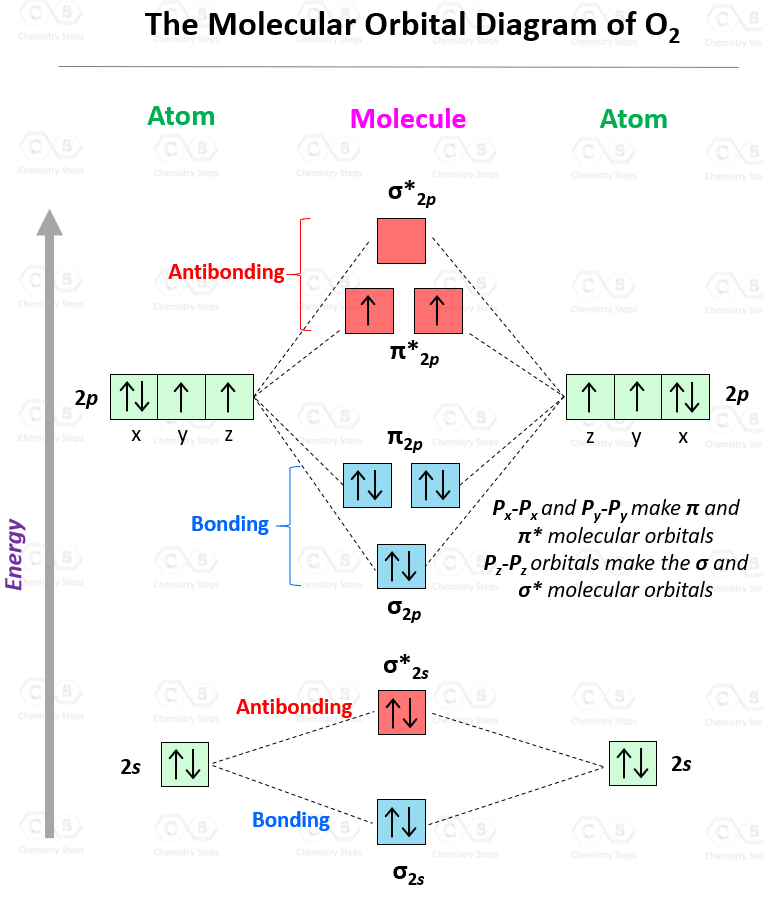
Perhaps the most illustrative example is oxygen, which is triplet in its ground state. We can see this by looking at the molecular orbital diagram of oxygen, where the two electrons occupy the two π antibonding orbitals separately, with parallel spins:
It is known that oxygen can convert to a higher-energy singlet state upon absorption of energy. Singlet oxygen is much more reactive than ground-state oxygen and has been used in applications such as killing cancer cells. This is commonly achieved via photodynamic therapy (PDT), where a dye (photosensitizer) absorbs light of appropriate energy and transfers the energy from its excited state to triplet oxygen, converting it into singlet oxygen. The singlet oxygen then reacts with various biological molecules, causing damage to cellular components and ultimately helping kill cancer cells:
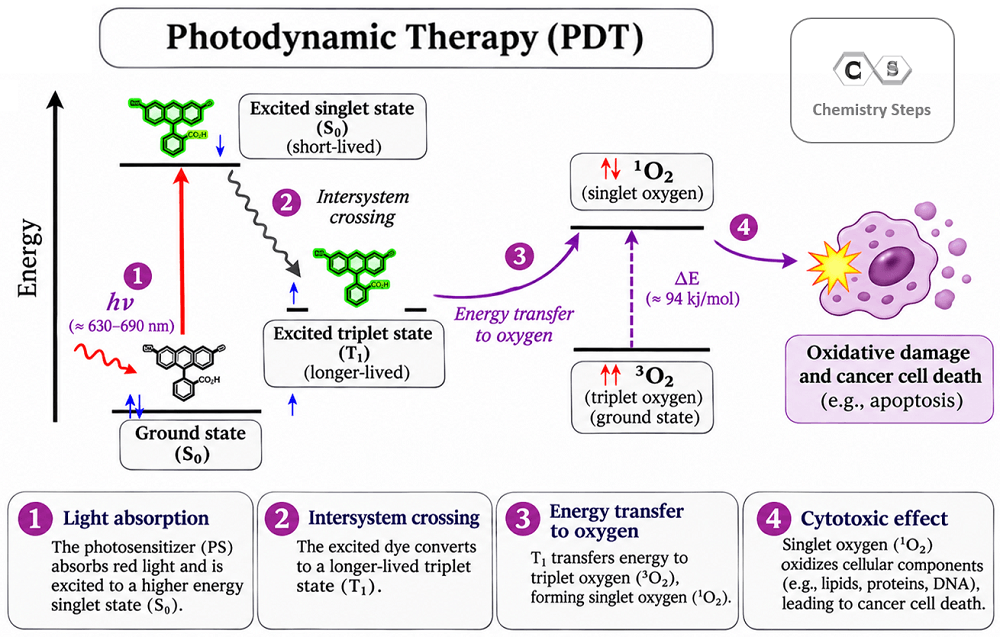
It is also worth mentioning that red light is commonly used because it falls within the biological window, a range of wavelengths at which light penetrates biological tissue relatively deeply due to reduced absorption and scattering by tissue components. This allows the light to reach deeper tissues and makes photodynamic therapy more effective for treating certain tumors.
Remember also that ground-state oxygen is paramagnetic, meaning it is attracted to a magnetic field, because it has two unpaired electrons in its π* antibonding orbitals. In contrast, singlet oxygen has paired electrons and is diamagnetic, meaning it is weakly repelled by a magnetic field.
Once again, there is no absolute statement that triplet species are always more stable than the corresponding singlet states, because this depends on their structure and substituents.
Let’s now go back to carbenes and see how they are generated and react with alkenes and other molecules.
How Are Singlet and Triplet Carbenes Generated?
In many common carbene-generating reactions, such as the decomposition of diazo compounds (e.g., diazomethane) or α-elimination reactions (e.g., the generation of dichlorocarbene from chloroform under basic conditions), singlet carbenes are initially formed. In these processes, the carbene can be formed with two electrons paired in the same orbital, resulting in a singlet state. However, depending on the carbene and the reaction conditions, triplet carbenes can also be formed, either directly or through intersystem crossing.
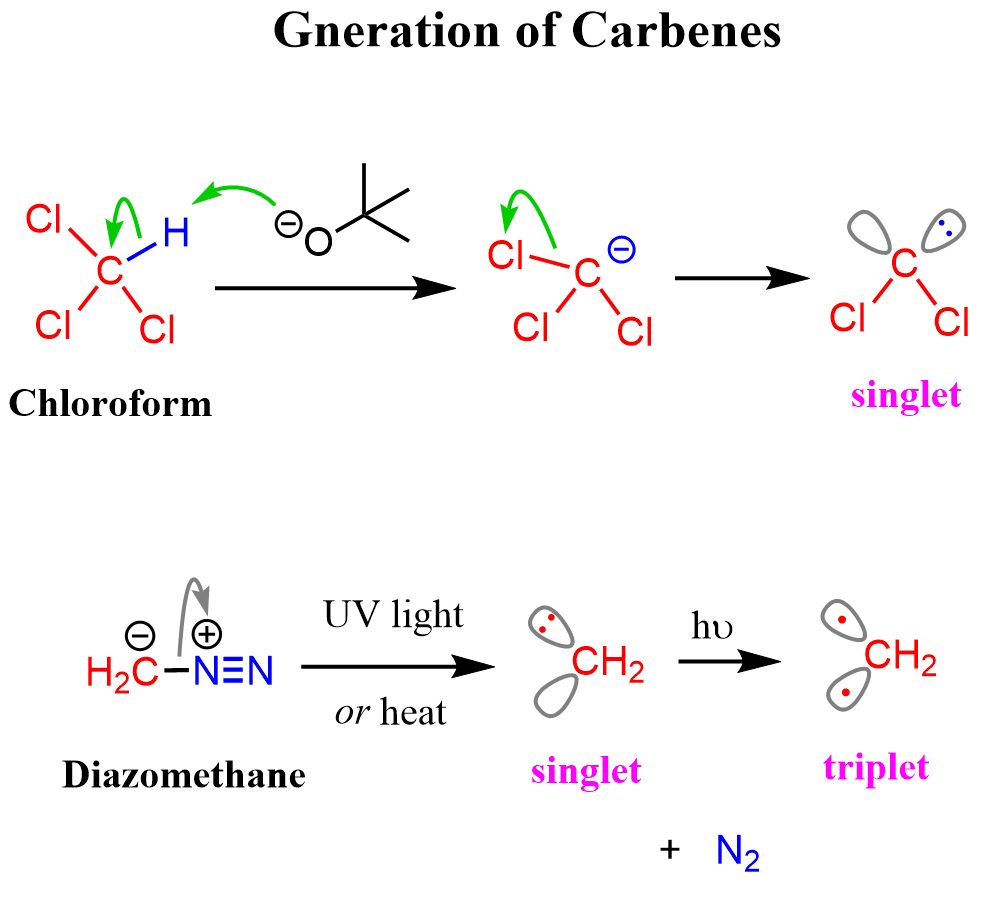
The formation of singlet carbenes allows us to use them in specific addition reactions to alkenes. What you need to remember is that the addition of carbenes and carbenoids, such as ICH2ZnI (iodomethylzinc iodide) in the Simmons-Smith reaction, occurs through concerted reactions, meaning that bond formation takes place simultaneously rather than through stepwise intermediates:
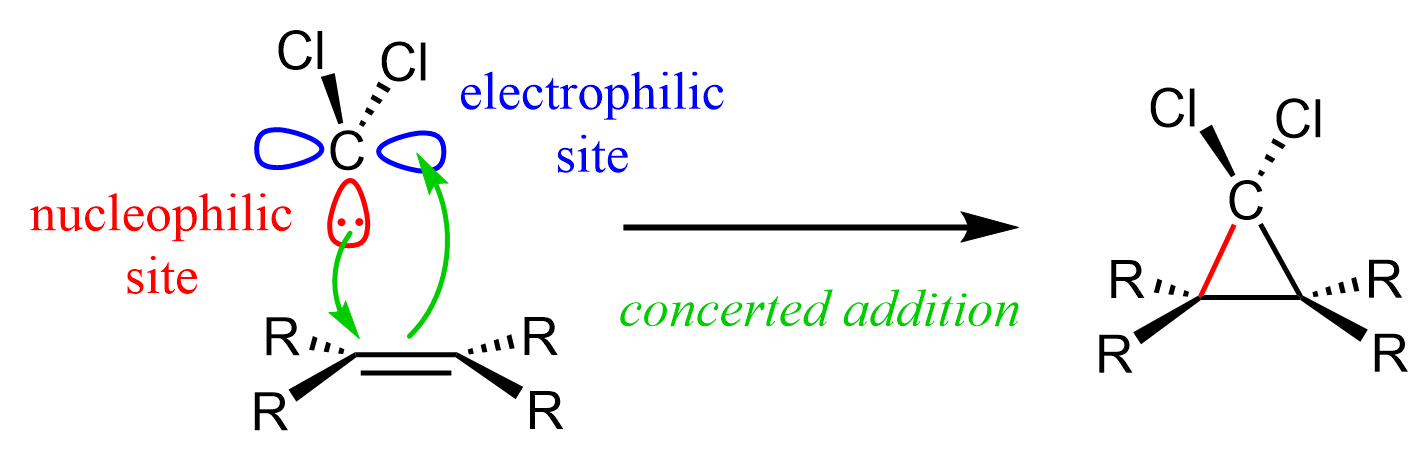
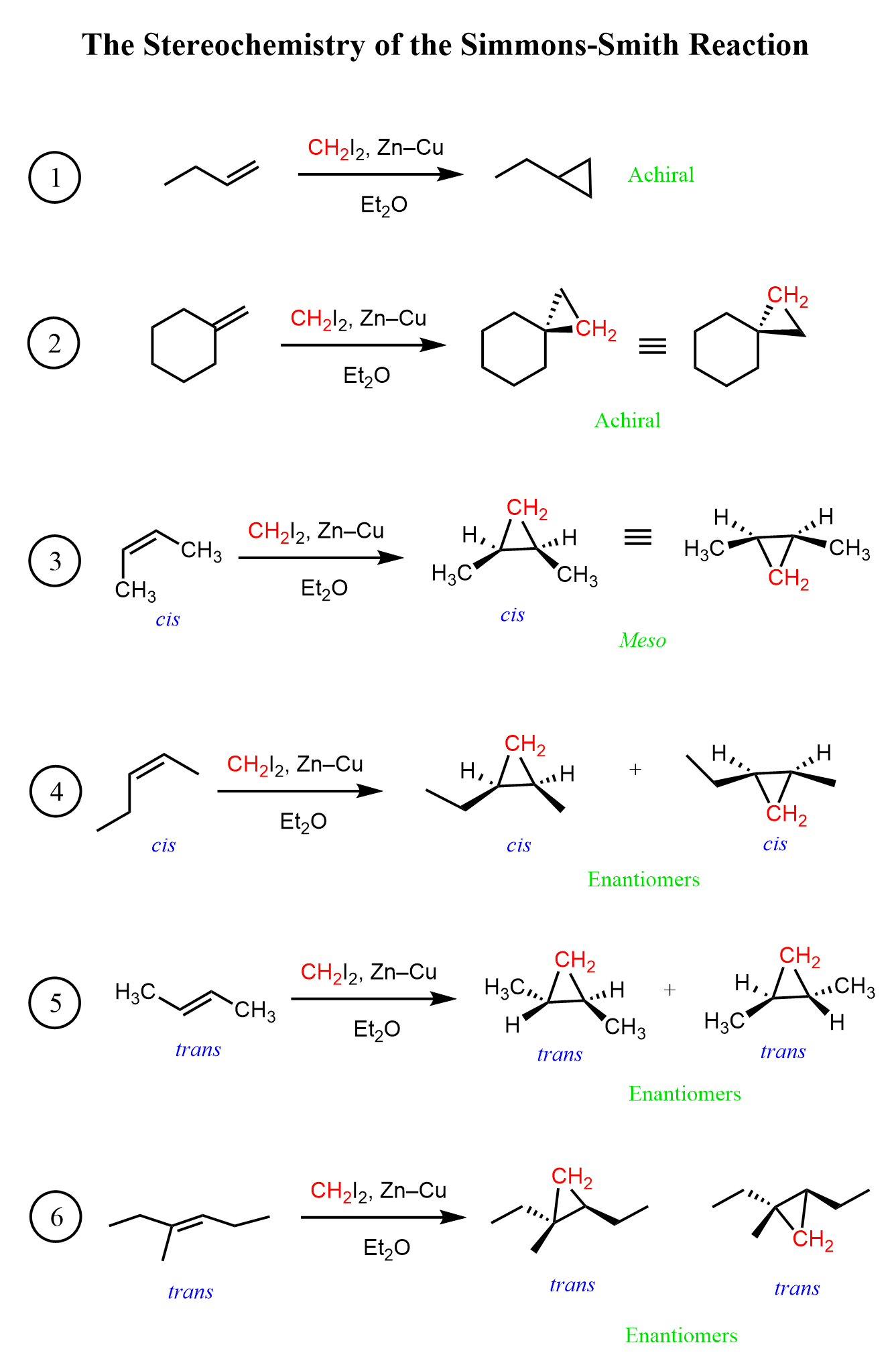
As a result, the alkene does not have time to change its configuration during the transition state, nor does it form an intermediate that can undergo configurational or conformational changes. Therefore, the initial configuration of the alkene is retained, and cis alkenes form cis-substituted cyclopropanes, whereas trans alkenes form trans-substituted cyclopropanes.
For reference, we will also include the following scheme of the Simmons-Smith reaction, which illustrates the stereochemistry of the cyclopropanation of alkenes:
And now, the question you may be wondering is: if triplet carbenes are more stable than singlet carbenes, how come the initially formed singlet carbene does not convert into a triplet carbene and then react with the alkene?
It is true that many carbenes, including methylene (CH2) have a triplet ground state, meaning that the triplet is lower in energy than the singlet. Nevertheless, singlet methylene can be generated and react before it undergoes conversion to the triplet state.
This does not mean triplet carbenes are never generated. In photochemical reactions, conditions such as the use of a triplet sensitizer can favor the formation of triplet carbenes, which then react with alkenes. What is important here is that they often react stepwise through a diradical intermediate, allowing rotation before the second bond forms.
As a result, these reactions may not retain the stereochemistry of the starting alkene. For example, in the following addition reactions, we can see that when a singlet carbene is used, the cis alkene gives cis-cyclopropane. On the other hand, under photochemical conditions, the generation of a triplet carbene results in a stepwise addition through a diradical intermediate, leading to a mixture of cis- and trans-cyclopropanes:
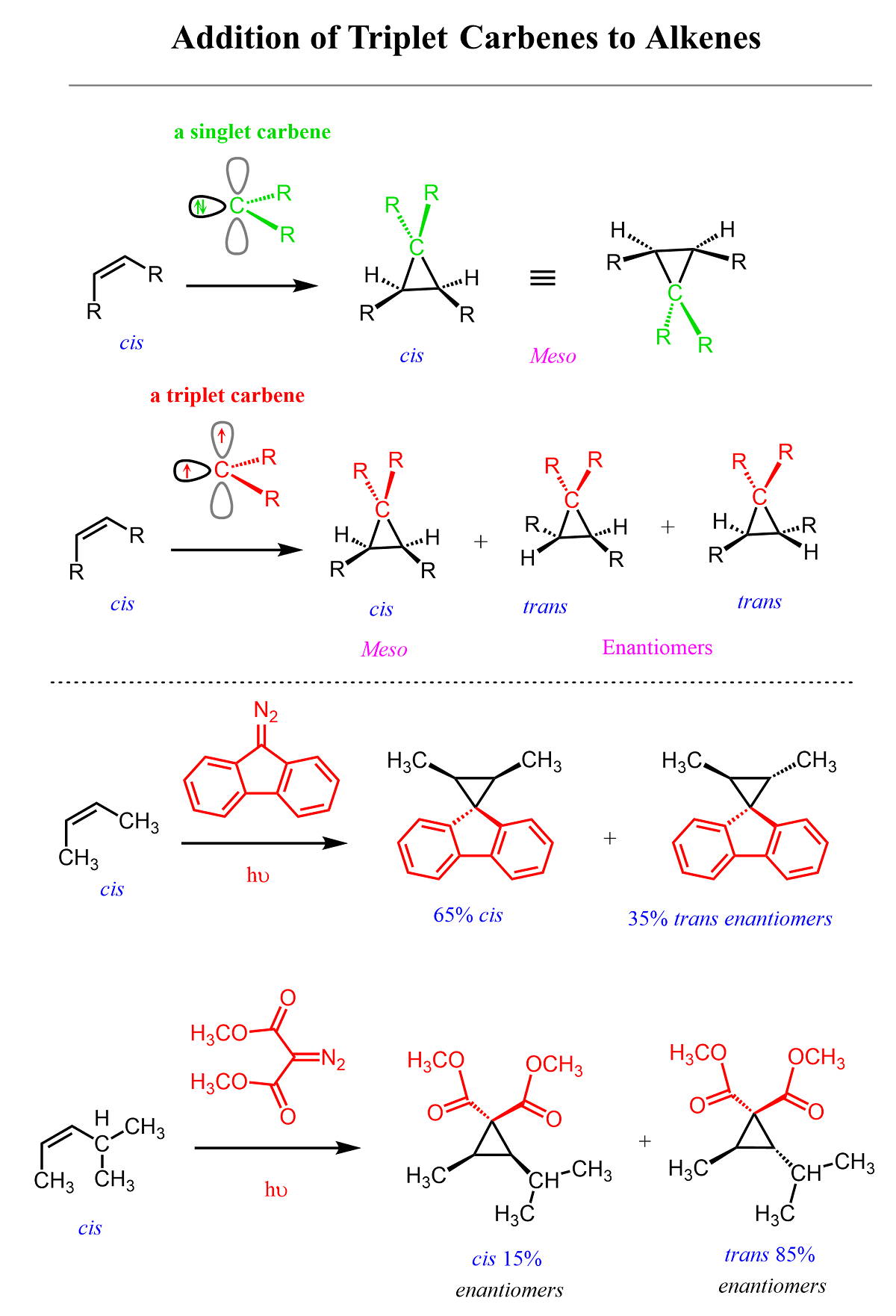
The reason for this is that the reaction is stepwise. In the first step, the triplet carbene adds to one of the carbon atoms of the alkene, forming a triplet diradical intermediate. In this intermediate, the two unpaired electrons have parallel spins and cannot immediately form the second C–C bond. Before intersystem crossing occurs and the second bond forms, the intermediate can undergo rotation around the newly formed C–C bond, allowing loss of stereochemical information. As a result, ring closure can produce a different cyclopropane stereoisomer:
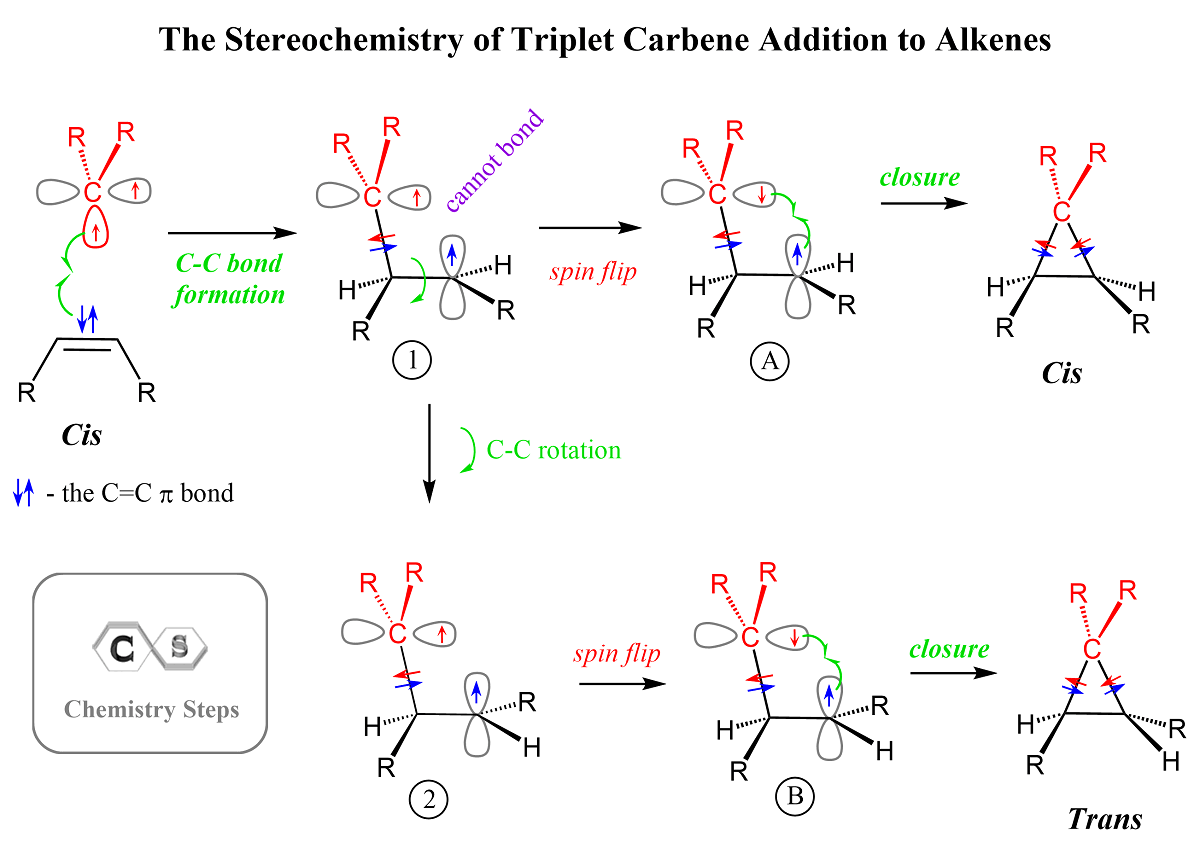
First, one electron from the triplet carbene and one electron from the alkene π bond form a new C–C bond, generating a biradical intermediate 1. Both unpaired electrons have the same spin, so they cannot immediately combine to form the second C–C bond. Bond formation requires a spin flip, which is slower than the subsequent ring closure. As a result, the biradical intermediate has sufficient time to undergo C–C bond rotation, forming a second conformation 2. It is this conformational isomer of the biradical intermediate that undergoes spin flip (B) and then forms the trans isomer of the cyclopropane. The cis-cyclopropane is formed as a result of spin flip of intermediate 1, followed by ring closure of A.
Reference
1. Clayden, J.; Greeves, N.; Warren, S. Organic Chemistry, 2nd ed.; Oxford University Press, 2012. Chapter 40: Synthesis and Reactions of Carbenes, pp. 1003-1022.
2. Candeias, N. R.; Afonso, C. A. M. Developments in the Photochemistry of Diazo Compounds. Curr. Org. Chem. 2009, 13 (7), 763-787. https://doi.org/10.2174/138527209788167231.
3. Manna, A.; Verma, A.; Panja, S. K.; Saha, S. Recent Development of Carbenes: Synthesis, Structure, Photophysical Properties and Applications. IntechOpen, 2022. https://doi.org/10.5772/intechopen.101413.
4. Visible Photons as Ideal Reagents for the Activation of Coloured Organic Compounds. Chem. Soc. Rev. 2024. https://doi.org/10.1039/D3CS01129A.
5. O’Callaghan, K. S.; Collins, S. G.; Maguire, A. R. Intramolecular Photochemical C–H Insertions of α-Diazocarbonyl Compounds. Eur. J. Org. Chem. 2024, 27 (45), e202400784. https://doi.org/10.1002/ejoc.202400784.
6. Cui, S.; Guo, X.; Wang, S.; Wei, Z.; Huang, D.; Zhang, X.; Zhu, T. C.; Huang, Z. Singlet Oxygen in Photodynamic Therapy. Pharmaceuticals 2024, 17 (10), 1274. https://doi.org/10.3390/ph17101274.
7. Photodynamic Therapy for Cancer: Mechanisms, Photosensitizers, Nanocarriers, and Clinical Studies. MedComm 2024, 5 (7), e603. https://doi.org/10.1002/mco2.603.
Check Also
- Electrophilic Addition Reactions to Alkenes
- Markovnikov’s Rule
- Markovnikov’s Rule with Practice Problems
- Addition of Water to Alkenes
- Acid-Catalyzed Hydration of Alkenes with Practice Problems
- Rearrangements in Alkene Addition Reactions
- Oxymercuration-Demercuration
- Addition of Alcohols to Alkenes
- Free-Radical Addition of HBr: Anti-Markovnikov Addition
- Hydroboration-Oxidation: The Mechanism
- Hydroboration-Oxidation of Alkenes: Regiochemistry and Stereochemistry with Practice Problems
- Halogenation of Alkenes and Halohydrin Formation
- The Regiochemistry of Alkene Addition Reactions
- The Stereochemistry of Alkene Addition Reactions
- Cis product in an anti-Addition Reaction of Alkenes
- Ozonolysis of Alkenes with Practice Problems
- Syn Dihydroxylation of Alkenes with KMnO4 and OsO4
- Anti-Dihydroxylation of Alkenes with MCPBA and Other Peroxides with Practice Problems
- Catalytic Hydrogenation
- Oxidative Cleavage of Alkenes with KMnO4 and O3
- Alkene Reactions Practice Problems
- Changing the Position of a Double Bond
- Changing the Position of a Leaving Group
- Alkenes Multi-Step Synthesis Practice Problems
- Reactions of Norbornane Derivatives
- Alkene Addition Reactions Practice Quiz
- Reactions Map of Alkenes