
The Sonogashira reaction couples a terminal alkyne with an aryl or vinyl halide (or triflate), forming a new C(sp)-C(sp2) bond. The reaction is catalyzed by palladium, typically in the presence of a copper(I) co-catalyst and an amine base, and is one of the most important methods for synthesizing substituted alkynes:
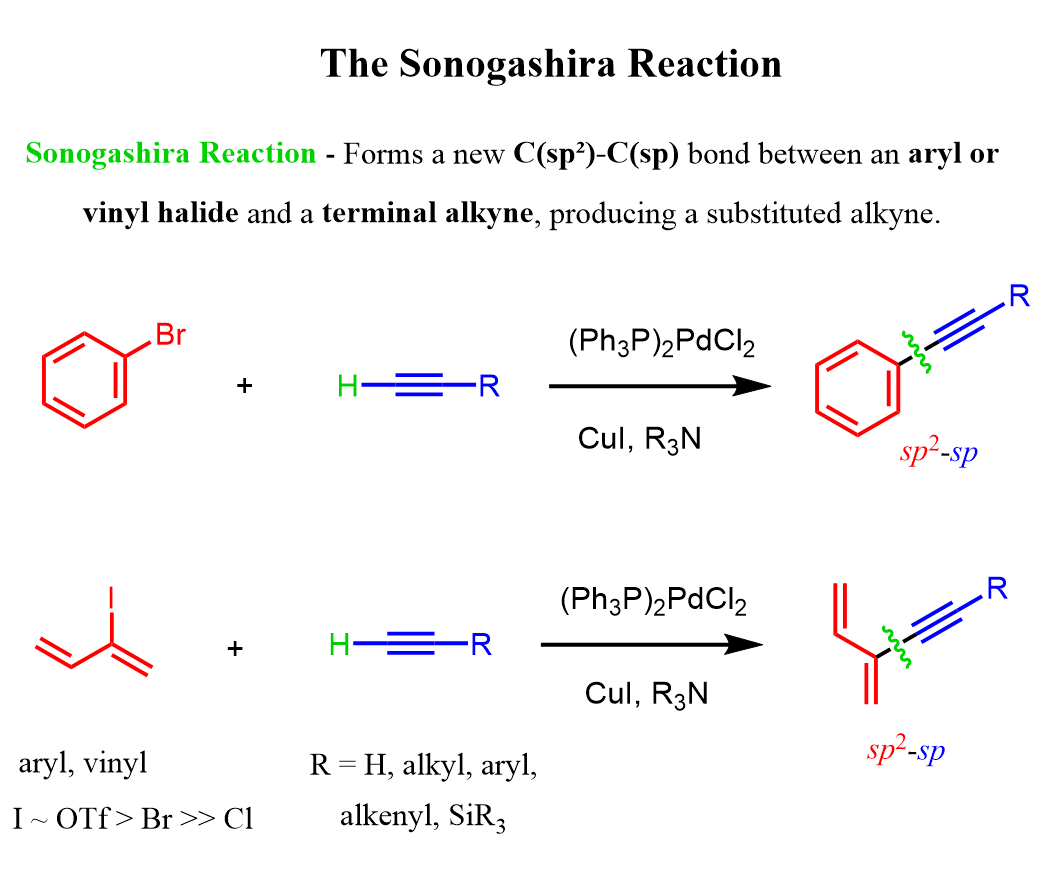
So, let’s discuss the mechanism of the Sonogashira reaction to understand the role of each catalyst here.
The Mechanism of the Sonogashira Reaction
Like in all the Pd-catalyzed cross-coupling reactions, the key role is played by Pd, which is typically used in the Pd(0) or Pd(II) form. We have a discussion on the notation, oxidation state, and ligands of the catalyst in the introductory post, so feel free to check it out before moving forward.
The Pd serves as both the meeting point and the reaction center where the carbon fragments couple to form the new C(sp)-C(sp2) bond.
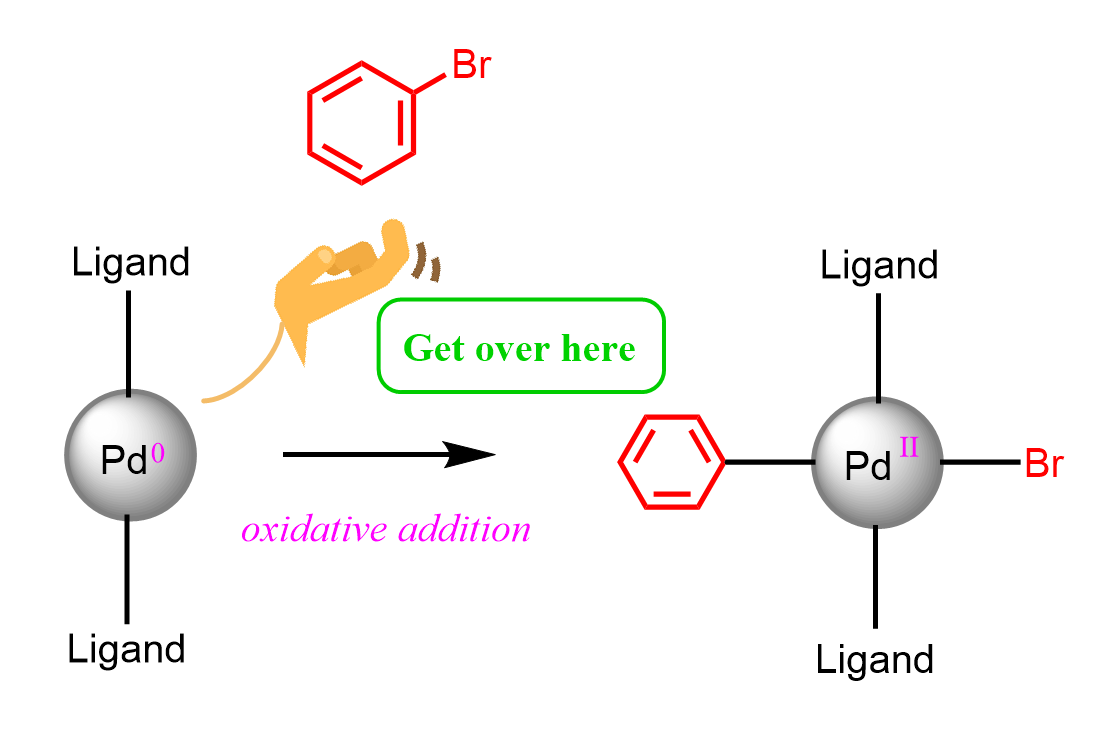
The first step is the oxidative addition to Pd via cleavage of the C-X bond of the aryl or vinyl halide. It is called oxidative addition because it increases the oxidation state of Pd because of the two new ligands:
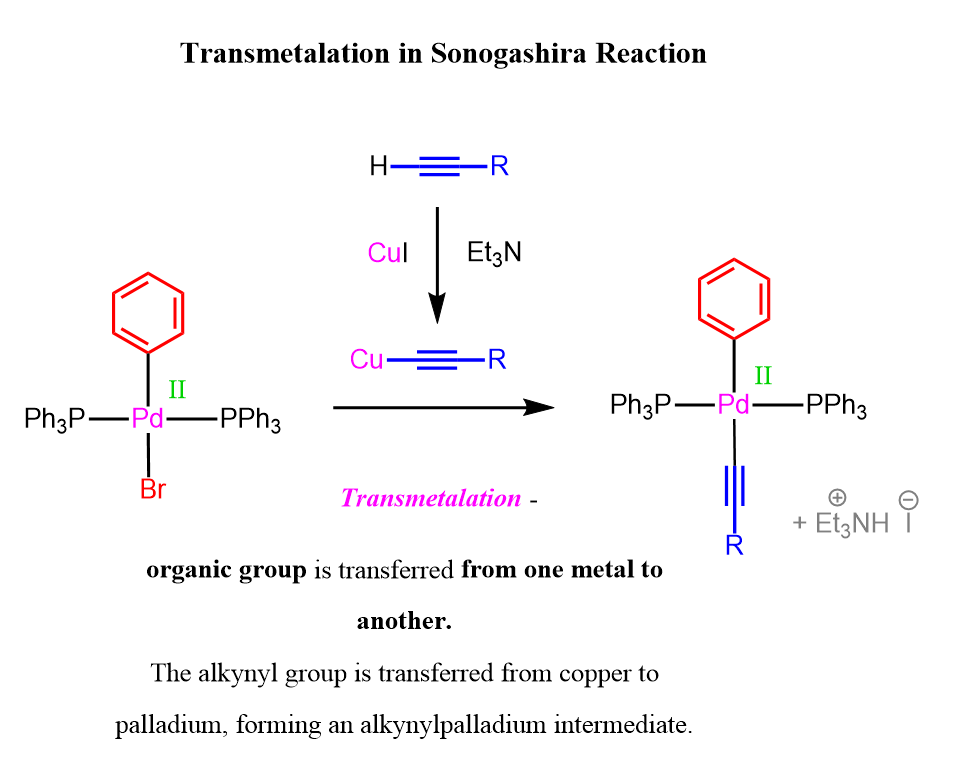
Meanwhile, the terminal alkyne exchanges its proton with the Cu(I) ion, forming copper acetylide, and at this point, we have two organometallic species, which, in the next step, undergo a transmetallation. This is where the two metals exchange their ligands. Palladium exchanges its Br ligand for the alkynyl ligand, while Cu gets the Br in return:
The last step of the reaction is called reductive elimination because the palladium eliminates the two carbon ligands, which combine to form the new C-C bond:
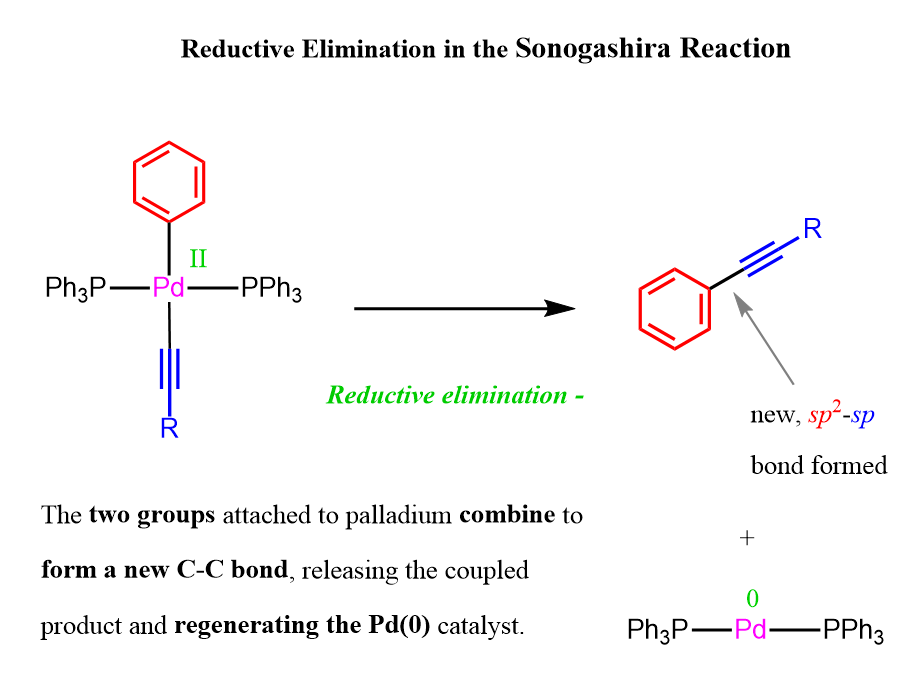
Notice also that the catalyst is regenerated and is ready to facilitate another cross-coupling reaction.
Let’s now put all the steps together to have a complete image of the Sonogashira reaction:
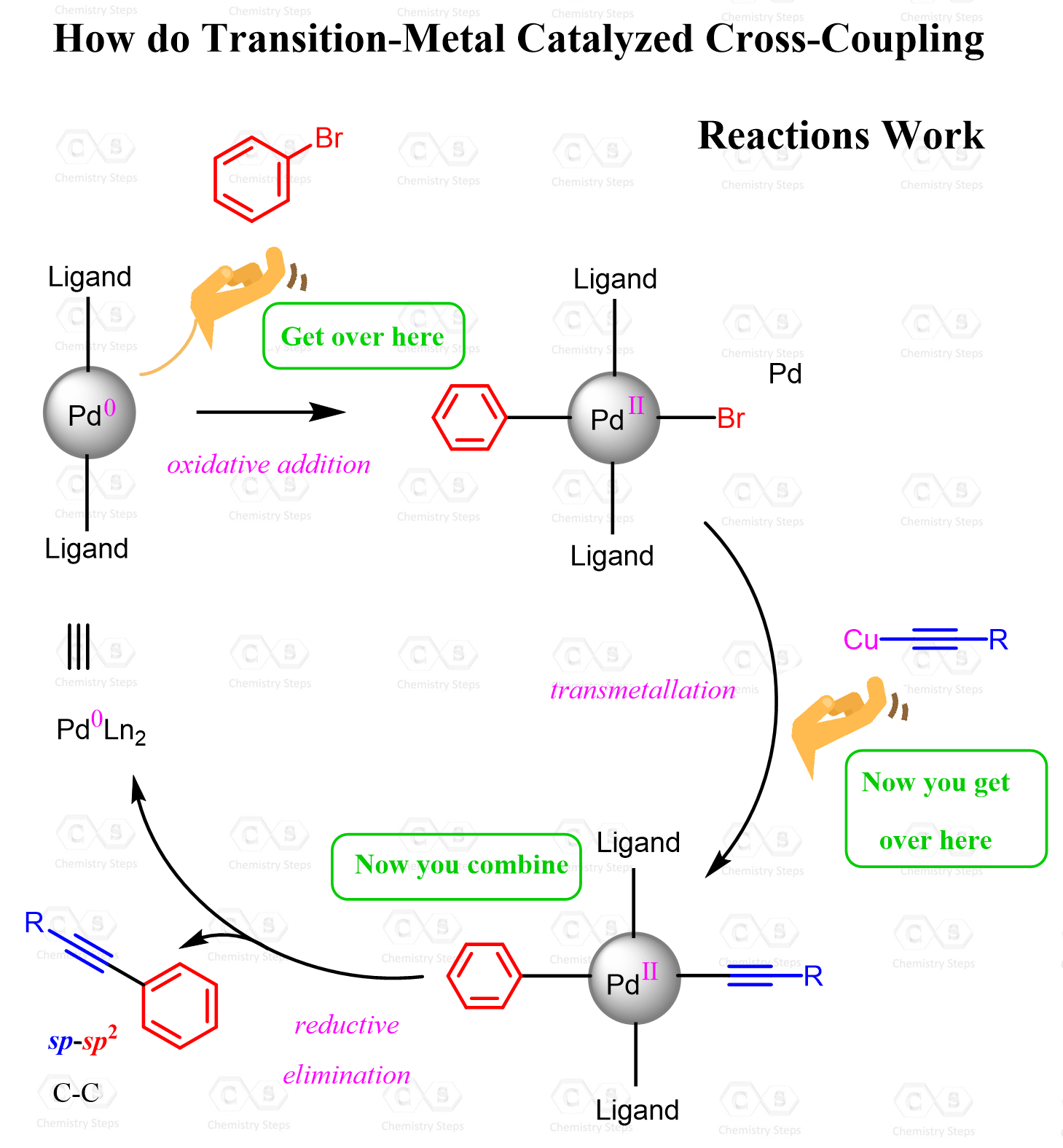
We have shown the mechanism of the Sonogashira reaction in the catalytic cycle, which is a catalytic cycle is a common way of representing the mechanism of catalytic reactions, especially transition metal-catalyzed reactions. Instead of showing the reaction as a straight sequence of steps, we arrange the intermediates in a circular fashion to emphasize that the catalyst is regenerated at the end of the reaction and can participate in another cycle.
The History and Applications of Sonogashira Reactions
At this point, it is worth mentioning that Sonogashira coupling is a variation of the Castro–Stephens coupling, which achieves the same type of coupling without the use of Pd catalysts:
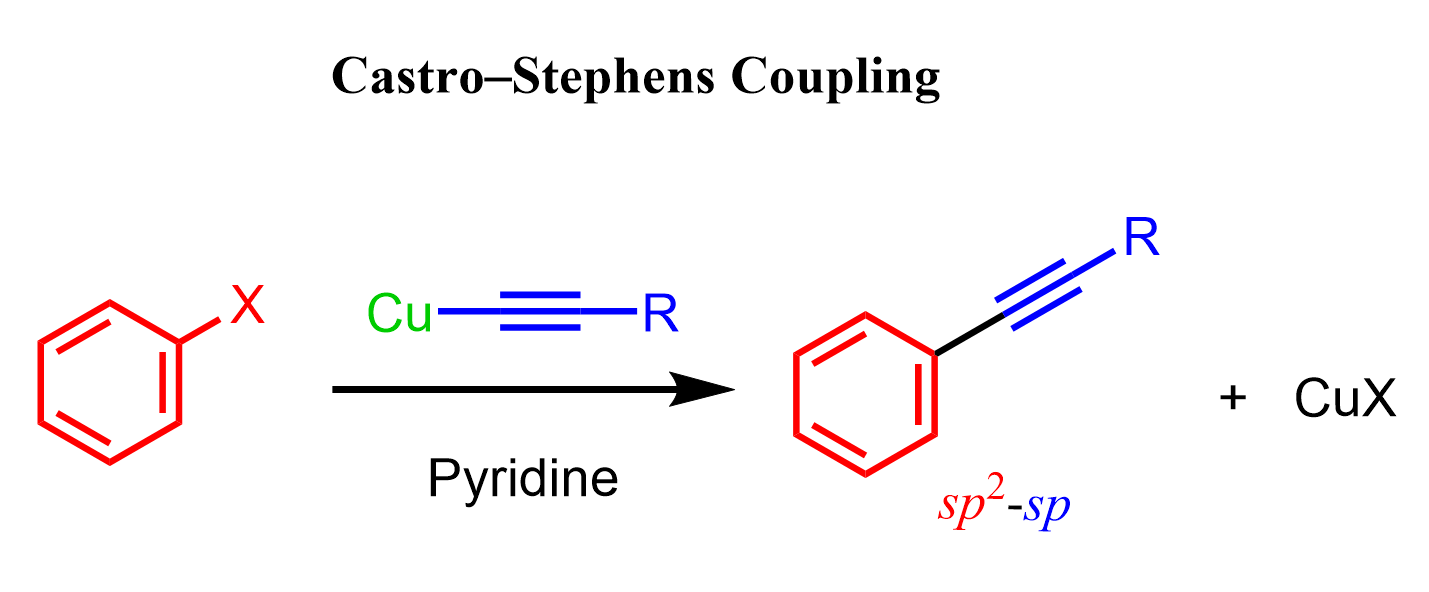
To answer the question you may be wondering, what are the advantages of the Sonogashira reaction compared to the Castro–Stephens coupling? It is the much milder conditions of the reaction.
The Castro–Stephens coupling, discovered in 1963 by Charles E. Castro and Stephen G. Stephens, typically requires pyridine under reflux conditions, whereas the Sonogashira coupling, developed in 1975 by Kenkichi Sonogashira, Nobue Tohda, and Yasuo Hagihara, can most often be achieved under much milder conditions, including room temperature.
The milder conditions allow a great tolerance of functional groups in the Sonogashira coupling, and it is used for functionalizing a variety of compounds, including nucleic acids, pharmaceuticals, natural products, and materials used in organic electronics.
References
- The Sonogashira Reaction: A Booming Methodology in Synthetic Organic Chemistry, Chem. Rev. 2007, 107, 874-922
- László Kürti and Barbara Czakó, Strategic Applications of Named Reactions in Organic Synthesis, 2005
Check Also
- Pd-Catalyzed Cross-Coupling Reactions
- Heck Reaction
- Suzuki Reaction
- Negishi Reaction
- Stille Coupling
- Alkene Metathesis