
Before we go into the details of the structure and stability of allylic carbocations, let’s first define what the allylic position is and compare it with the vinylic, benzylic, and phenyl positions.
The allylic position is the carbon atom adjacent to a C=C double bond. In contrast, the vinylic position refers to a carbon atom that is directly part of the C=C double bond. Similarly, we have the benzylic and phenyl positions, where the former is the carbon adjacent to a benzene ring, while the latter is a carbon that is directly part of the aromatic ring:
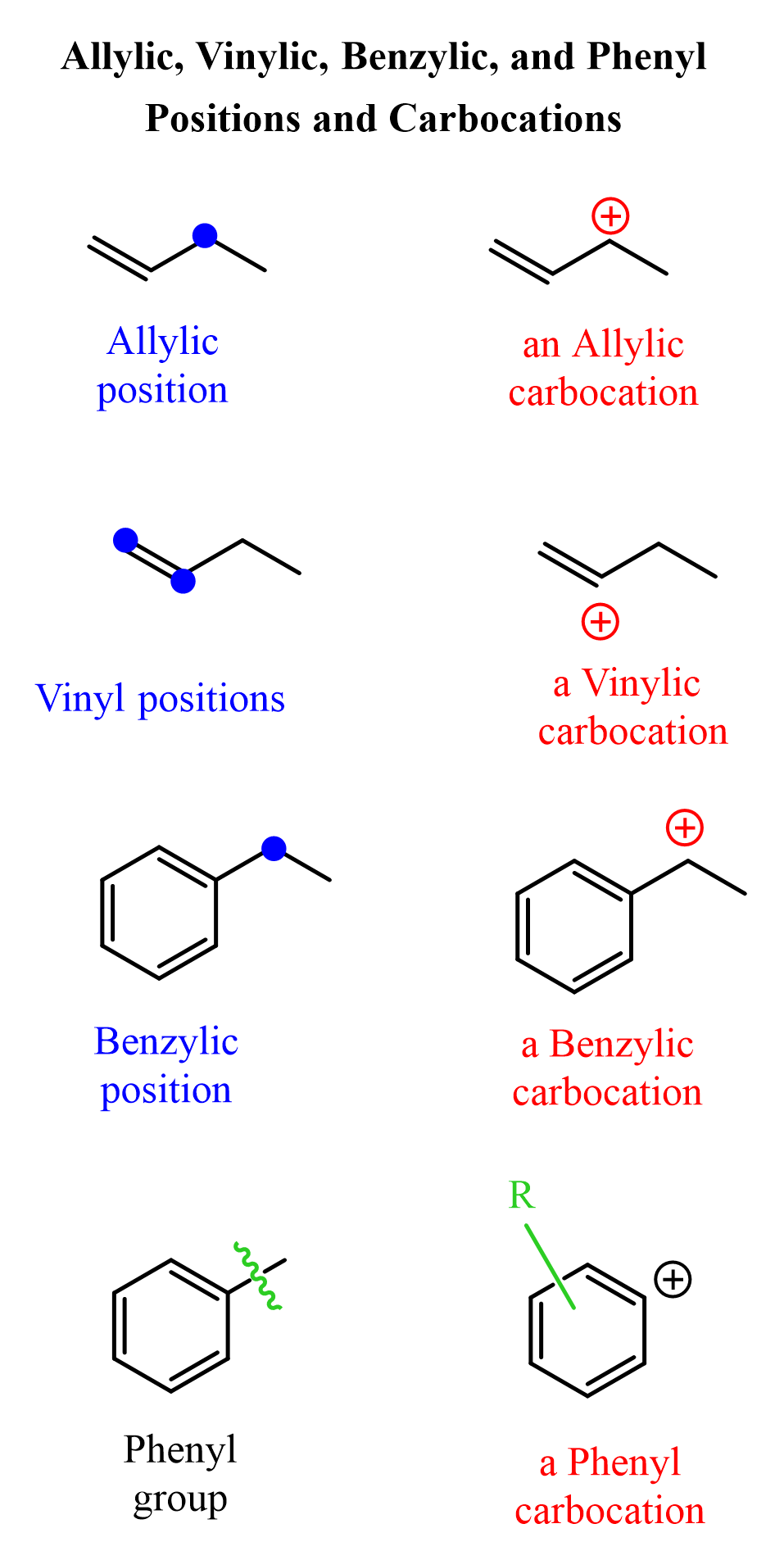
This set of structures provides a great comparison for understanding the unique features and relative stabilities of their corresponding carbocations.
At this point in your organic chemistry course, you have probably noticed that the answer to half of the questions your instructor asks is resonance.
The good news is that, when discussing the stability of allylic, vinylic, benzylic, and phenyl carbocations, we will once again rely on resonance stabilization – or the lack thereof to explain their relative stabilities.
Allylic carbocations are much more stable than vinylic carbocations because they are resonance-stabilized:
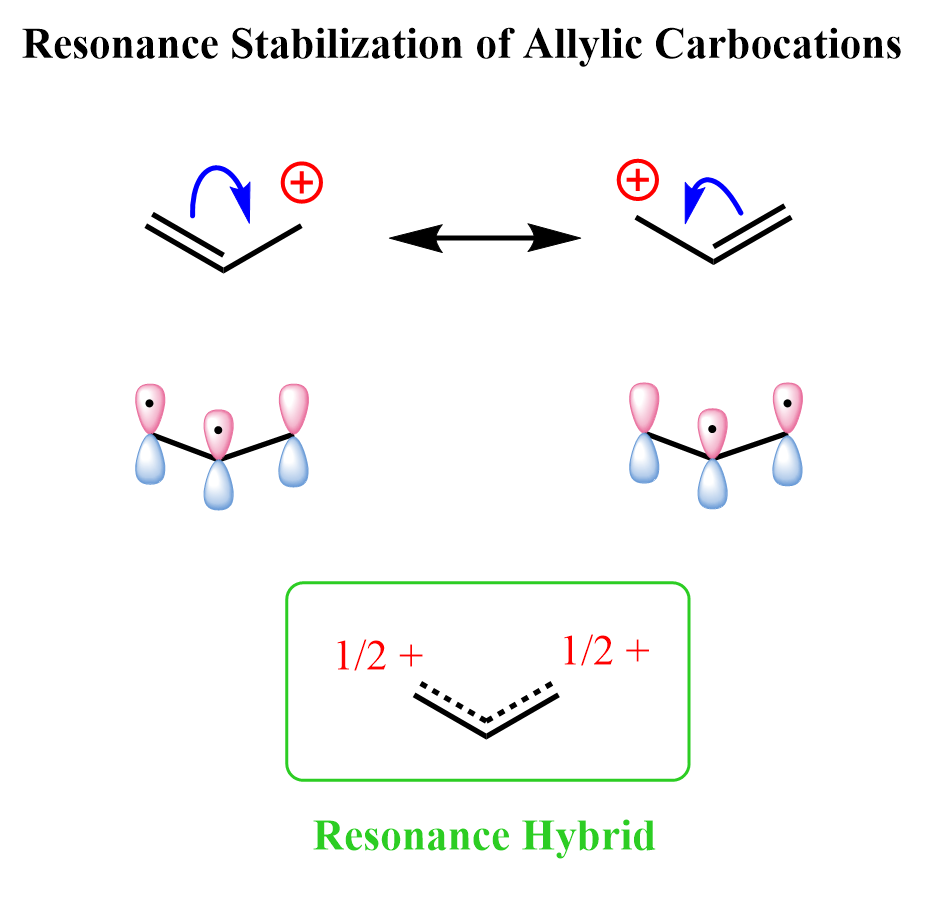
So why are allylic carbocations resonance stabilized, but vinylic carbocations are not?
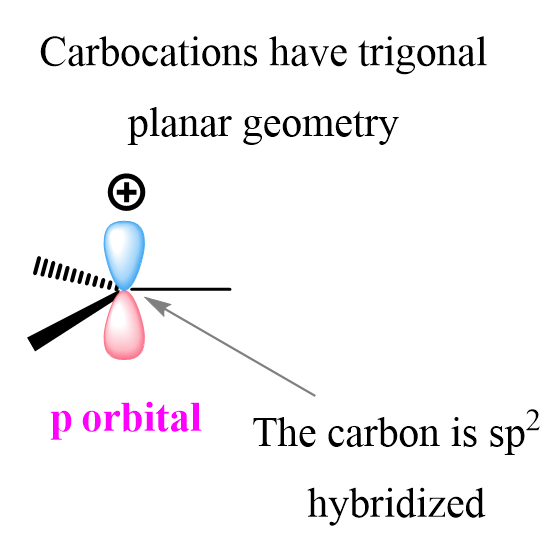
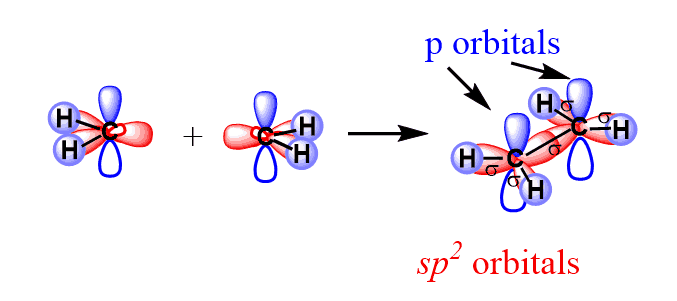
Recall from hybridization theory that carbocations are sp2-hybridized and possess a vacant p orbital:
In an allylic carbocation, this empty p orbital is aligned with the π system of the adjacent double bond, allowing the positive charge to be delocalized over three carbon atoms through resonance:
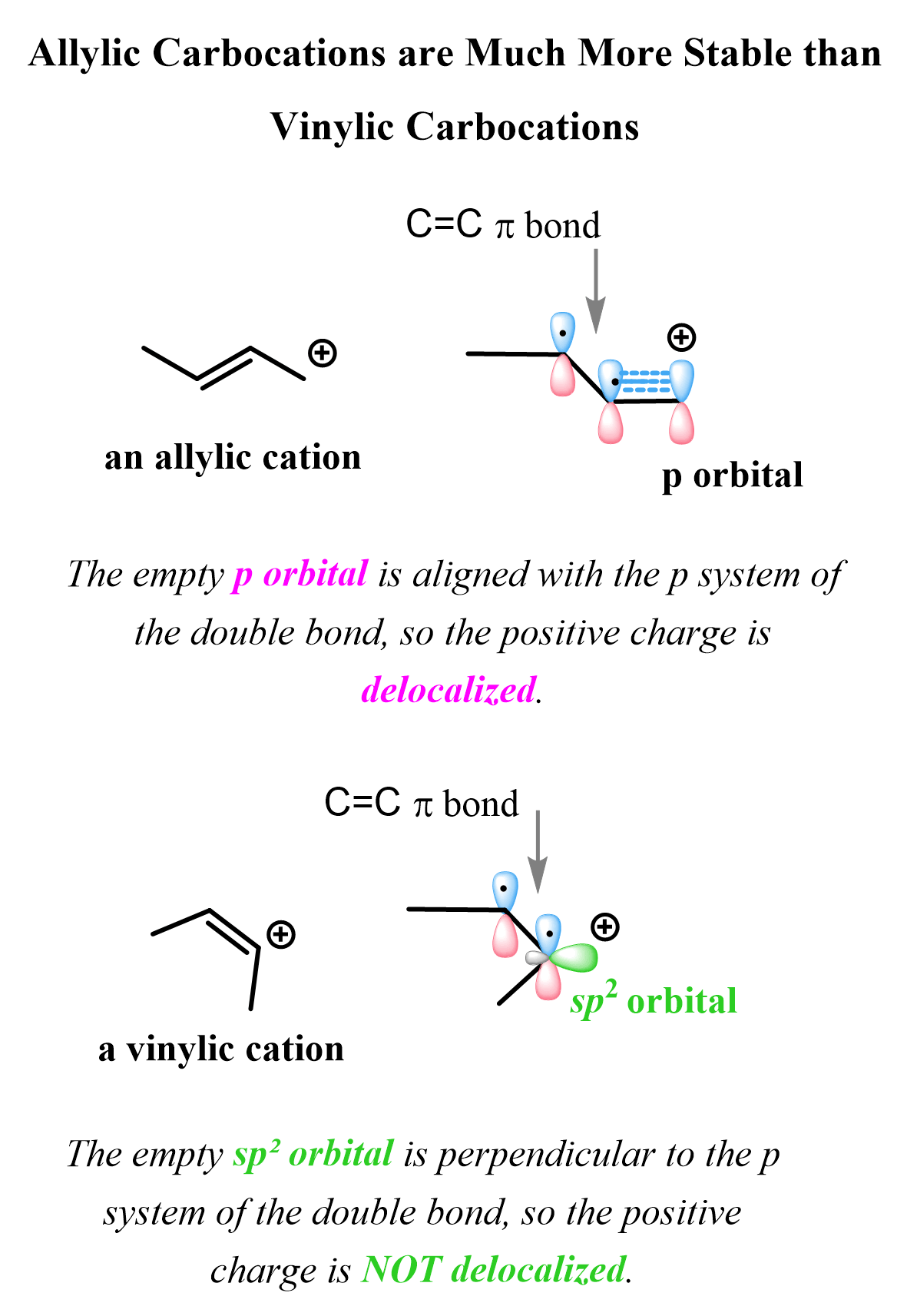
Once again, effective resonance requires a continuous overlap of parallel p orbitals. Therefore, the situation is very different for vinylic carbocations. Regardless of which carbon of the double bond bears the positive charge, the positively charged carbon is part of the C=C bond and is therefore sp2-hybridized. Here, it is important to recall that the sp2 hybrid orbitals form the σ bonds, while the unhybridized p orbitals overlap side-by-side to form the π bond. Because the vacant p orbital required for resonance is already being used to form the π bond, there is no adjacent, properly aligned p orbital available for delocalization of the positive charge:
For the same reason, benzylic carbocations are incomparably more stable than phenyl carbocations. The positive charge in a benzylic carbocation is delocalized into the aromatic ring because the vacant p orbital on the benzylic carbon is aligned parallel to the π system of the benzene ring, allowing resonance stabilization:
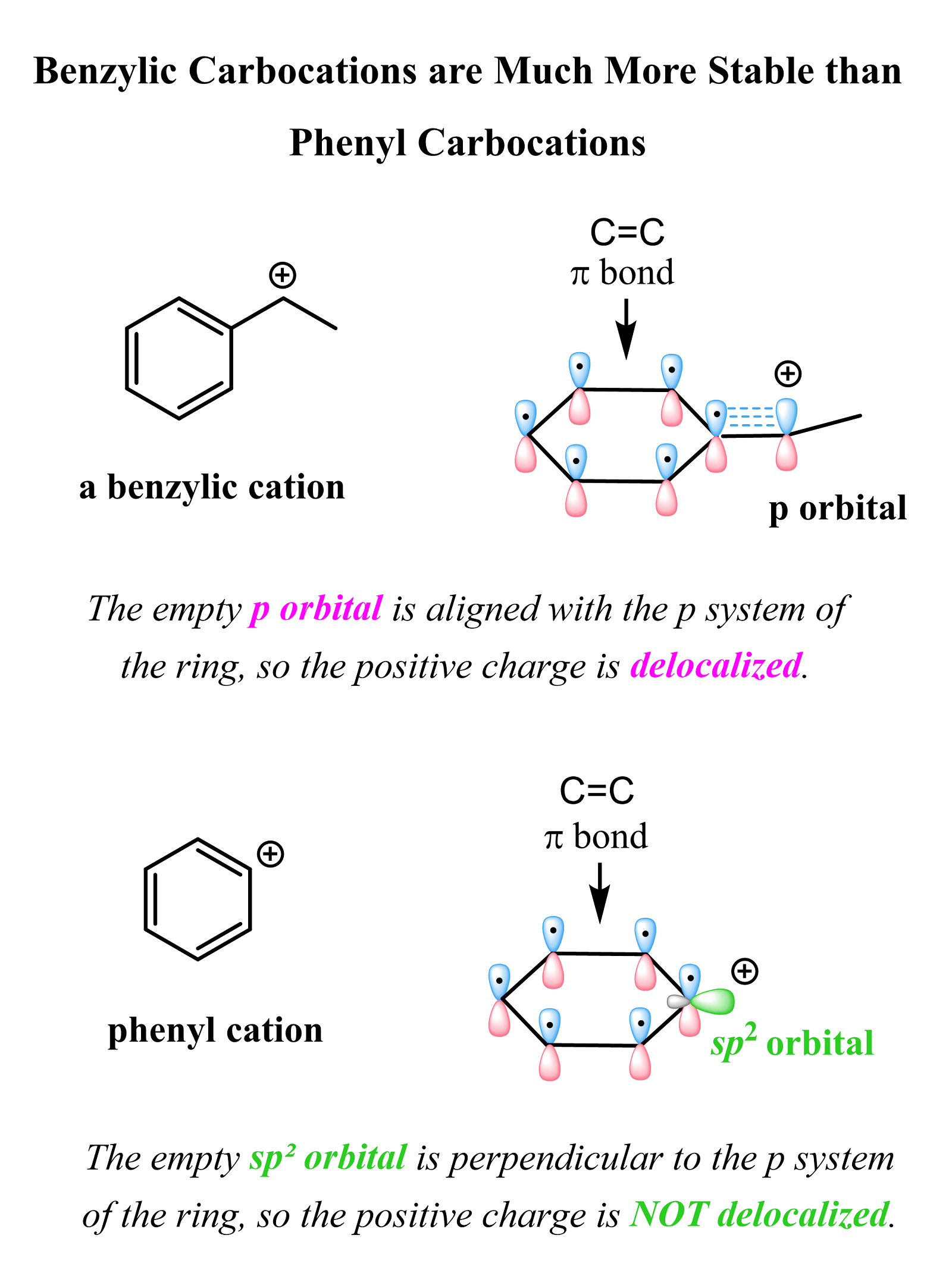
In a phenyl carbocation, however, the positively charged carbon is part of the aromatic ring itself. The positive charge is associated with an empty sp2 hybrid orbital, which is oriented at 90° to the p orbitals that make up the aromatic π system. Because these orbitals cannot overlap, the positive charge cannot be delocalized by resonance, making phenyl carbocations extremely unstable.
The Stability of Allylic Carbocations and the Degree of Substitution
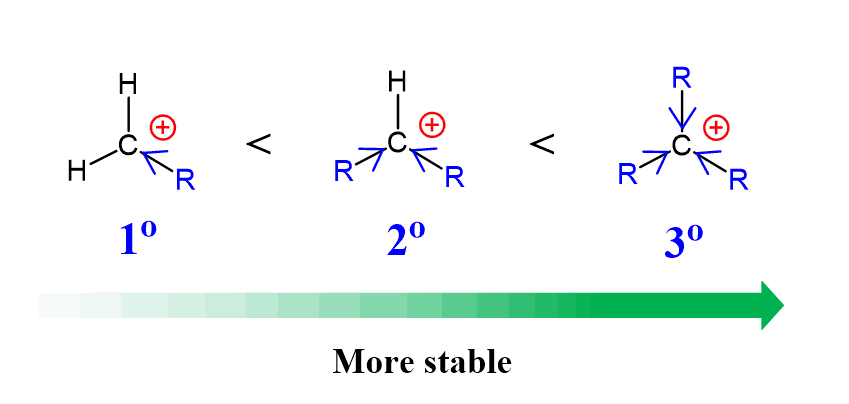
We know that carbocations become more stable as the number of alkyl groups attached to the positively charged carbon increases. This is because alkyl groups are electron-donating and help compensate for the electron deficiency of the positively charged carbon. This is why the stability of carbocations increases with the number of alkyl groups:
Aside from the inductive effect, alkyl groups stabilize carbocations via hyperconjugation, which is the delocalization of electrons from an adjacent C-H or C-C σ bond into the empty p orbital of the positively charged carbon. This electron donation helps disperse the positive charge, making the carbocation more stable:

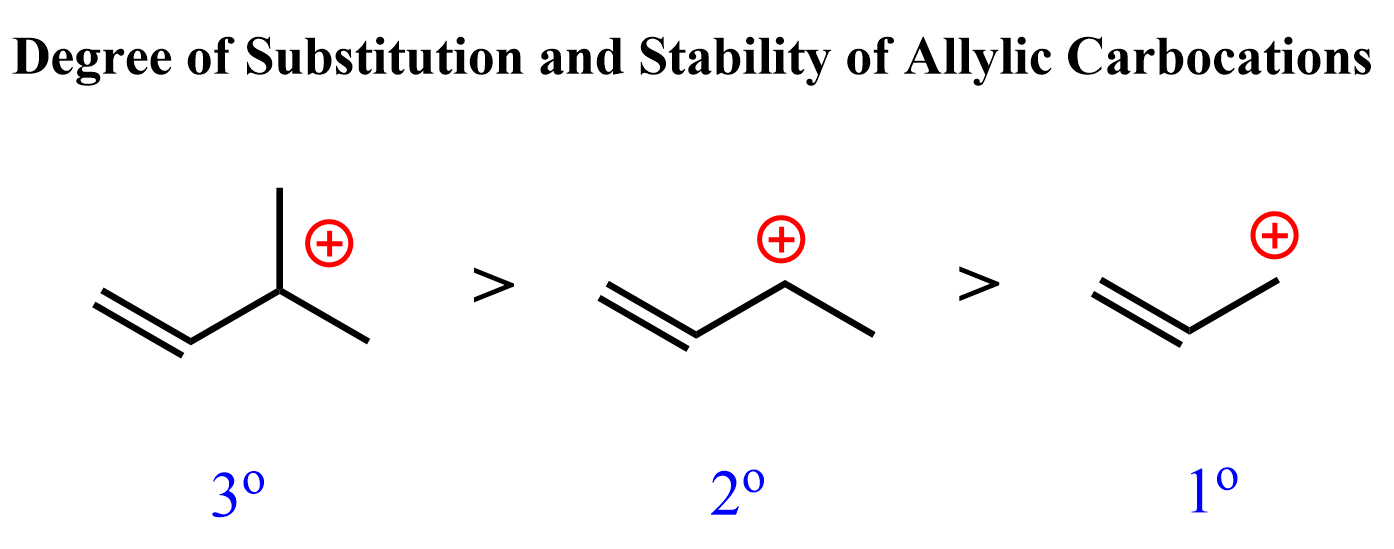
This stability trend applies to allylic carbocations as well: more substituted allylic carbocations are more stable than less substituted allylic carbocations, since they benefit from both resonance stabilization and the electron-donating effect of alkyl substituents:
The main factor stabilizing allylic carbocations is the resonance delocalization of the positive charge. Therefore, the presence of groups that allow the charge to be delocalized over an even larger π-system further increases the stability of allylic carbocations. These groups can include an additional double bond, multiple double bonds, a phenyl group, and other conjugated π-systems:
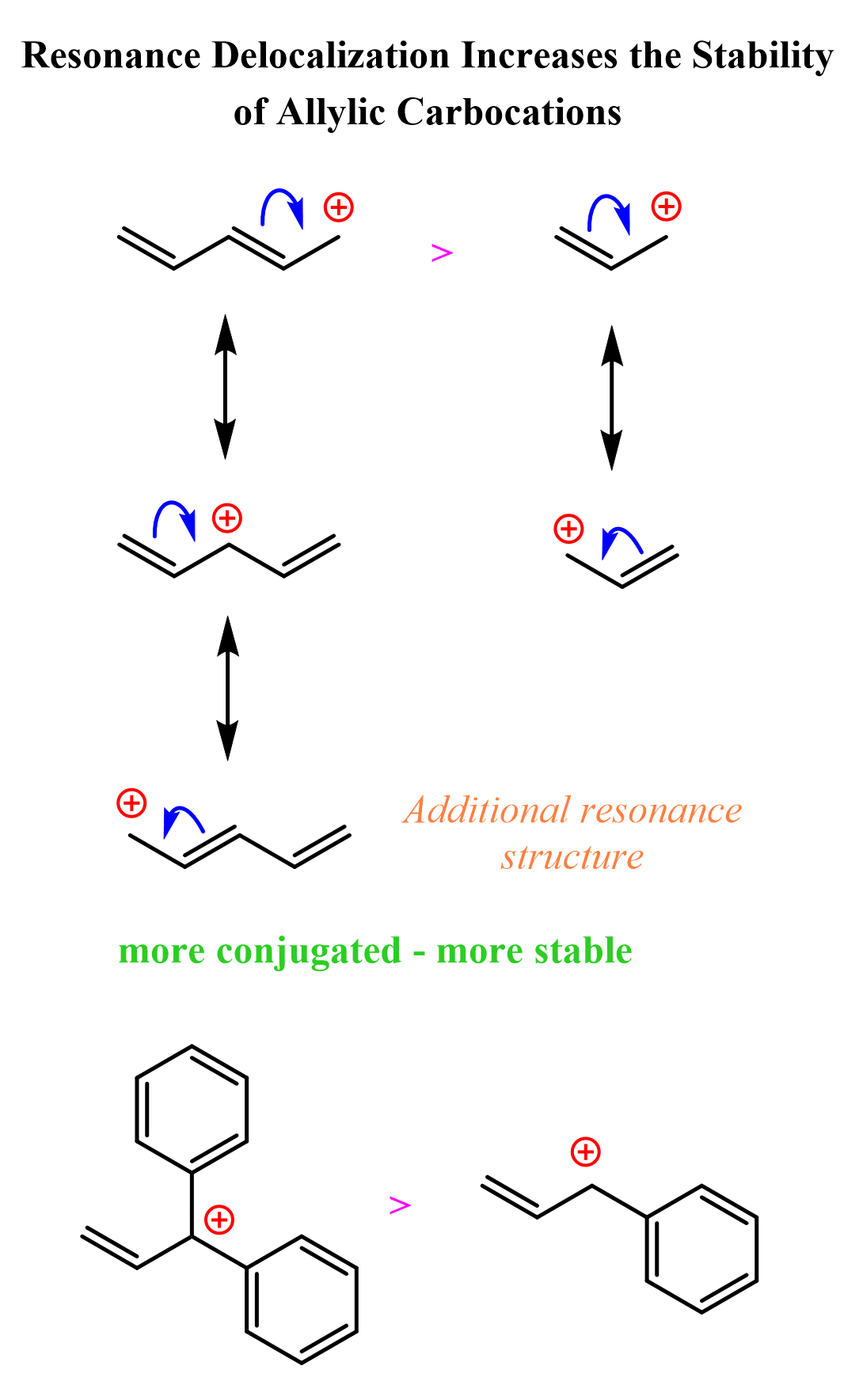
Perhaps an even greater stabilizing effect is provided by heteroatom-containing groups such as oxygen or nitrogen, which can donate a lone pair of electrons to the carbocation, completing the octet of the positively charged carbon atom through resonance:
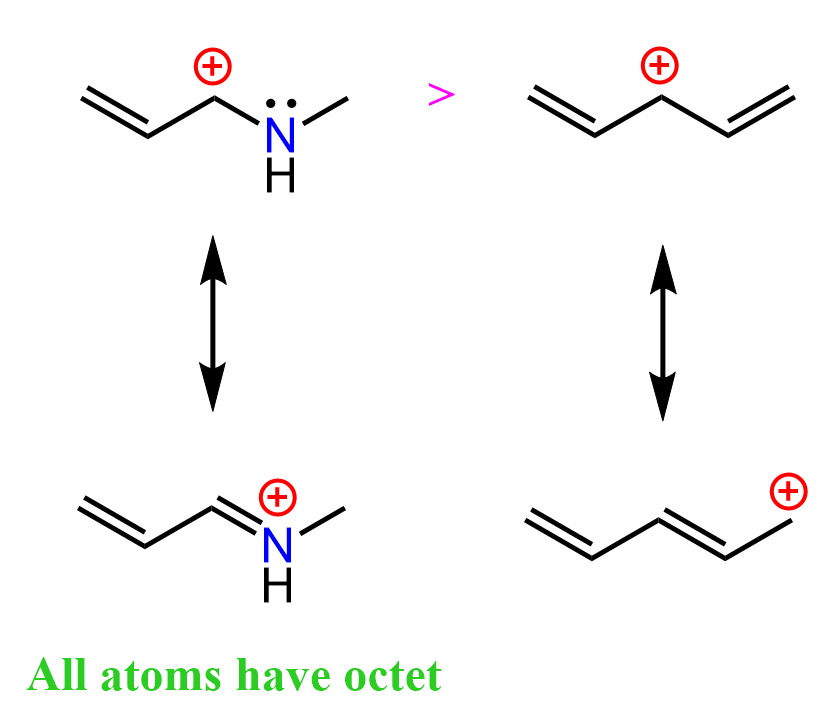
You may be wondering why the resonance form with a positive charge on the nitrogen is more stable. To understand this, recall the factors that determine the stability of resonance structures. One of the most important is the octet rule, which has a higher priority than placing the positive charge on the less electronegative atom. Thus, the resonance structure in which all atoms have complete octets is the major contributor, even though it places the positive charge on nitrogen.
Allylic Carbocations in the Rank of Stability
The next question is how does the stability of a regular alkyl carbocation compare with that of an allylic carbocation?
We know that primary alkyl carbocations are the least stable after the methyl carbocation, and it is even argued that they do not exist, so there is not much to compare their stability with allylic carbocations.
Secondary and tertiary alkyl carbocations are comparable to allylic carbocations, but we need to understand that allylic carbocations can also be primary, secondary, or tertiary, as we have seen earlier.
So, relative stabilities depend on the specific structure of the carbocation, including the degree of substitution and the extent of resonance stabilization.
For example, this is how allylic carbocations are ranked in the carbocation stability chart presented in McMurry’s Organic Chemistry:
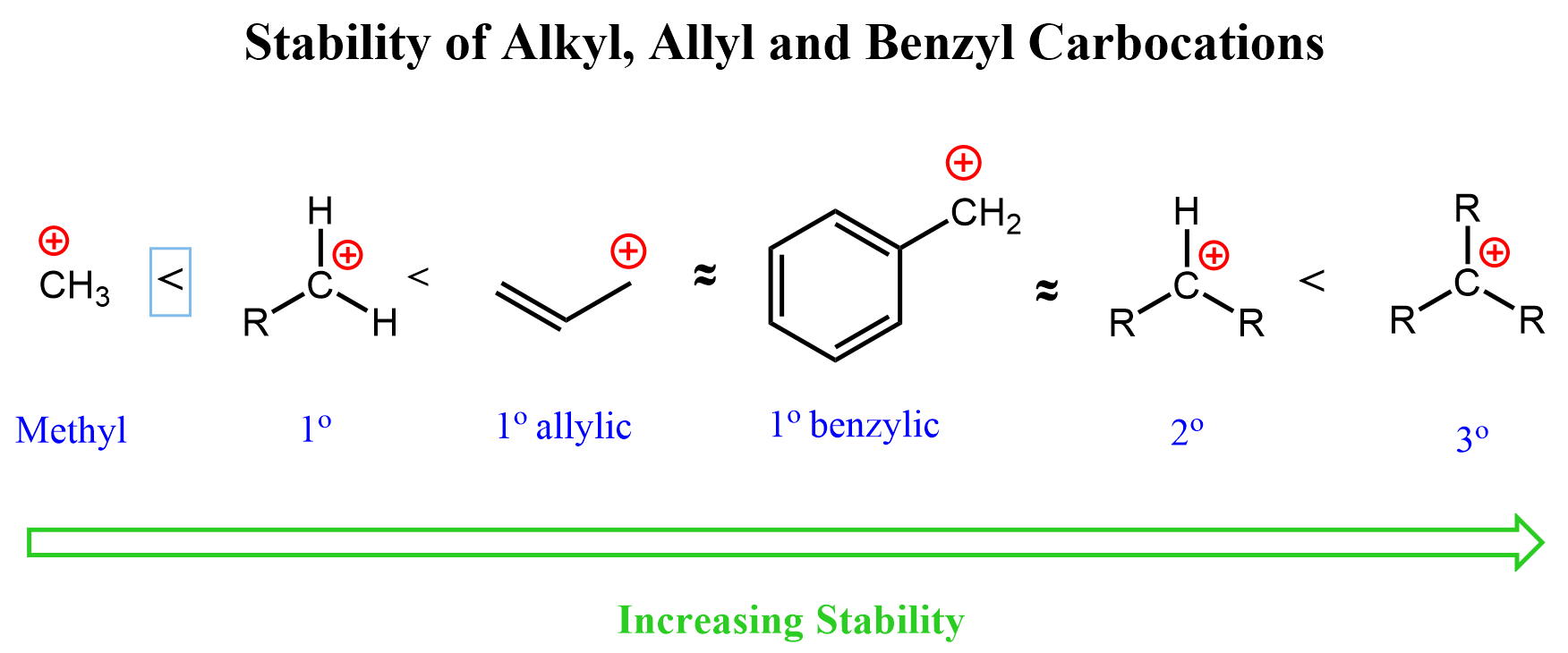
However, any allylic carbocation with the same degree of substitution is more stable than the corresponding alkyl carbocation.
- A secondary allylic carbocation is generally more stable than a regular secondary carbocation because it is resonance-stabilized.
- A tertiary allylic carbocation is significantly more stable than a regular tertiary carbocation because it benefits from both resonance stabilization and hyperconjugation.
A simple primary allylic carbocation and a secondary alkyl carbocation are often considered to have comparable stabilities. Different sources may rank one above the other because the energy difference is small and depends on the specific molecular framework.
The Reactivity of Allylic and Benzylic Positions
In the next post, we will also discuss how allylic carbocation intermediates affect the addition reactions of conjugated dienes:

Later in this or in the next semester, you will also discuss reactions involving benzylic positions, which, similar to allylic carbocations, are highly reactive because the positive charge can be stabilized through resonance delocalization. This resonance stabilization makes benzylic carbocations more stable and allows reactions that proceed through these intermediates to occur more readily:

The formation of the benzylic carbocation above occurs via the loss of a leaving group. Once again, allylic and benzylic carbocations readily undergo unimolecular reactions such as SN1 and E1 because of the stability of the carbocation intermediates.


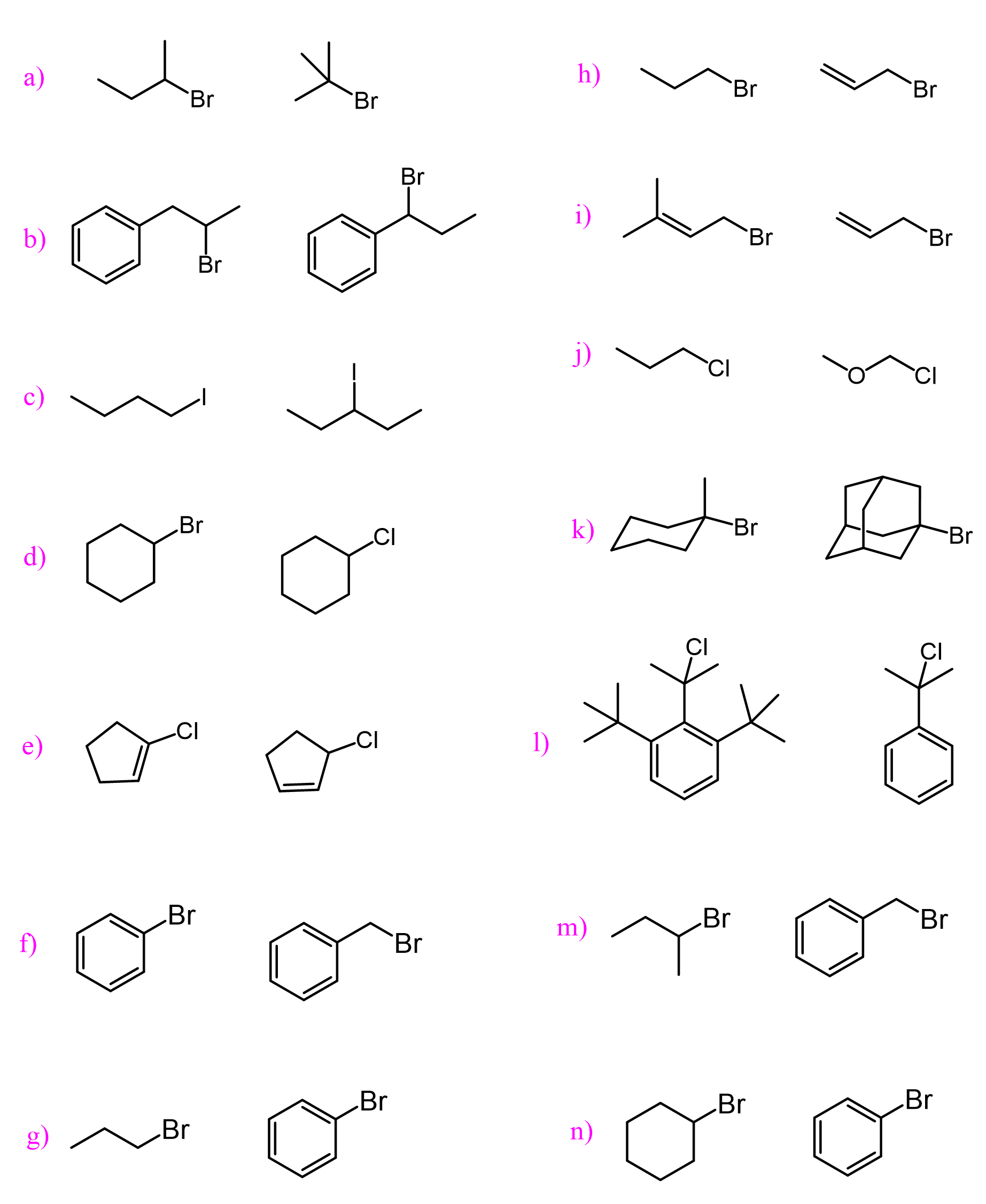

Can you provide detailed explanation
Isn´t the Allylic Carbocation more stable than the methyl-cyclohexane (f) because of the resonance stabilisation? And why is compound a more stable than d?
You are right, but you might be looking in the wrong direction – the ones on the right are more stable.
Could you please explain why … is more stable than b).
Thanks for your quick response
One argument is that although it is allylic, the charge is still delocalized over primary carbon atoms. Allylic itself does not mean it is more stable than any other carbocation. I mean you don’t need to memorize how stability of each combination of allylic copares to any secondary or tertiary carbocation. Focus rather on the general patterns unless you are asked to expicitly knwo their stabilty. There are some practice problems you can also work on here: https://www.chemistrysteps.com/stability-of-carbocations/