
Cross-coupling reactions are carbon-carbon bond-forming reactions that join two organic molecules together. These reactions are catalyzed by transition metals such as palladium, nickel, copper, and iron, which is why they are also called transition metal-catalyzed cross-coupling reactions.
Here are some examples of the most common cross-coupling reactions you may see in your undergraduate organic chemistry course:
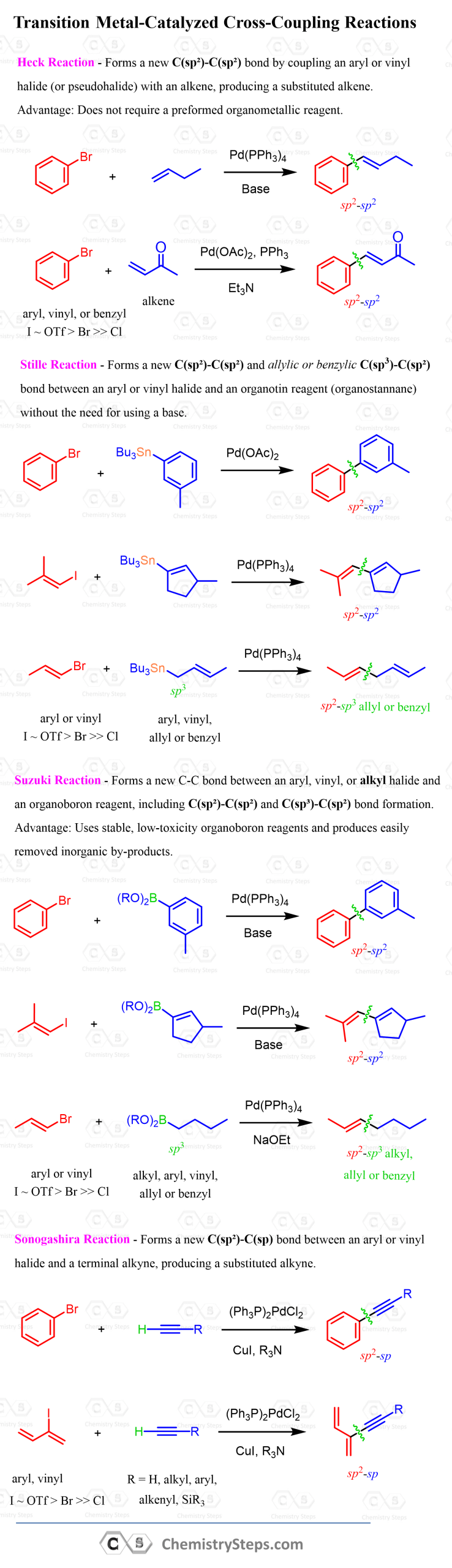
What we notice is that in most of them, we have the formation of C-C bonds between sp and sp2-hybridized carbons. Recall that in all the reactions we covered earlier, such as substitution reactions, they were mainly between sp3-hybridized carbon atoms. The ones that involve sp2 carbon atoms, such as the Grignard reaction, are mostly the addition reactions to the carbonyl group. In any case, it was due to the nucleophilic and electrophilic nature of the reactants – that is, the nature of classic organic reactions:

Now, all of this is, of course, classical organic chemistry and is essential for understanding traditional organic synthesis. However, beginning in the 1970s and rapidly expanding throughout the 1980s, a new class of reactions emerged that changed the way chemists think about forming carbon-carbon bonds. These reactions allow us to connect sp²-hybridized carbons directly, bypassing many of the limitations of classical chemistry. We no longer have to worry about things like “there is no SN2 on sp² carbons,” “bulky substrates favor elimination over substitution,” or “multiple steps are required to construct C=C-containing frameworks.” Instead, transition metal catalysts make these challenging bond formations possible in a single, highly selective reaction.
What are Transition-Metal Catalysts?
So, let’s dedicate this post to understanding the big picture of Transition-Metal Catalyzed Reactions cross-coupling reactions.
For these catalysts, we also use the term Organometallic compounds – these are compounds containing a bond between a carbon atom and a metal (C-M). Among them, we have some that you are already familiar with, such as Grignard reagents, organolithium compounds, and organocuprates.
We also have some of the newer, game-changing reagents and catalysts, most notably those based on palladium.
The ones shown below are bis(triphenylphosphine)palladium(II) chloride (more systematically, dichlorobis(triphenylphosphine)palladium(II)) and palladium acetate (Pd(OAc)2).
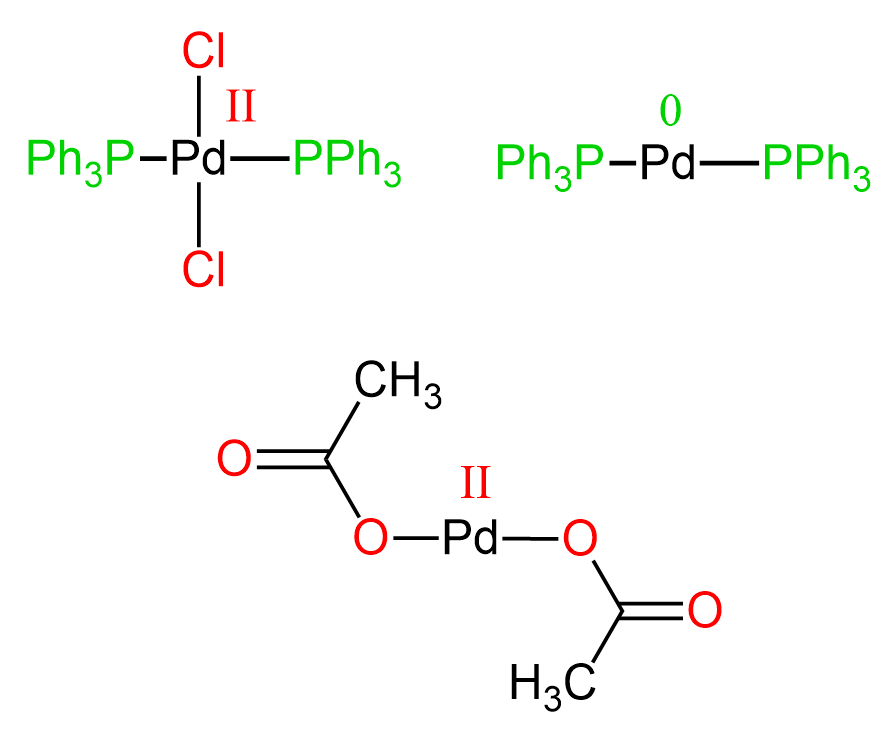
These are some of the most commonly used palladium catalysts used in many cross-coupling reactions, such as the Suzuki reaction, Heck reaction, and Sonogashira reaction.
The groups connected to the metal center are called ligands, which can be atoms, ions, or molecules that donate a pair of electrons to the metal and form a coordinate covalent bond. In PdCl₂(PPh₃)₂, the two chloride ions and the two triphenylphosphine molecules are all ligands attached to the palladium atom. Palladium is in the +2 oxidation state, giving the complex the general name palladium(II).
How do Transition-Metal Catalyzed Reactions Work?
In essence, the transition metal acts like the big boss, bringing all the reagents together, activating them on its surface, and directing which partners react with each other to form the new C-C bond:
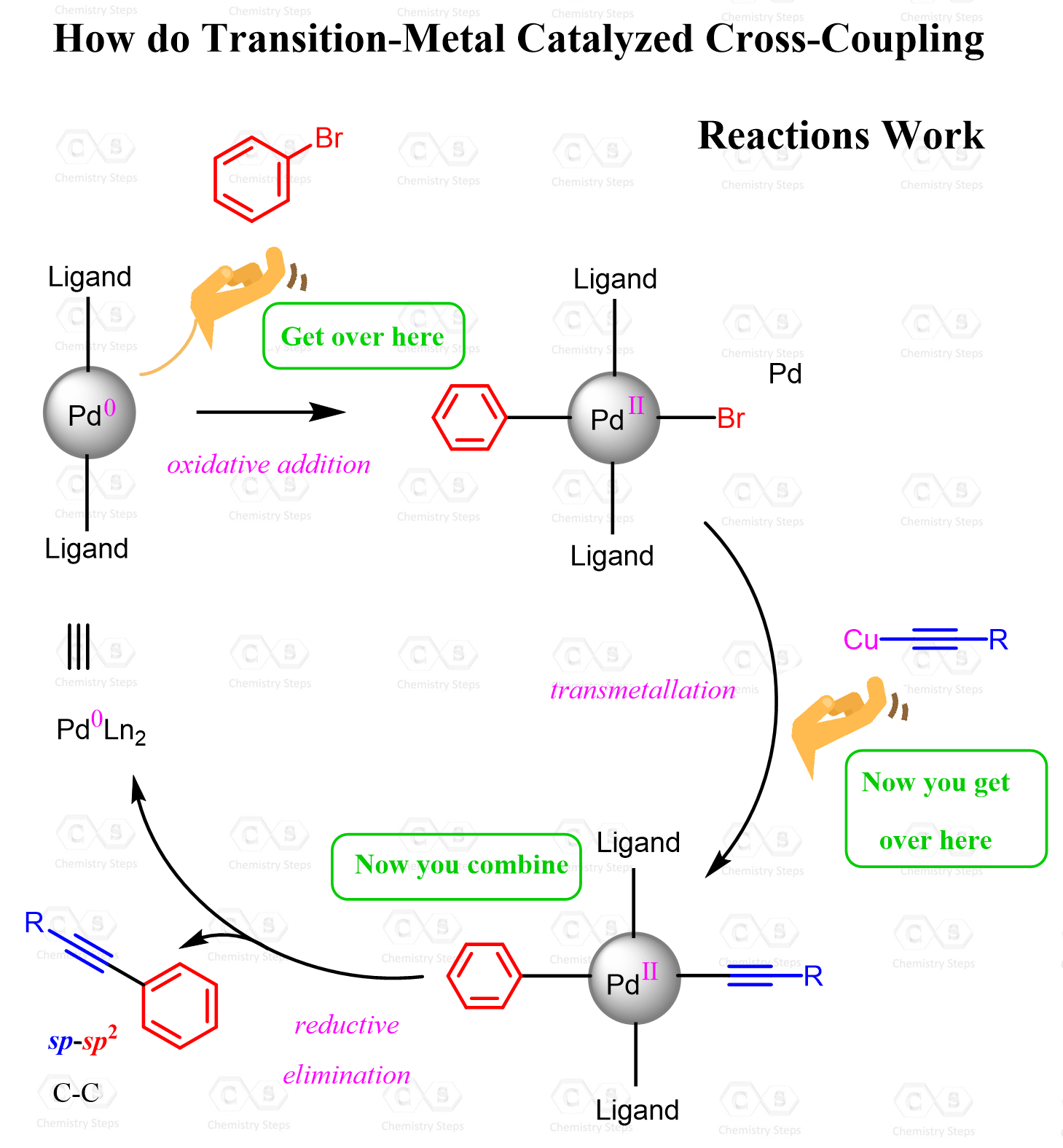
This, of course, is an oversimplification, but in the grand scheme of things, this is the basic principle behind transition metal-catalyzed cross-coupling reactions. The reaction shown above illustrates the main reactants and the product of the Sonogashira coupling, which forms a new carbon-carbon bond between an aryl or vinyl halide and a terminal alkyne. So, it makes a C (sp2) – C(sp) bond in one step, which, on a normal day, would take us quite a bit of thinking on how to achieve it.
Oxidative Addition, Transmetallation, and Reductive Elimination
Let’s now elaborate on the terminology mentioned in the schematic representation of the Sonogashira coupling reaction. I call it a schematic representation instead of a mechanism because, for a mechanism, you are probably expecting some sort of curved-arrow notation where we clearly see which electrons are moving and what bonds are forming and breaking. However, curved-arrow notation is often omitted for transition metal-catalyzed cross-coupling reactions because the bond formation and breaking with transition metals are not as straightforward as it is with the main-group elements.
There are steps that are not entirely clear as to whether they are radical or ionic, and so on. Recall catalytic hydrogenation – we do not normally show conventional curved arrows for those reactions either, but rather illustrate the key changes that occur during the reaction:
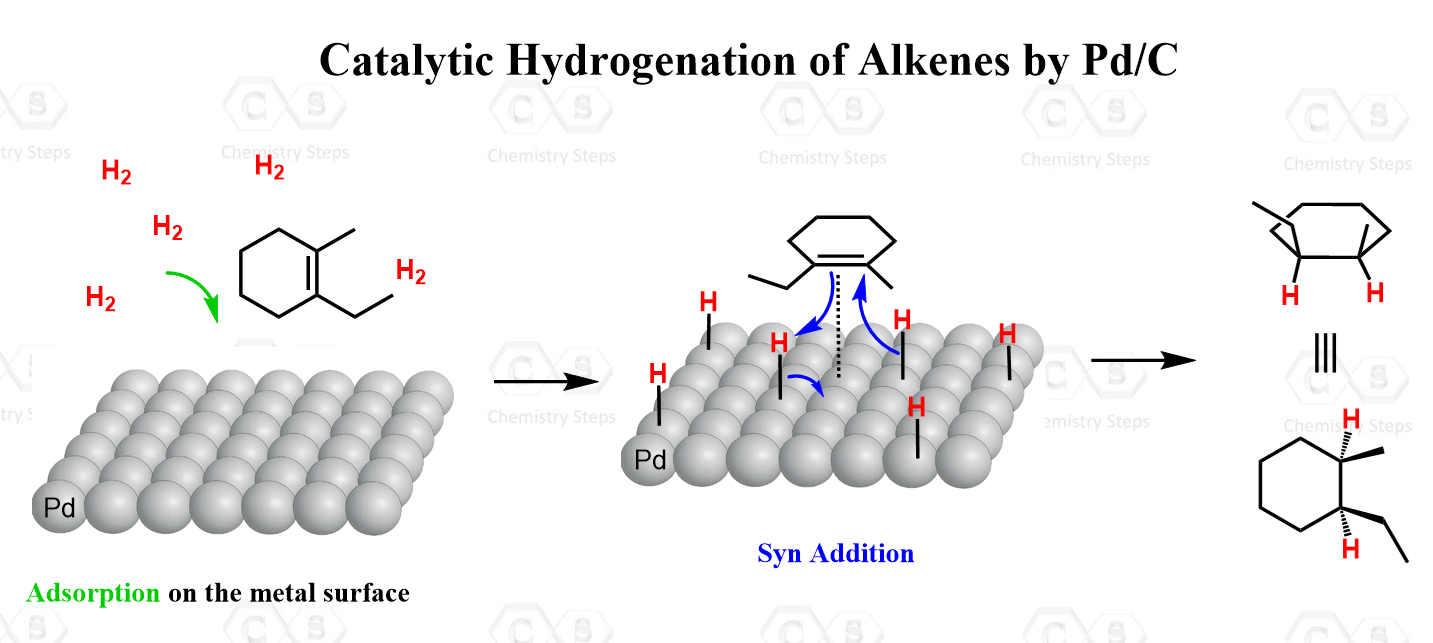
Obviously, another reason I did not call it a mechanism is because of the somewhat cartoonish representation of the events that take place during the reaction. But, once again, we are going to see that it is actually not too far from the accepted mechanistic representation.
The Mechanism of Transition Metal-Catalyzed Cross-Coupling Reactions
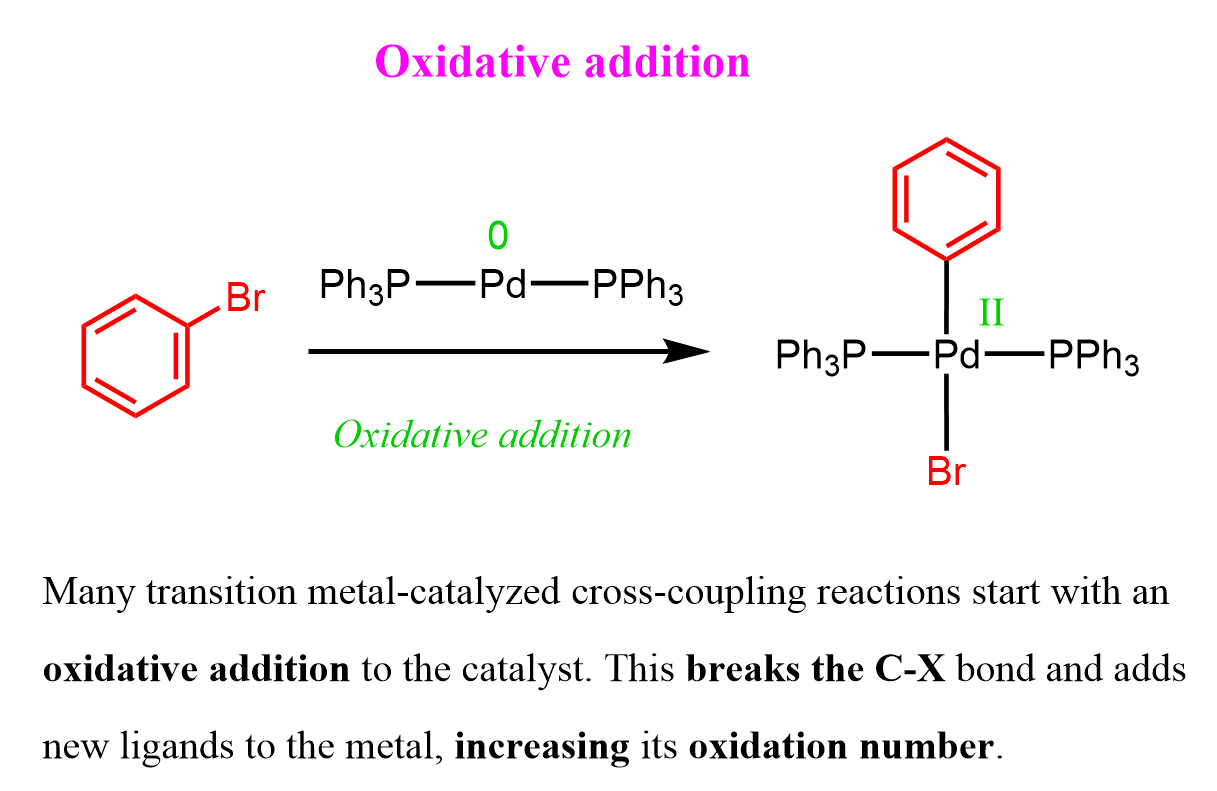
So, let’s start with the steps of the reaction. At the beginning, we have a Pd(0) catalyst with its two ligands (or a Pd(II) precatalyst that is reduced to Pd(0) under the reaction conditions). In the first step, the aryl halide adds to the metal by breaking the carbon-halogen bond. This step is called oxidative addition because it increases the oxidation state of the metal:
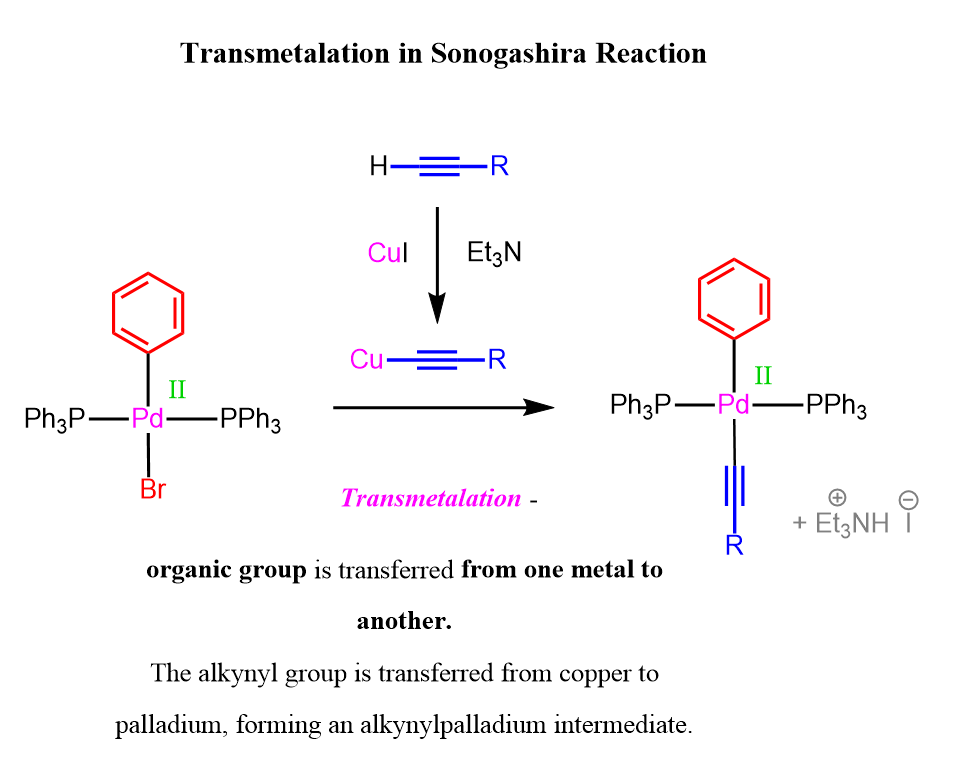
In the second step, the copper acetylide formed by the reaction between the terminal alkyne and the Cu(I) salt adds to the palladium catalyst, replacing the Br ligand. This step is called transmetallation because the two metals exchange their ligands. Palladium exchanges its Br ligand for the alkynyl ligand, while Cu gets the Br in return:
The last step of the reaction is called reductive elimination because the palladium eliminates the two carbon ligands, which combine to form the new C-C bond. In the Sonogashira reaction, it is the formation of the C(sp²)-C(sp) bond between an aryl or vinyl halide and a terminal alkyne:
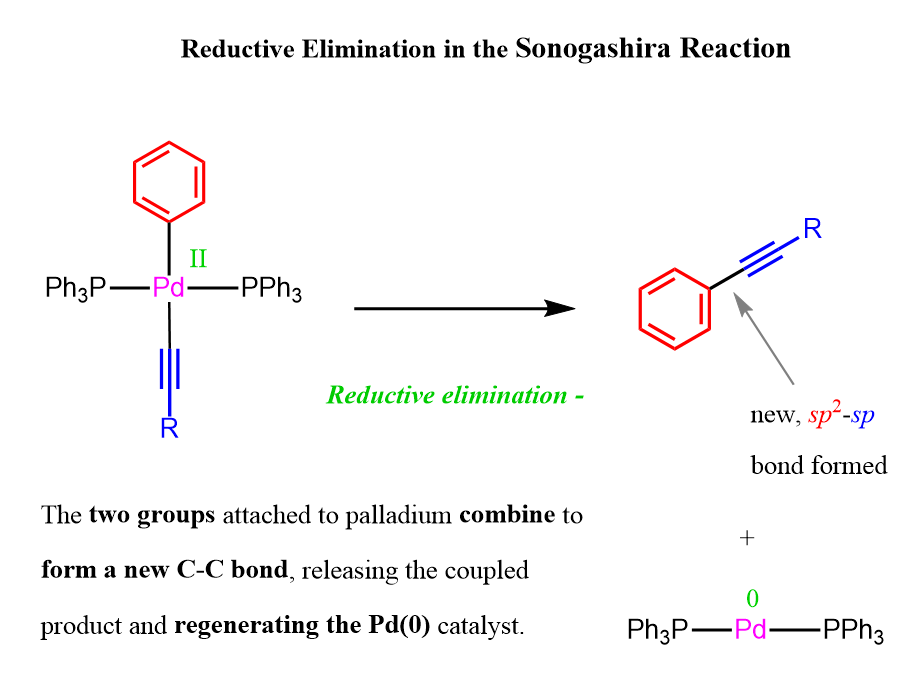
This step is called reductive elimination because, aside from the product formation, it also represents the reduction of palladium. The metal is reduced because, instead of four ligands, it now has only two. Notice that the catalyst underwent an oxidation and reduction and is regenerated and ready to facilitate another cross-coupling reaction. Recall that catalysts speed up reactions but are not consumed during the process.
The Oxidation States of Pd
I also wanted to add a little bit about the Pd(0) and Pd(II) notations. The numbers refer to the oxidation state of the palladium atom, and you may be wondering why palladium is zero when it is connected to two ligands such as PPh₃, but becomes II when chloride or carbon-based ligands are added, making it a total of four ligands.
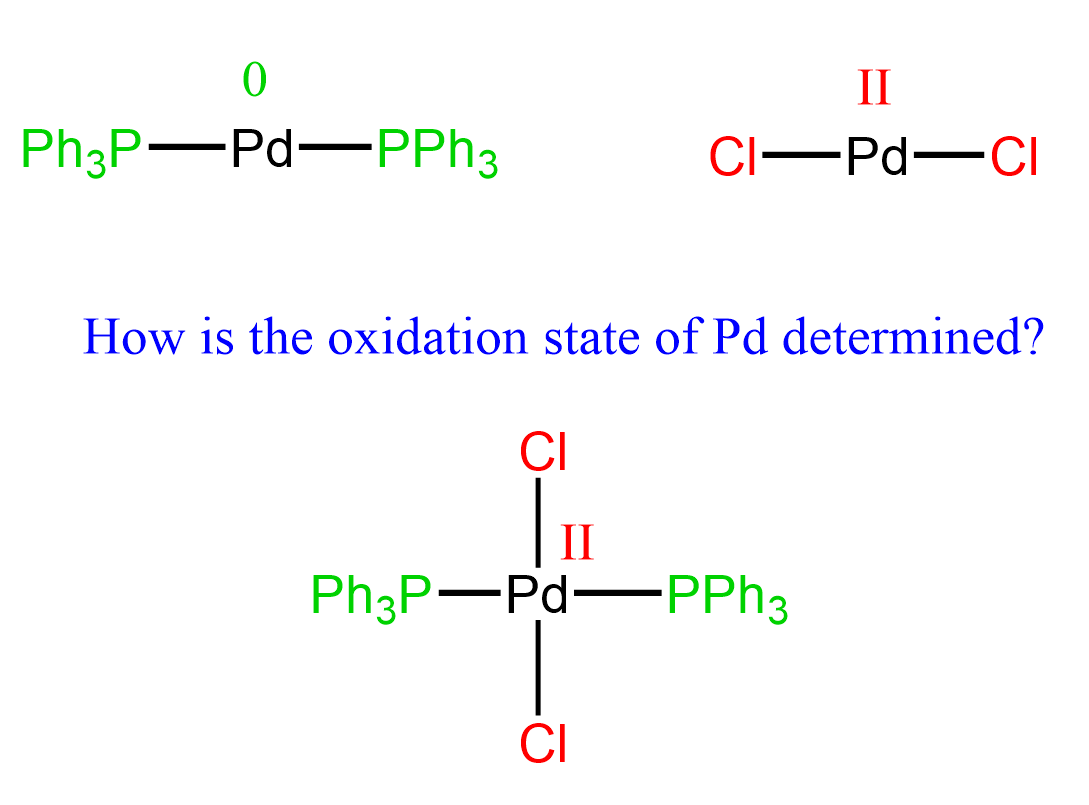
This can be a little confusing at first, but you need to know that there are neutral ligands and charged (anionic) ligands. The number of ligands alone does not determine the oxidation state of the metal; rather, it depends on the formal charge of those ligands.
For example, PPh₃ (triphenylphosphine) is a neutral ligand. Although it donates a lone pair of electrons to palladium, it does not carry a charge and therefore does not change the oxidation state of the metal. As a result, a complex such as Pd(PPh₃)₂ contains Pd(0).
The most common charged ligands are halides (Cl⁻, Br⁻, I⁻), acetate (OAc⁻), hydroxide (OH⁻), alkoxides (OR⁻), alkyl groups (R⁻), aryl groups (Ar⁻), alkynyl groups (C≡CR⁻), and hydride (H⁻).
On the other hand, ligands such as Cl⁻ (chloride), Br⁻ (bromide), and carbon-based ligands such as phenyl (Ph⁻), acetate, or alkynyl groups are anionic ligands. Because they carry a negative charge, they increase the formal oxidation state of palladium.
For example, in a complex such as PdCl₂(PPh₃)₂, the two chloride ligands contribute a total charge of -2, meaning palladium must have a +2 oxidation state to balance the overall neutral complex:
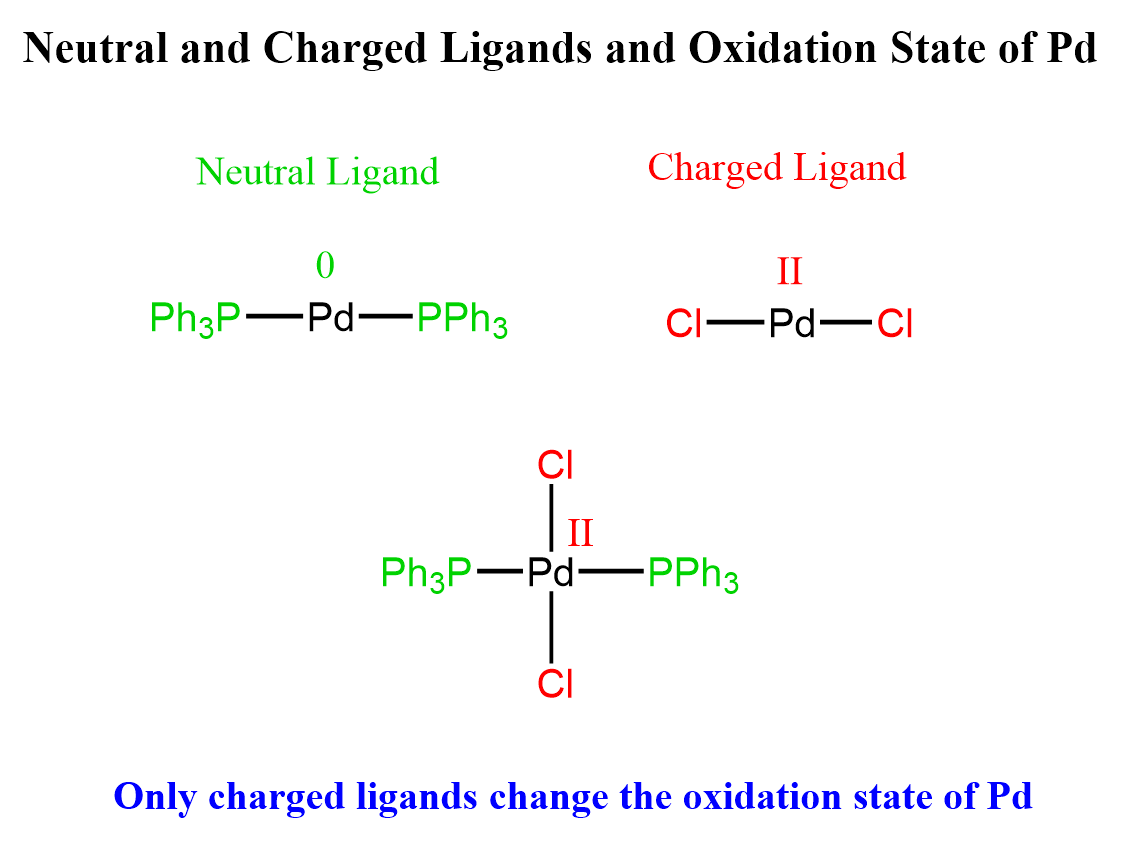
So, remember that neutral ligands can donate electrons to palladium without changing its oxidation state, whereas anionic ligands change the formal oxidation state of the metal.
The Heck Reaction: Formation of sp2 C-C Bonds
The example we discussed above is the Sonogashira reaction, which is used for the formation of a C(sp)-C(sp2) bond. So, let’s also discuss the Heck reaction as an example of a transition metal-catalyzed cross-coupling reaction where a C(sp2)-C(sp2) bond is formed:
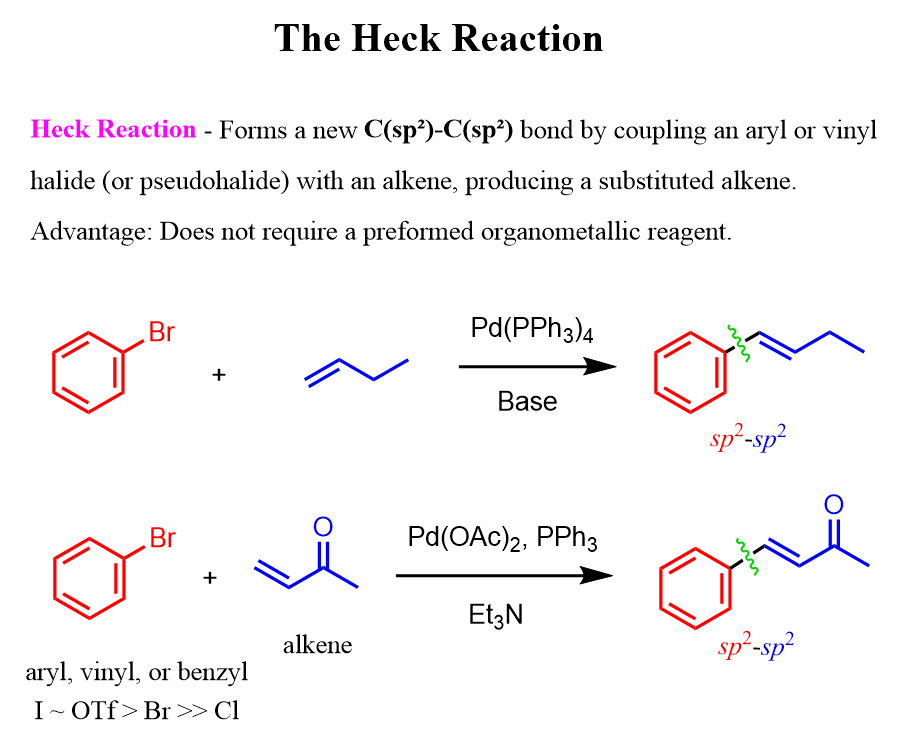
The key principle is the same: the transition metal acts as a gathering point for the two reactant species and undergoes a couple of transformations to join the two molecules together. One of the molecules in the Heck reaction is an aryl, vinyl, or benzyl halide such as an iodide, bromide, or chloride, or a pseudohalide such as a triflate, and the other is a simple alkene or an alkene with some electron-withdrawing groups conjugated with the double bond.
Notice that compared with all the others listed in this post, the Heck reaction has the advantage of working with simple, unfunctionalized alkenes, meaning that unlike other cross-coupling reactions, it does not require the preparation of an organometallic reagent such as an organoboron or organotin compound. So, let’s see how it works and what other differences it has compared with the Sonogashira reaction by looking at the mechanism of this coupling reaction.
The Mechanism of the Heck Reaction
In the first step, the Pd(0) catalyst breaks the bond between the carbon and halogen of the aryl or vinyl halide and adds both fragments as ligands through oxidative addition. During this step, the oxidation state of palladium increases from Pd(0) to Pd(II) because the halide and the carbon group are both treated as anionic ligands.
In the second step, the alkene coordinates to the palladium center through its π bond. The alkene then undergoes migratory insertion into the Pd–carbon bond, forming a new carbon-carbon bond between the aryl group and one of the alkene carbons:
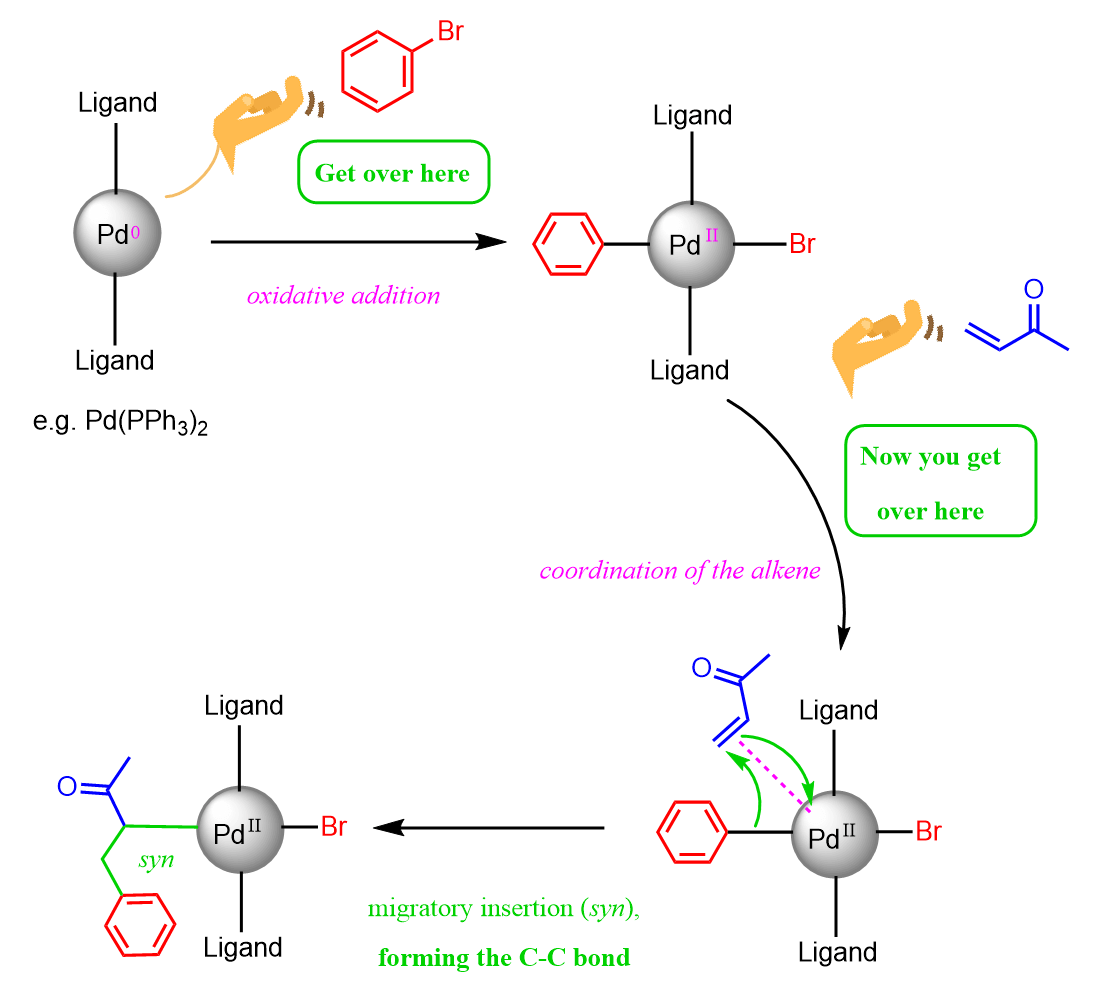
So, this is the step when the new C-C bond is formed, and the good news is that we can use curved arrows to show how it happens. It is a concerted syn addition to the C=C double bond, similar to what we saw in hydroboration and other related reactions of alkenes. Notice that as it stands, both carbons are sp3 hybridized, and they will become sp2 later via beta-hydride elimination.
In the third step, the alkyl-palladium intermediate undergoes β-hydride elimination. This step occurs through a syn elimination, meaning that the hydrogen atom and the palladium group must be positioned on the same side of the molecule during the elimination process. A hydrogen atom located on the carbon adjacent to palladium (the β-carbon) is transferred to the metal, while the electrons from the C–H bond form a new C=C bond, producing the substituted alkene product. This step also regenerates the π bond and forms a palladium hydride intermediate:
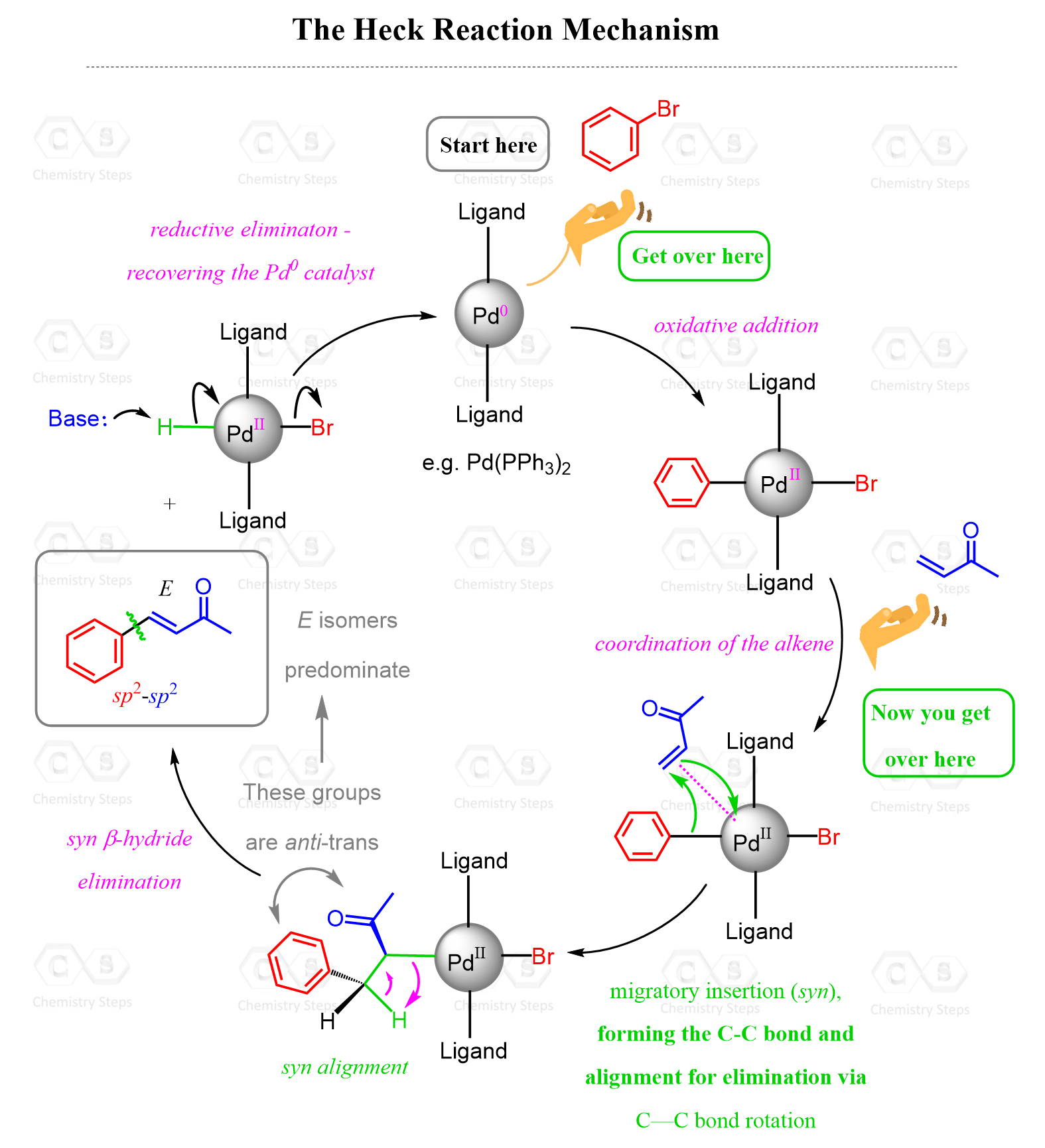
Finally, the palladium hydride species undergoes reductive elimination in the presence of a base, which removes the hydrogen as HX and regenerates the active Pd(0) catalyst. The regenerated catalyst can then enter another catalytic cycle.
We have shown the mechanism of the Heck reaction in the catalytic cycle. A catalytic cycle is a common way of representing the mechanism of catalytic reactions, especially transition metal-catalyzed reactions. Instead of showing the reaction as a straight sequence of steps, we arrange the intermediates in a circular fashion to emphasize that the catalyst is regenerated at the end of the reaction and can participate in another cycle.
This representation is particularly useful for organometallic reactions because the metal catalyst continuously changes its oxidation state and coordination environment throughout the process. It allows us to clearly visualize how the catalyst facilitates the transformation without being consumed.
Check Also
- Heck Reaction
- Suzuki Reaction
- Negishi Reaction
- Stille Coupling
- Sonogashira Coupling
- Alkene Metathesis