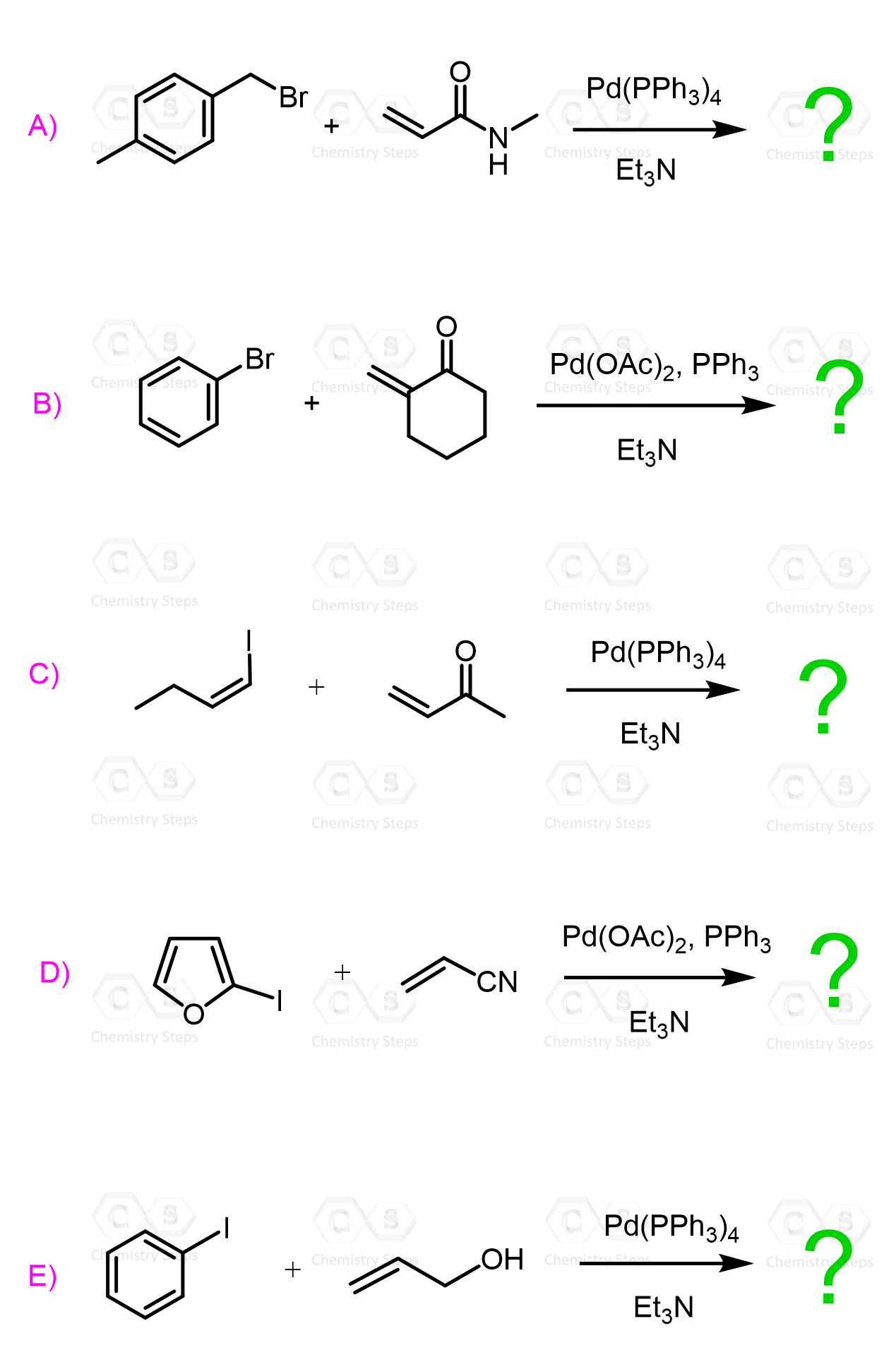
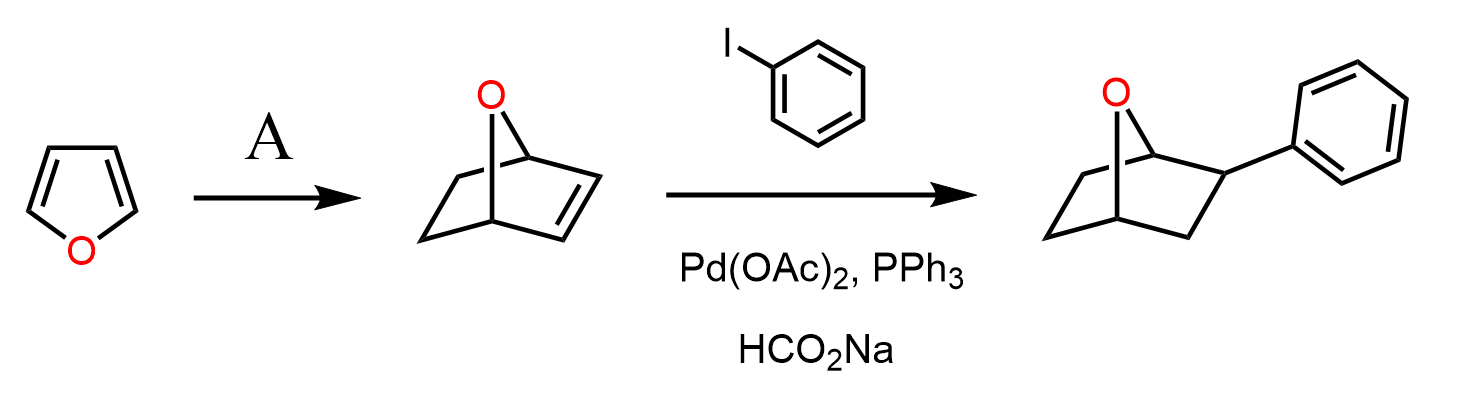
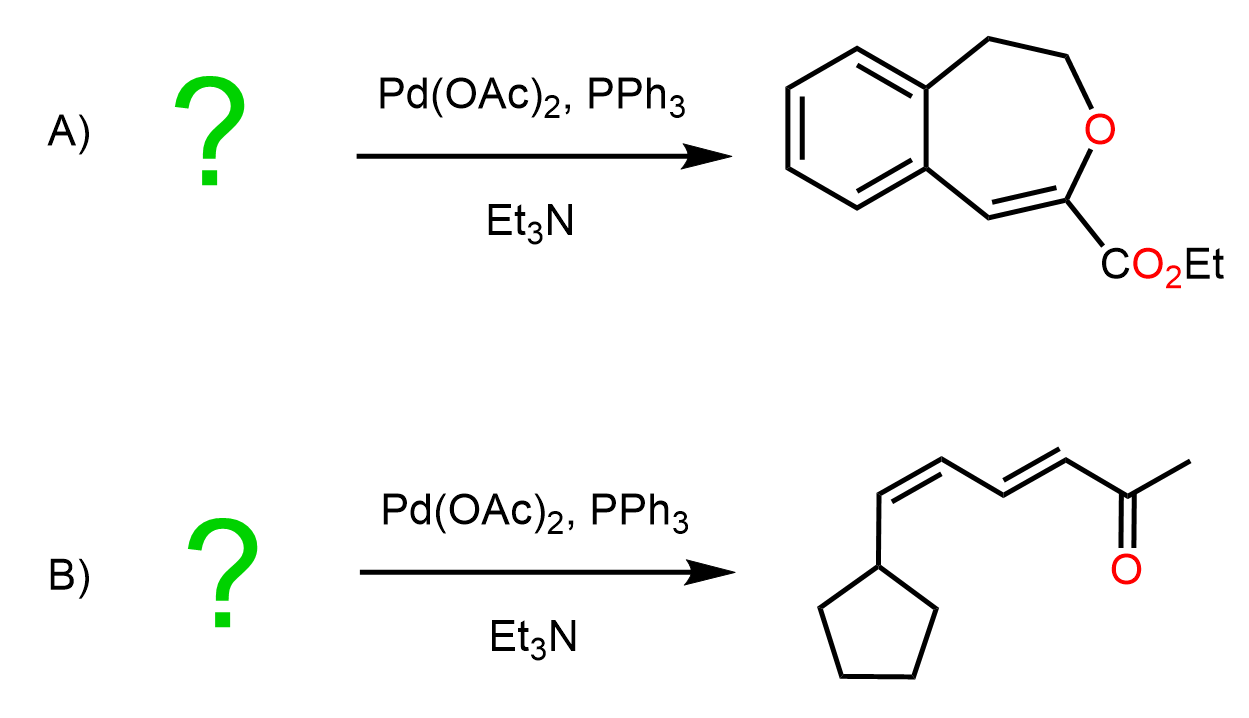
In the previous post, we discussed the general features of transition metal-catalyzed cross-coupling reactions by listing the Heck, Suzuki, Stille, and Sonogashira reactions. The big picture we learned about these cross-coupling reactions is that the transition metal, namely Pd, serves as the meeting point of the two carbon source reactants and facilitates their coupling to form C(sp2)-C(sp2) or, in less common examples, C(sp)-C(sp2) and C(sp3)-C(sp2) bonds.
So, let’s dedicate this discussion to the Heck reaction, also known as the Mizoroki–Heck reaction, which is a palladium-catalyzed cross-coupling reaction between an aryl or vinyl halide and an alkene. The reaction forms a new C(sp2)-C(sp2) bond and produces a substituted alkene:
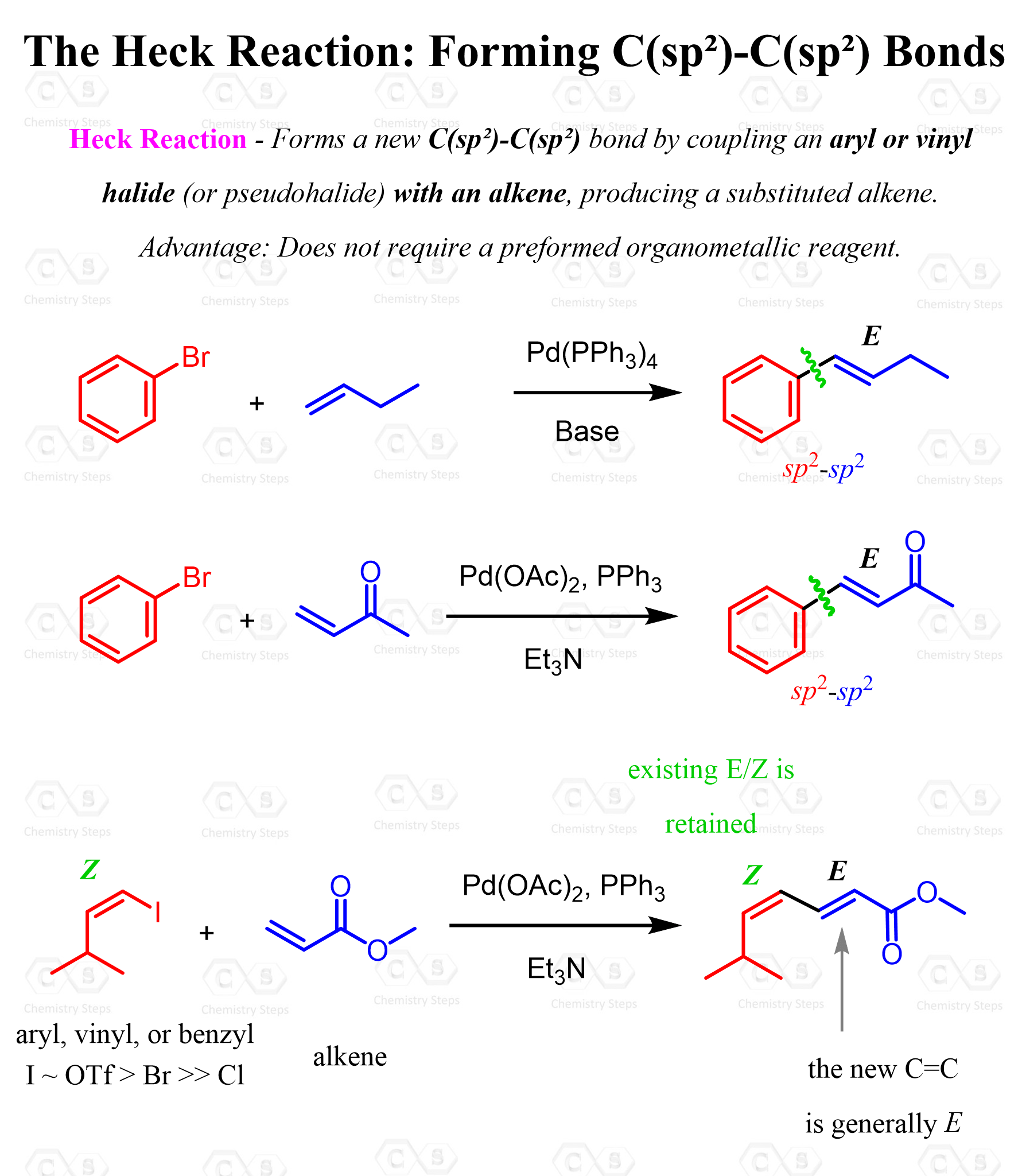
Notice that compared with all the others listed in this post, the Heck reaction has the advantage of working with simple, unfunctionalized alkenes, meaning that unlike other cross-coupling reactions, it does not require the preparation of an organometallic reagent such as an organoboron or organotin compound.
Let’s see how it works and what other differences it has compared with the Sonogashira reaction by looking at the mechanism of this coupling reaction.
The Mechanism of the Heck Reaction
In the first step, the Pd(0) catalyst breaks the bond between the carbon and halogen of the aryl or vinyl halide and adds both fragments as ligands through oxidative addition. During this step, the oxidation state of palladium increases from Pd(0) to Pd(II) because the halide and the carbon group are both treated as anionic ligands.
In the second step, the alkene coordinates to the palladium center through its π bond. The alkene then undergoes migratory insertion into the Pd–carbon bond, forming a new carbon-carbon bond between the aryl group and one of the alkene carbons:
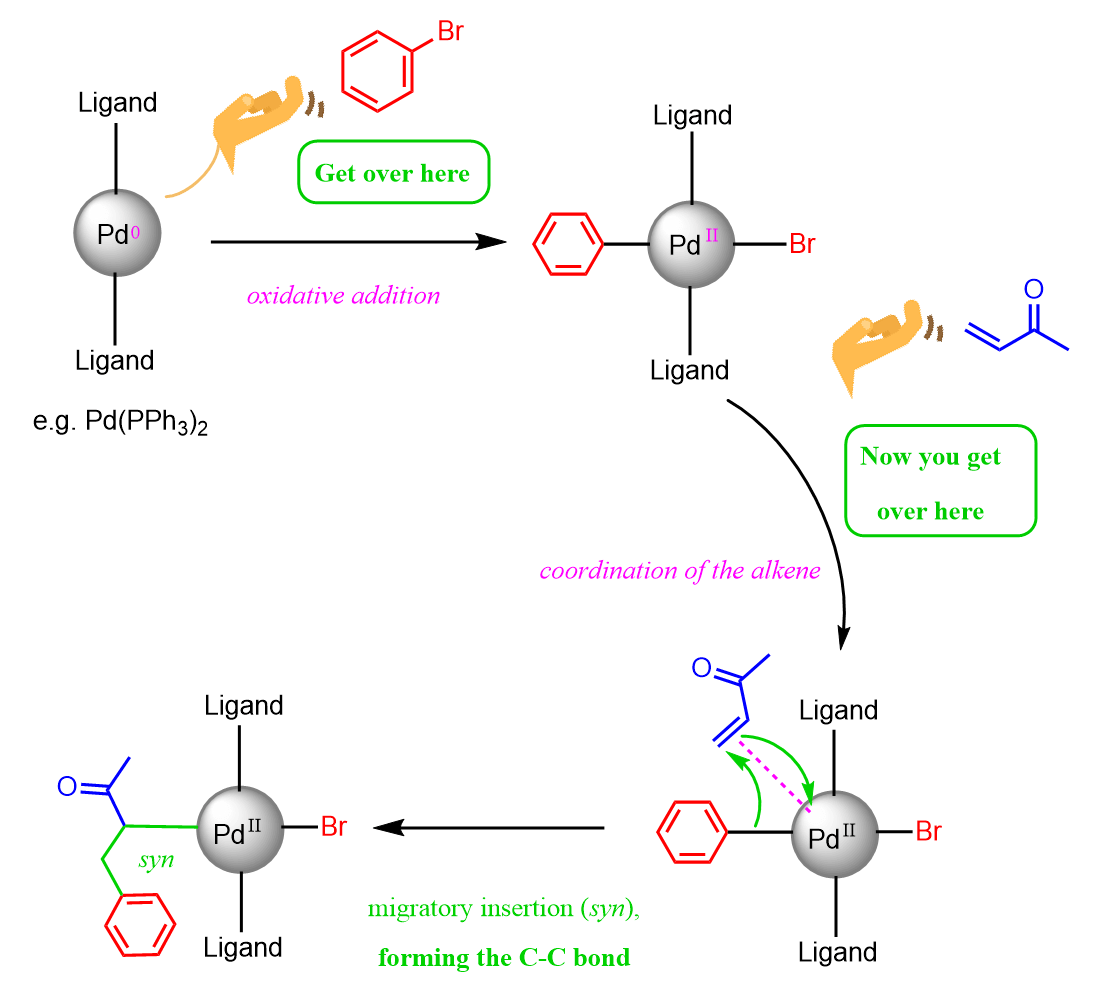
So, this is the step when the new C-C bond is formed, and the good news is that we can use curved arrows to show how it happens. It is a concerted syn addition to the C=C double bond, similar to what we saw in hydroboration and other related reactions of alkenes. Notice that as it stands, both carbons are sp3 hybridized, and they will become sp2 later via beta-hydride elimination.
In the third step, the alkyl-palladium intermediate undergoes β-hydride elimination. This step occurs through a syn elimination, meaning that the hydrogen atom and the palladium group must be positioned on the same side of the molecule during the elimination process. A hydrogen atom located on the carbon adjacent to palladium (the β-carbon) is transferred to the metal, while the electrons from the C–H bond form a new C=C bond, producing the substituted alkene product. This step also regenerates the π bond and forms a palladium hydride intermediate:
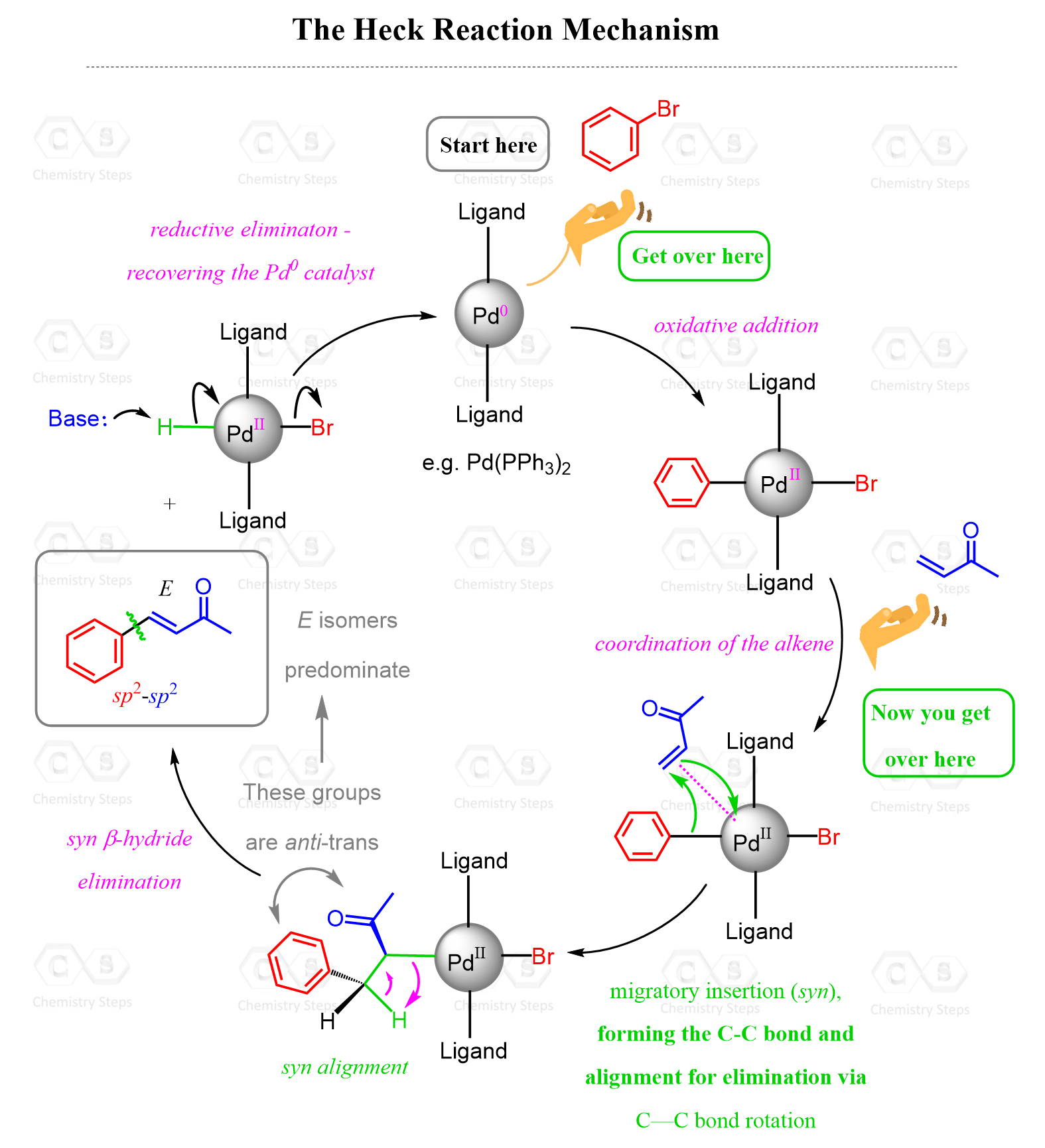
Finally, the palladium hydride species undergoes reductive elimination in the presence of a base, which removes the hydrogen as HX and regenerates the active Pd(0) catalyst. The regenerated catalyst can then enter another catalytic cycle.
We have shown the mechanism of the Heck reaction in the catalytic cycle. A catalytic cycle is a common way of representing the mechanism of catalytic reactions, especially transition metal-catalyzed reactions. Instead of showing the reaction as a straight sequence of steps, we arrange the intermediates in a circular fashion to emphasize that the catalyst is regenerated at the end of the reaction and can participate in another cycle.
This representation is particularly useful for organometallic reactions because the metal catalyst continuously changes its oxidation state and coordination environment throughout the process. It allows us to clearly visualize how the catalyst facilitates the transformation without being consumed.
The Stereochemistry of the Heck Reaction
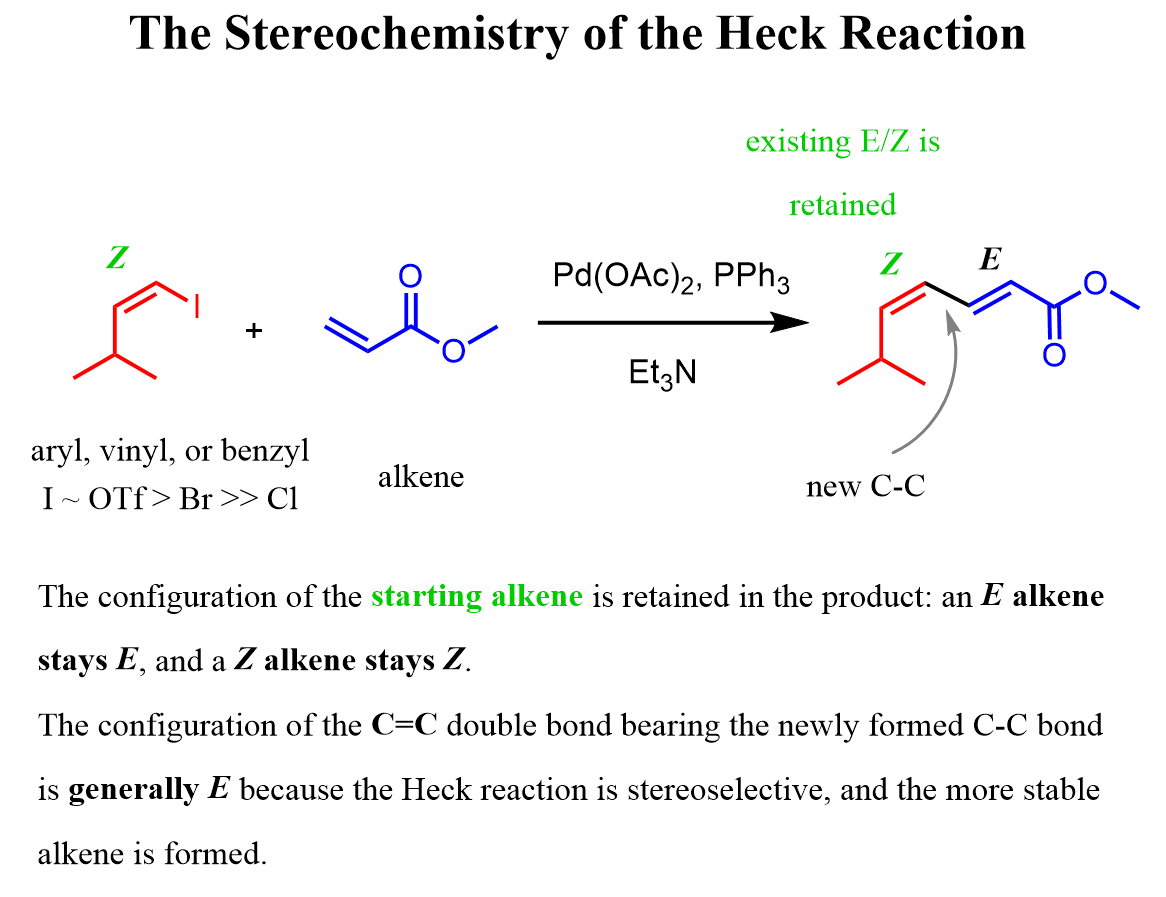
There are two main components to address for the stereochemistry of the Heck reaction. These are the configurations of the starting alkene and the one that is formed. The good news is that they are both quite predictable.
The configuration of the starting alkene is retained in the product: an E alkene stays E, and a Z alkene stays Z.
The configuration of the C=C double bond bearing the newly formed C-C bond is generally E because the Heck reaction is stereoselective, and the more stable alkene is formed:
We can also see from the mechanism of the reaction that another reason the E configuration is predominant in the product is the syn β-hydride elimination that the intermediate Pd complex undergoes. Once again, by syn we mean that the hydrogen is syn to the palladium, meaning they are aligned at 0°.
With two beta hydrogens, there are two conformations that allow a syn orientation of the carbon fragment and the palladium. The one that places the largest groups, i.e., the anti conformation, gives the major product because it is more stable:
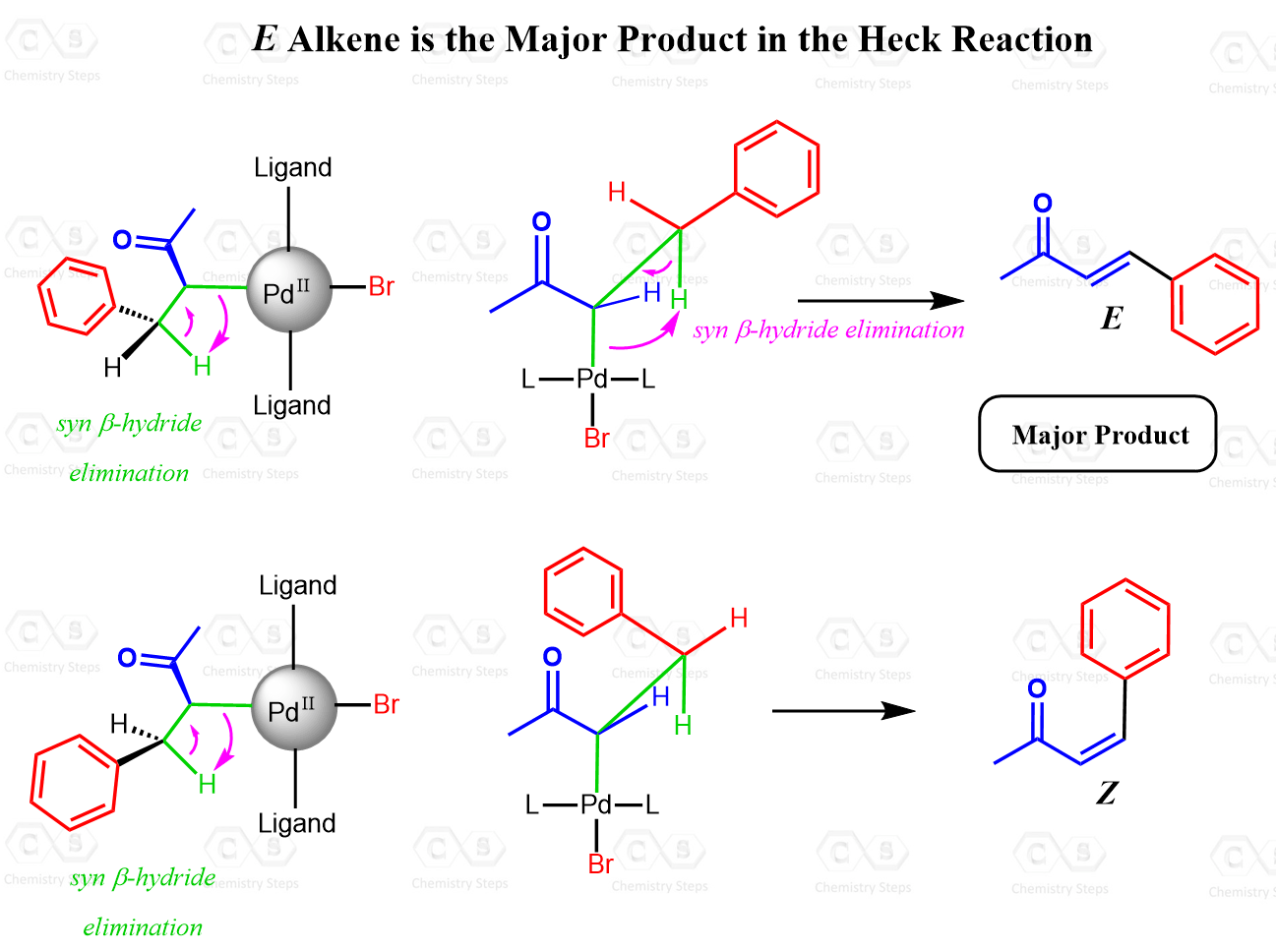
Recall that this is what we learned about the stereoselectivity of the E2 elimination. The only difference is that in conventional E2 elimination, the antiperiplanar orientation of the beta hydrogen and the leaving group is preferred, whereas here, it is the syn elimination because this is an intramolecular elimination, and that is the only way to have the Pd aligned correctly with the beta hydrogen:

One such example of syn elimination in the cope elimination, and you check out here because I do not want to make this post too overwhelming, but at the same time, this is a nice concept, and I did not want to leave it out either.
The Advantages of the Heck Reaction
Like any synthetic method, the Heck reaction has both advantages and limitations. One of its greatest advantages is that it forms carbon-carbon bonds directly from readily available aryl or vinyl halides and alkenes without requiring a preformed organometallic reagent. The reaction generally provides good regio- and stereoselectivity, often producing the more stable E alkene.
In addition, similar to the Stille, Negishi, and Suzuki coupling reactions, the Heck reaction tolerates a wide variety of functional groups, including alcohols, ethers, aldehydes, ketones, and esters.
The Limitations of the Heck Reaction
Despite these advantages, the Heck reaction does have some limitations. One important drawback is that the alkene substrate must contain at least one β-hydrogen atom because the catalytic cycle relies on a β-hydride elimination step to form the C=C double bond and regenerate the palladium catalyst.
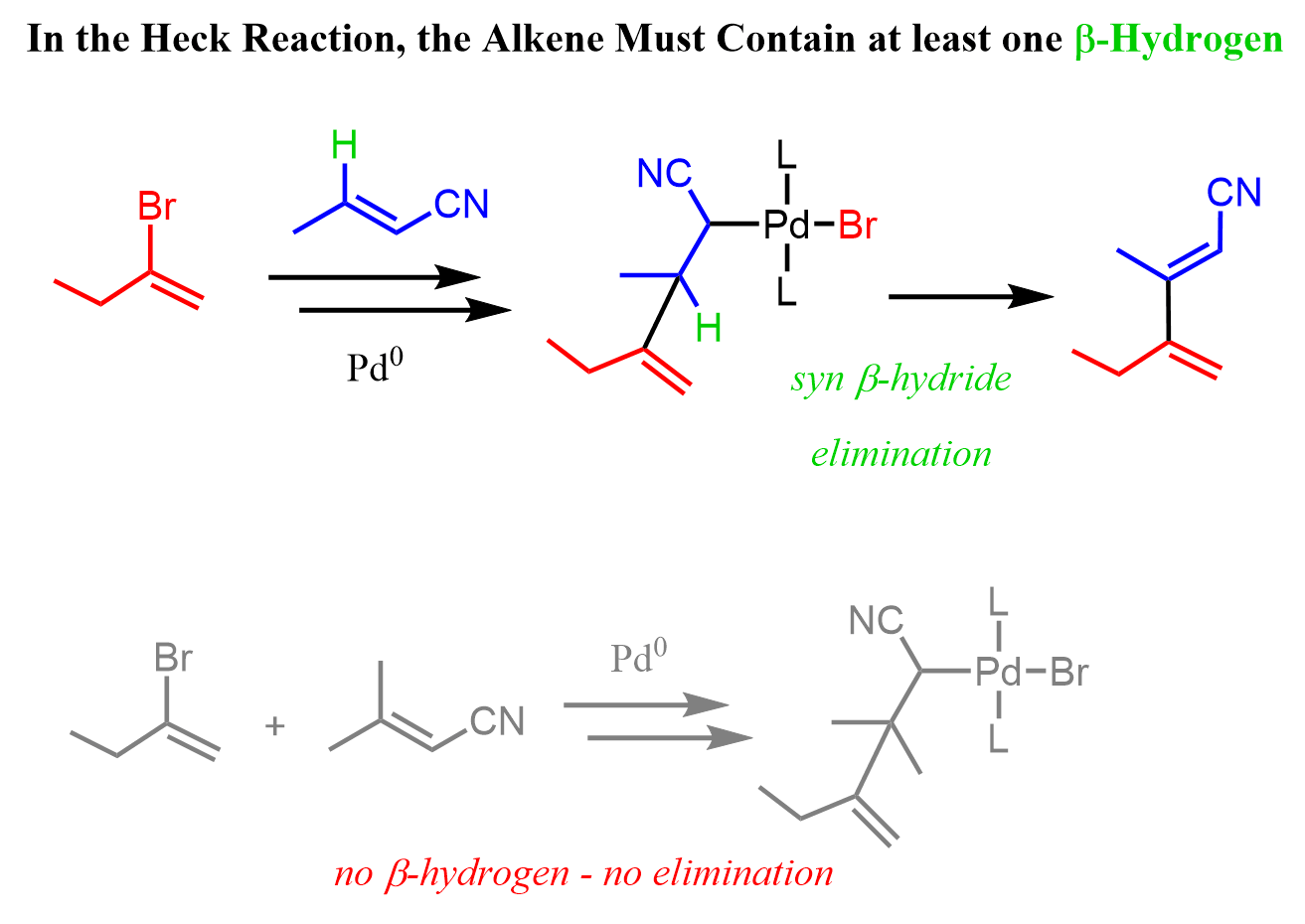
Again, this is much like in the E2 elimination of alkyl halides – they cannot occur if the substrate has no beta hydrogens.
Alkyl Halides in the Heck Reaction
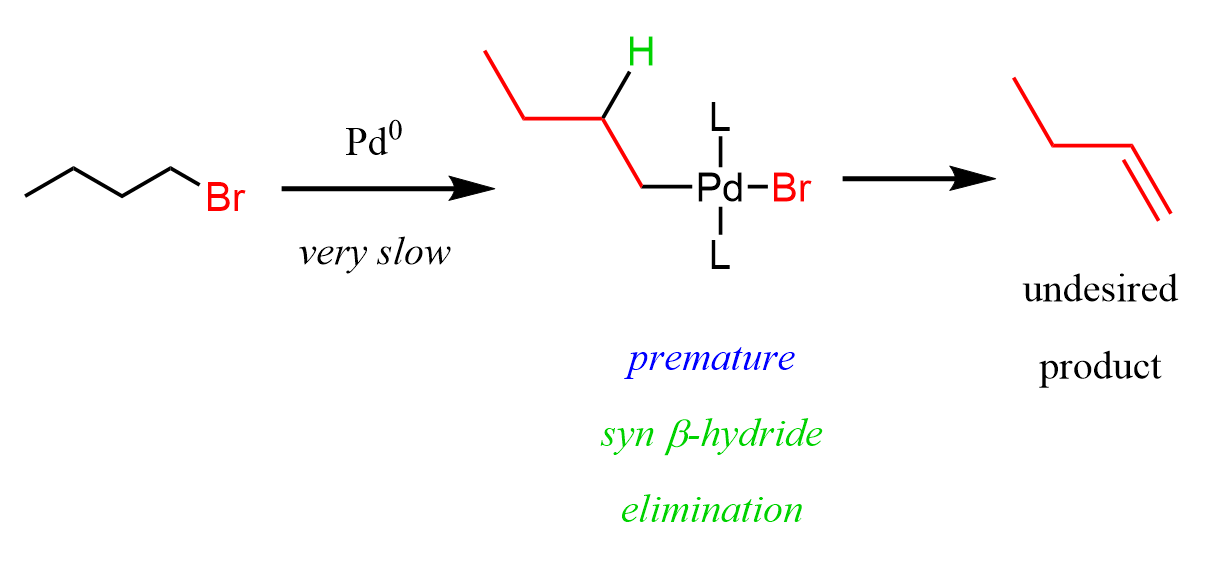
Another limitation that comes to mind is that, like with many cross-coupling reactions, the scope of the Heck reaction is still largely limited to aryl and vinyl halides, while alkyl halides are generally poor substrates. One reason is that alkyl halides undergo oxidative addition to the palladium catalyst much more slowly than aryl and vinyl halides.
More importantly, if the alkyl halide contains β-hydrogen atoms, the alkylpalladium intermediate, formed upon the oxidative addition, readily undergoes β-hydride elimination before the cross-coupling reaction can take place. This competing pathway produces an undesired alkene byproduct instead of forming the new C-C bond through the cross-coupling process:
One thing you should keep in mind is that transition metal-catalyzed cross-coupling reactions are extremely versatile and have virtually no limitations on how they can be modified to achieve a target transformation.
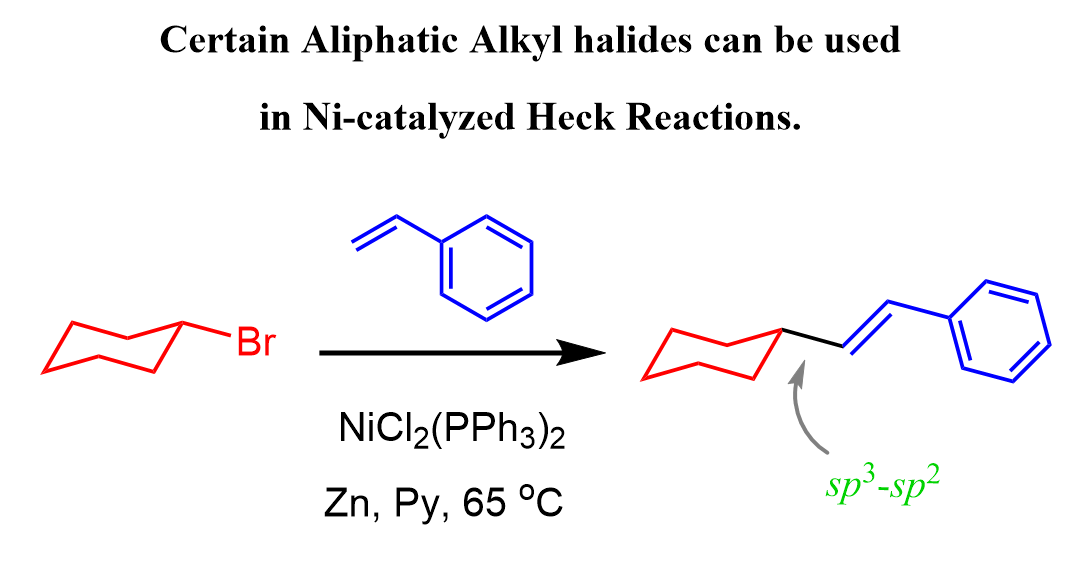
For example, the aforementioned limitation of alkyl halides is often overcome by using a nickel catalyst in place of the traditional Pd catalyst for the Heck reaction. Aliphatic halides, such as cyclohexyl bromide and secondary alkyl bromides, can be used for addition reactions with aryl and vinyl halides:
With this said, simply follow what your instructor provides you in the class to determine which variations and specific conditions of these reactions you are expected to know and apply. The goal of this discussion is to introduce the general principles and possibilities of transition metal-catalyzed cross-coupling reactions rather than to cover every available modification and variation.
References
- Heck, R. F.; Nolley, J. P. J. Org. Chem. 1972, 37, 2320–2322.
- Beletskaya, I. P.; Cheprakov, A. V. Chem. Rev. 2000, 100, 3009–3066.
- ACS Catal. 2017, 7, 4, 2353–2356.
- Clayden, J.; Greeves, N.; Warren, S. Organic Chemistry, 2nd ed.; Oxford University Press: Oxford, 2012.
- László Kürti and Barbara Czakó, Strategic Applications of Named Reactions in Organic Synthesis, 2005