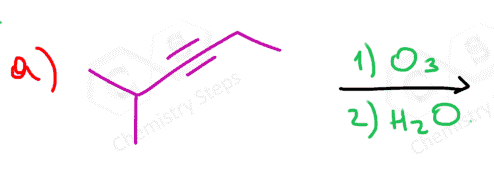
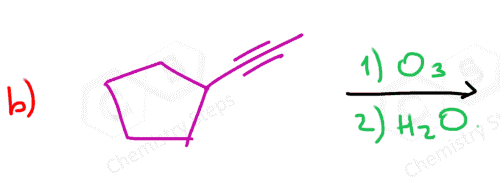
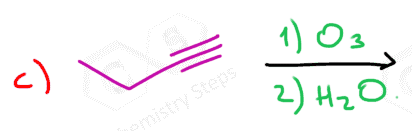
The oxidative cleavage of alkynes is typically achieved with ozonolysis or by reacting them with a basic or acidic solution of potassium permanganate (KMnO₄). For internal alkynes, the products of the reaction are a pair of carboxylic acids, and for terminal alkynes, we get a carboxylic acid and CO₂ bubbling out of the solution:
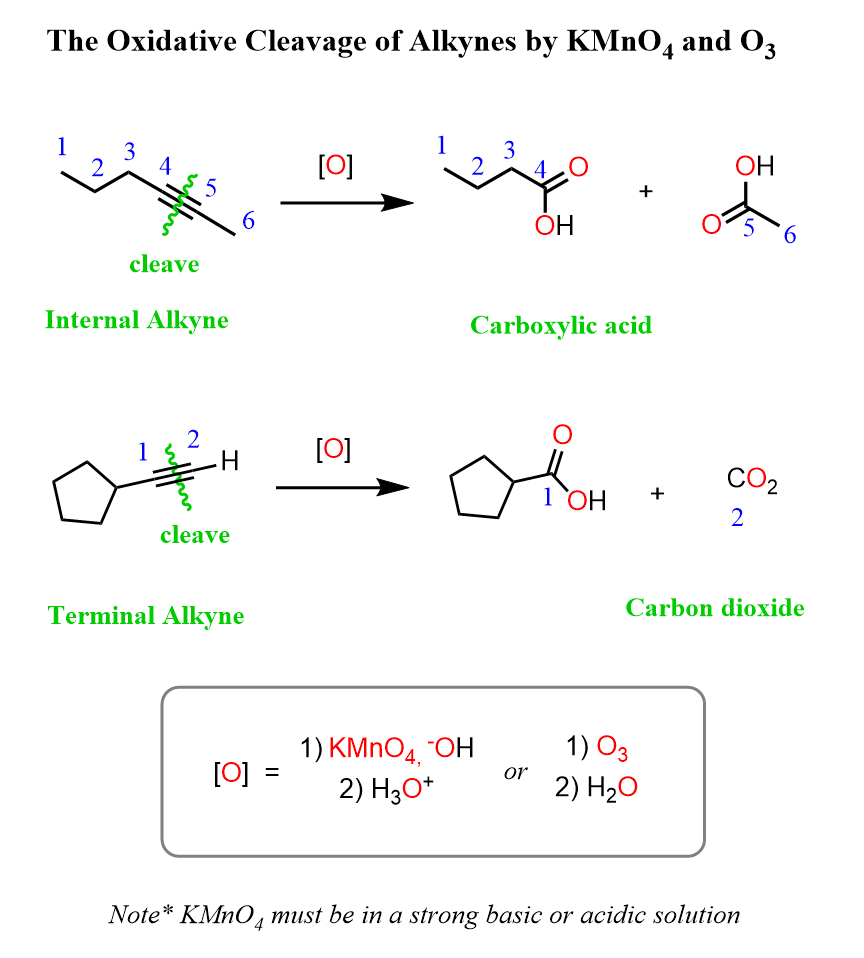
Notice that in the case of a terminal alkyne, the carbon chain is shortened by one because of the loss of CO₂.
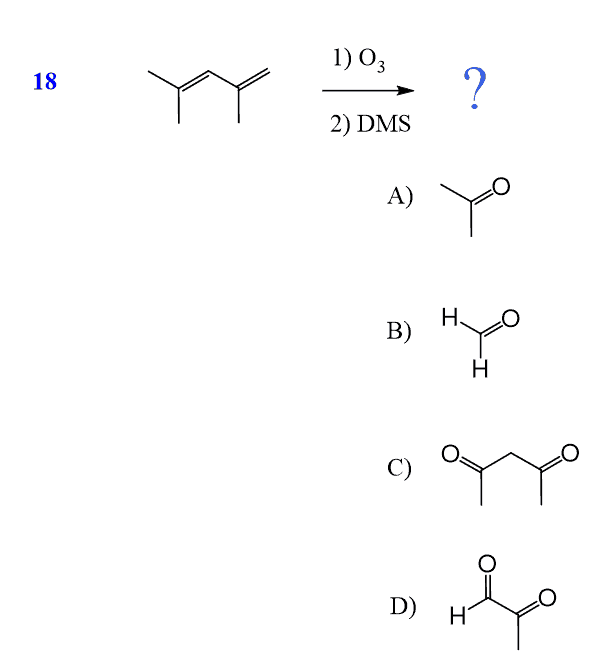
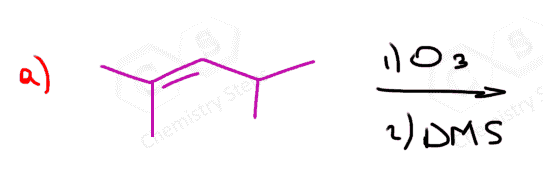
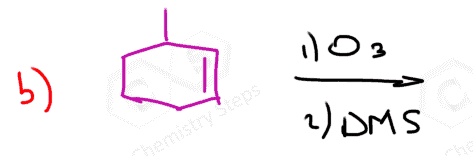
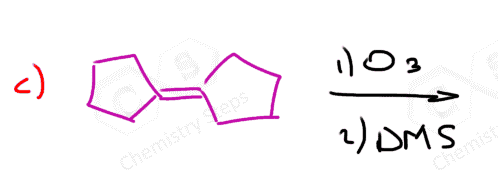
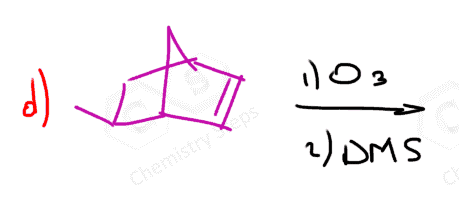
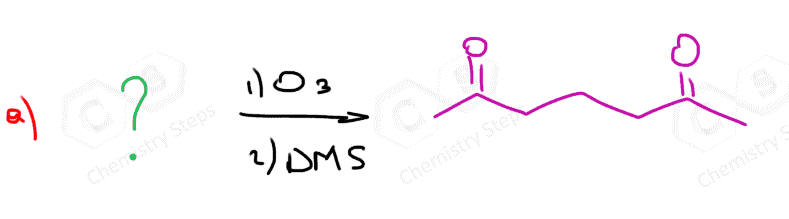
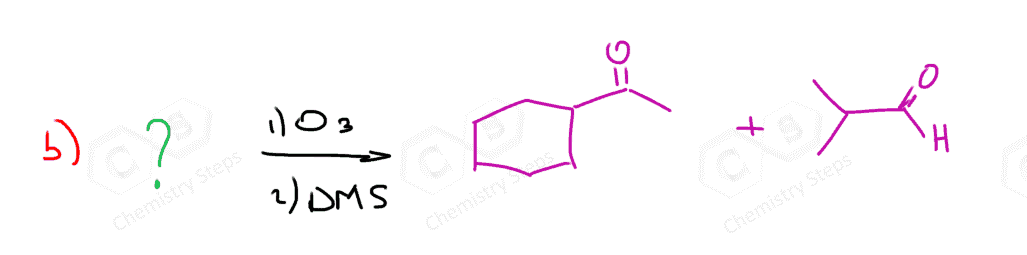
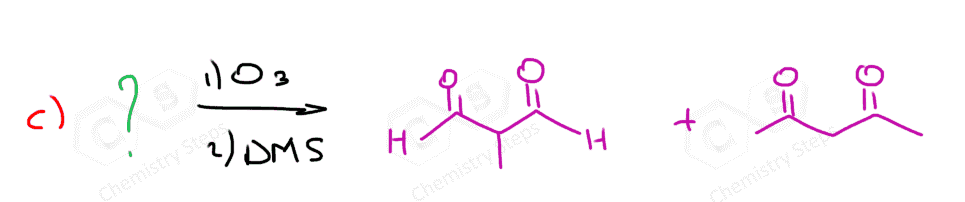
One thing I wanted to mention also is the comparison of the ozonolysis of alkynes to alkenes. Remember that in the case of alkenes, when no peroxide was used, the product was either an aldehyde or ketone depending on the structure of the alkene:

The Mechanism of Ozonolysis of Alkynes explains why carboxylic acids, instead of ketones and aldehydes, are formed.
The Mechanism of Ozonolysis of Alkynes
This content is for registered users only.
By joining Chemistry Steps, you will gain instant access to the answers and solutions for all the Practice Problems, including over 40 hours of problem-solving videos, Multiple-Choice Quizzes, Puzzles, Reaction Maps, and the powerful set of Organic Chemistry 1 and 2 Summary Study Guides.