
Starting from General Chemistry and up until discussing the key principles of acids and bases, we recognize hydrogens connected to heteroatoms as being the acidic protons. Recall all the inorganic acids such as HCl, HBr, H₂SO₄, etc., and the carboxylic acids, which become more relevant in organic chemistry:
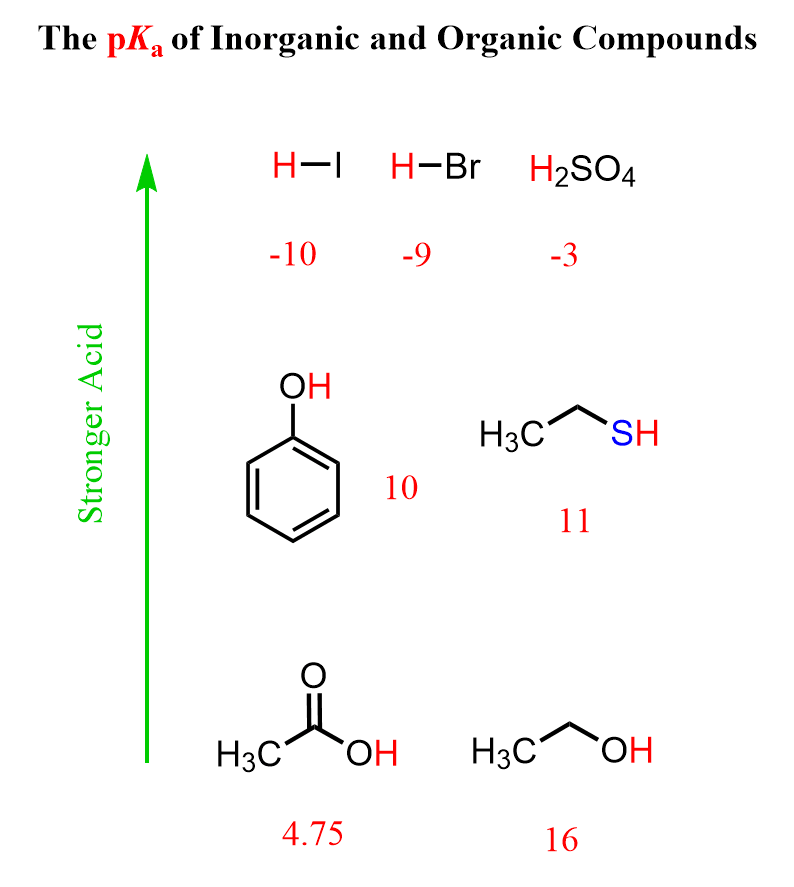
While it is true that these are generally the most acidic compounds, there is another important functional group that bears acidic hydrogen atoms, and that is the carbonyl group:
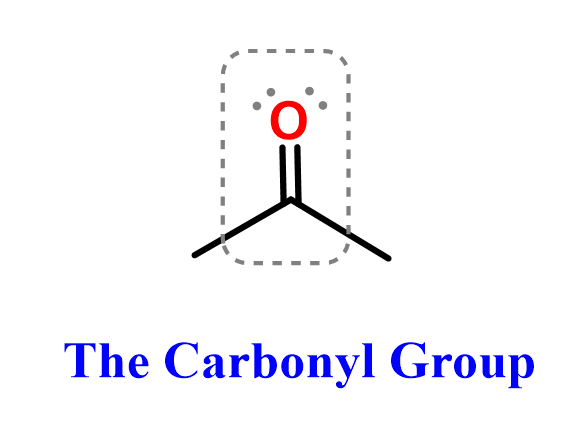
The carbonyl itself does not have any hydrogens, but we need to recognize that the neighboring carbon atoms do, or they often do, to be more accurate:
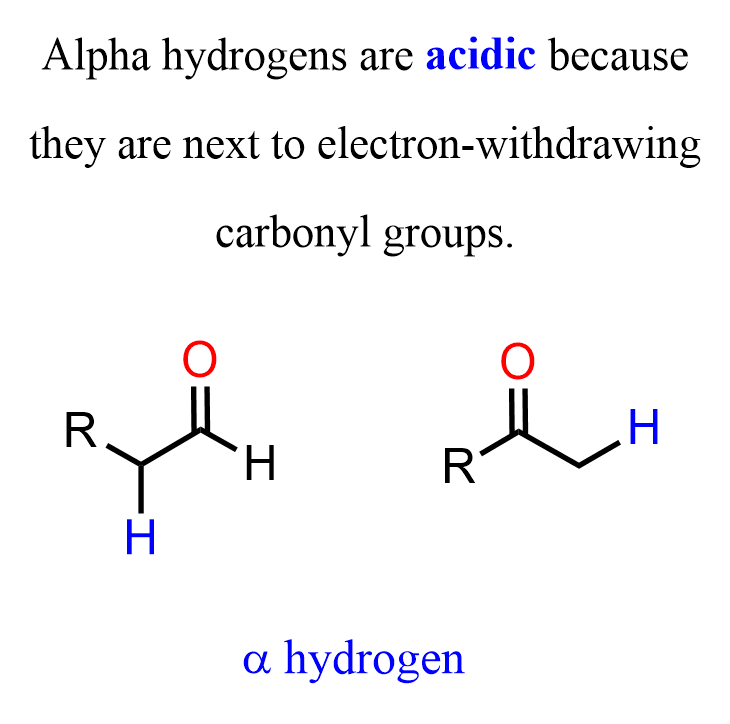
Now, it turns out these protons are acidic enough to open a whole new chapter in organic chemistry, which is what we call alpha carbon chemistry, or the chemistry of enols and enolates.
This may not be as surprising to you if you recall the principles of acid strength that we observed in what is called ARIO. In ARIO, the R stands for resonance, and it is the second contributing factor to the acidity of given hydrogen atoms.
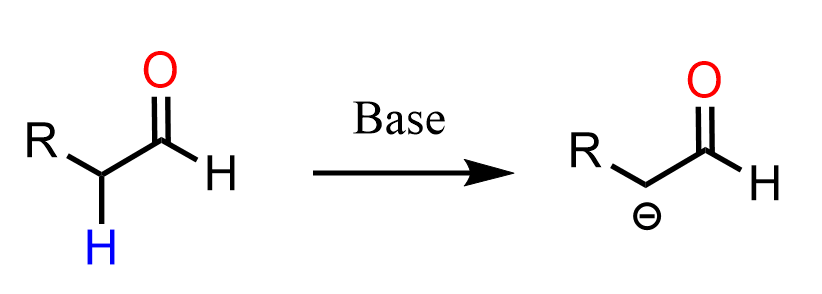
If we use a strong enough base to remove the hydrogen next to the carbonyl group (these are called alpha hydrogens or alpha protons because they are connected to the carbon that is in the alpha position of the carbonyl), the conjugate base of a carbonyl is formed, which is resonance-stabilized by the carbonyl group itself:
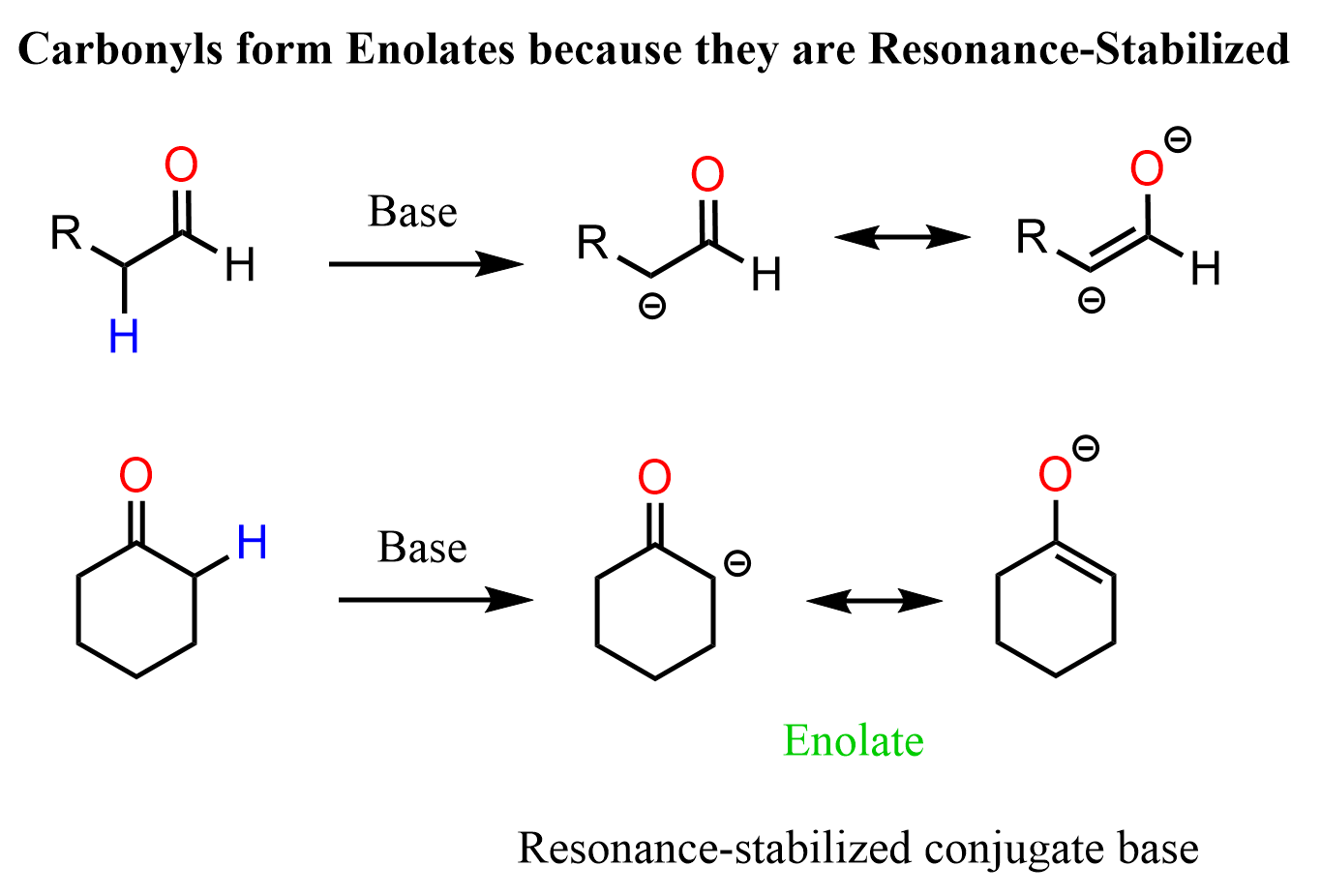
The pKa of typical alpha hydrogens is about 20, which is a lot lower than if there were no carbonyl group. For example, if we replace the oxygen with a methylene group, the pKa jumps to about 43:
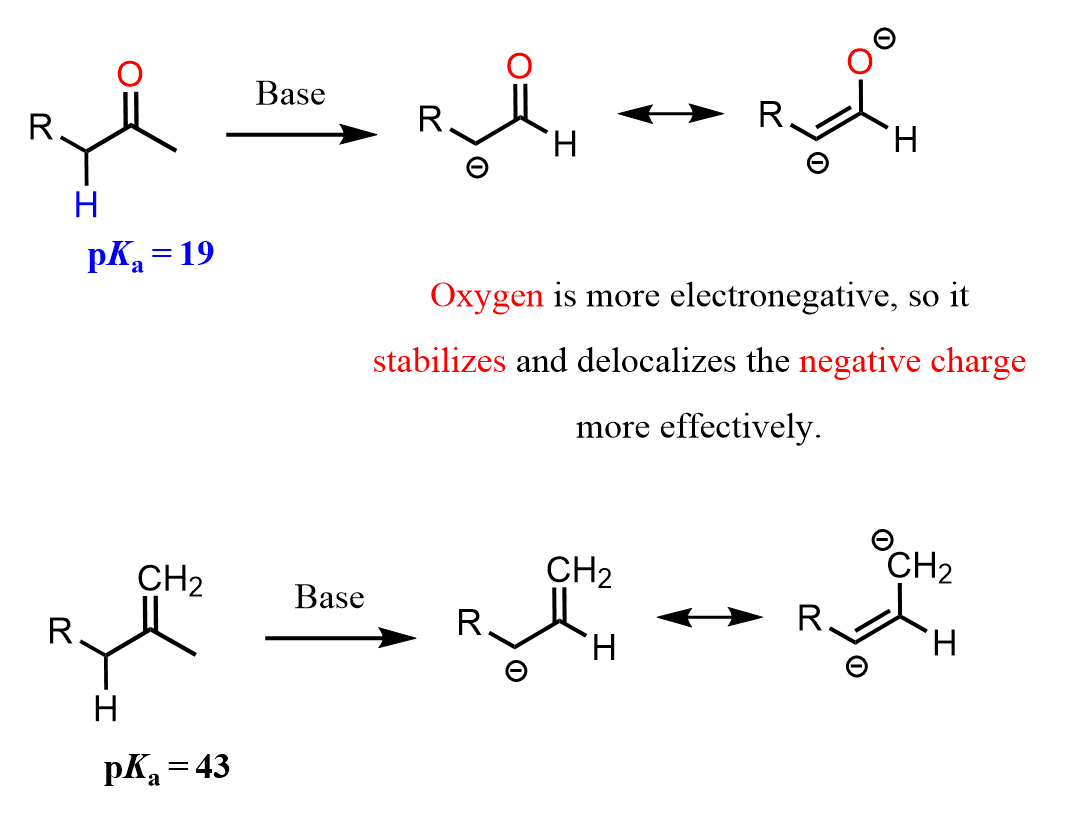
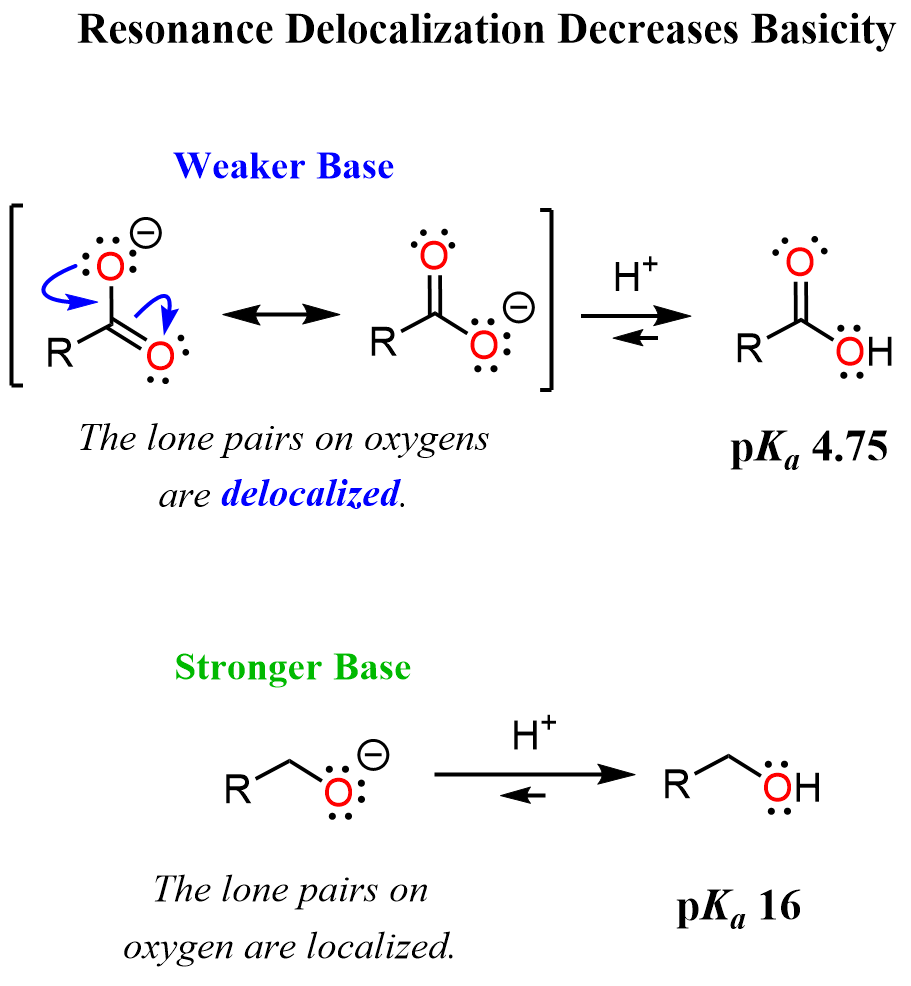
We have a dedicated post on the effect of resonance stabilization on the acidity and basicity of molecules; check it out for broader coverage of this effect, which is not limited to the carbonyl group.
Keto-Enol Tautomerization
What is interesting about the acidity of the alpha carbons is that they can also get deprotonated in acidic media via what is called keto-enol tautomerism.
Remember, an enol is a compound that contains both a carbon-carbon double bond and an alcohol group (–OH) directly attached to one of the alkene carbons:

In acidic media, the carbonyl is protonated, which makes the alpha position even more acidic and easier to deprotonate, leading to the formation of an enol. We can illustrate this, for example, by looking at the alpha halogenation of aldehydes and ketones, which proceeds via the formation of enols:
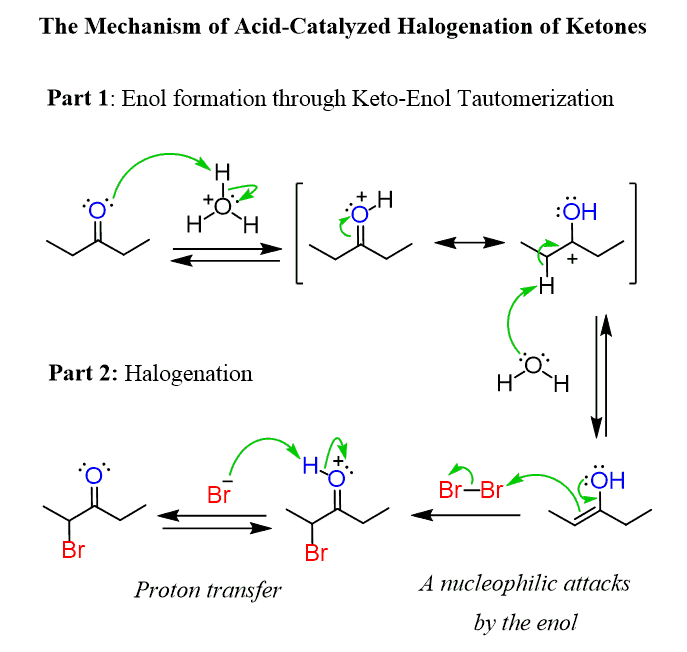
We have a separate post on keto–enol tautomerization addressing the factors affecting these equilibria, as well as the most common uses in organic synthesis, including enolate chemistry and related reaction mechanisms.
The Acidity of Dicarbamoyls
As expected, if there are two carbonyl groups pulling the electron density from the alpha carbon, the acidity of the alpha hydrogen is going to increase.
For example, diethyl malonate, acetoacetic ester, and acetylacetone are the most commonly encountered dicarbonyl compounds in Organic Chemistry 1 and 2 courses. Their pKa values range from about 9 to 13, which makes them about a million times more acidic than acetone and similar carbonyl compounds:
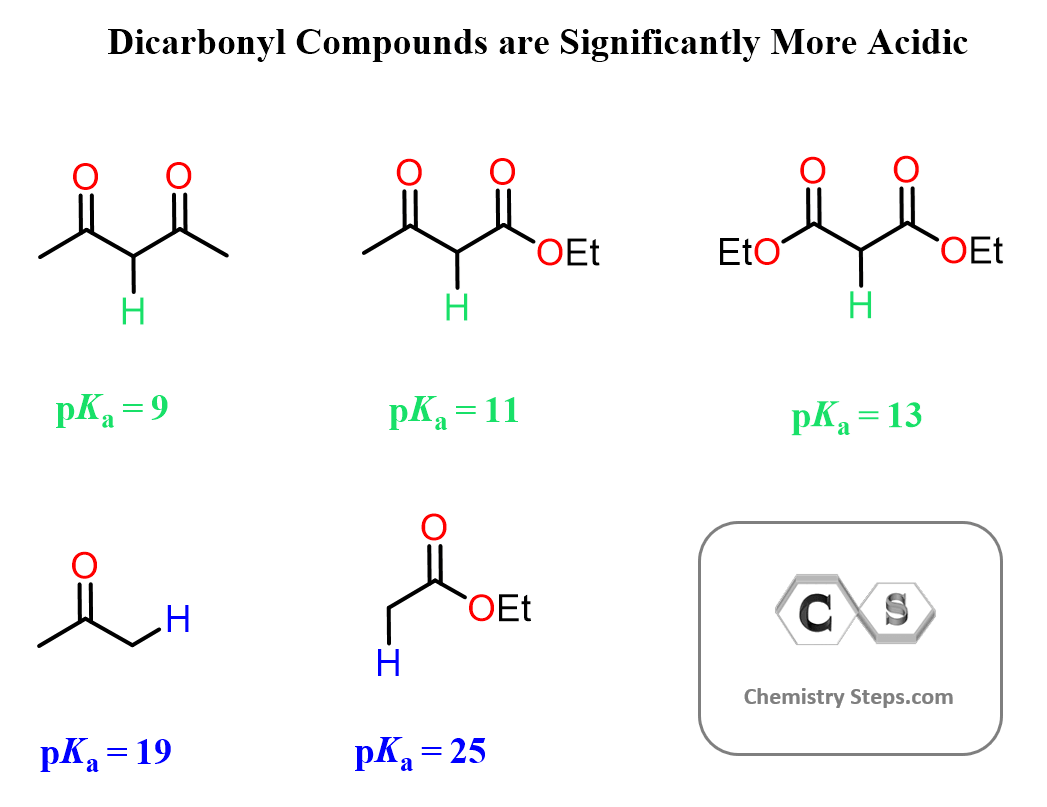
The lower the pKa, meaning the more acidic the alpha protons, the easier it is to deprotonate these positions with milder bases, which in turn allows for much greater control in organic synthesis. This is especially important in systems such as diethyl malonate, acetoacetic ester, and acetylacetone, where the stabilized enolate can be formed under relatively mild conditions.
These dicarbonyl compounds are particularly useful because they enable predictable carbon-carbon bond formation without the need for very strong bases that could lead to side reactions.
For example, ethyl acetoacetate can be deprotonated with a relatively mild base such as sodium ethoxide to form the corresponding enolate, which is further used in a variety of reactions.

We have dedicated sections on acetoacetic ester synthesis, malonate ester synthesis, and related dicarbonyl chemistry, where this principle is used extensively in organic synthesis.
α-Carbon Acidity in other Electron-Withdrawing Systems
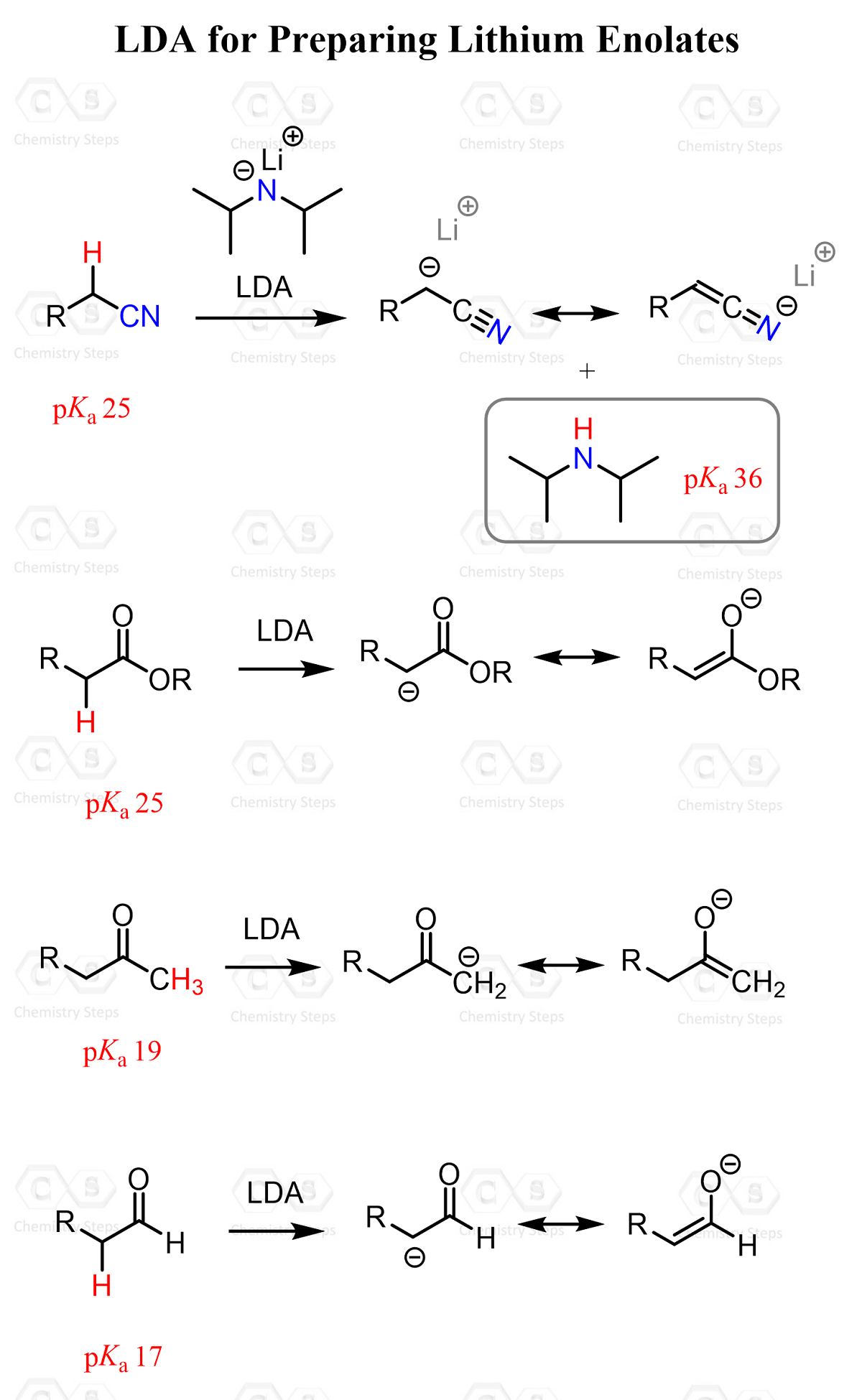
The carbonyl group of aldehydes and ketones is not the only electron-withdrawing group that stabilizes the negative charge of the alpha carbon via resonance delocalization. Other common groups are esters, nitriles, and nitro compounds, which also allow for stabilization of adjacent carbanions through inductive and/or resonance effects.
These positions are often deprotonated with a strong base such as LDA (lithium diisopropylamide), a very common strong and bulky base, to make the process irreversible and to generate the corresponding enolate (or stabilized carbanion) for further reactions.
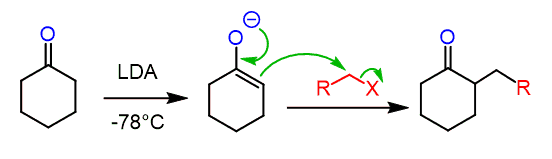
One of the most common reactions of enolates is alkylation using alkyl halides. As you have noticed, enols and especially enolates are nucleophilic, and they react with alkyl halides in the same way as other nucleophiles discussed in the chapter on SN2 substitutions.
The principle is the same for nitriles or nitro groups with alpha hydrogens:
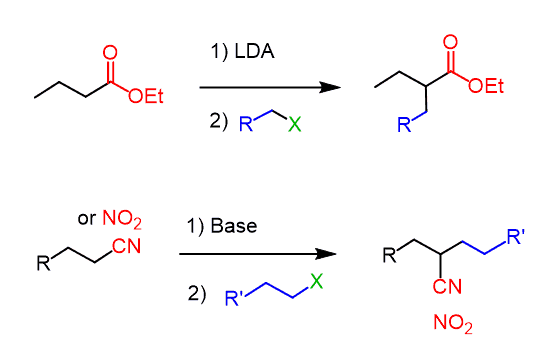
There are many other compounds similar to these, and they undergo a variety of reactions upon deprotonation and formation of the corresponding enolates. The purpose of this post, however, is not to cover all the reactions of enols and enolates, because, as mentioned earlier, this is an entire chapter on its own, and you can find the corresponding topics on the homepage.
The aim of this post was to familiarize you with the principle of carbonyl acidity, how it varies depending on the number and nature of other electron-withdrawing groups present. So, the key take-home message is to remember that the alpha position of electron-withdrawing groups is acidic, and that this acidity is what enables the formation of resonance-stabilized enolates that are central intermediates in many organic reactions.
Check Also
- Organic acid-base mechanisms
- Acid Strength and pKa
- How to Determine the Position of Equilibrium for an Acid-Base Reaction
- Inductive and Resonance (Mesomeric) Effects
- How to Choose an Acid or a Base to Protonate or Deprotonate a Given Compound
- Lewis Acids and Bases
- Basicity of Amines
- Organic Acids and Bases Practice Problems
- How Resonance Affects Acidity and Basicity
- Keto-Enol Tautomerization
- Acid-Base Reactions Practice Problems
- Organic Acids and Bases Quiz