Nucleophilic Substitution Reactions
In the following posts, we will learn about and do many practice problems on Nucleophilic Substitution Reactions. Nucleophilic Substitution Reactions are one of the most important major classes of organic chemistry and essential that you build a solid foundation and understanding of their principles and mechanisms such as the SN1 and SN2 reactions.

We will start from the introduction and general features of Nucleophilic Substitution Reactions and go in detail individually for the SN1 and SN2 mechanism. Each practice problem is designed to address the specifics of these mechanisms; the reactivity, stereochemistry and possibility of rearrangements. For example, you will have many practice problem examples that demonstrate in detail the inversion of R and S configuration during SN2 reactions. On the other hand, we will also see why a racemic mixture is obtained when the reaction goes by the SN1 mechanism via the formation of a carbocation intermediate.
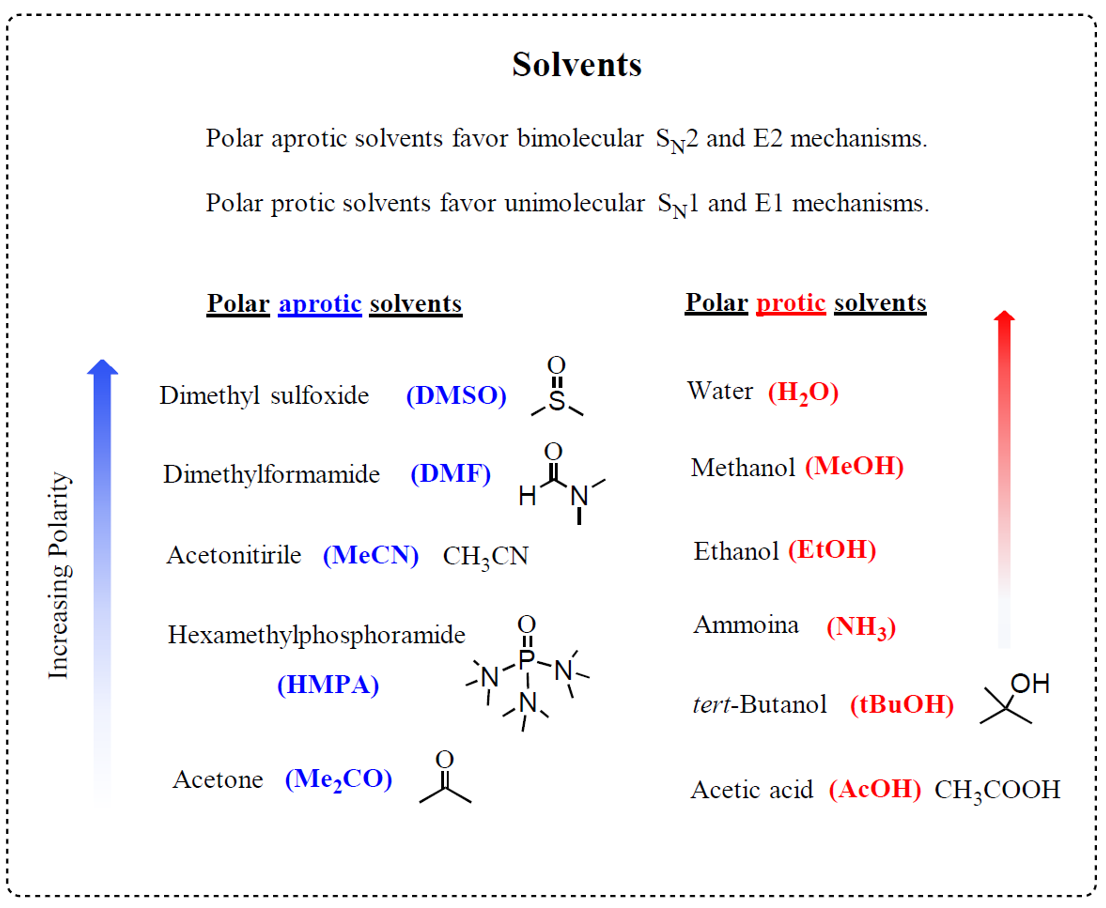
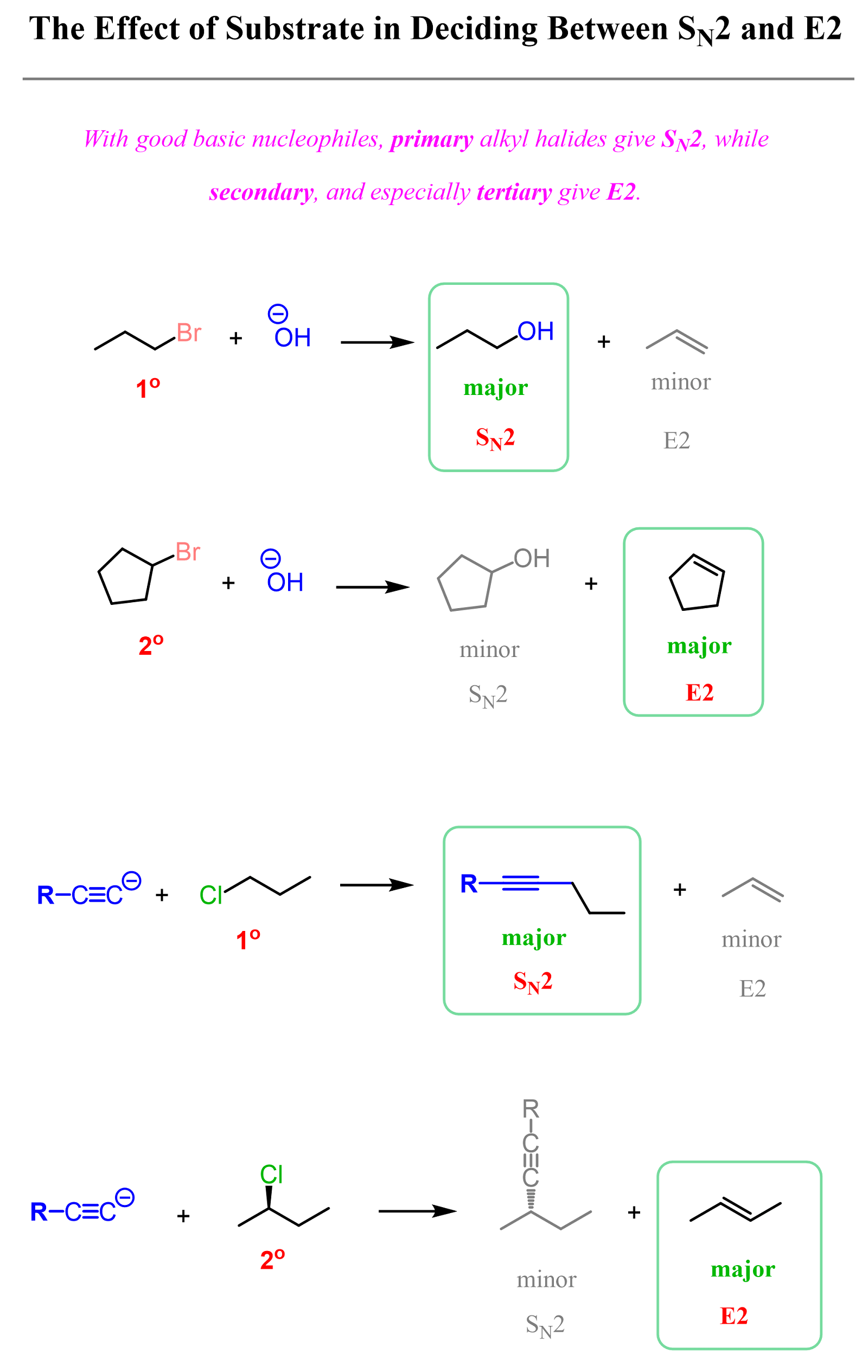
One important and yet overwhelming questions in Nucleophilic Substitution Reactions is the prediction of the mechanism as to whether it is SN1 or SN2. And we will talk about how to choose between SN1 and SN2 considering the nucleophile, the substrate, the solvent, and the reaction conditions. Once you have sufficient knowledge, we will so do the retrosynthetic analysis of Nucleophilic Substitution Reactions to learn the best of choosing a reagent for functional group transformations.
Carbocation Stability
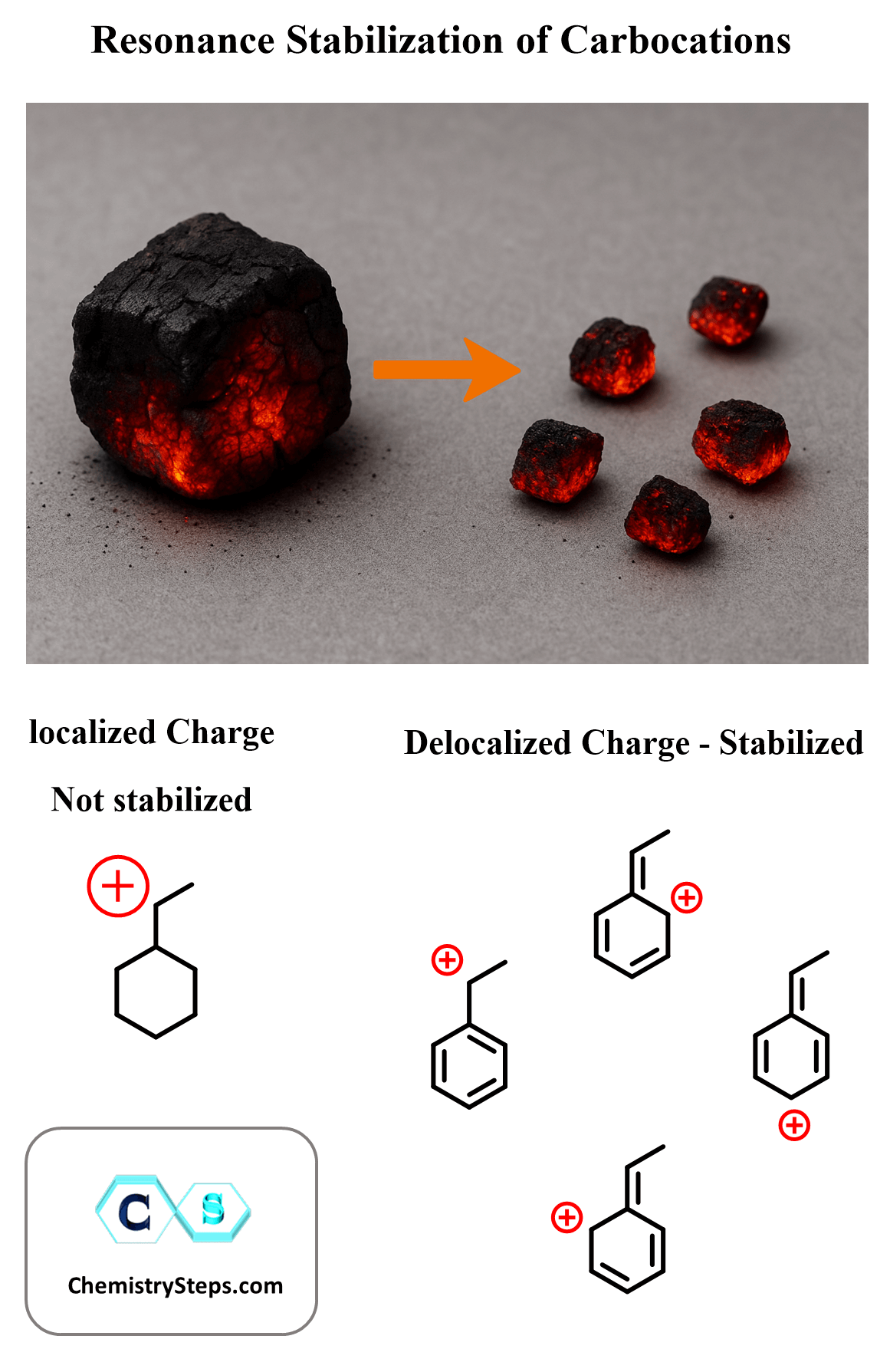
Carbocations are electron-deficient species, as the carbon atom is surrounded by only three bonds with no lone pairs. Remember, the standard bonding pattern of carbon is 4 bonds with no lone pair: So, how can we stabilize the … Read more
Can OH Be a Leaving Group?
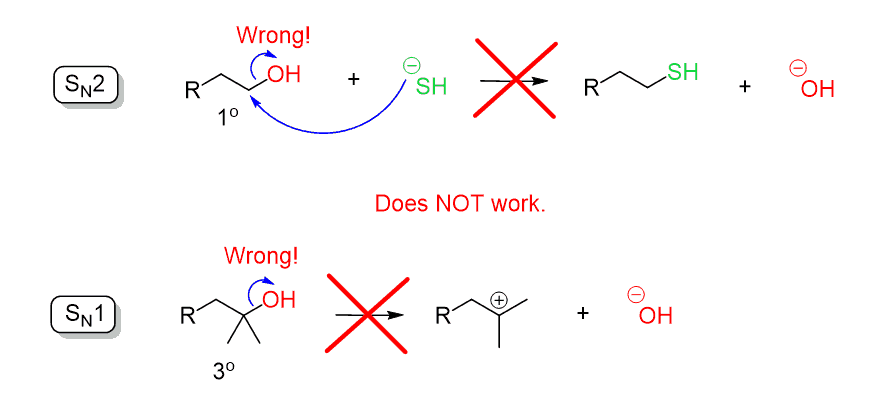
We have seen many times in SN1, SN2, E1, and E2 reactions that halogens, more specifically, their ions called halides, are the leaving group.A common question many students wonder about, and make the mistake of, is whether an OH group … Read more
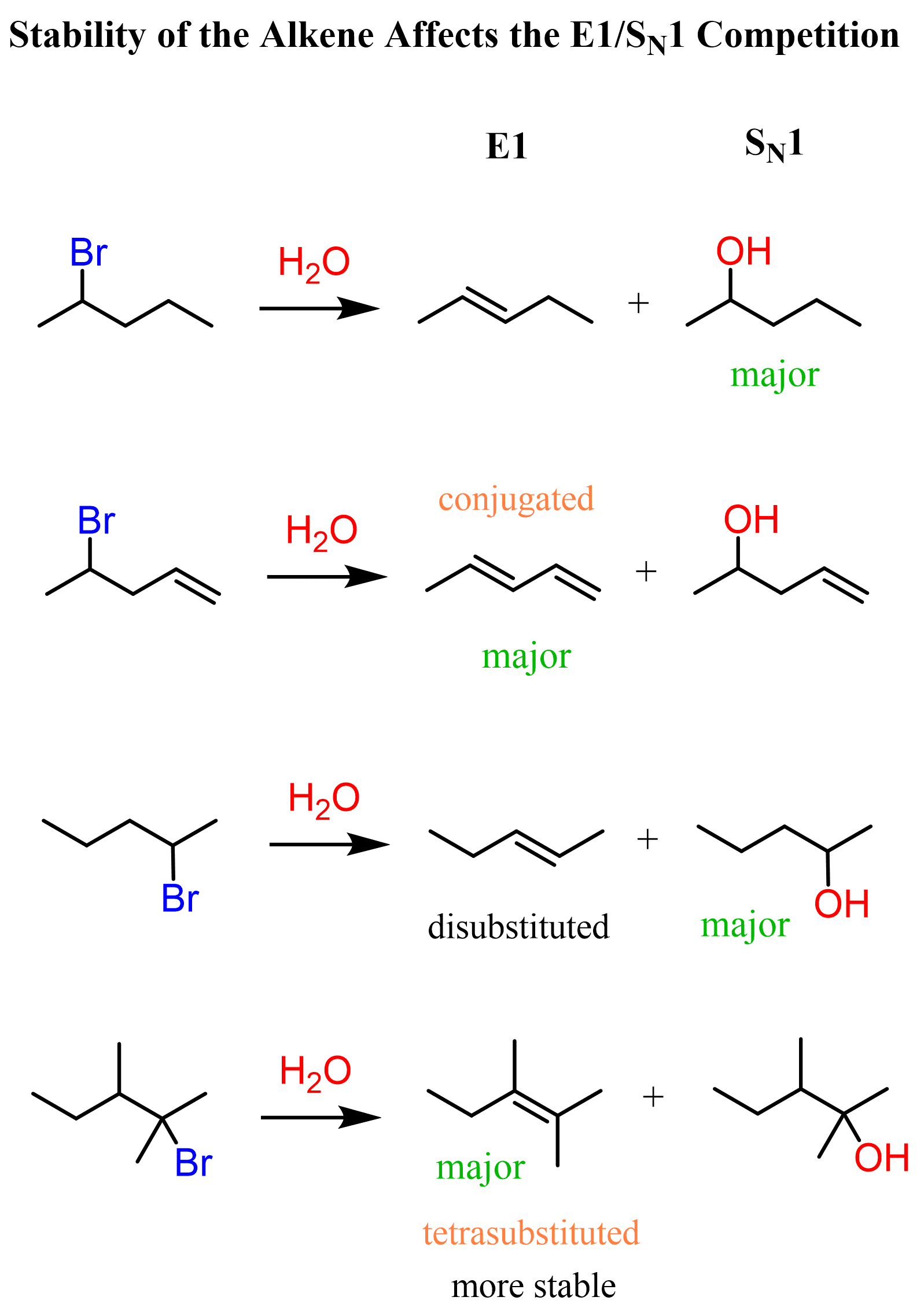
SN1 vs E1 Reactions
In this post, we’ll talk about a common question you encounter in organic chemistry tests and exams. How do you know if the alkyl halide or a similar substrate will react by SN1 or E1 mechanism? This dilemma is one … Read more
Reaction Map of Alkyl Halides
This content is for registered users only. Click here to Register! By joining Chemistry Steps, you will gain instant access to the answers and solutions for all the Practice Problems, including over 40 hours of problem-solving videos, Multiple-Choice Quizzes, Puzzles, Reaction … Read more
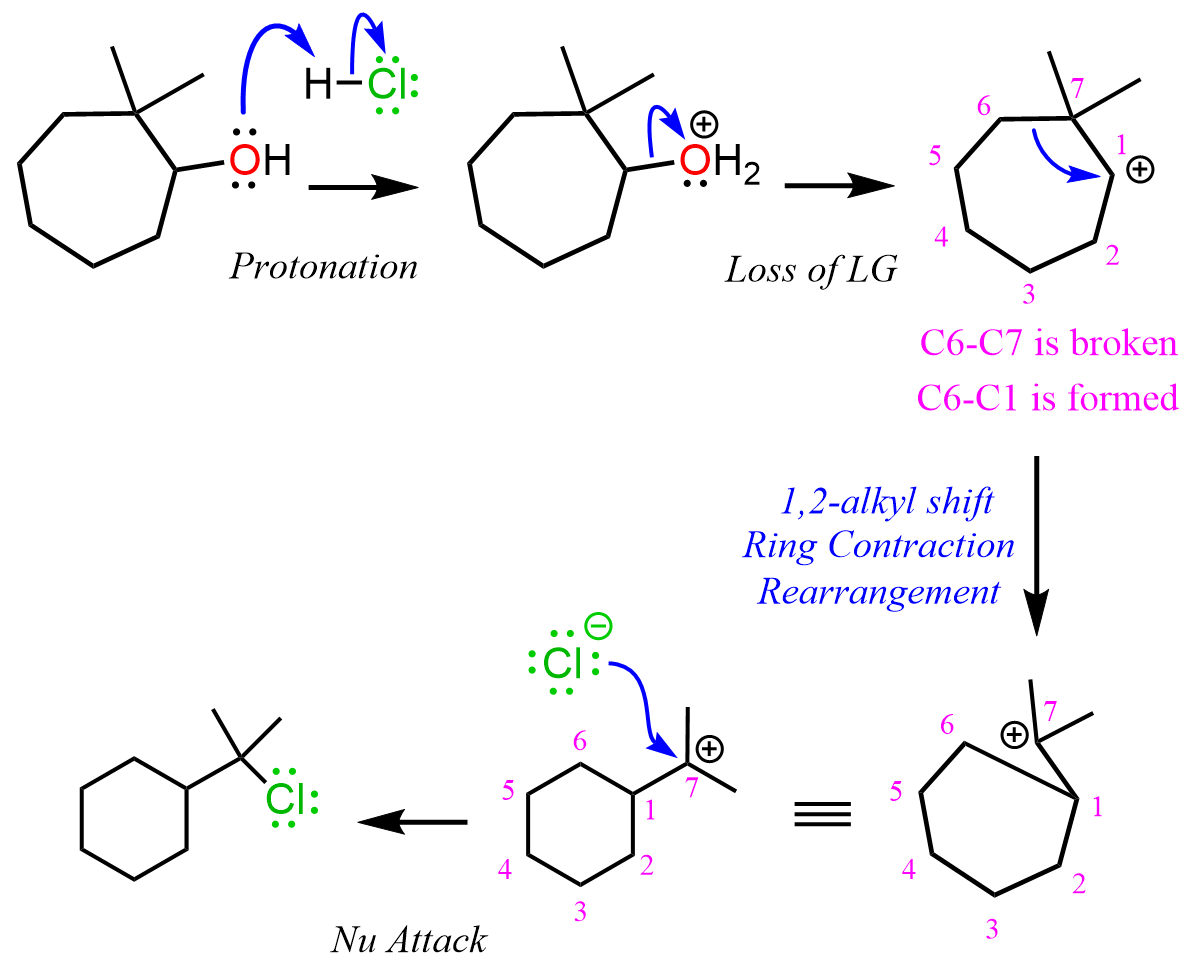
Ring Contraction Rearrangements
In the previous post, we discussed ring expansion rearrangements where 4 and 5-membered rings were transformed into more stable, larger rings. Sometimes, the process goes in reverse direction, and larger rings are transformed into smaller rings. These are … Read more
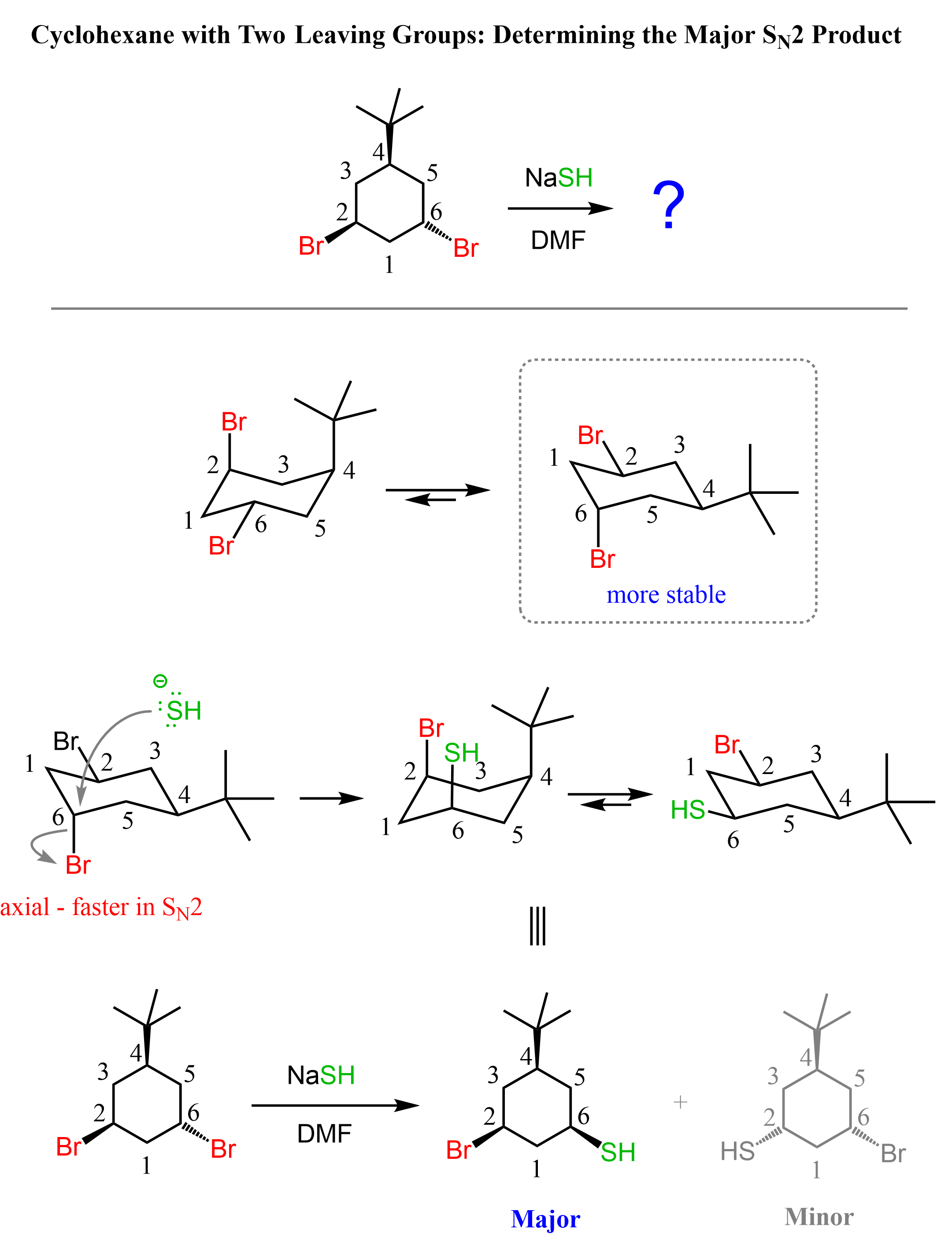
SN2 and E2 Rates of Cyclohexanes
Let’s address two common exam questions: comparing the SN2 and E2 rates of two isomeric cyclohexanes and determining the major product in those reactions. The first thing you need to remember here is that both SN2 and E2 … Read more
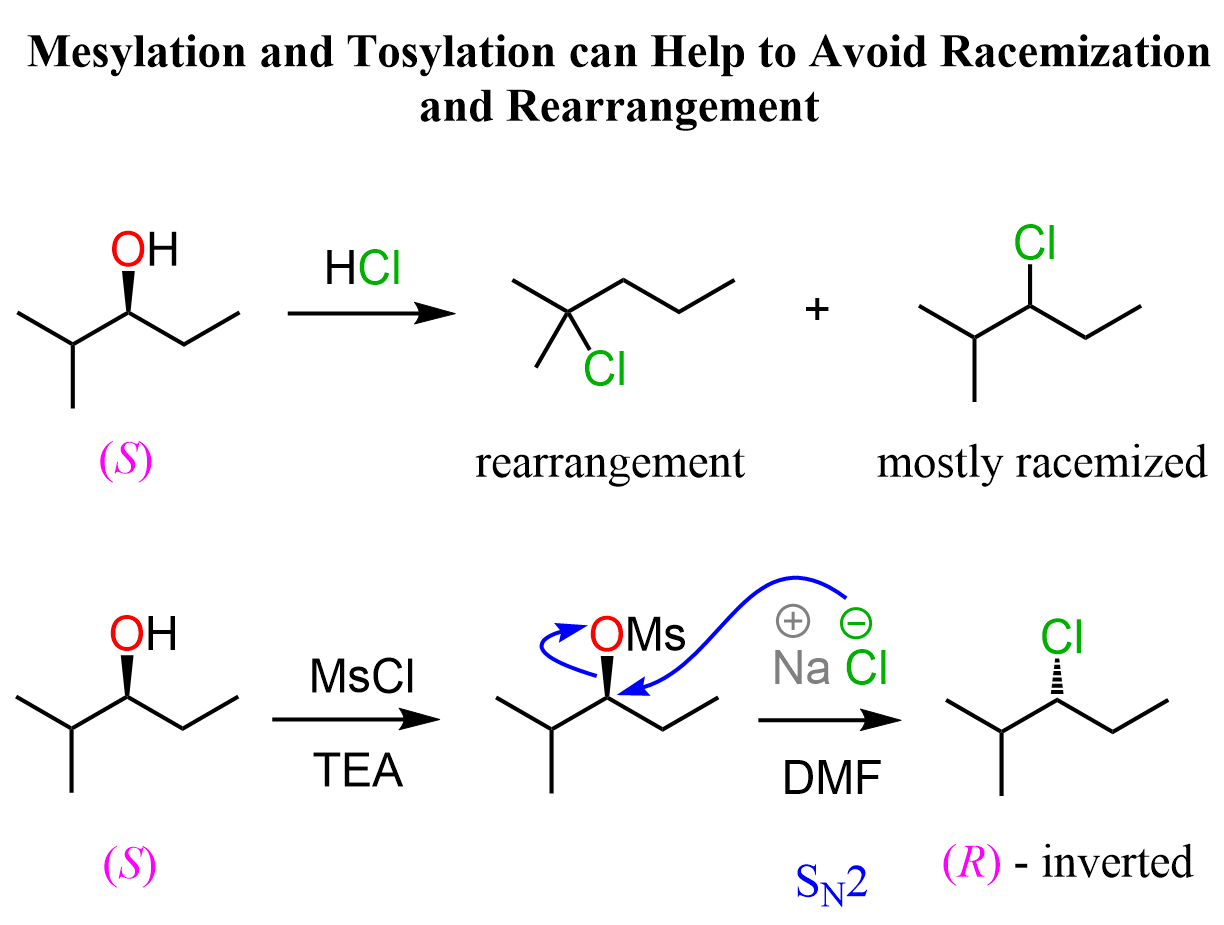
Alcohols to Alkyl Halides
There are several ways of converting alcohols to alkyl halides. The most common, and perhaps the one that covers nuances of SN1 and SN2 reactions is the use of HX acids (HCl, HBr, HI), so let’s start with that. The … Read more
Alkyl Halides to Aldehydes and Ketones
Let’s discuss some strategies for converting alkyl halides to aldehydes and ketones. Converting the alkyl halide to an alcohol and oxidizing the latter to an aldehyde or ketone requires the least number of topics to have covered, so let’s start … Read more
Alkyl Halides to Alcohols
Alkyl halides can be converted to alcohols by reacting them with water or hydroxide ion. Recall that the hydroxide ion is a good nucleophile, and water is a poor nucleophile; therefore, the conversions occur via SN2 and SN1 mechanisms, respectively. … Read more