
Alcohols to Amides
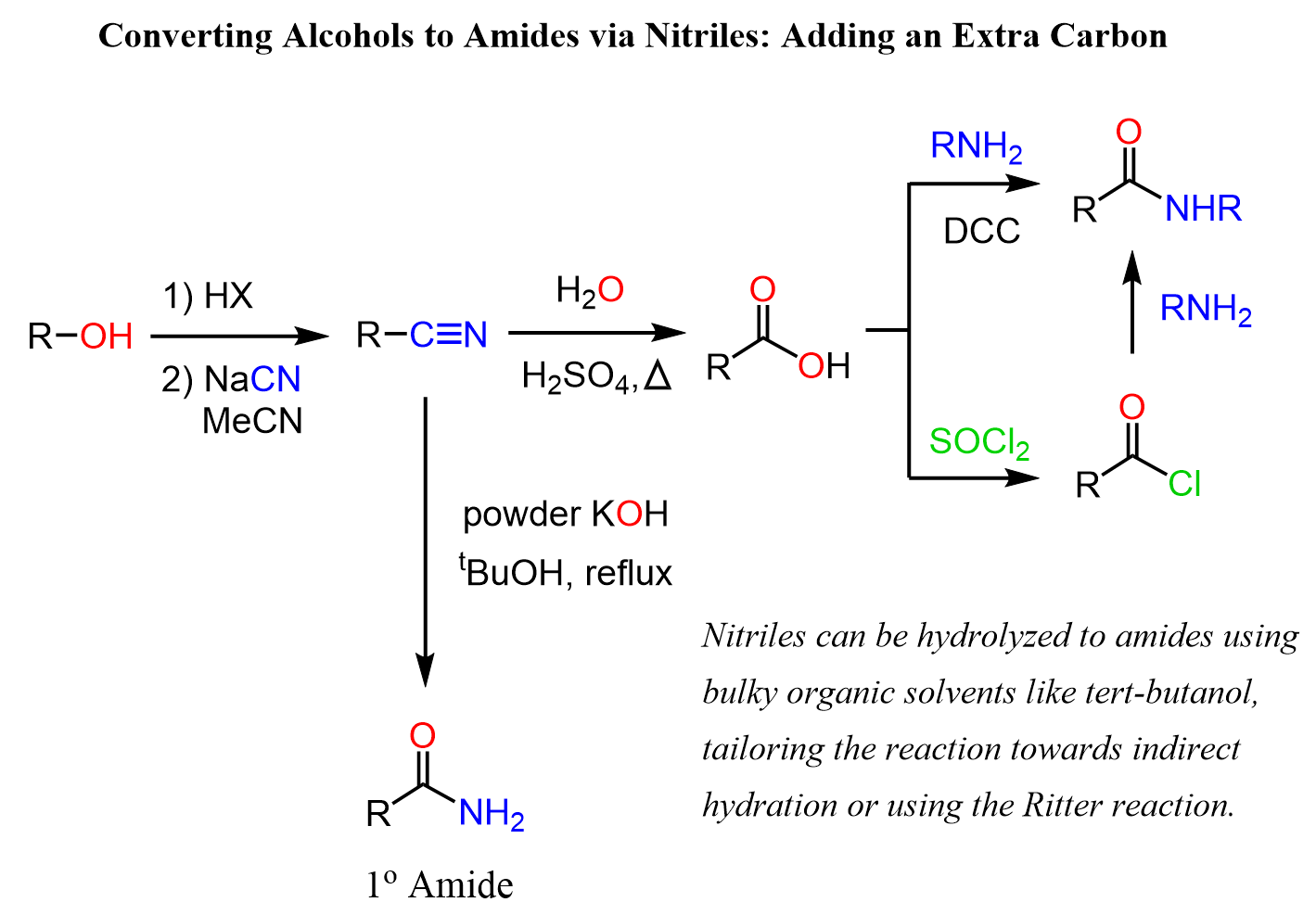
There are a few strategies to convert alcohols to amides, and to discuss them, we first need to decide whether the alcohol is going to be the acyl or amino part of the amide: Alcohols to Amides via … Read more
In the following posts, we will learn about the main reactions of alcohols. Each post is accompanied by practice problems of alcohol reactions to show the transformations and their corresponding mechanisms. The practice problems include simple one-step transformations such as the preparation of alcohols by reductions reactions of carbonyl compounds using NaBH4, LiAlH4, Pd/C, DIBAL-H and many more, as well as the oxidation of the alcohols to convert them into aldehydes, ketones and carboxylic acids depending on the reagent that is used. All the major oxidizing agents such as Na2Cr2O7/ H2SO4, H2CrO4, CrO3/ H+, KMnO4/ -OH/ H+, NaClO/AcOH. will also be discussed.

We will also discuss in detail how alcohols react in substitution and elimination reactions. This will include the reactions where alcohols are used as a substrate and also reactions where they work as the base and the nucleophile.
The Grignard Reaction used for the synthesis of alcohols and in general, the application of the Grignard Reaction in Organic Synthesis is also covered in many examples. To be used in organic synthesis, the hydroxyl group often needs to be protected in the presence of strong bases like organometallics. The protecting groups of alcohols and strategies for their use organic synthesis are also covered with a handful of practice problems.
There are a few strategies to convert alcohols to amides, and to discuss them, we first need to decide whether the alcohol is going to be the acyl or amino part of the amide: Alcohols to Amides via … Read more
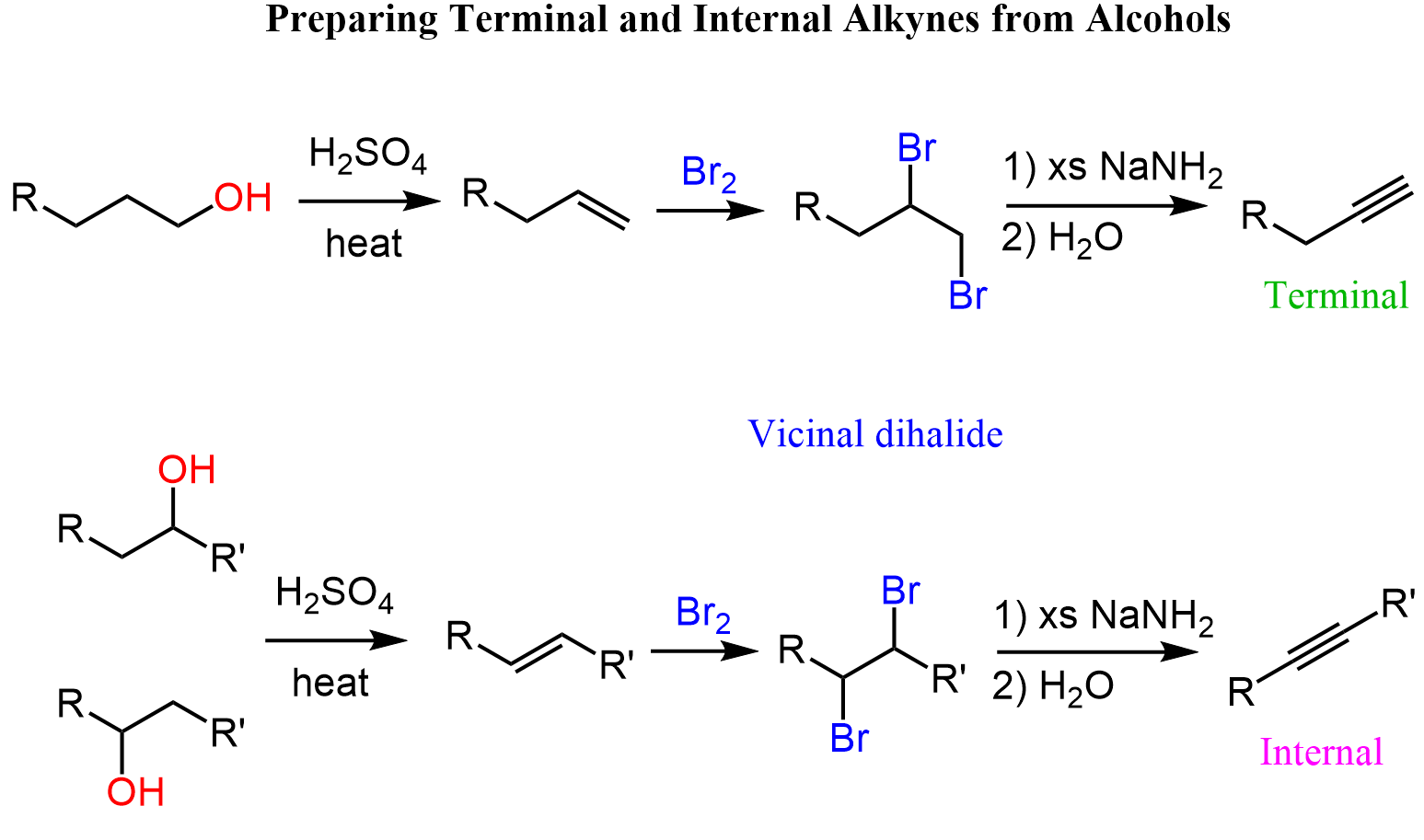
The conversion of alcohols to alkynes is a two-step process. We need to first dehydrate to an alkene, and halogenate the latter to a dihalide, which can now be treated with a strong base such as sodium amide (NaNH2) to … Read more
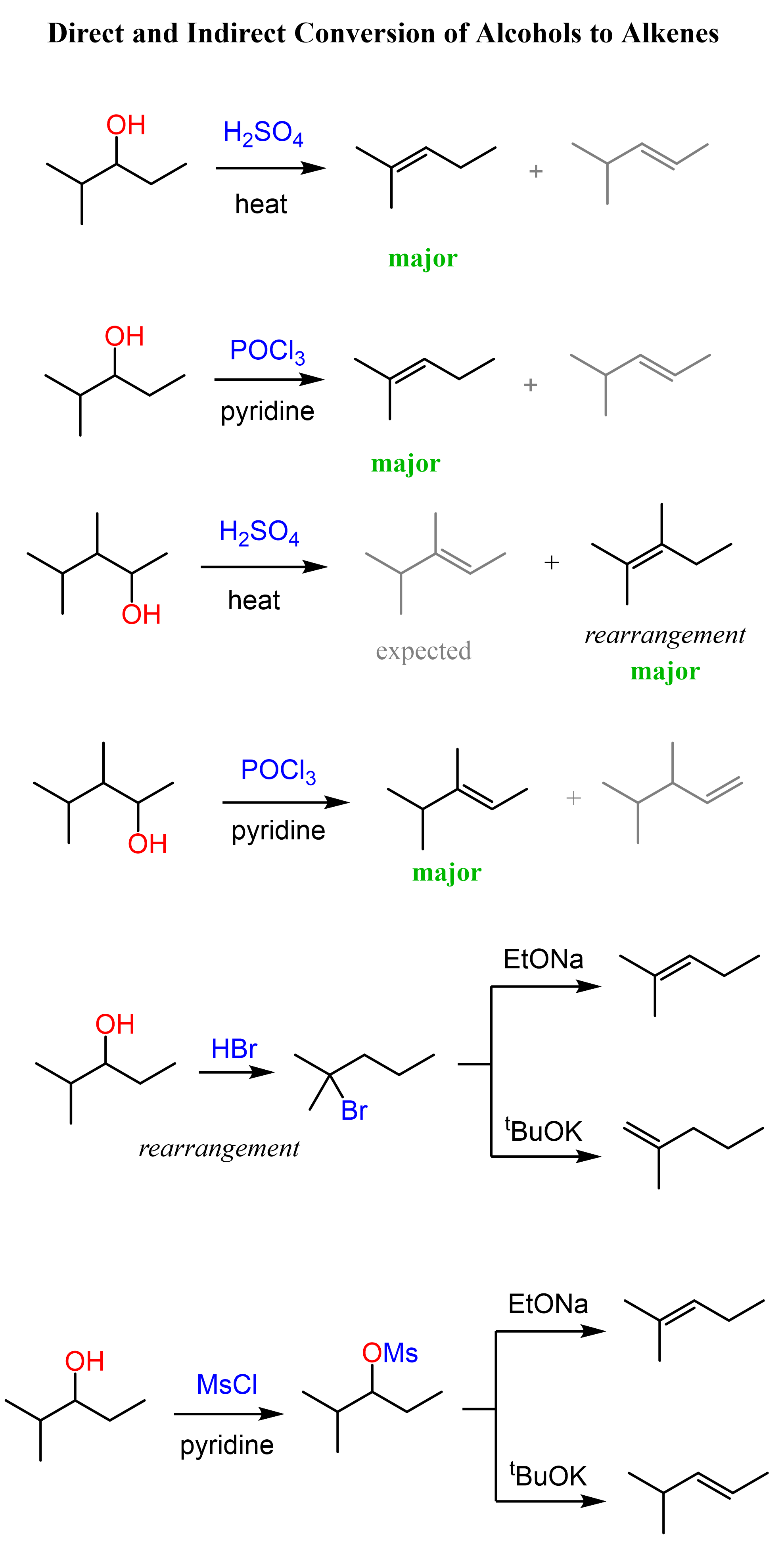
In the previous post, we discussed the methods for converting alkenes to alcohols via Markovnikov and anti-Markovnikov addition of water, the strategies to avoid possible rearrangements when the reactions go through carbocation rearrangements, as well as the indirect addition of … Read more

Amines from Alcohols Via Substitution Reactions Although amines are good nucleophiles, we cannot use them is a direct SN2 reaction to achieve the OH to NH2 conversion because the hydroxide ion is a poor leaving group. So, the … Read more

Preparation of Thiols Thiols (RSH) are prepared by relying on the high nucleophilicity of sulfur. For example, the reaction of sodium hydrosulfide with unhindered alkyl halides is the most common approach for preparing thiols. Because of the high … Read more

Thiols are sulfur analogues of alcohols, containing an SH group in place of the OH group. When naming a thiol, we follow the same rules we discussed earlier for the IUPAC nomenclature rules for alcohols, with the focus on giving … Read more
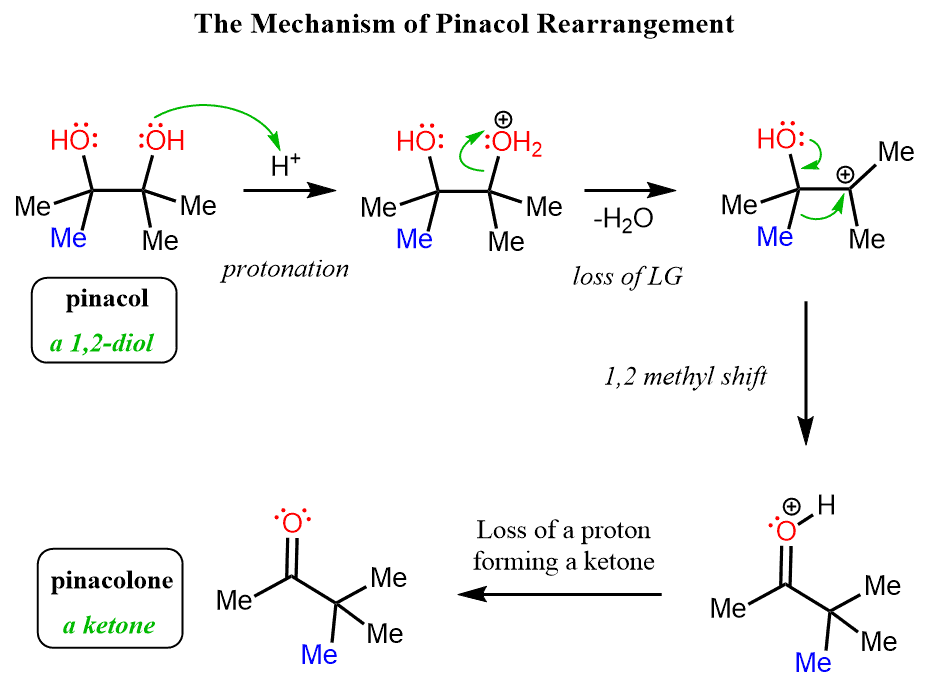
When 1,2-diols (vicinal diols) are treated with acid, a rearrangement takes place, and the diol is transformed to a ketone. This reaction is known as the pinacol rearrangement since pinacol is the simplest diol capable of undergoing such … Read more

Introduction and Nomenclature of Diols In an earlier article, we discussed the nomenclature of alcohols and mentioned that the presence of a hydroxyl group is identified by changing the parent suffix from “e” to “ol”: Now, compounds with … Read more

A comprehensive set of practice problems on the reactions of alcohols including substitution, elimination, oxidation, as well as multistep synthesis through the formation of alkenes and subsequent addition reactions. се

Sodium periodate (NaIO4) is a strong oxidizing agent mainly used for the oxidative cleavage of 1,2-diols (vicinal diols), forming aldehydes and ketones depending on the structure of the alcohol. So, there are two things happening here: 1) the … Read more