
The Bombardier beetle uses one of the most famous examples of chemical defense in nature. When threatened, it mixes hydroquinone and hydrogen peroxide with enzymes in a specialized reaction chamber, triggering a highly exothermic oxidation that converts hydroquinone into p-Benzoquinone. The enzymes (such as catalases and peroxidases) rapidly decompose hydrogen peroxide and accelerate the reaction, generating heat and gases at the same time. As a result, the temperature of the mixture rises close to that of boiling water, and pressure builds up inside the chamber. The beetle then releases this hot, pressurized, and chemically irritating spray in controlled pulses, allowing it to accurately aim at predators and effectively deter attacks.
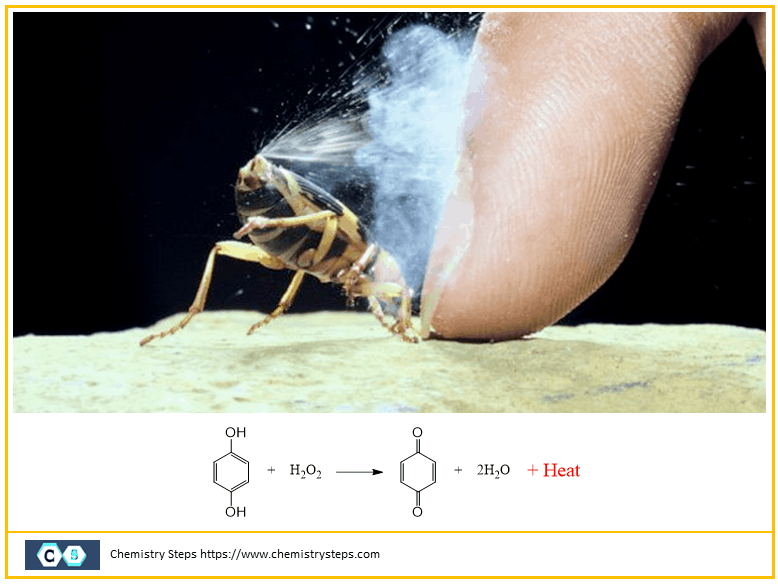
The reaction shown above is the oxidation of Hydroquinone to p-Benzoquinone (also called 1,4-benzoquinone).
Hydroquinone is a derivative of phenol, which is an aromatic compound consisting of a hydroxyl group directly attached to a benzene ring and is an important structural motif in both chemistry and biology. Phenol derivatives are widely found in natural products, pharmaceuticals, and industrial chemicals, and they play key roles due to their unique combination of aromatic stability and functional group reactivity. Their ability to undergo oxidation, substitution, and hydrogen bonding makes them essential building blocks in synthesis as well as important components in materials, antioxidants, and biologically active molecules.
Check this post on the reactions of phenols for more examples, mechanisms, and practical problems.