Organic Acids and Bases Practice Problems

This is a summary practice problem set on organic acids and bases. The questions cover:

The definition of organic acids and bases, as well as conjugate acids and bases, drawing acid-base mechanism, acid and base strength based on pKa, factors determining the acid strength, choosing acids and bases for protonating or deprotonating organic compounds, as well as Lewis acids and bases.

The problems are taken from the corresponding topics which, together with the answers, can be found by following the “Answers” link after each problem set.

There is also a multiple-choice quiz on organic acids and bases available for registered users of Chemistry Steps:


Practice

1.

Draw a mechanism for the following acid-base reactions. Label the acid, base, conjugate acid, and conjugate base:


Answers

2.

Draw the conjugate base for each of the following acids:

Answers

3.

Draw the conjugate acid for each of the following bases:


Answers

4.

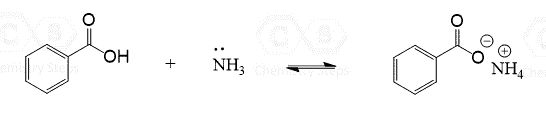
Draw a mechanism for the following acid-base reaction. Label the acid, base, conjugate acid, and conjugate base:

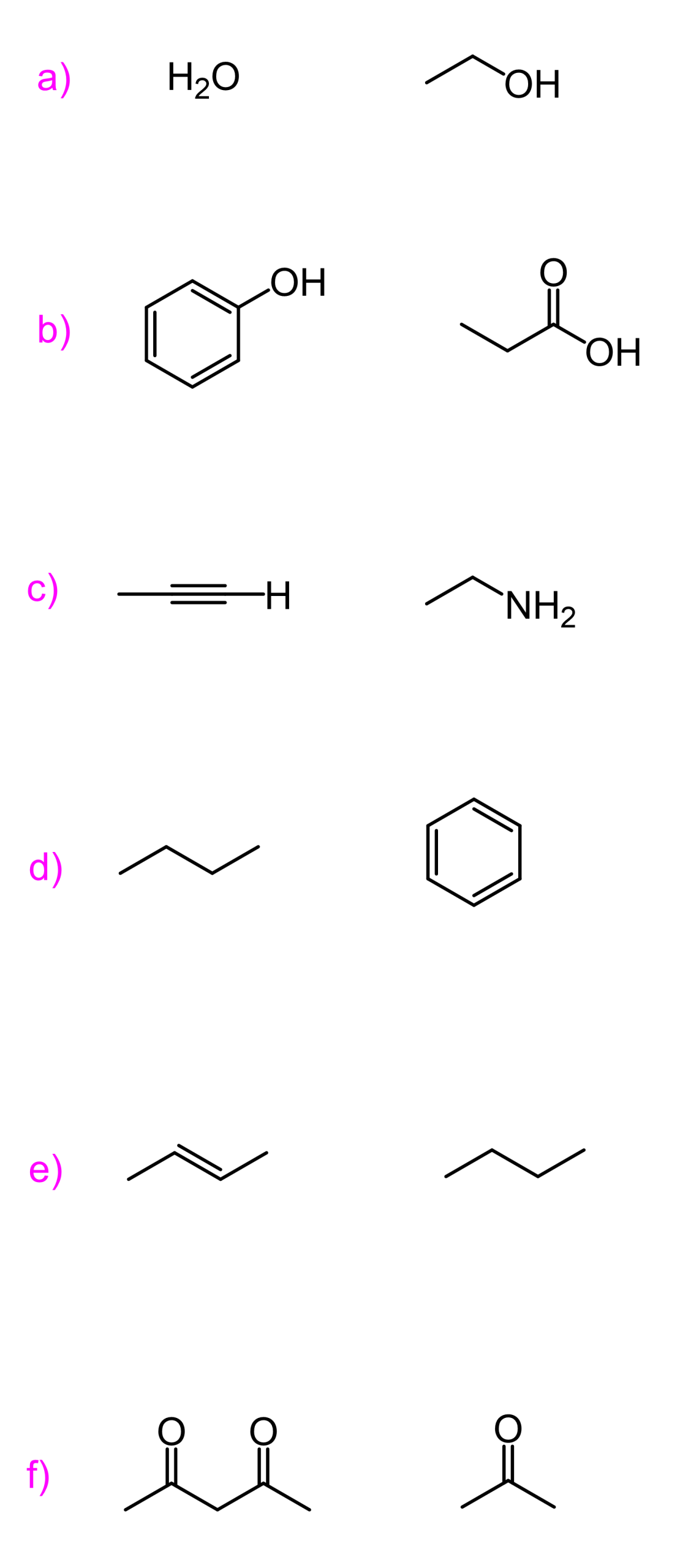
5.

For each pair of compounds below, highlight the most acidic proton and identify the more acidic compound:


Answers

6.

Using the pKa values in the Table, determine the position of equilibrium for each of the following acid-base reactions: Is the acid strong enough to protonate the base, or, which is the same to say, is the base strong enough to deprotonate the acid in each reaction? Or, the question can also be formulated: Will each of the following reactions proceed to a significant extent?


Answers

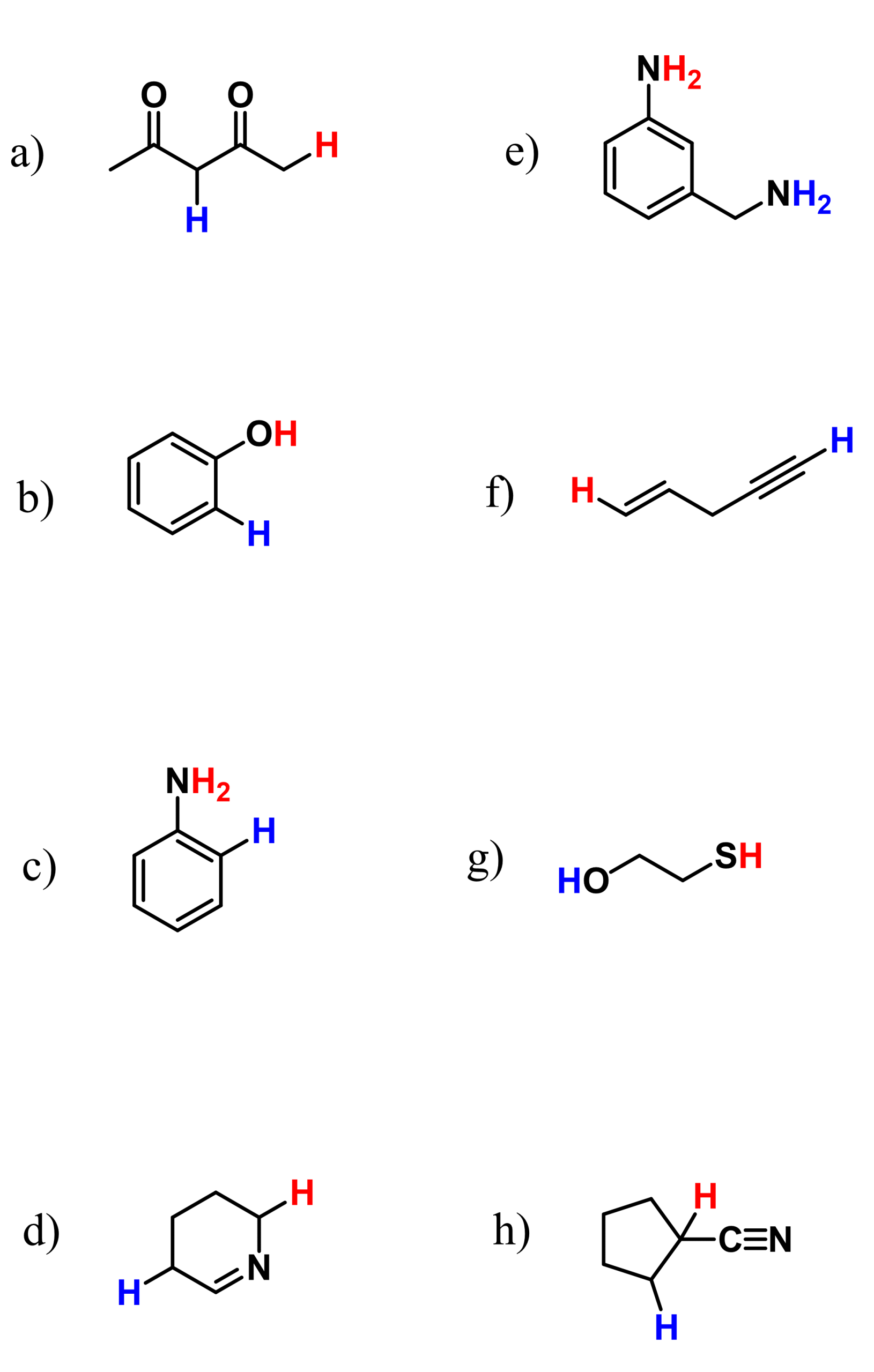
7.

Determine if the blue- or red-colored proton is more acidic in each of the following compounds:


Answers

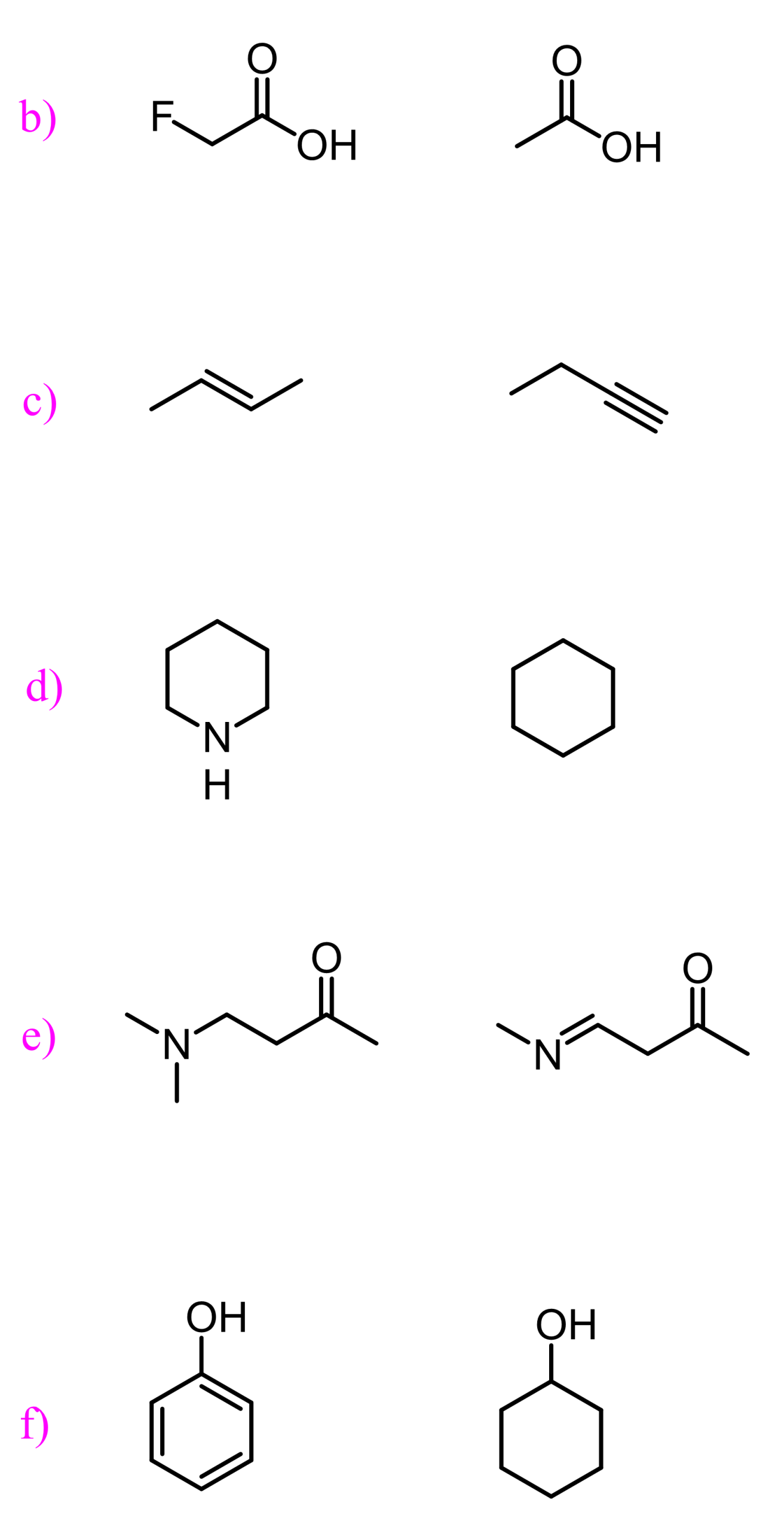
8.

Identify the most acidic proton in each molecule and then, based on that, the more acidic compound for each pair shown below. Consider the electronegativity, hybridization, and possible resonance stabilization of the conjugate bases.


Answers

9.

Download the PDF file of the pKa Table below here to work on the following problems.

Determine, based on the pKa values, if each of the following compounds can be protonated by water. Write the corresponding chemical equation and remember that the equilibrium is shifted towards a weaker base and acid (higher pKa value).

Answers

10.

Using the pKa table, determine a suitable reagent (except H3O+ and other inorganic acids) to protonate the following species. Use each reagent only once. Write the second product of the reaction as well.

Answers

11.

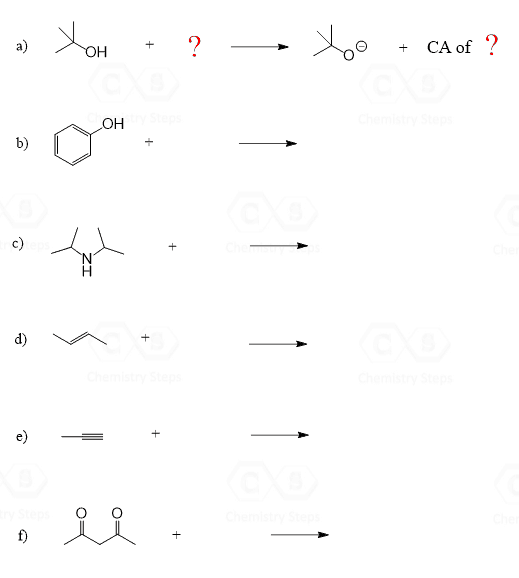
Using the pKa table, determine a suitable reagent to deprotonate the following compounds. Each reagent can only be used once. Indicate the pKa values and write the second product as well.

Answers

Share Your Thoughts, Ask that Question!

Stuck? Need a Quick Guidance?

🔴 Our Live Board is Here! 🖥️✏️