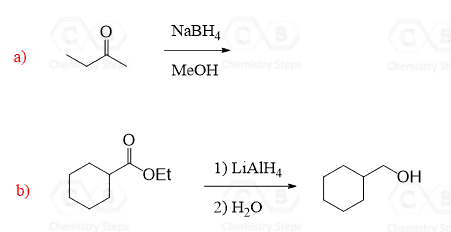
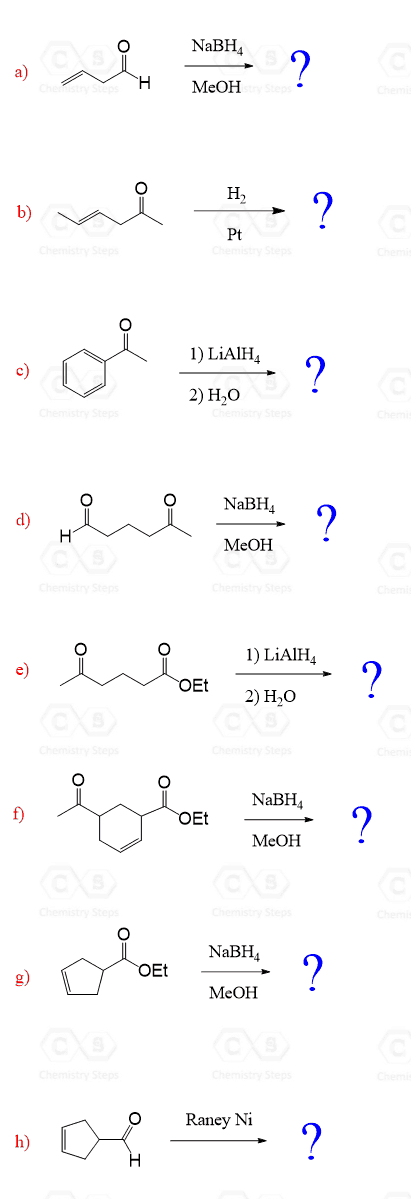
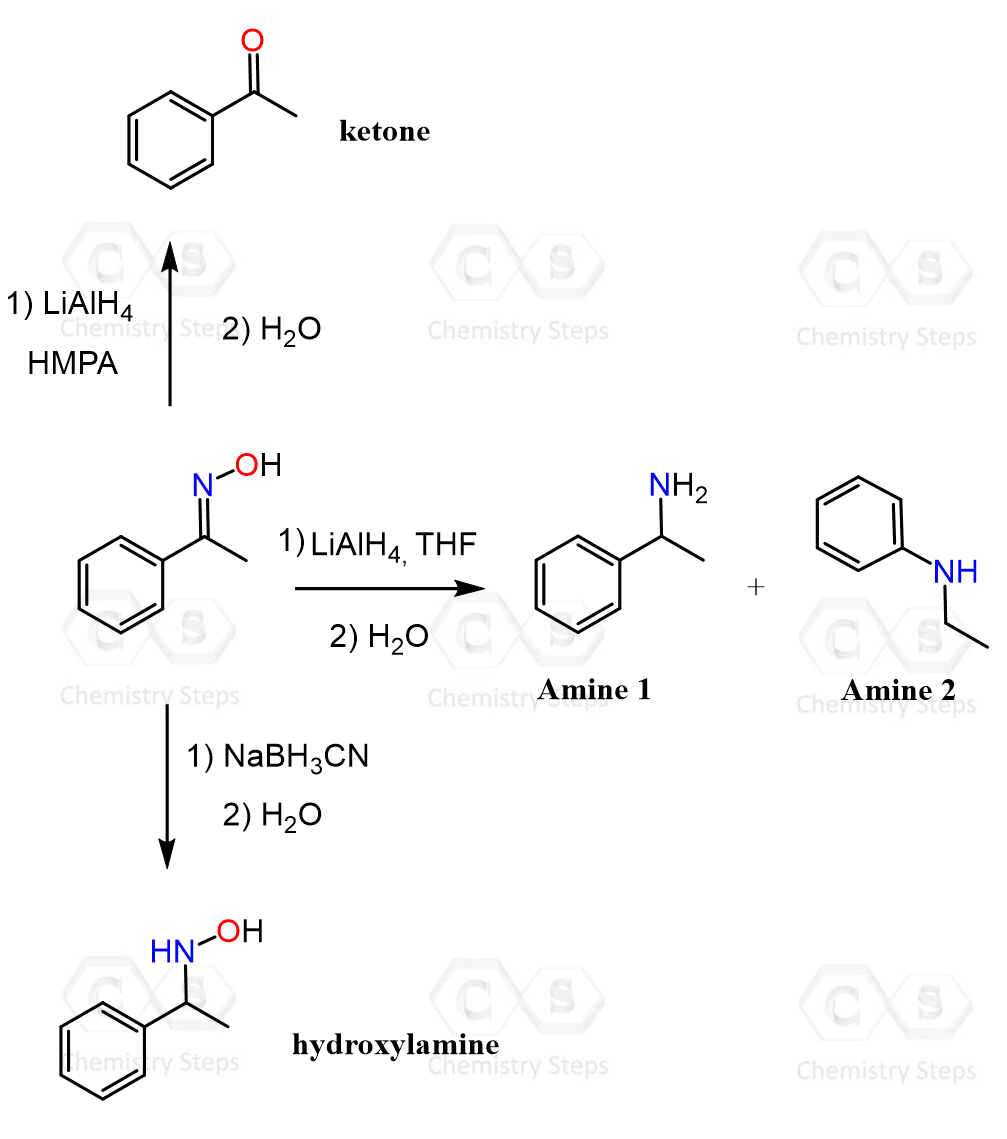
Alcohols can be prepared by reduction of aldehydes, ketones, esters and other carbonyl containing compounds. There are dozens of reagents such as LiAlH4, BaBH4, DIBAL for reducing carbonyls to alcohols. Each of these reagents has advantages and disadvantages. Some are very powerful while others are more selective.
The specifics of these reagents and their mechanism of carbonyl reductions is covered in this post.
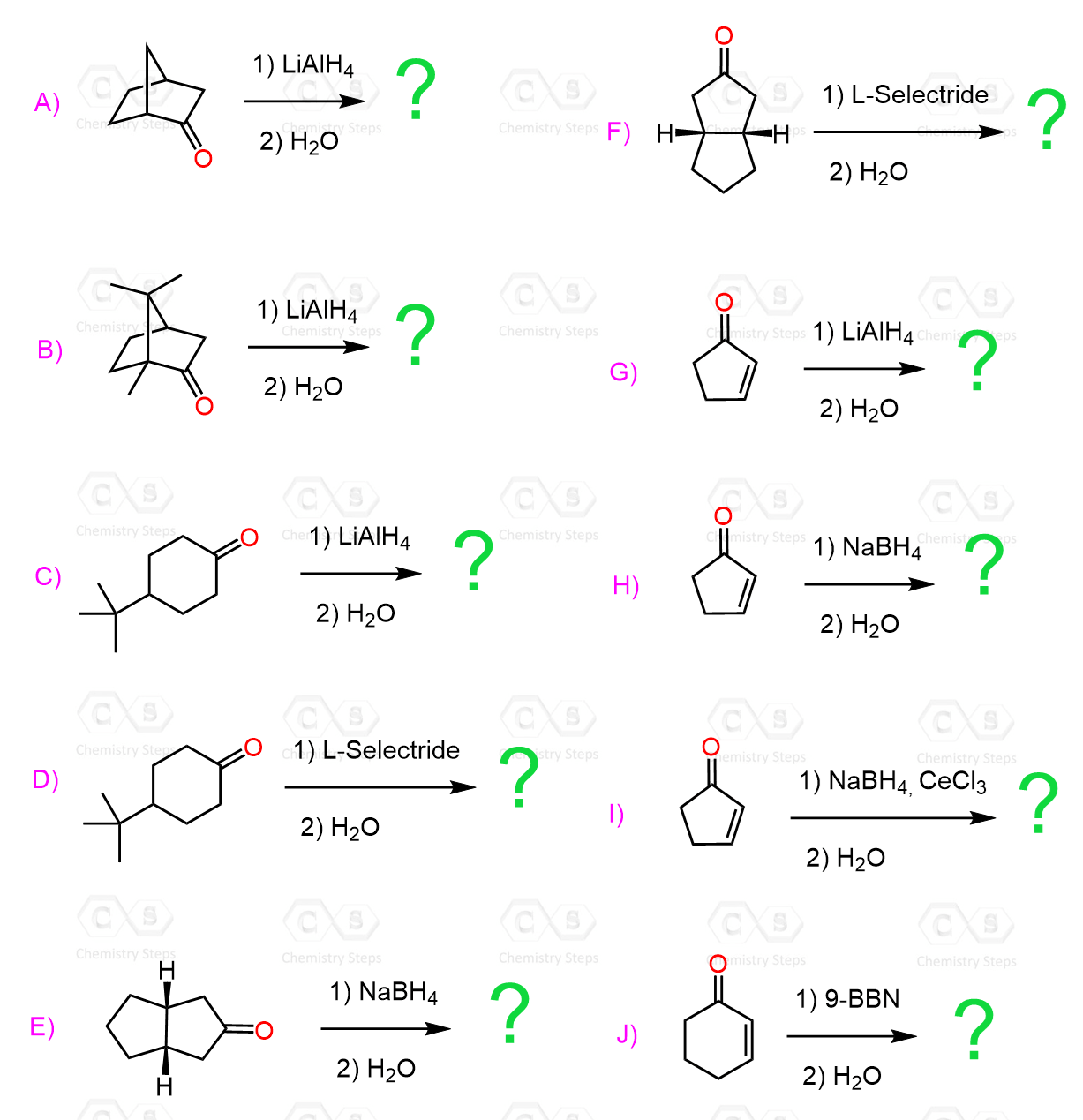
In the following sets of practice problems, we will discuss the reduction of aldehydes, ketones, and other carbonyl compounds, including conjugated systems such as cyclohexenone and cyclopentenone, as well as the stereochemistry of reducing cyclic and bicyclic carbonyl compounds.