You may have noticed that we use lots of reduction reactions, such as those of carbonyls, such as aldehydes, ketones, esters, nitro groups, nitriles, etc., and we do not bother about the benzene ring that appears in the same molecule:
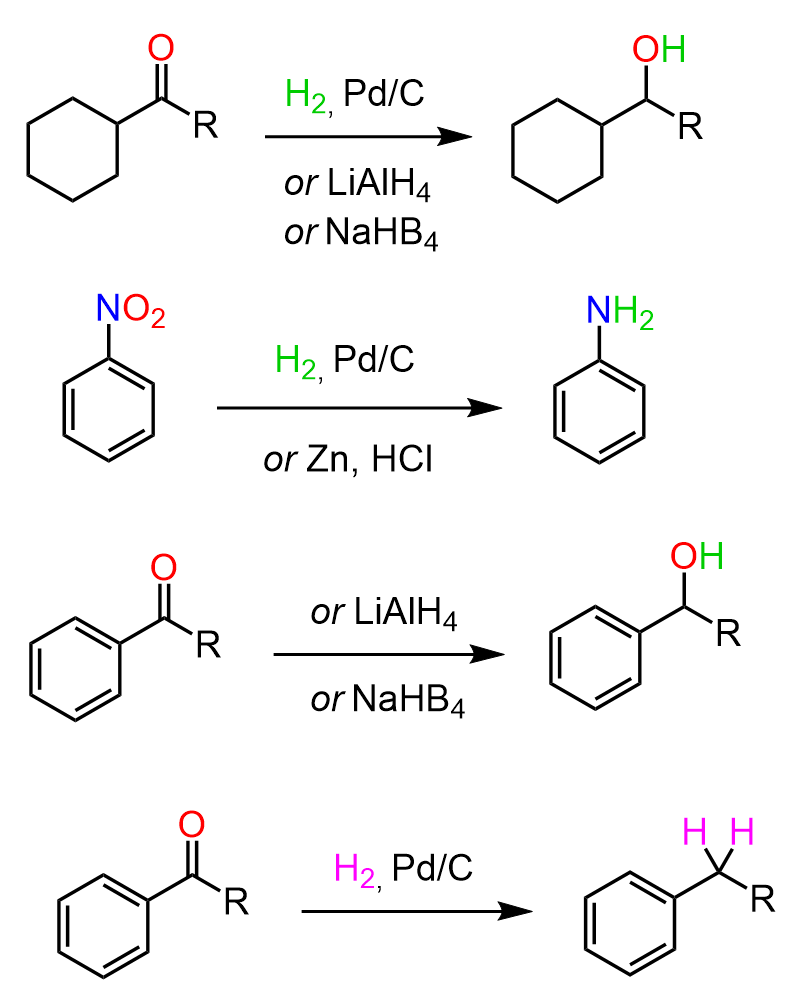
Notice in the last example that benzylic ketones are normally reduced to CH2 when catalytic hydrogenation is used.
So, there is almost always this habitual assurance of knowing that nothing’s going to happen to the benzene ring, and it is partly justified, too. One thing we learned earlier in the chapter on aromatic compounds is that they are very stable due to their unique geometrical and electronic structures, which we also saw when comparing the heats of hydrogenation of regular C=C bonds and those of benzene:
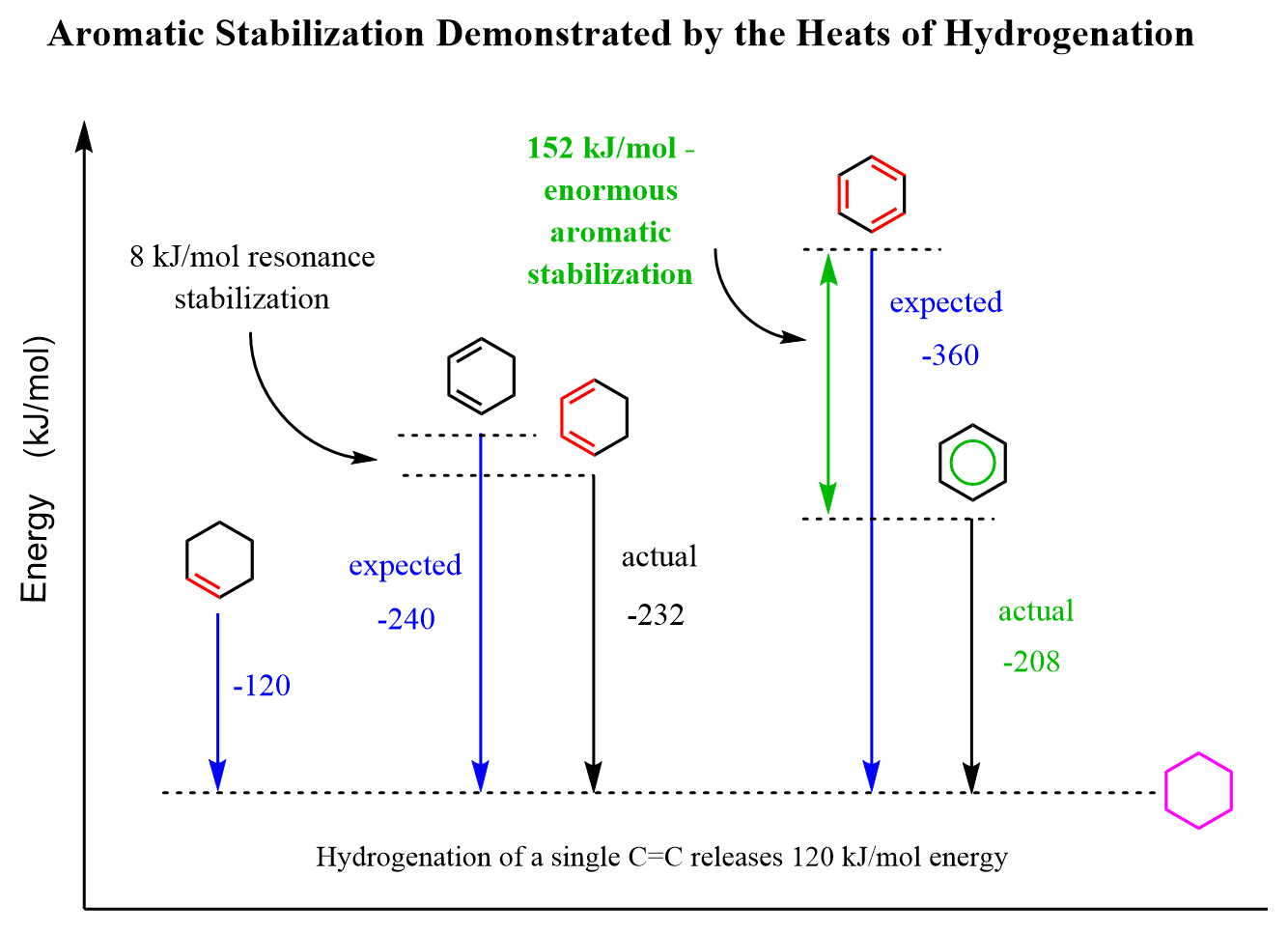
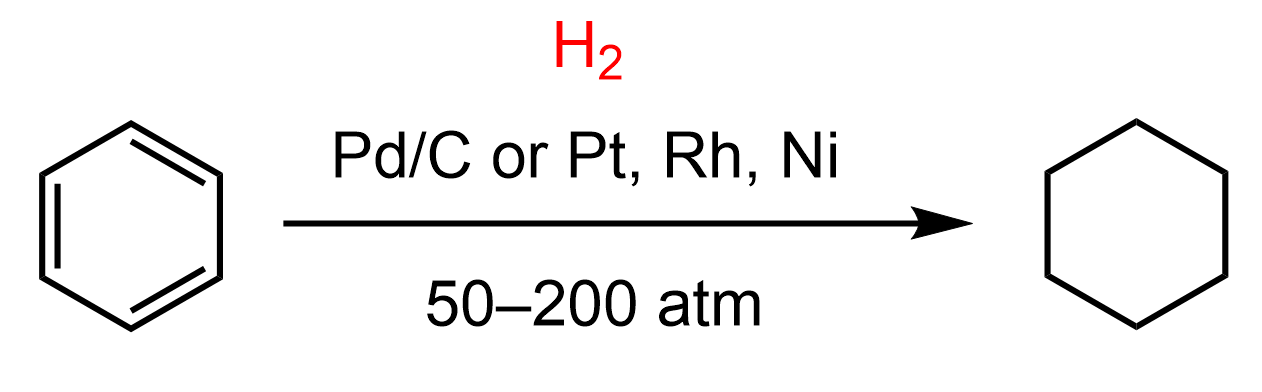
As the image suggests, the benzene ring can indeed be reduced by using different transition metal catalysts such as Pt, Pd, Ni, etc., and adjusting the reaction pressure.
No matter which transition metal we use, though, these conditions are going to be either harsh or extremely harsh, and we are going to reduce or just mess up any other functional group that is in the molecule.
So, the question is, how do we actually reduce aromatic compounds?
One excellent approach for reducing the aromatic ring whilst leaving the other functional groups alone is the Birch reduction, which is a dissolving metal reduction of aromatic compounds using an alkali metal such as sodium or lithium in liquid ammonia, typically in the presence of an alcohol as a proton source. This reaction does not fully reduce the benzene ring to a cyclohexane, but instead converts it into a 1,4-cyclohexadiene.
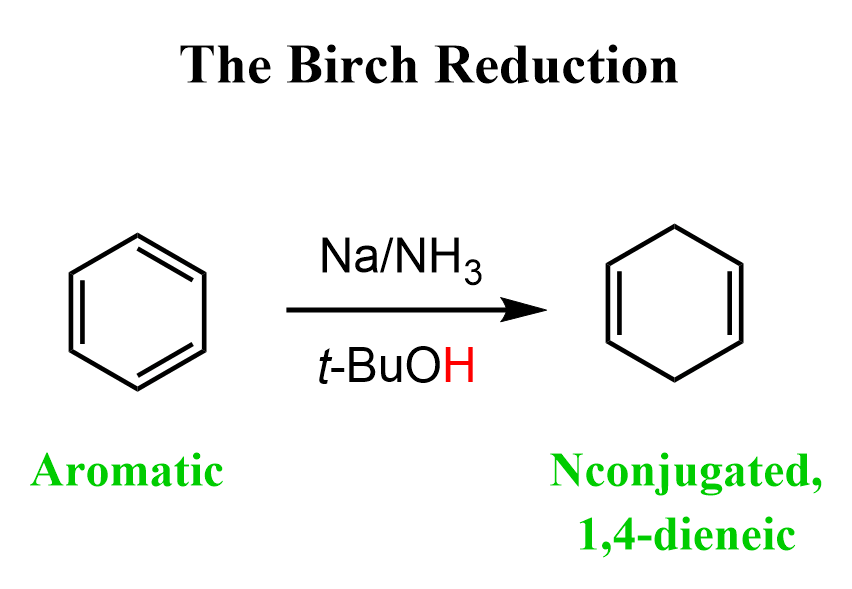
The key feature of the Birch reduction is its selectivity and mildness compared to catalytic hydrogenation, allowing many functional groups such as esters, alcohols, and halides to remain intact under the reaction conditions.
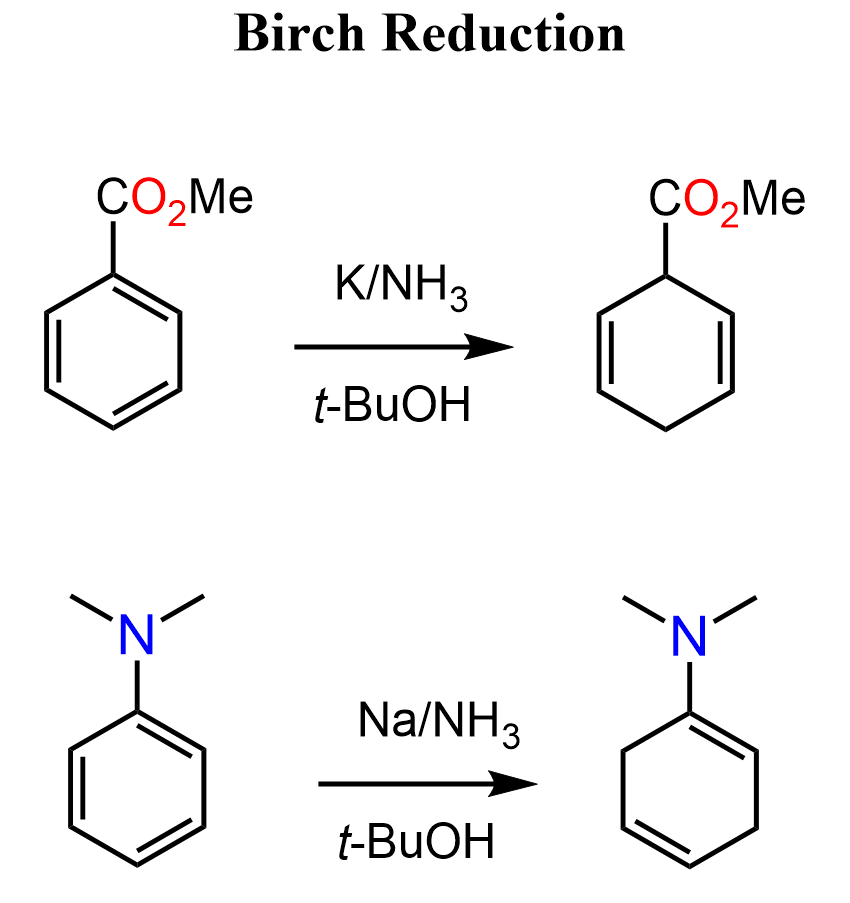
The Mechanism of Birch Reduction
The mechanism of Birch reduction is similar to what we saw for the conversion of alkynes to alkenes. Remember, when an alkali metal like sodium, potassium, or lithium is dissolved in ammonia, a “sea of electrons” is formed. We also call them solvated electrons. These electrons are highly reducing species and are responsible for initiating the reaction.
The reduction starts with an electron transfer from the metal to the aromatic ring, forming a radical anion that is protonated by the alcohol, and then the process repeats one more time until the 1,4-diene is formed.
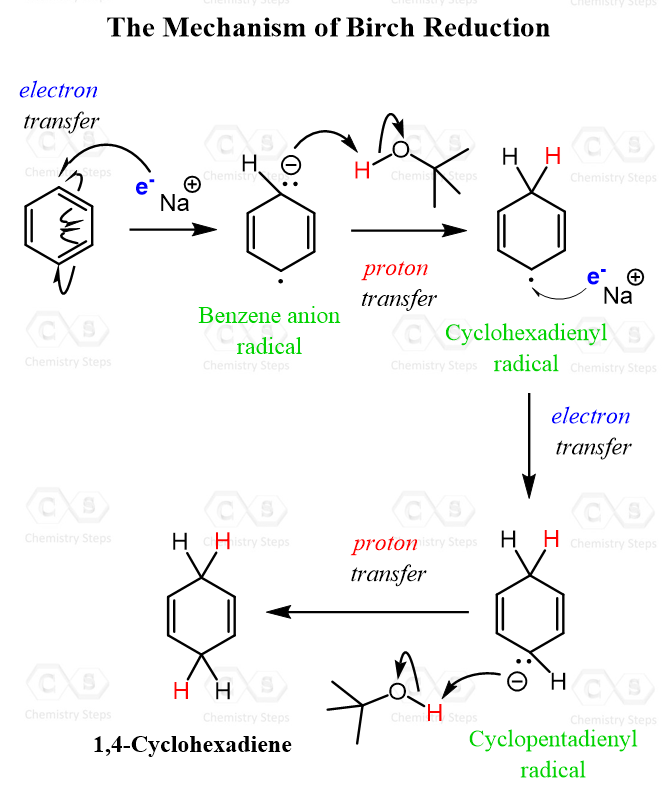
We have a dedicated post on Birch reduction, which addresses all the mechanistic details and also explains the regioselectivity of the reaction, so feel free to check it out here.
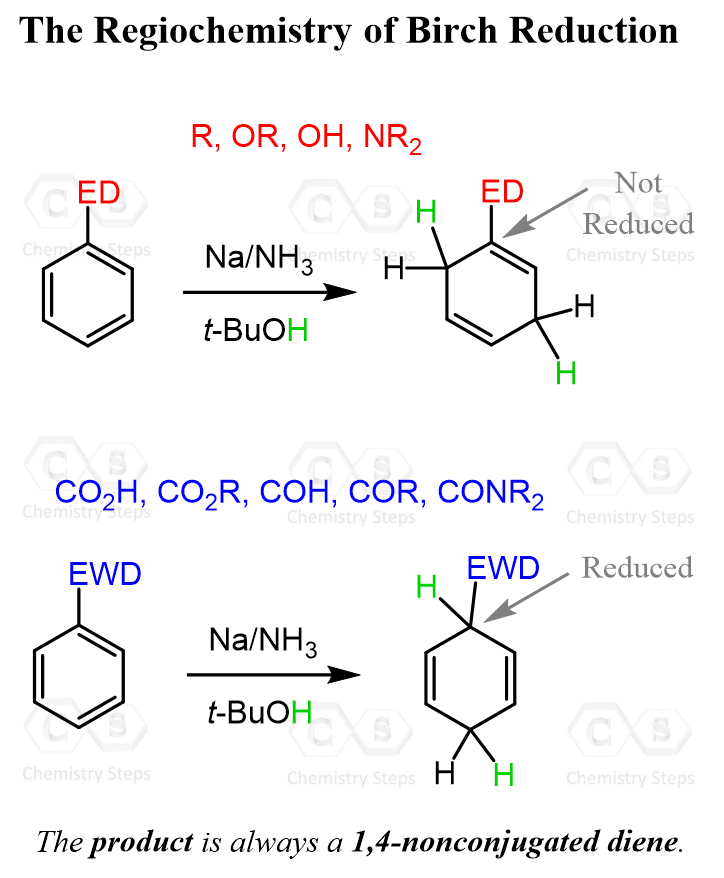
The key point about regioselectivity is that substituents on the aromatic ring influence where the double bonds remain in the final product. Electron-withdrawing groups (EWG) tend to stabilize the adjacent anionic intermediate, so this double bond is ultimately reduced.
In contrast, electron-donating groups (EDG) destabilize negative charge, and the double bonds adjacent to them are not reduced:
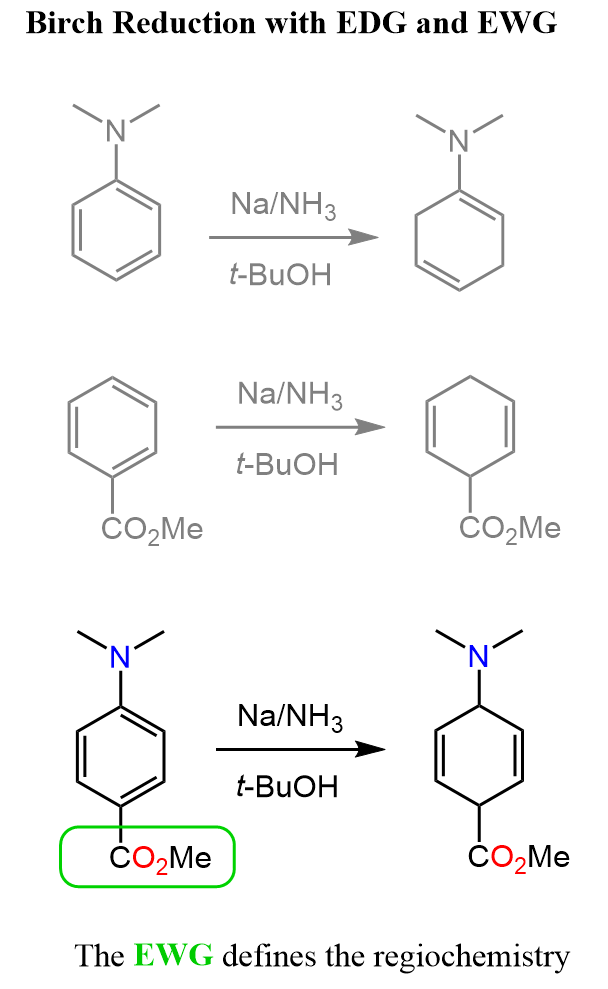
For example, the following benzene ring bears an electron-donating amino group and electron-withdrawing ester groups, and the result of the Birch reduction is a 1,4-diene where the double bond next to the EWG is reduced:
The Reduction of the Benzylic Position
The benzylic position (the carbon directly attached to an aromatic ring) can often be reduced by catalytic hydrogenation or hydride sources such as LiAlH4 and NaBH4 that leave the aromatic ring itself intact.
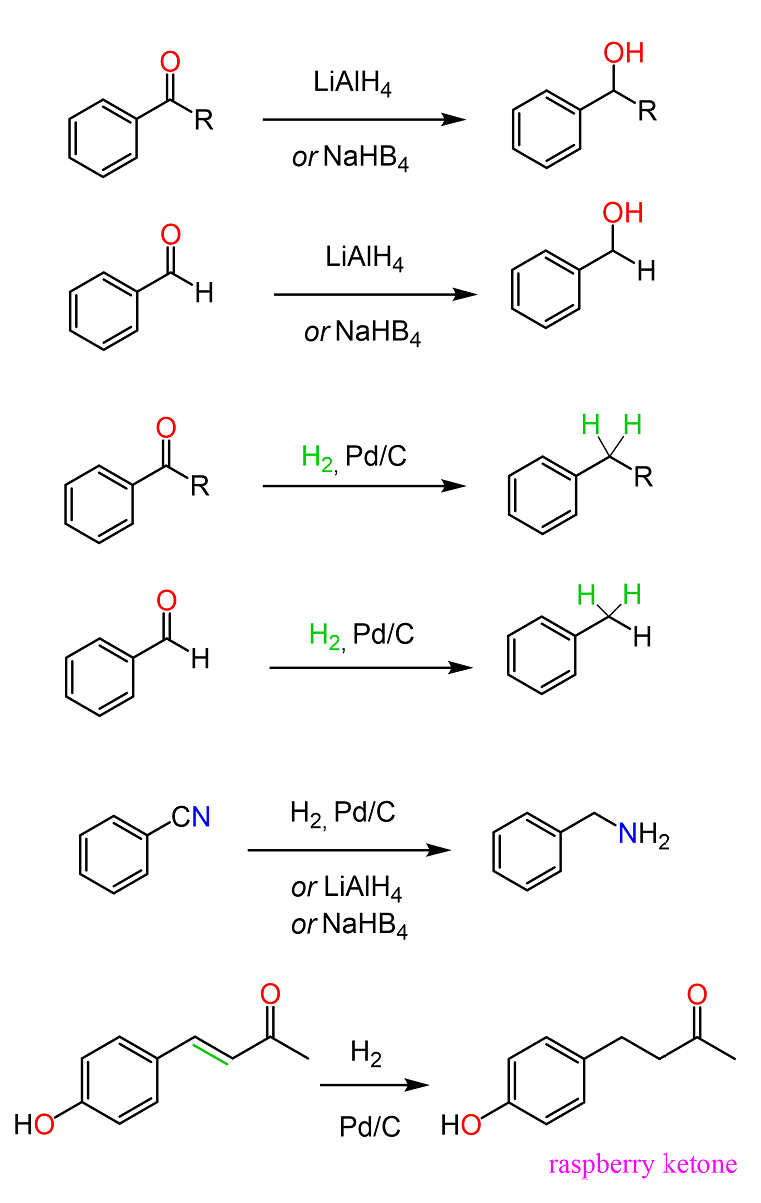
Notice that in the last example, the C=C double bond is reduced while the aromatic and carbonyl systems remain intact. These types of selectivity are sometimes possible by adjusting the reaction conditions, which, in the case of catalytic hydrogenation, is mainly the applied pressure.
Because the benzylic C–H bonds are relatively weak and the benzylic radical or carbocation is stabilized by resonance, this position is more reactive than a typical alkyl side chain. As a result, common carbonyl reduction methods such as the Clemmensen reduction (Zn(Hg), HCl) or the Wolff-Kishner reduction (NH₂NH₂, strong base, heat) are widely used to convert benzylic carbonyl groups (such as benzaldehydes or aryl ketones) into alkyl side chains.

The reduction of aryl ketones is especially useful for introducing alkyl groups that are prone to rearrangements during Friedel–Crafts alkylation or for particular sequences of addition, considering the directing effect of the groups.
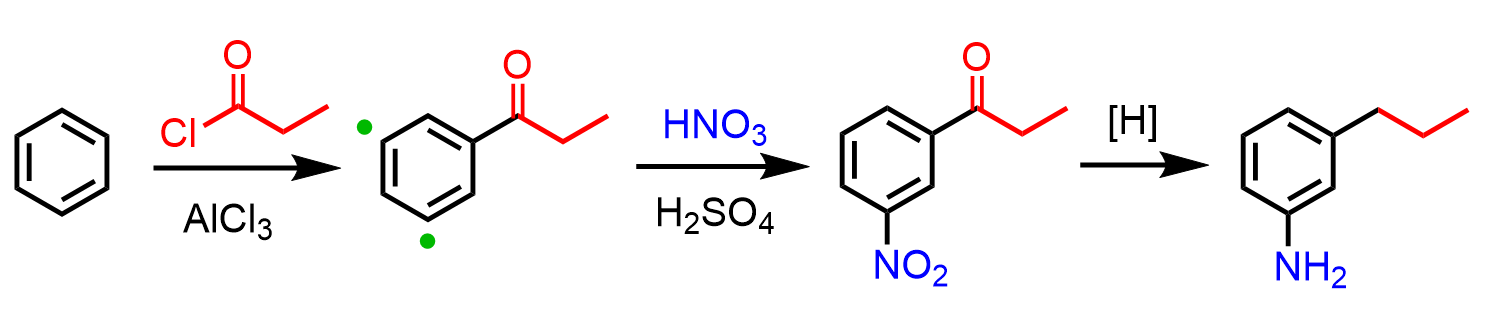
These are separate topics, though, and we will cover them later in the chapter on electrophilic aromatic substitution.
With everything we have discussed about the Birch reduction and the reduction of carbonyl groups in the benzylic position, if you want to achieve a complete reduction of the aromatic ring to a cyclohexane ring, catalytic hydrogenation under high pressure is the method of choice:
Check Also
- Electrophilic Aromatic Substitution – The Mechanism
- The Halogenation of Benzene
- The Nitration of Benzene
- The Sulfonation of Benzene
- Activating and Deactivating Groups
- Friedel-Crafts Alkylation with Practice Problems
- Friedel-Crafts Acylation with Practice Problems
- Vilsmeier-Haack Reaction
- The Alkylation of Benzene by Acylation-Reduction
- Ortho, Para, Meta in EAS with Practice Problems
- Ortho, Para, and Meta in Disubstituted Benzenes
- Why Are Halogens Ortho-, Para- Directors yet Deactivators?
- Is Phenyl an Ortho/Para or Meta Director?
- Limitations of Electrophilic Aromatic Substitution Reactions
- Orientation in Benzene Rings With More Than One Substituent
- Synthesis of Aromatic Compounds From Benzene
- Arenediazonium Salts in Electrophilic Aromatic Substitution
- Reactions at the Benzylic Position
- Benzylic Bromination
- Nucleophilic Aromatic Substitution
- Nucleophilic Aromatic Substitution Practice Problems
- Reactions of Phenols
- Reactions of Aniline
- Meta Substitution on Activated Aromatic Ring
- Birch Reduction
- Electrophilic Aromatic Substitution Practice Problems
- Aromatic Compounds Quiz
- Reactions Map of Aromatic Compounds