Friedel-Crafts Acylation with Practice Problems

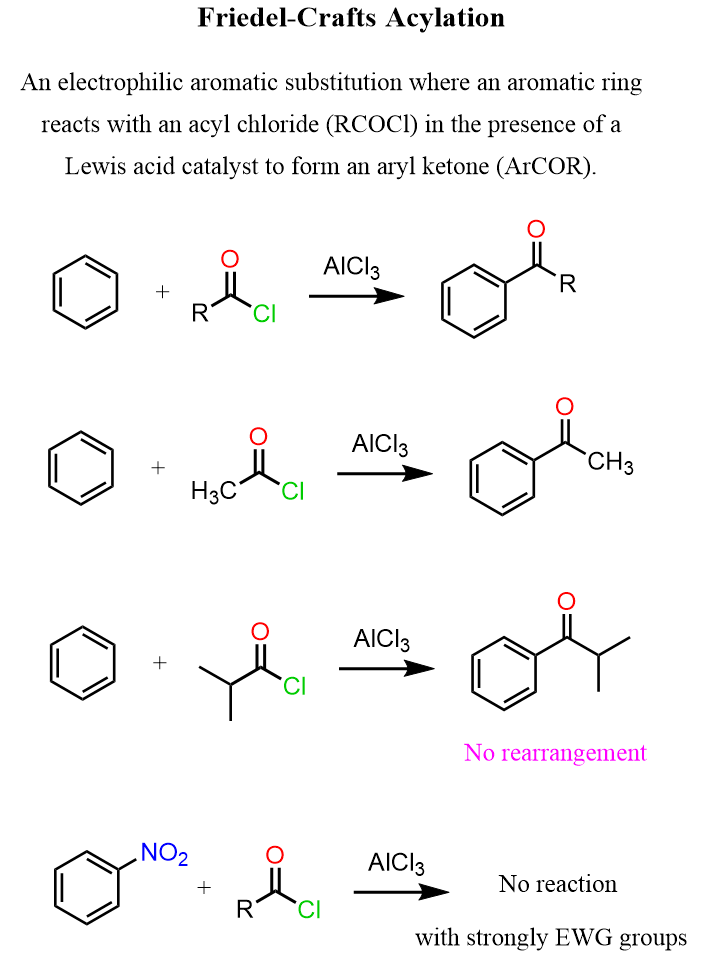
In the previous post, we learned about the Friedel–Crafts alkylation and discussed its mechanism and limitations. In Friedel–Crafts acylation, aromatic compounds are reacted with an acyl halide to prepare an aryl ketone:


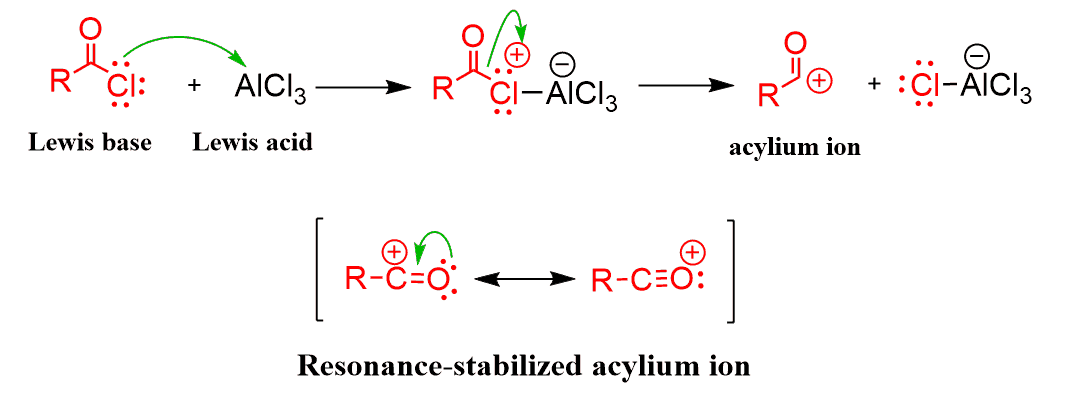
The electrophile in this reaction is the resonance-stabilized acylium ion, which is formed when the Lewis acid AlCl3 ionizes the C-Cl bond of the acyl chloride:


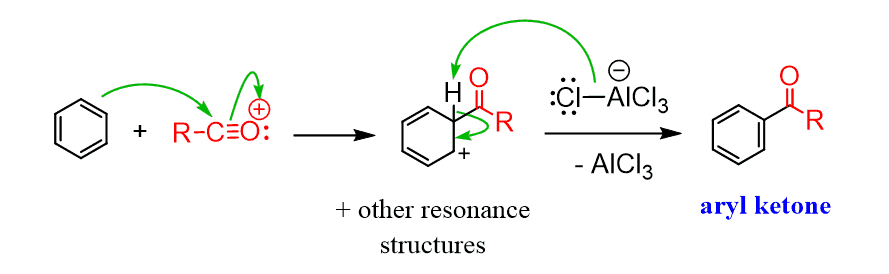
The acylium ion is a good electrophile and can be attacked by the aromatic ring according to the general mechanism of the electrophilic aromatic substitution reactions:


Carboxylic acid anhydrides can also be used for Friedel–Crafts acylations since the leaving group here is the acetate ion, which is a resonance-stabilized, good leaving group.

One important difference and advantage of the Friedel–Crafts acylation reactions is that they do not undergo rearrangements like Friedel–Crafts alkylations do:


This allows for the preparation of primary alkyl-substituted aromatic compounds since the Wolff can reduce the aryl ketones–Kishner or Clemenson reduction:


Intramolecular Friedel–Crafts Acylation is possible for aromatic compounds containing the acyl chloride functional group:


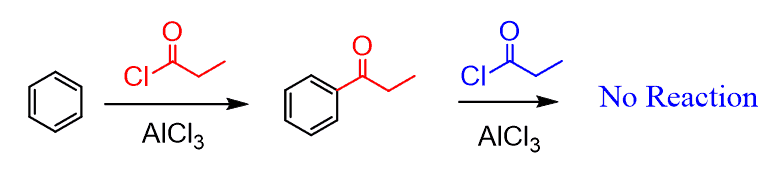
The limitation of the Friedel-Crafts alkylation not working with deactivated aromatic rings is still applied to the Friedel-Crafts Acylation as well:
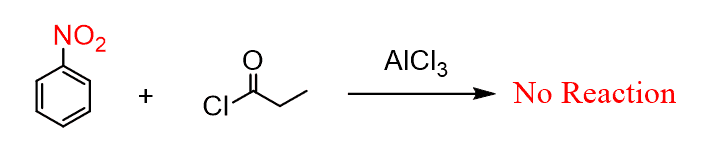


Because of this, polyacylation cannot be achieved since the carbonyl added in the first acylation deactivates the ring.


We will go over this in more detail in the upcoming posts.

Notice that we have not mentioned a Friedel-Crafts reaction for introducing an aldehyde group to the aromatic ring. The reason for this is that formyl chloride (H-COCl) and formyl anhydride are not stable reagents, and therefore, alternative methods such as the Vilsmeier-Haack formylation and Gatterman-Koch reactions are used


Practice

1.

Determine whether each of the following reactions will proceed and predict the major product and draw the mechanism for the following Friedel-Crafts Acylation reactions:

Answer

This content is for registered users only.

Click here to Register!

By joining Chemistry Steps, you will gain instant access to the answers and solutions for all the Practice Problems, including over 40 hours of problem-solving videos, Multiple-Choice Quizzes, Puzzles, Reaction Maps, and the powerful set of Organic Chemistry 1 and 2 Summary Study Guides.

Solution

This content is for registered users only.

Click here to Register!

By joining Chemistry Steps, you will gain instant access to the answers and solutions for all the Practice Problems, including over 40 hours of problem-solving videos, Multiple-Choice Quizzes, Puzzles, Reaction Maps, and the powerful set of Organic Chemistry 1 and 2 Summary Study Guides.

2.

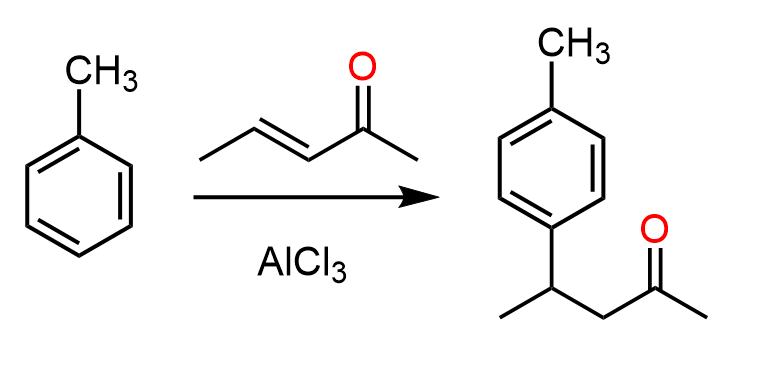
Draw a feasible mechanism for the following electrophilic aromatic substitution:


Answer

This content is for registered users only.

Click here to Register!

By joining Chemistry Steps, you will gain instant access to the answers and solutions for all the Practice Problems, including over 40 hours of problem-solving videos, Multiple-Choice Quizzes, Puzzles, Reaction Maps, and the powerful set of Organic Chemistry 1 and 2 Summary Study Guides.

3.

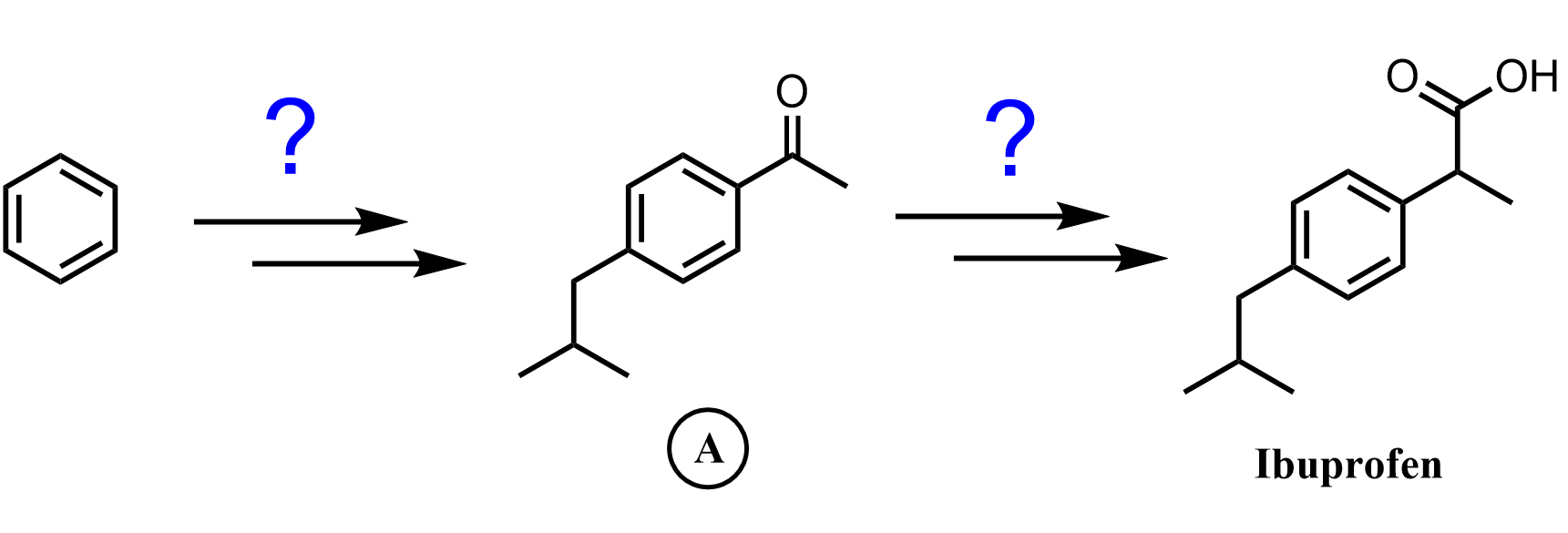
Three ways of preparing Ibuprofen from benzene are shown in this exercise. In one of them, disubstituted benzene A is formed as an intermediate.


How would you synthesize it from benzene? Can you complete the entire conversion?


Answer

This content is for registered users only.

Click here to Register!

By joining Chemistry Steps, you will gain instant access to the answers and solutions for all the Practice Problems, including over 40 hours of problem-solving videos, Multiple-Choice Quizzes, Puzzles, Reaction Maps, and the powerful set of Organic Chemistry 1 and 2 Summary Study Guides.

4.

Propose a mechanism for the following conversion:

Answer

This content is for registered users only.

Click here to Register!

By joining Chemistry Steps, you will gain instant access to the answers and solutions for all the Practice Problems, including over 40 hours of problem-solving videos, Multiple-Choice Quizzes, Puzzles, Reaction Maps, and the powerful set of Organic Chemistry 1 and 2 Summary Study Guides.

5.

Propose a mechanism for the following synthesis. Is the product aromatic or antiaromatic, and how does its structure influence the reaction?


Answer

This content is for registered users only.

Click here to Register!

By joining Chemistry Steps, you will gain instant access to the answers and solutions for all the Practice Problems, including over 40 hours of problem-solving videos, Multiple-Choice Quizzes, Puzzles, Reaction Maps, and the powerful set of Organic Chemistry 1 and 2 Summary Study Guides.

6.

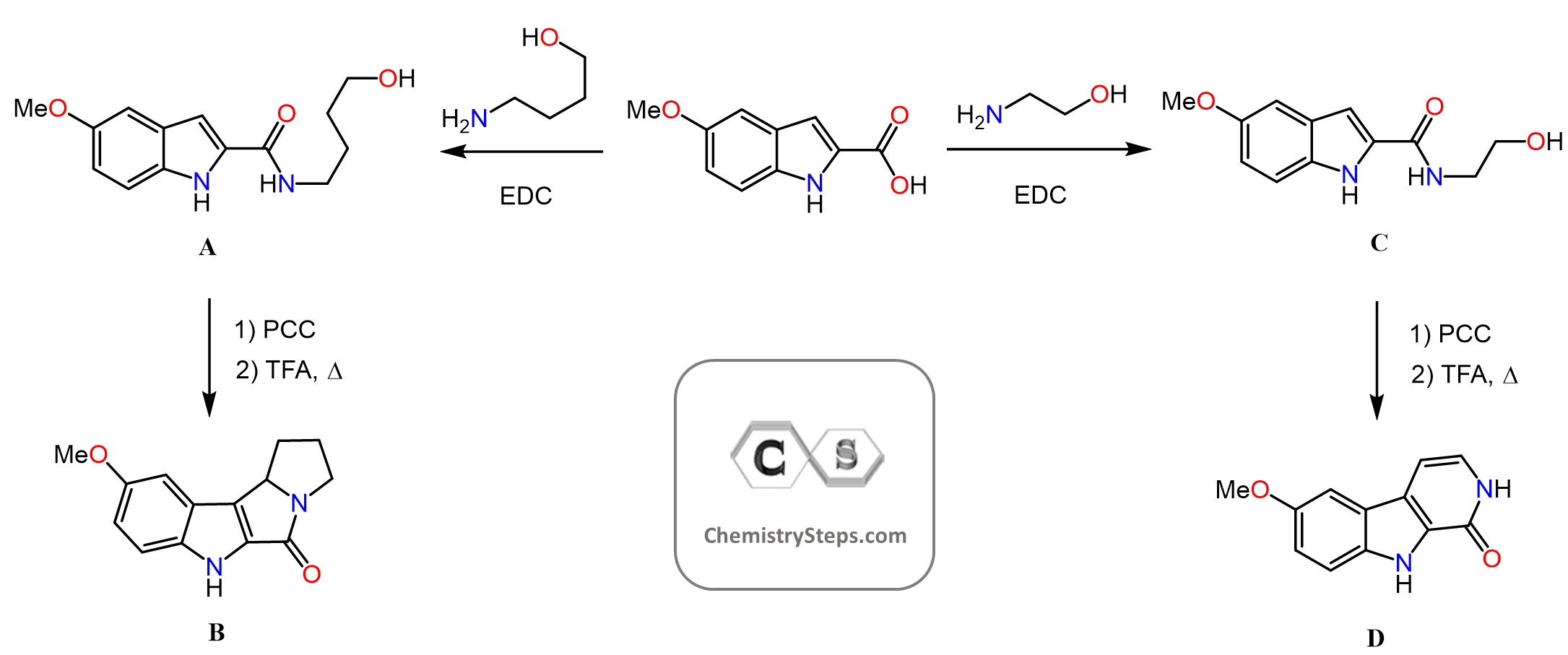
The C-D transformation is an example of an intramolecular Friedel-Crafts acylation. Draw a mechanism for this step.


Answer

This content is for registered users only.

Click here to Register!

By joining Chemistry Steps, you will gain instant access to the answers and solutions for all the Practice Problems, including over 40 hours of problem-solving videos, Multiple-Choice Quizzes, Puzzles, Reaction Maps, and the powerful set of Organic Chemistry 1 and 2 Summary Study Guides.

7.

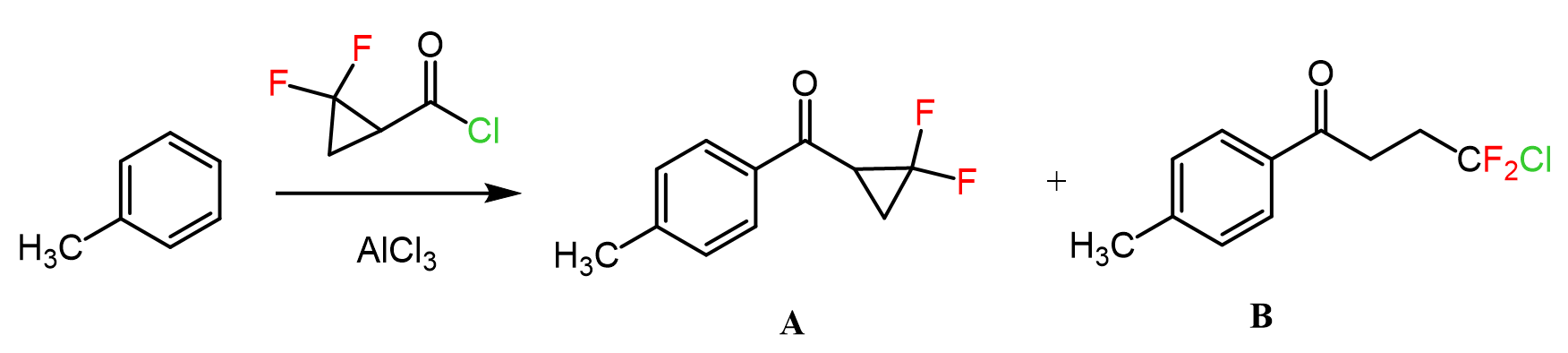
Propose a mechanism for the formation of products A and B in the following Friedel-Crafts acylation reactions:

Answer

This content is for registered users only.

Click here to Register!

By joining Chemistry Steps, you will gain instant access to the answers and solutions for all the Practice Problems, including over 40 hours of problem-solving videos, Multiple-Choice Quizzes, Puzzles, Reaction Maps, and the powerful set of Organic Chemistry 1 and 2 Summary Study Guides.

8.

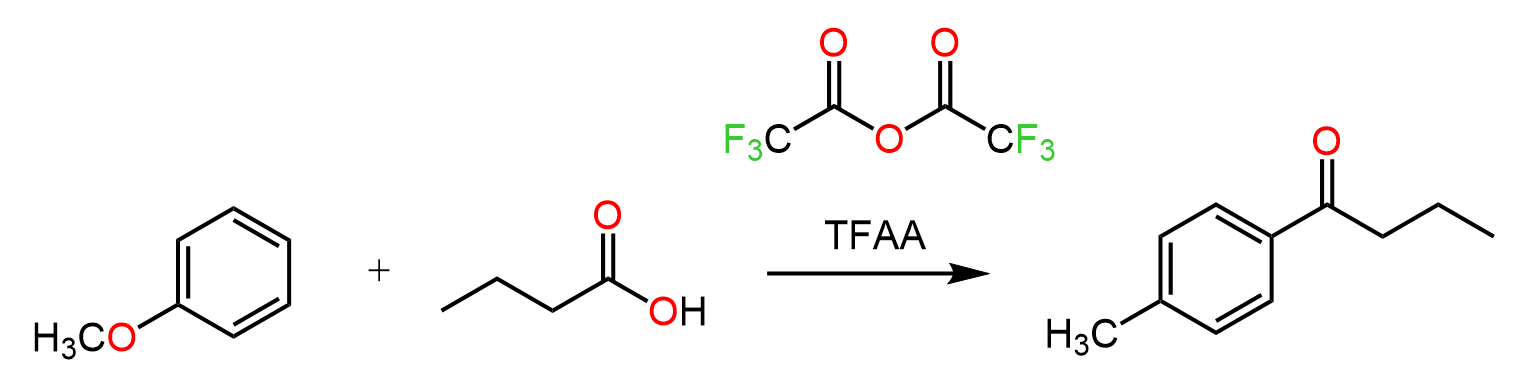
Friedel-Crafts acylation of carboxylic acids is not very common as the carbonyl group is not so electrophilic. One of the ways to activate the acid is the use of TFAA (Trifluoroacetic anhydride). Propose a mechanism for the following Friedel-Crafts acylation and explain the role of TFAA:


Answer

This content is for registered users only.

Click here to Register!

By joining Chemistry Steps, you will gain instant access to the answers and solutions for all the Practice Problems, including over 40 hours of problem-solving videos, Multiple-Choice Quizzes, Puzzles, Reaction Maps, and the powerful set of Organic Chemistry 1 and 2 Summary Study Guides.

9.

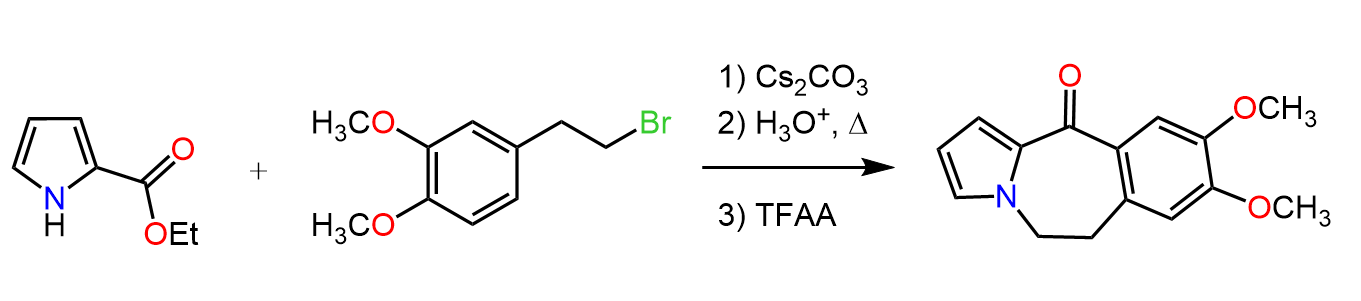
Propose a mechanism for the following Friedel-Crafts acylation reaction.


Note: H3O+ with heat is used for hydrolyzing the ester to a carboxylic acid. 

Answer

This content is for registered users only.

Click here to Register!

By joining Chemistry Steps, you will gain instant access to the answers and solutions for all the Practice Problems, including over 40 hours of problem-solving videos, Multiple-Choice Quizzes, Puzzles, Reaction Maps, and the powerful set of Organic Chemistry 1 and 2 Summary Study Guides.

10.

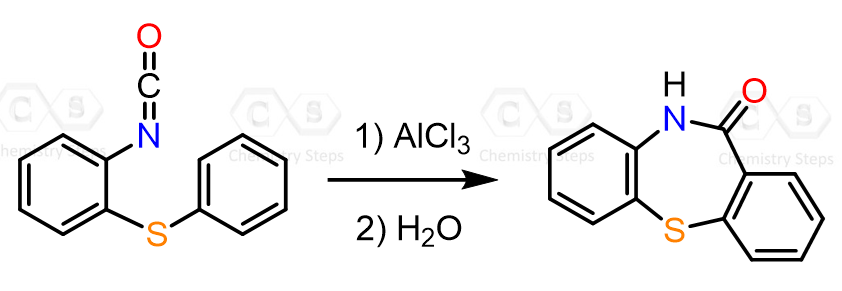
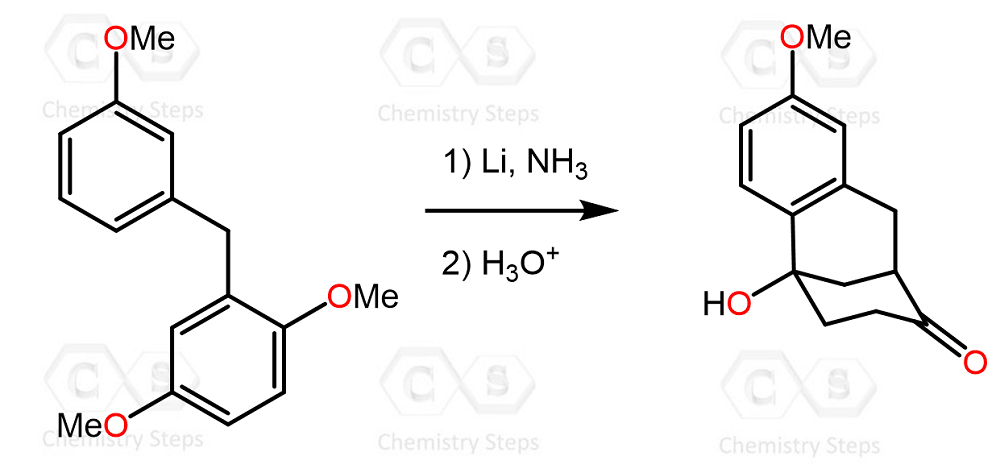
Propose a mechanism for the following synthetic transformation:

Answer

This content is for registered users only.

Click here to Register!

By joining Chemistry Steps, you will gain instant access to the answers and solutions for all the Practice Problems, including over 40 hours of problem-solving videos, Multiple-Choice Quizzes, Puzzles, Reaction Maps, and the powerful set of Organic Chemistry 1 and 2 Summary Study Guides.

5 thoughts on “Friedel-Crafts Acylation with Practice Problems”

Share Your Thoughts, Ask that Question!

Stuck? Need a Quick Guidance?

🔴 Our Live Board is Here! 🖥️✏️