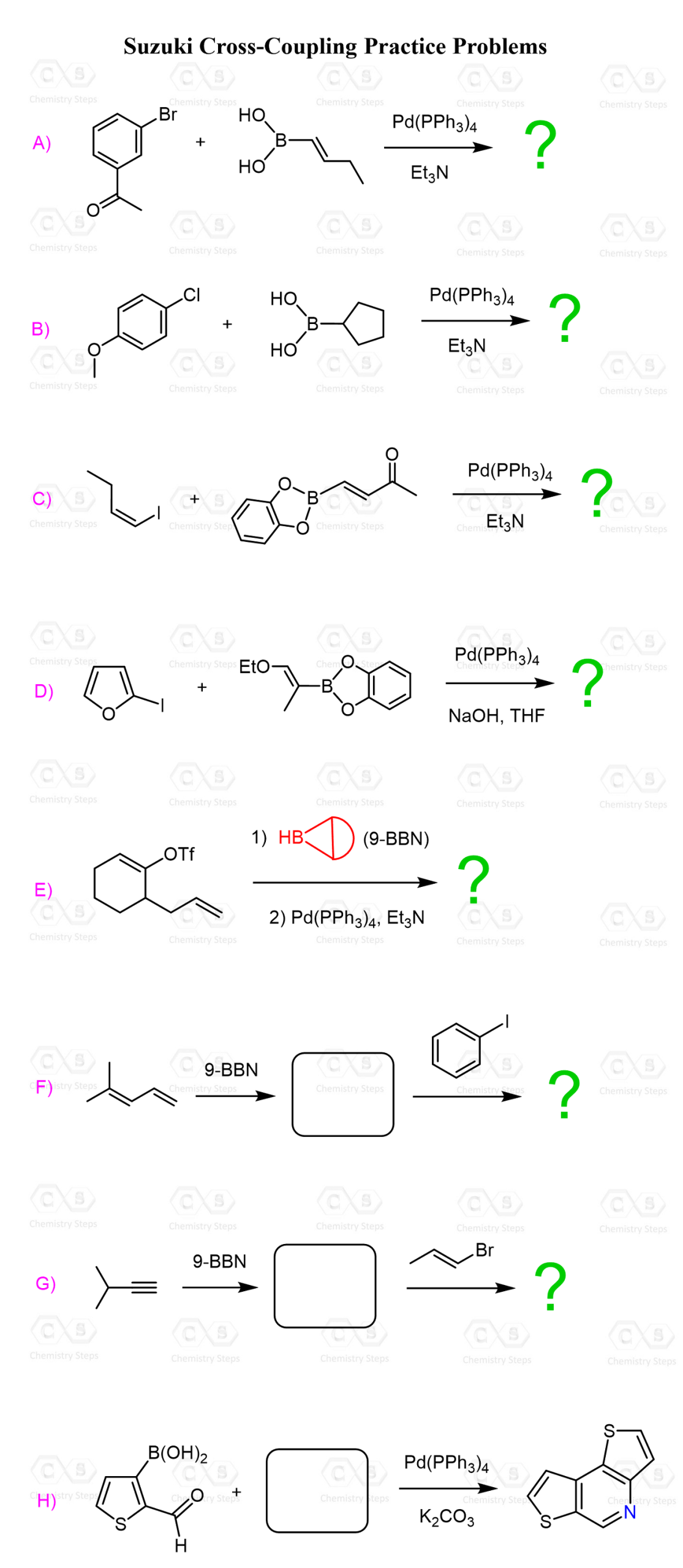
The Suzuki reaction is a Pd-catalyzed cross-coupling reaction between an organoboron compound, such as a boronic acid or boronic ester, and an organic halide or triflate, forming a new C(sp2)-C(sp2) bond:
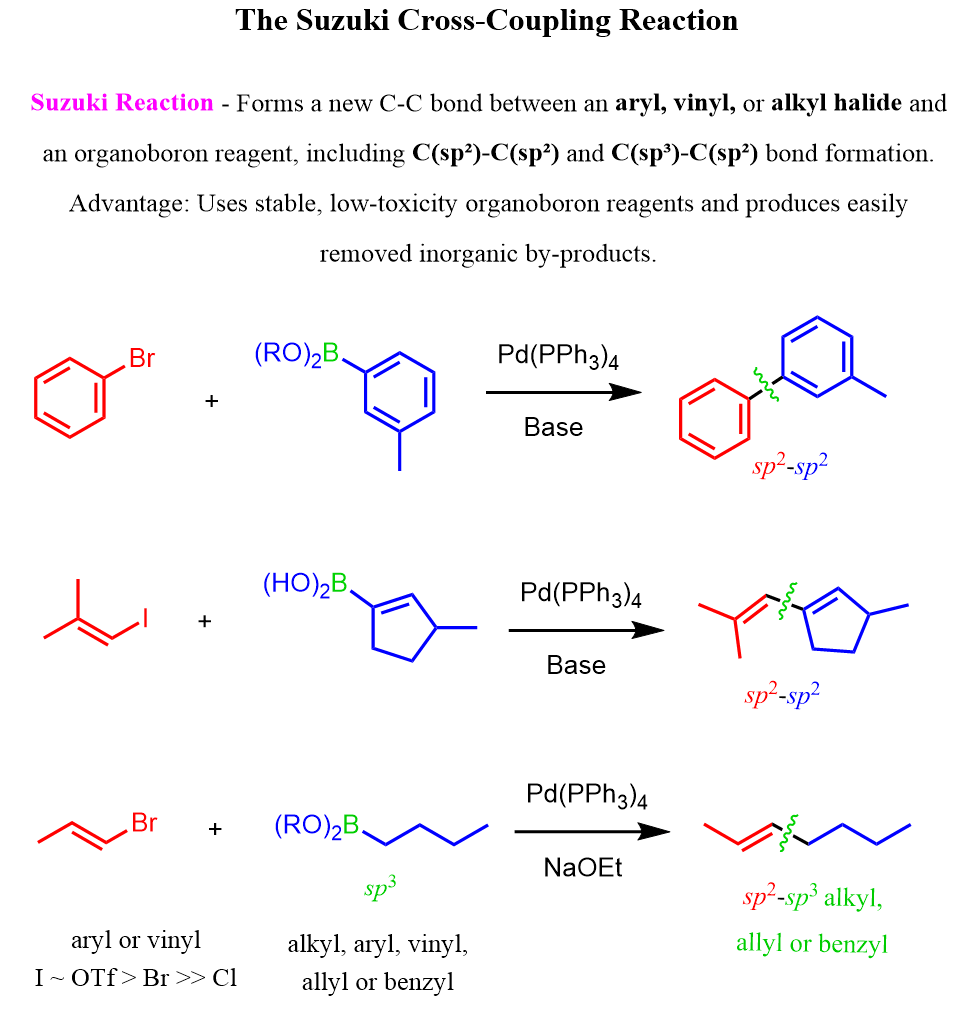
This should not look much different from what we have discussed about cross-coupling reactions, but the part with boron may still make one feel a little uncomfortable. This could especially be the case if you are just switching from the Heck reaction, where a simple alkene was used to couple with a vinyl or aryl halide:
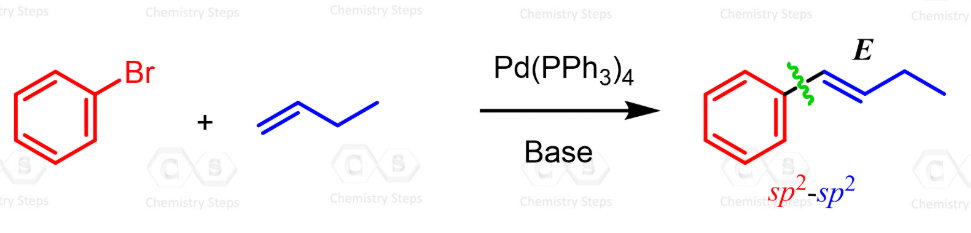
So, what are these boron compounds? Let’s first look at the general formulas of boronic acids and their ester derivatives.
The structure of boronic acid may not fit our usual image of acids in organic chemistry, as we often recall the carbonyl group upon hearing the word acid. It is okay, though, because boronic acids are, in turn, derivatives of boric acids, which are inorganic compounds where the boron atom is bonded to hydroxyl groups.
Now, boronic esters are derivatives of boronic acids where the hydroxyl groups are replaced with alkoxy groups containing alkyl or other organic fragments:
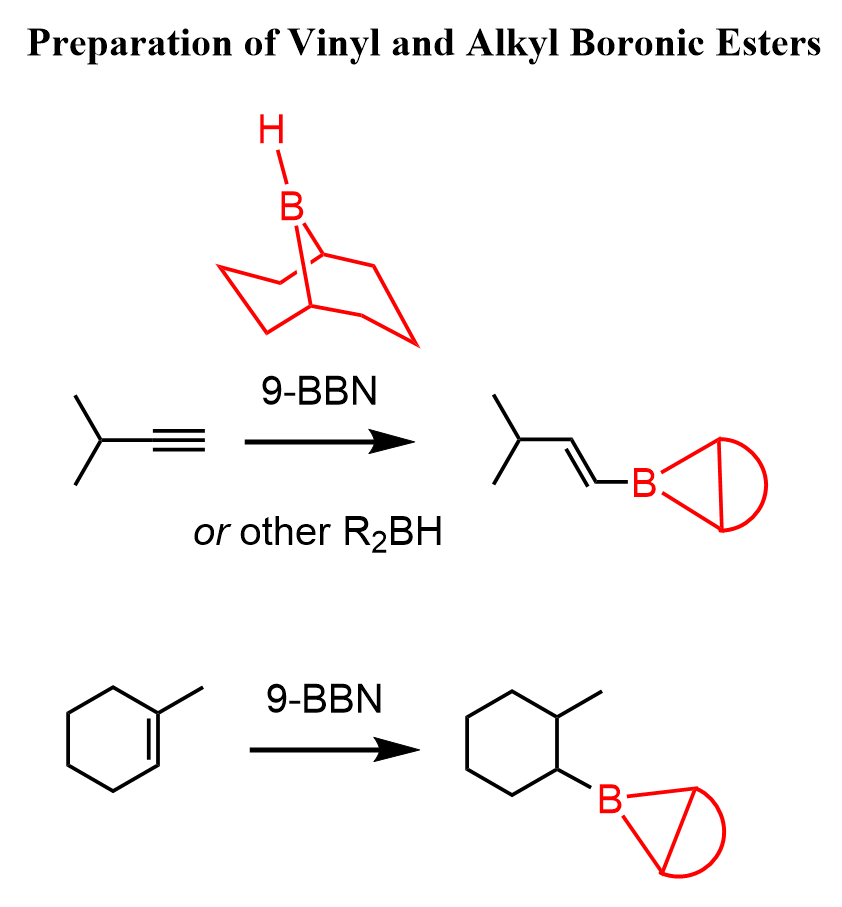
To make this a little more familiar, recall the hydroboration-oxidation of alkenes and alkynes, where borane reagents such as 9-BBN add across the multiple bond, forming organoboron intermediates in a regioselective manner:
So, yes, these are the guys that are now going to be used in the Suzuki reaction. In fact, the first Suzuki coupling was carried out by preparing an alkenylborane intermediate and using it as the organoboron partner in the cross-coupling reaction (Suzuki, Tetrahedron Letters 1979, 36, 3437 – 3440).
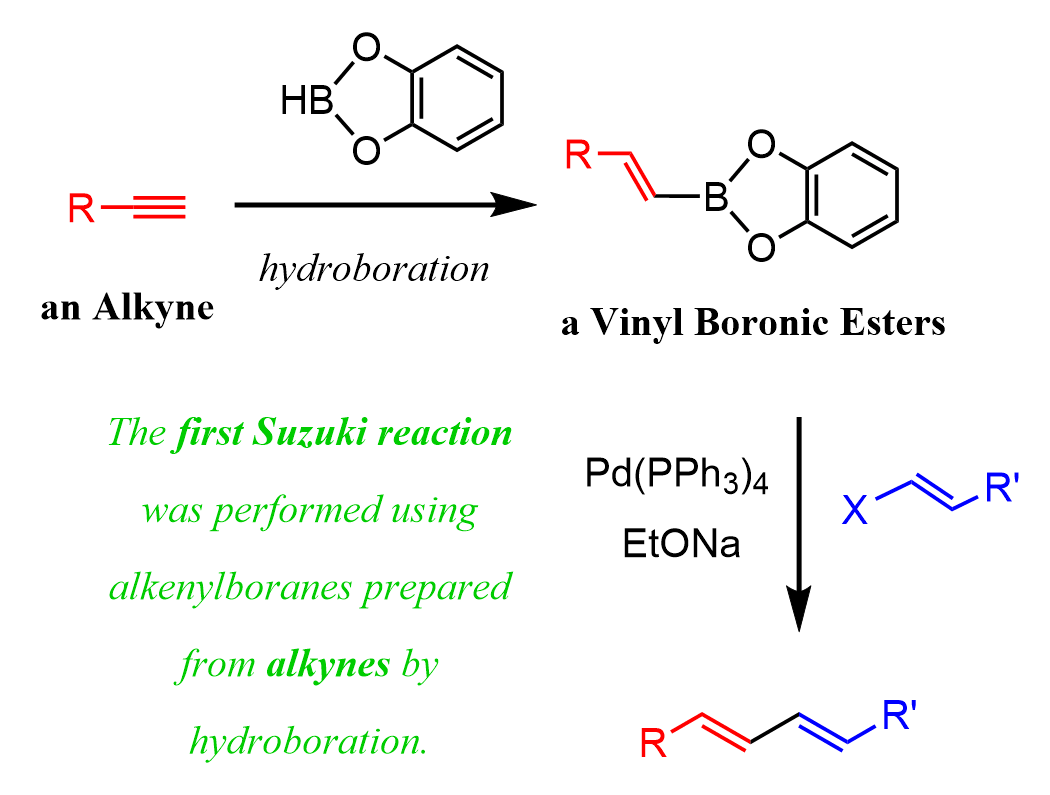
So, let’s discuss the Suzuki reaction in more detail by looking at the mechanism of the cross-coupling reaction.
There are some terms here, such as ligands, the oxidation state of Pd, transmetalation, and reductive elimination, which we have discussed in the introductory post on cross-coupling reactions, so be sure to check it out before moving forward.
The Mechanism of the Suzuki Reaction
Like in other cross-coupling reactions, the key function here is Pd: it brings the reactive species together and facilitates their coupling to form the new C-C bond.
The reactants in the Suzuki coupling are a vinyl or aryl halide and another carbon fragment, which can be a vinyl, aryl, or alkyl group connected to boron.
So, let’s see how these two are activated and transferred to the Pd and eventually couple to form the new C(sp2)-C bond.
Before saying “in the first step,” “in the next step,” etc., keep in mind that these steps are actually happening at the same time. It is not like boron waits before Pd does oxidative addition, and so on. These are individual steps used to describe the mechanism, but in reality, they occur as part of a dynamic catalytic cycle.
In the first part of the reaction, we have an oxidative addition where Pd inserts into the C-X bond of the vinyl or aryl halide, forming a Pd(II) complex containing the organic fragment and the halide ligand:
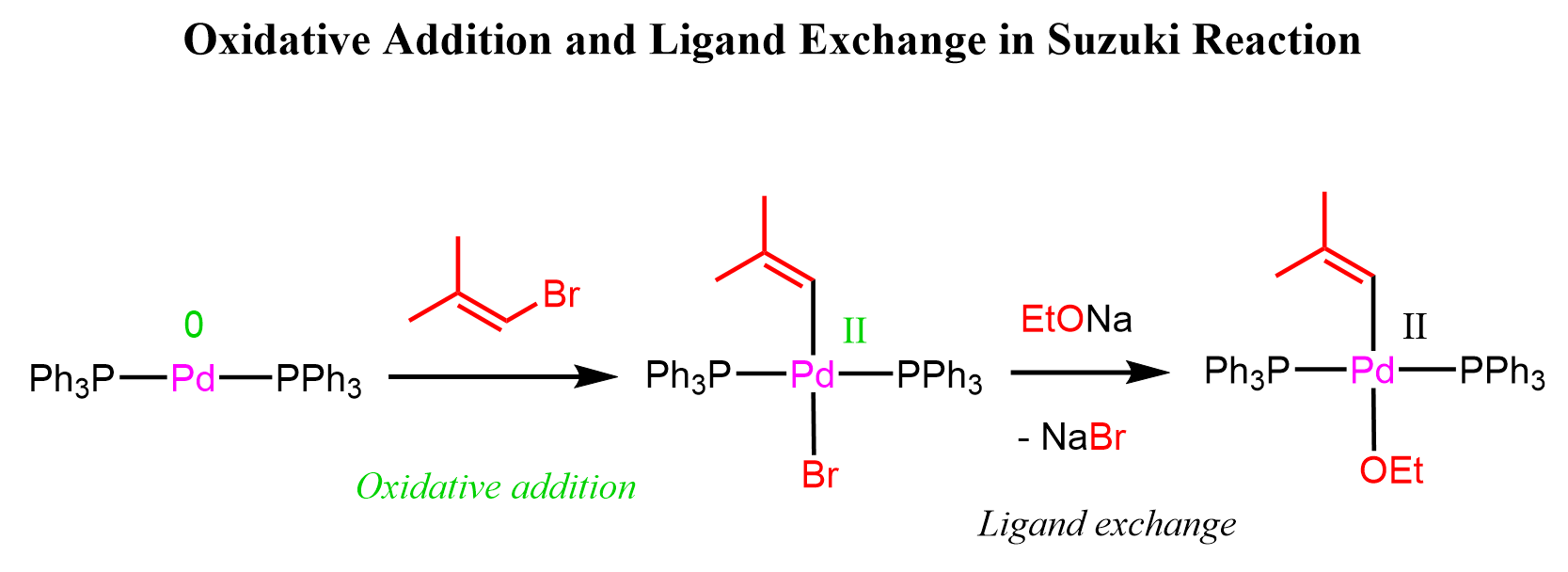
Notice that once this complex is formed, there is also a ligand exchange between the halide and the ethoxide ion. The latter, being more nucleophilic, replaces the halide ligand on the Pd center, forming a more reactive Pd-ethoxide intermediate.
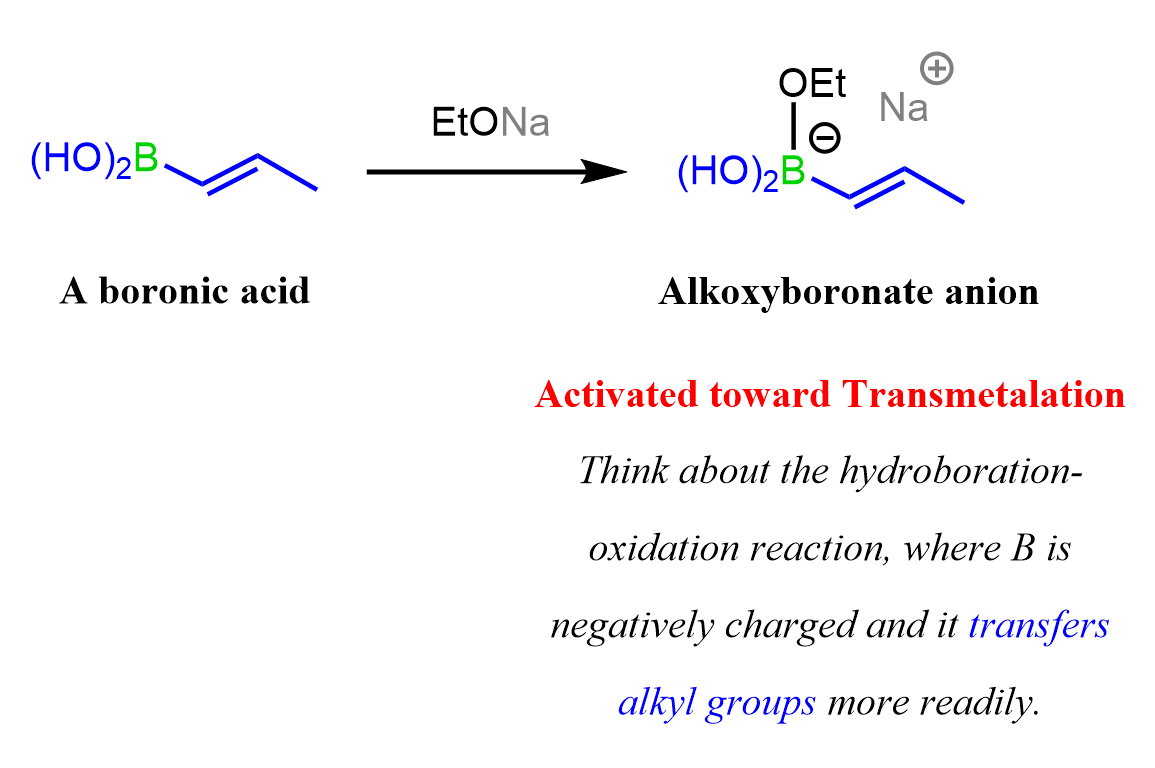
The boronic acid or ester, which is the second component bringing the other carbon fragment, reacts with a base such as sodium ethoxide to form a tetrahedral boronate ate complex. This activates the boron center by making it more electron-rich. Recall from the hydroboration-oxidation reaction that the carbon group attached to boron becomes more readily transferred when boron becomes electron-rich and negatively charged:
Once these two steps are complete, we now have two species ready to undergo transmetalation. Remember, this is an exchange of ligands between two centers. Here, the organic group attached to boron is transferred to the Pd center, while the ethoxide ligand on the Pd is transferred to boron. This brings the two carbon fragments together on the Pd catalyst:
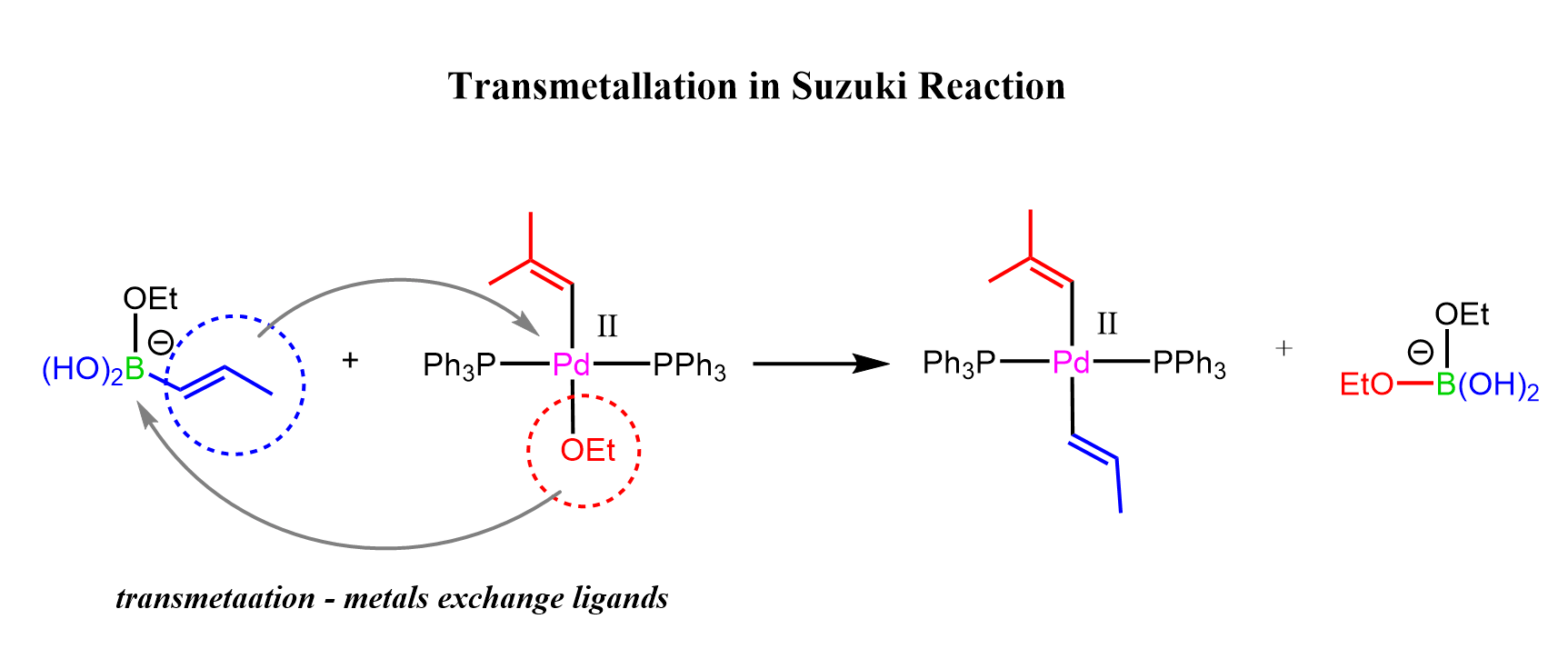
Notice that the two carbon ligands are at 180° on Pd, which is to say they are trans. Before these groups can couple, there must be an isomerization to the cis Pd complex, where the carbon fragments are positioned adjacent to each other. This arrangement allows the two carbon groups to interact and undergo reductive elimination.
So, after the isomerization, the last step, which is the reductive elimination, occurs. This couples the two carbon fragments together, forming a new C(sp2)-C bond while regenerating the Pd(0) catalyst:
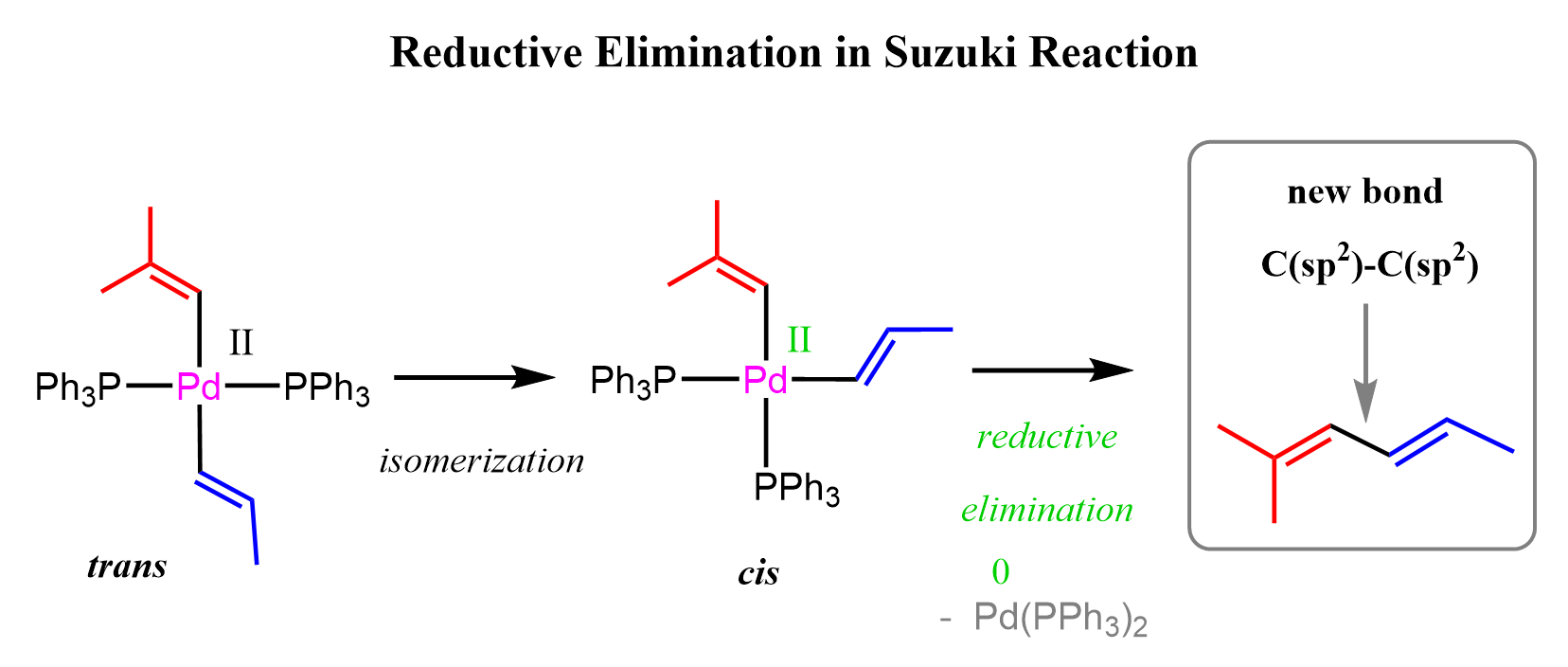
The term reductive elimination is used because the Pd center undergoes a reduction during this step, changing its oxidation state from +2 to 0. At the same time, the two carbon fragments are coupled together to form the new C-C bond, completing the catalytic cycle.
This was a step-by-step description of the Suzuki reaction mechanism, which is normally given in what we call a catalytic cycle, where the different steps of the catalytic process are connected together to show how the Pd catalyst is regenerated and reused throughout the reaction.
I find catalytic cycles a little confusing for students to grasp because it is not always clear where to start and what is happening at each stage. However, the stepwise representation of the mechanism should help you better understand what is happening in the Suzuki coupling reaction mechanism:
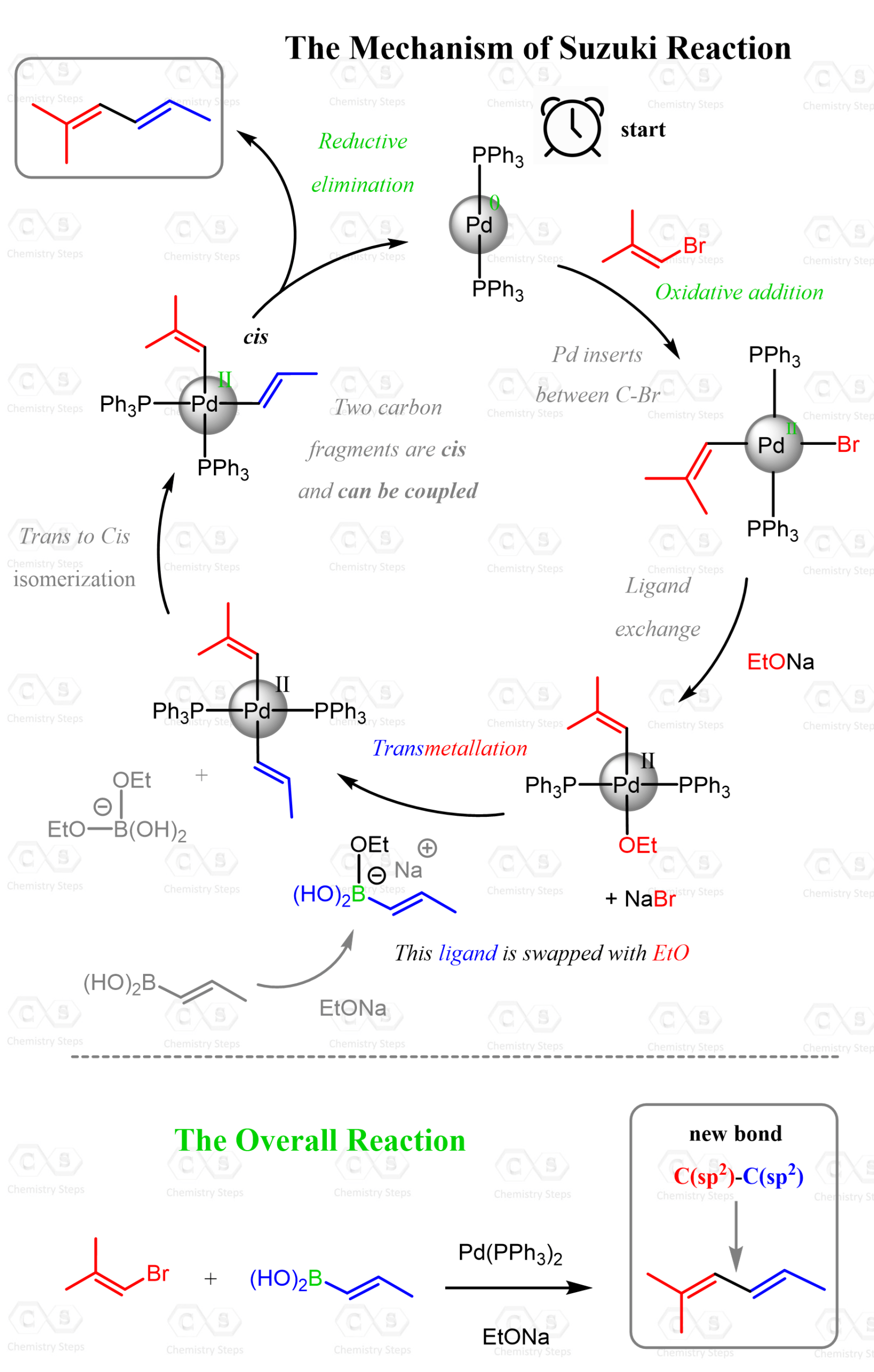
Overall, the Suzuki coupling consists of four key steps: oxidative addition, where Pd inserts into the C-X bond of the aryl or vinyl halide; base activation of the organoboron reagent, forming a more reactive boronate species; transmetalation, where the organic group attached to boron is transferred to Pd; and reductive elimination, where the two carbon fragments couple to form the new C(sp2)-C(sp2) bond while regenerating the Pd(0) catalyst.
The Regio- and Stereochemistry of the Suzuki Reaction
The Suzuki reaction is generally regioselective, meaning the position of the new C-C bond is determined by the location of the leaving group (halide or triflate) and the C-B bond. In other words, the coupling occurs specifically at the carbon bearing the halide/triflate and the carbon bonded to boron.
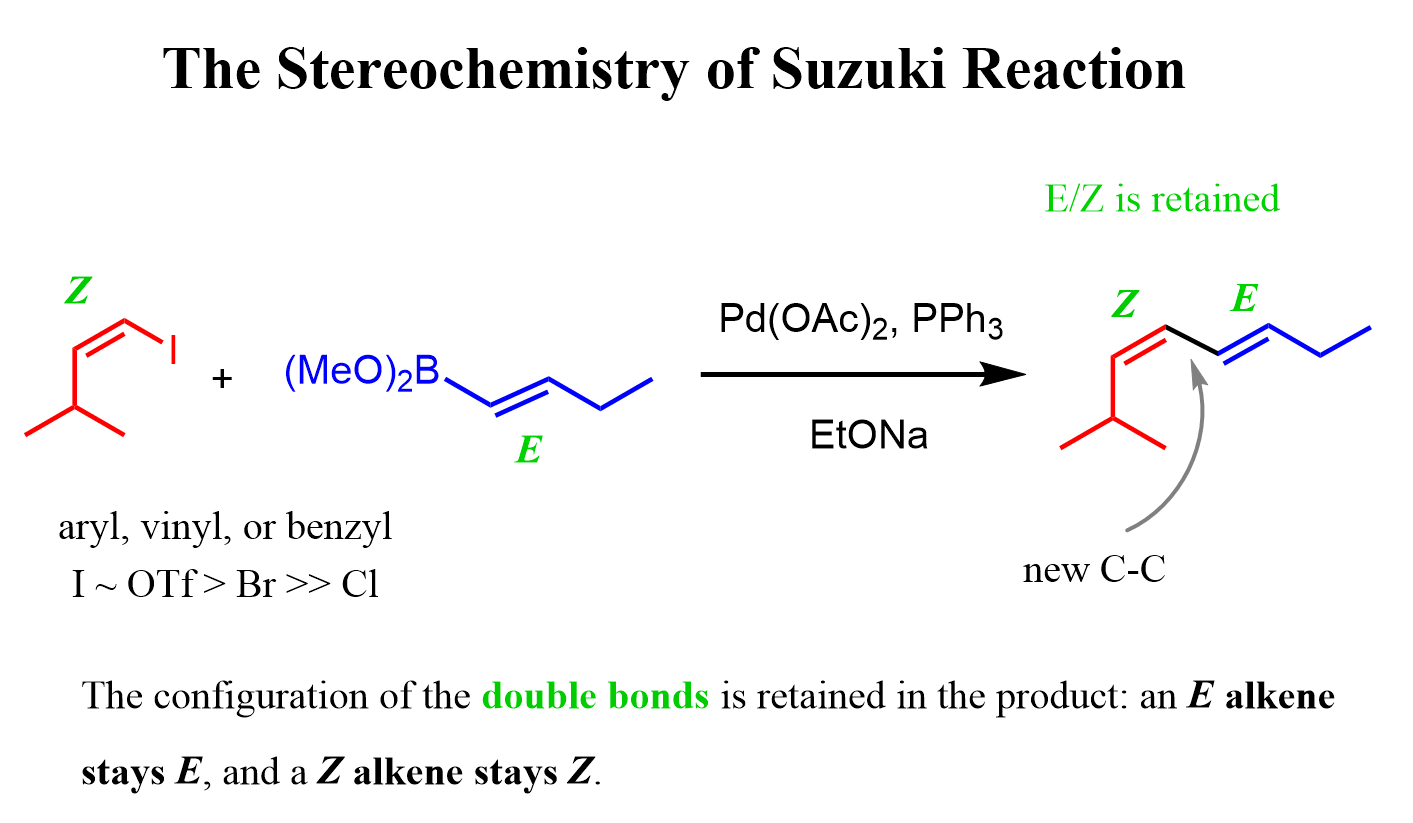
It is also stereospecific, which means the configuration of the reacting alkenes is preserved in the product. For example, the following two alkenes have Z and E configurations, respectively, and these configurations are retained in the conjugated diene product:
The Advantages of Suzuki Coupling
The Suzuki coupling offers several important advantages that have made it one of the most widely used cross-coupling reactions in organic synthesis.
🟢 A major advantage of Suzuki coupling is the ability to use a wide variety of organoboron compounds, including alkyl boranes, boronic acids, and boronic esters. In particular, the use of alkylboron reagents allows the formation of C(sp3)-C(sp2) bonds, providing greater versatility in the types of carbon-carbon bonds that can be constructed.
🟢 Another important advantage is the low toxicity and easy handling of organoboron compounds compared with organotin reagents used in reactions such as the Stille coupling. In addition, the inorganic boron-containing by-products are easily removed from the reaction mixture, making the Suzuki coupling more practical for large-scale and industrial applications.
🟢 The Suzuki coupling also proceeds under relatively mild conditions and shows excellent tolerance toward many functional groups. A wide variety of starting materials can be used, and the reaction is often highly regio- and stereoselective, making it a powerful method for constructing complex carbon frameworks.
🔴 However, the Suzuki coupling also has some limitations. One disadvantage is that simple alkyl halides are generally less reactive than aryl and vinyl halides, making C(sp³)-C(sp²) couplings more challenging. Another limitation is the requirement for basic conditions, which can sometimes cause unwanted side reactions, especially when the starting materials contain base-sensitive functional groups such as aldehydes or ketones with α-hydrogens, which can undergo aldol-type reactions.
📒 Overall, the Suzuki reaction is a palladium-catalyzed coupling of an organoboron compound, such as a boronic acid or boronic ester, with an aryl or vinyl halide (or triflate), forming a new C(sp2)-C(sp2) or, less often, C(sp3)-C(sp2) bond and releasing boron-containing by-products.
References
- Miyaura, N.; Yamada, K.; Suzuki, A. Tetrahedron Lett. 1979, 20, 3437–3440.
- Miyaura, N.; Suzuki, Chem. Rev. 1995, 95, 2457–2483.
- Suzuki, A. Chem. Int. Ed. 2011, 50, 6722–6737.
- Clayden, J.; Greeves, N.; Warren, S. Organic Chemistry, 2nd ed.; Oxford University Press: Oxford, 2012.
- László Kürti and Barbara Czakó, Strategic Applications of Named Reactions in Organic Synthesis, 2005
Check Also
- Pd-Catalyzed Cross-Coupling Reactions
- Heck Reaction
- Negishi Reaction
- Stille Coupling
- Sonogashira Coupling
- Alkene Metathesis