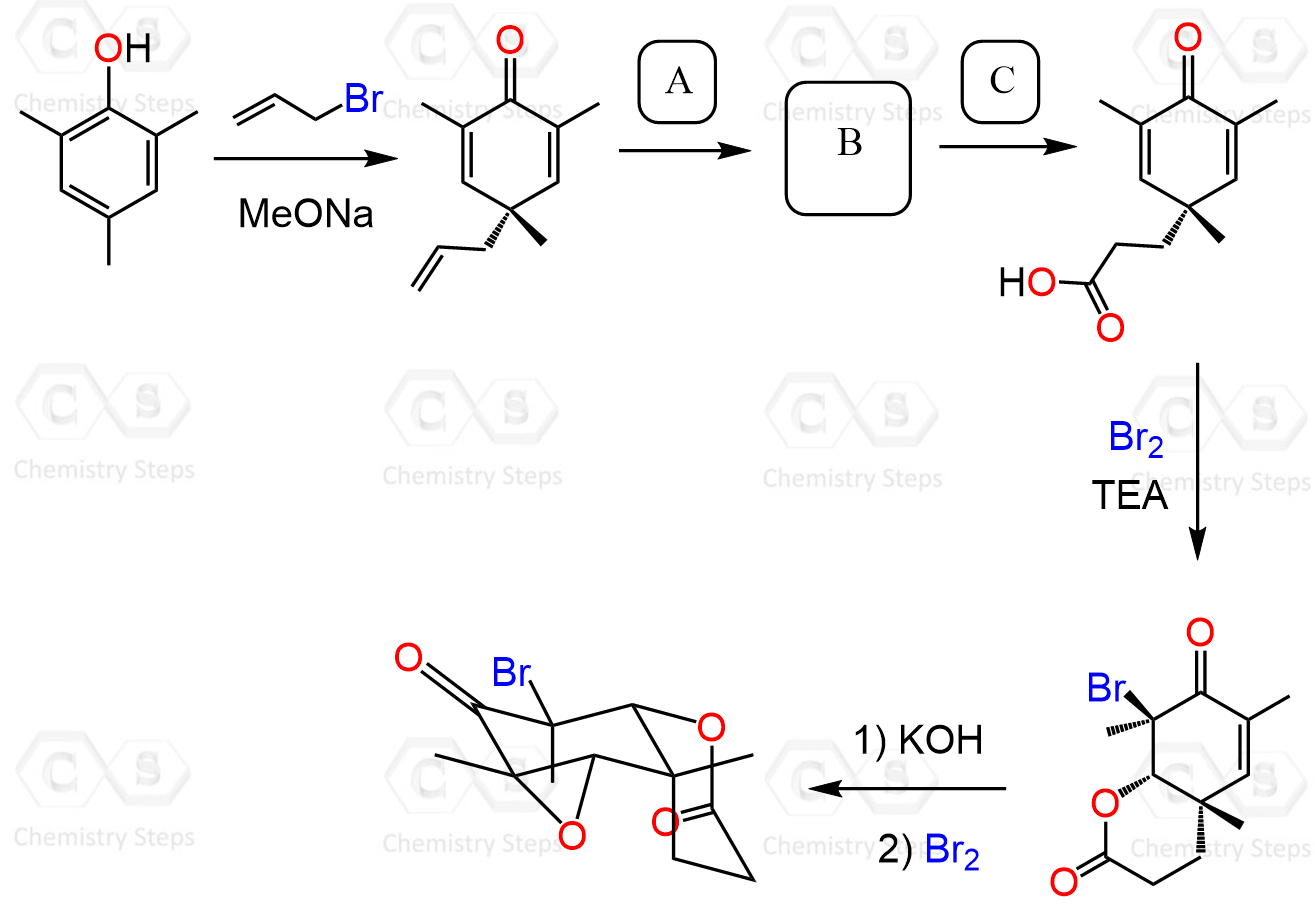
What are Lactones
Lactones are defined as cyclic esters of hydroxy carboxylic acids. They are classified based on ring size, where alpha-, beta-, gamma-, delta-, and epsilon-lactones contain 3-, 4-, 5-, 6-, and 7-membered rings, respectively.
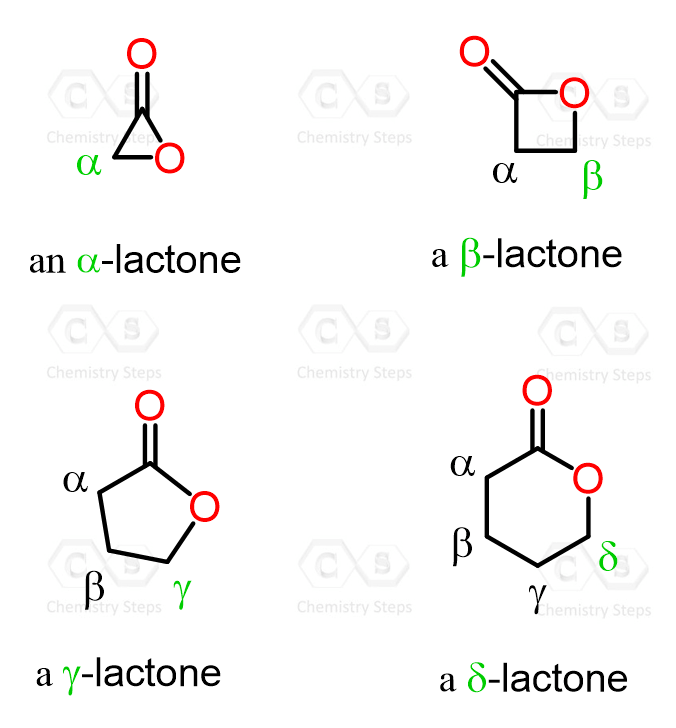
Among these, gamma- and delta-lactones are the most common in nature due to the higher stability of five- and six-membered rings, while alpha-lactones are typically only obtained synthetically.
Lactones are widespread in natural products and are found in many biologically active compounds, as well as in substances used in pharmaceutical, food, and fragrance applications.
Preparation of Lactones
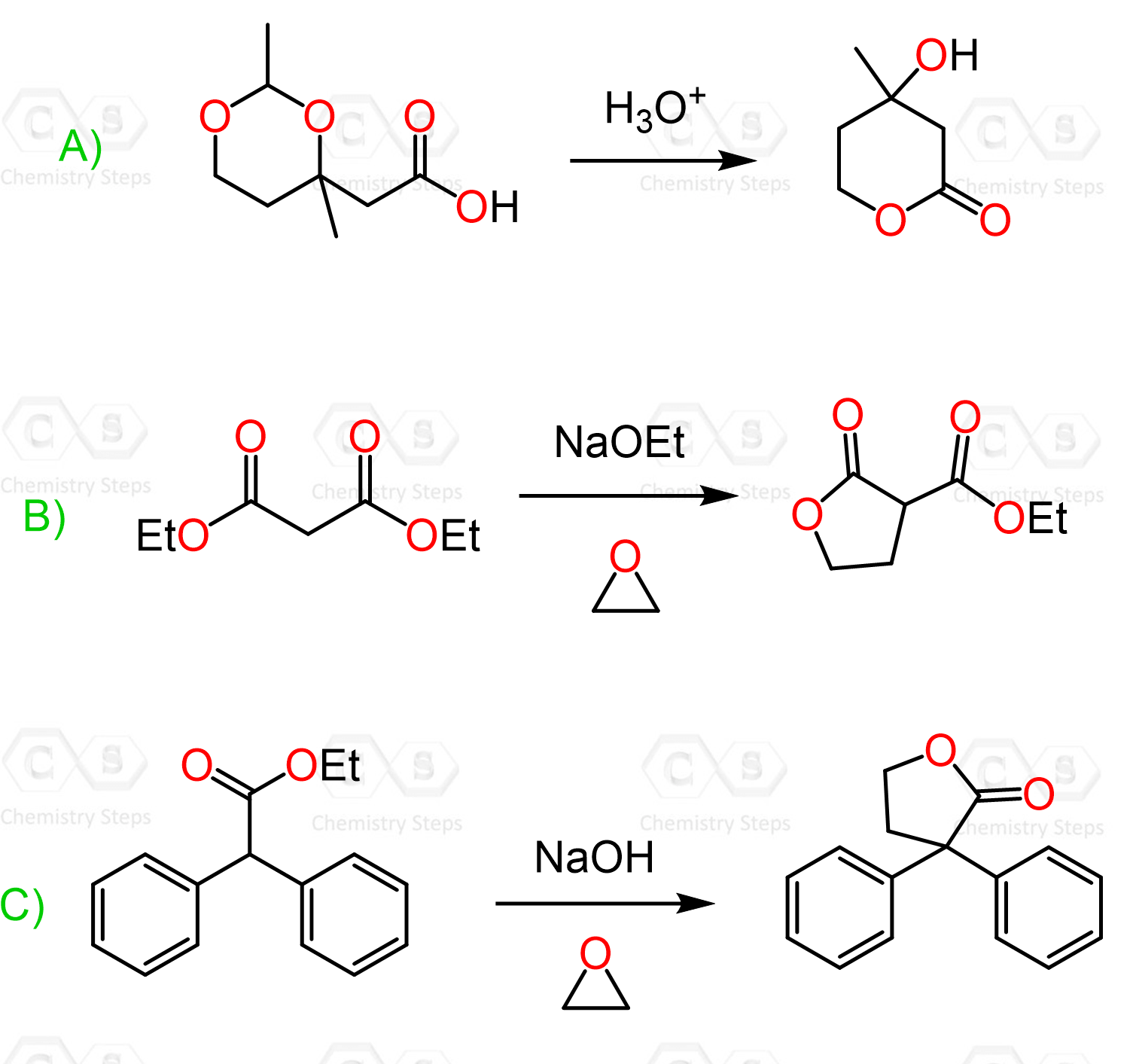
We have seen earlier how the acid-catalyzed condensation of carboxylic acids with alcohols leads to the formation of esters. This is known as the Fischer esterification.

Now, when the alcohol and carboxyl group are part of the same molecule, an intramolecular reaction occurs and cyclic esters, also known as lactones, are formed.
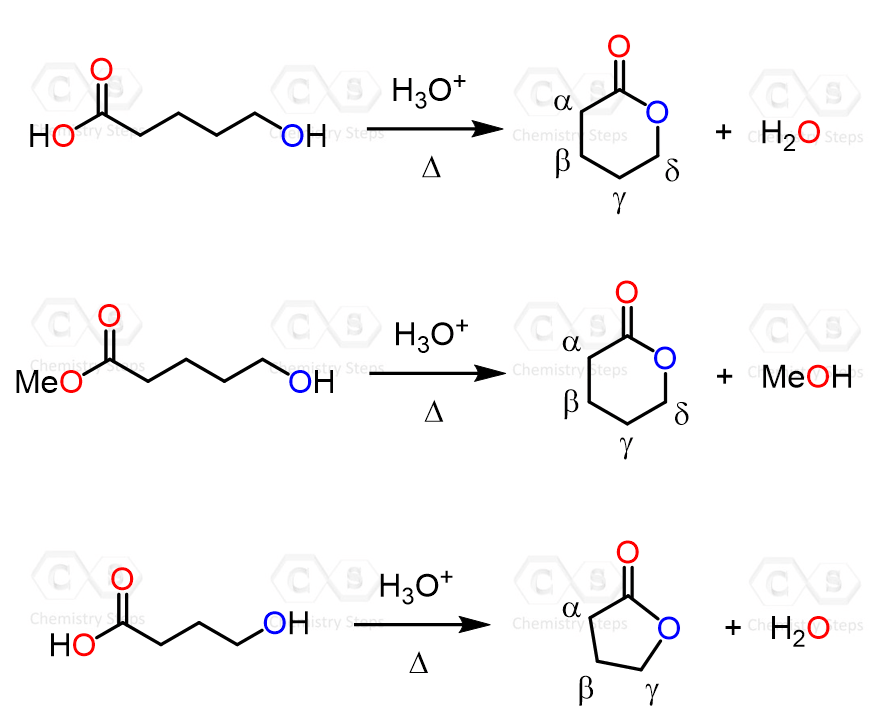
Like in the case of regular Fischer esterification, the reaction starts with protonation of the carbonyl oxygen, which increases the electrophilicity of the carbonyl carbon. The alcohol group within the same molecule then acts as a nucleophile and attacks the carbonyl carbon, forming a tetrahedral intermediate.
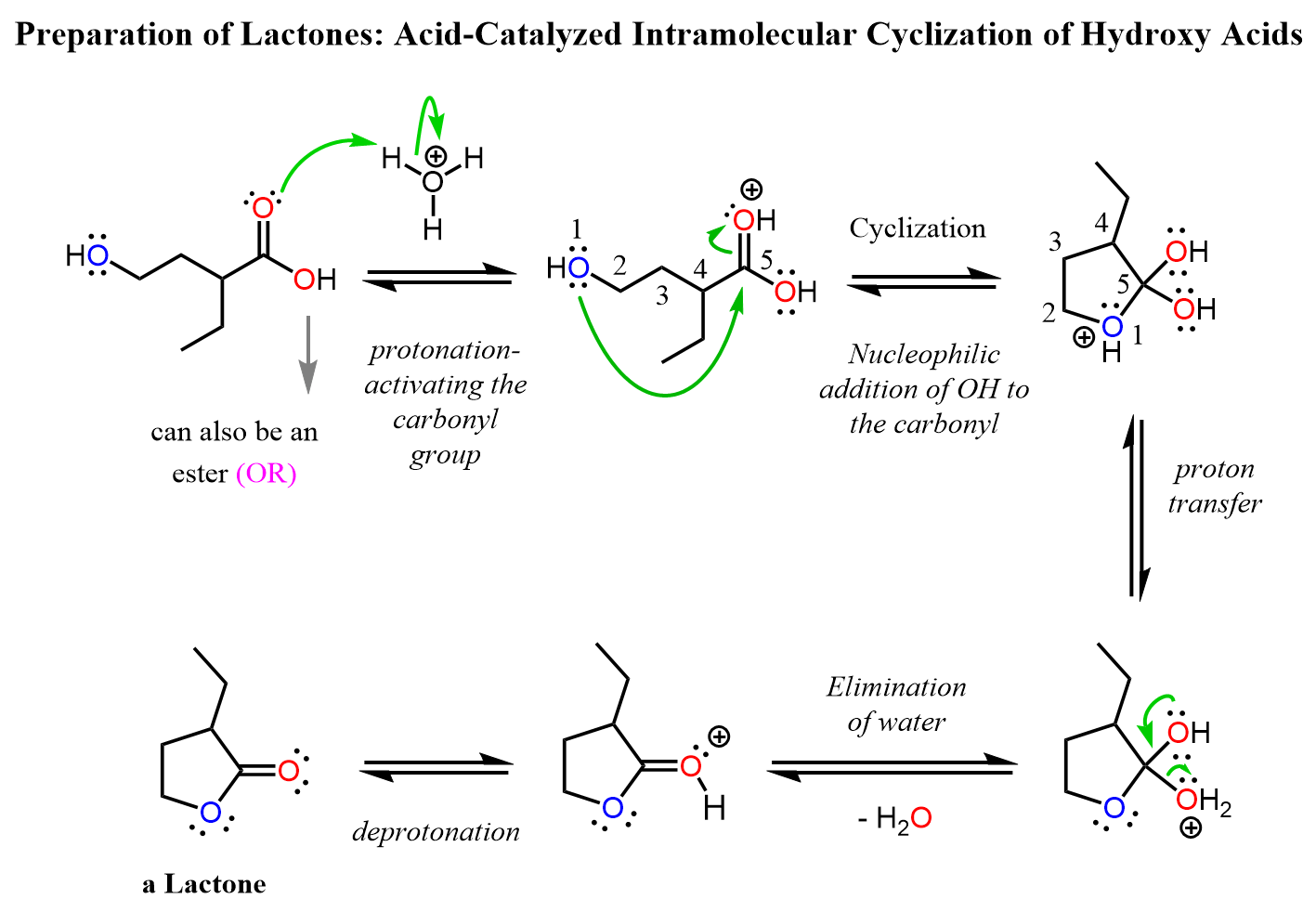
This is followed by proton transfer steps that convert the hydroxyl group into a better leaving group. The intermediate then collapses with the loss of water, giving a protonated ester. Finally, deprotonation regenerates the acid catalyst and yields the lactone.
Because this is an intramolecular reaction, it is generally faster and favored, especially when five- and six-membered rings are formed.
Formation of Lactones via Iodolactonization
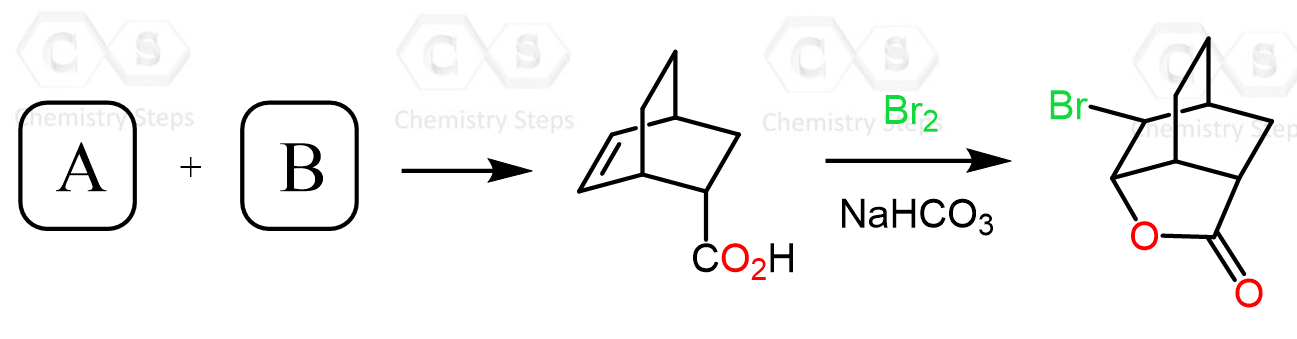
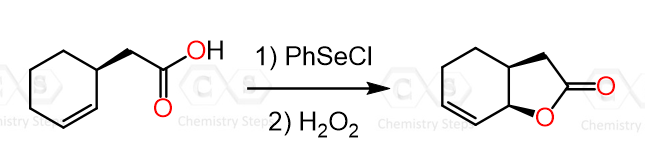
Another method for synthesizing lactones is iodolactonization, in which an unsaturated carboxylic acid reacts with iodine to form a cyclic ester.
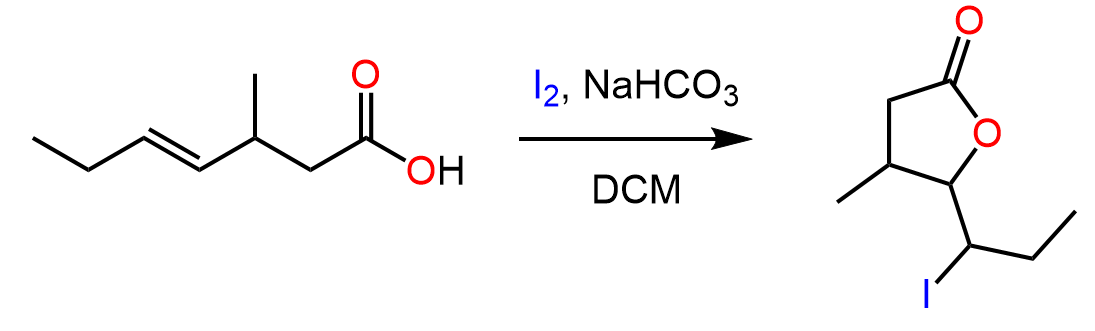
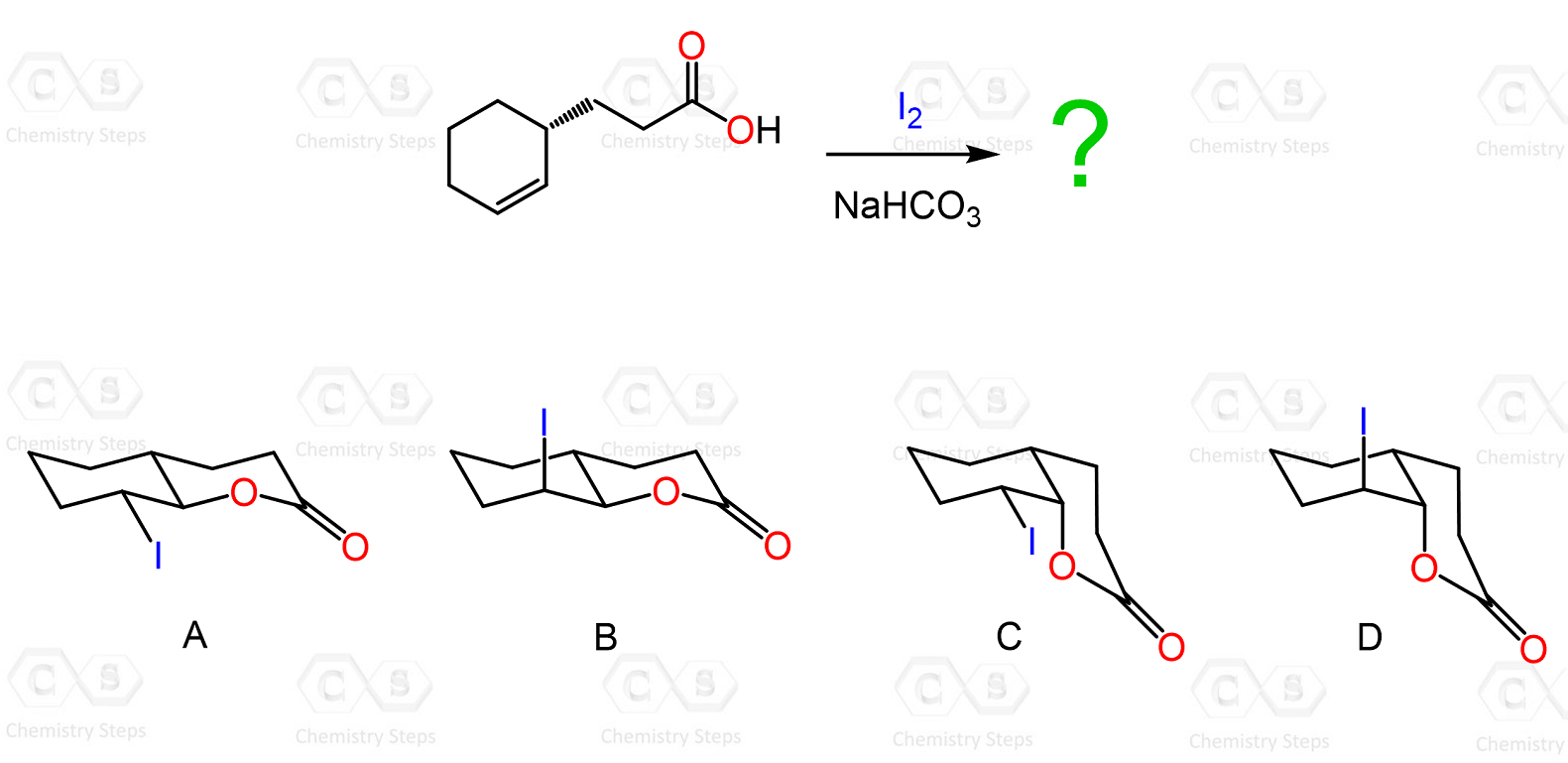
The reaction begins with deprotonation of the carboxylic acid by a base such as sodium bicarbonate, followed by the electrophilic addition of iodine across the carbon–carbon double bond, generating a halonium ion intermediate. The nearby carboxylate then attacks the more substituted carbon of the halonium ion in an intramolecular fashion, opening the three-membered ring and forming the lactone.
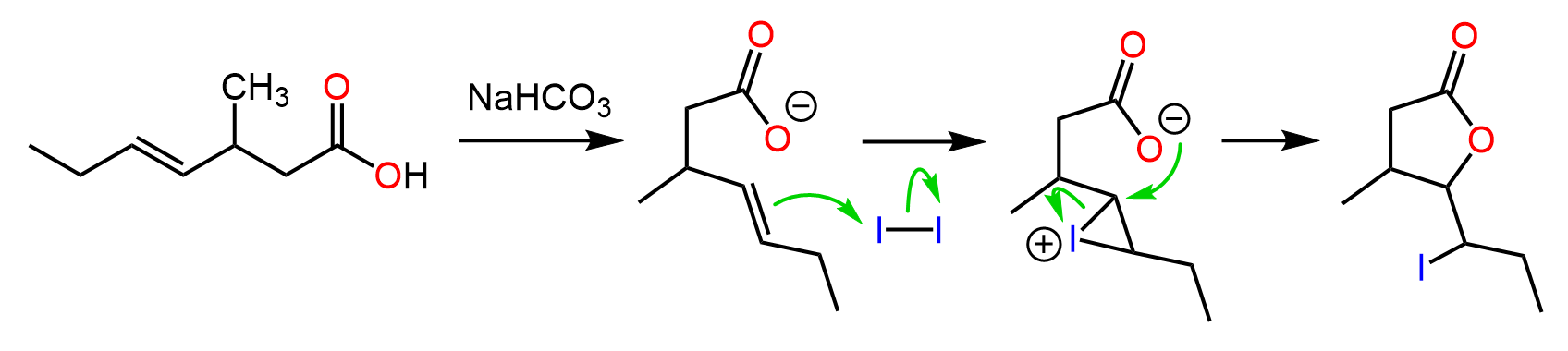
Both five- and six-membered lactone rings are possible in the reaction shown below; however, the formation of the five-membered ring is preferred. This preference aligns with Baldwin’s rules for ring closure, which predict that 5-exo-tet cyclizations are favorable, whereas 6-endo-tet cyclizations are disfavored. Therefore, the regioselectivity of iodolactonization reactions can be rationalized and anticipated using Baldwin’s guidelines.
The Baeyer-Villiger oxidation for Preparing Lactones
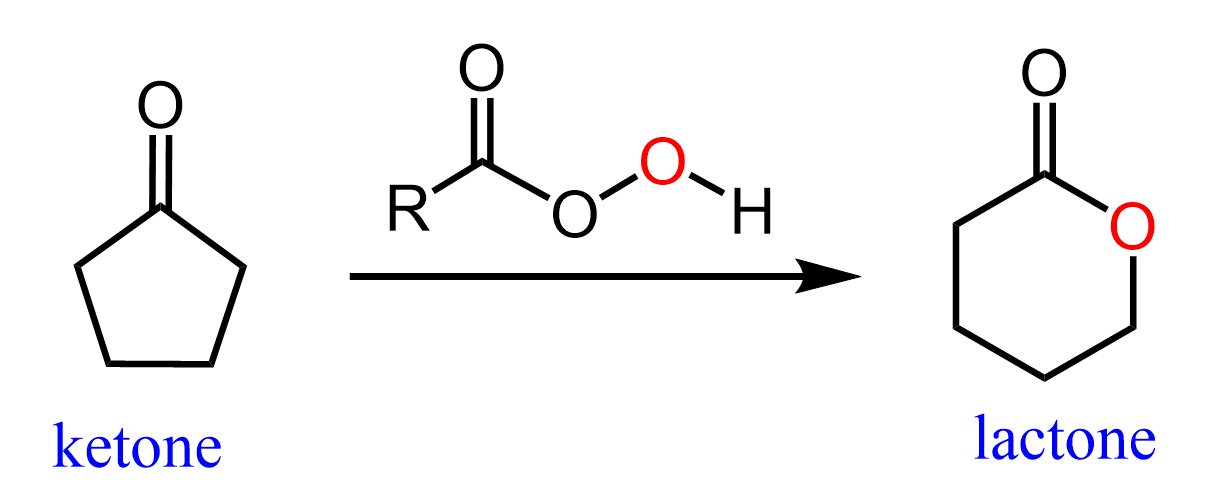
One important method is the Baeyer-Villiger oxidation, where a ketone is treated with a peracid such as mCPBA. In cyclic ketones, this inserts an oxygen next to the carbonyl and expands the ring to give a lactone.
Check this article for a more comprehensive review of the most important reactions of lactones and lactams.
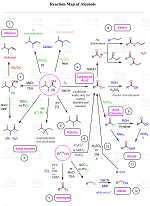
Organic Chemistry Reaction Maps
Never struggle again to figure out how to convert an alkyl halide to an alcohol, an alkene to an alkyne, a nitrile to a ketone, a ketone to an aldehyde, and more! The comprehensive powerfull Reaction Maps of organic functional group transformations are here!