
Let’s work through a common question: drawing all the isomers of C₂H₆O₂. The first thing you want to do is calculate the degree of unsaturation so that you know whether there are any π bonds or ring systems in these structures.
Using the following formula, we determine that there are zero degrees of unsaturation, which means the isomers are all saturated compounds containing oxygen atoms:

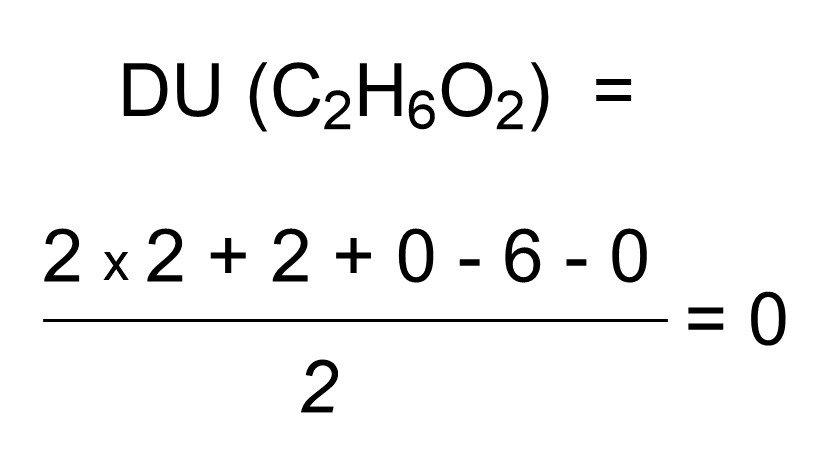
This also tells us the possible functional groups, which are combinations of alcohols, ethers, and peroxides, because other functional groups, such as aldehydes, ketones, carboxylic acids, and esters, contain a carbonyl group, which has a π bond. So, let’s systematically build all possible structures with two carbon atoms and two oxygen atoms.
Alcohol (Diol) Isomers of C₂H₆O₂
Diols are alcohols with two hydroxyl groups, so the most straightforward structure is when each carbon bears a hydroxyl group:
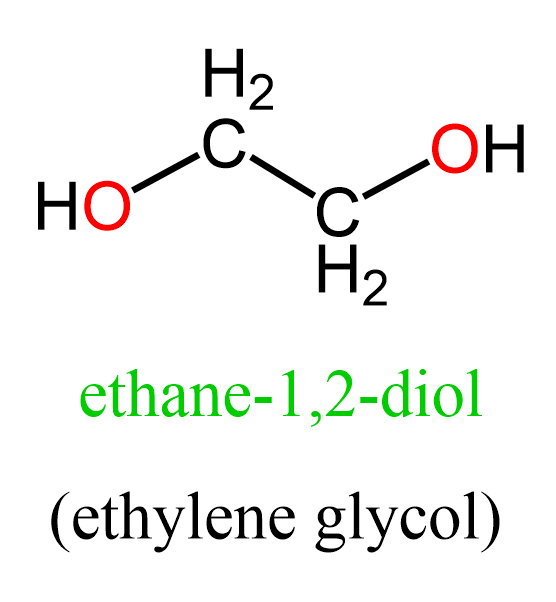
The other possibility of constructing a diol is to connect the two hydroxyl groups to the same carbon atom. While this is a valid theoretical option as it fits the molecular formula, keep in mind that having two OH groups on the same carbon (forming a geminal diol) is not a stable combination, and such molecules do not normally exist on their own under standard conditions. However, once again, for the purpose of drawing isomers, this representation is acceptable:
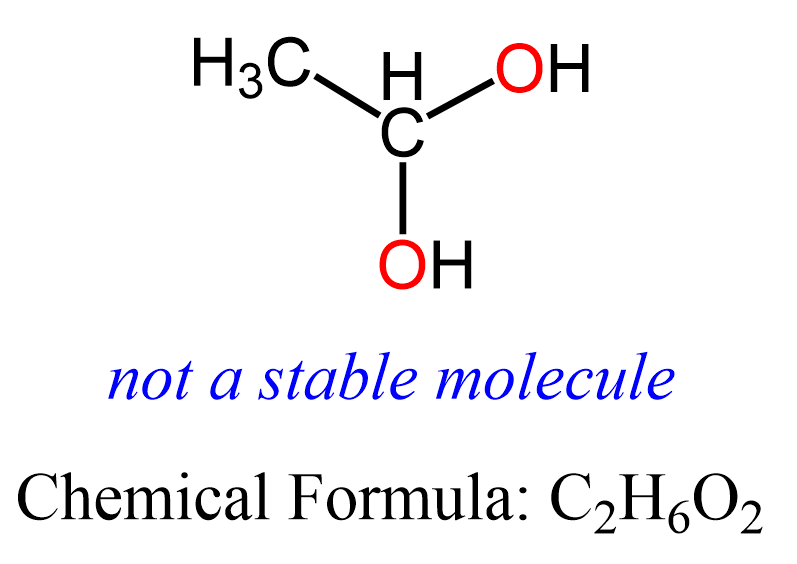
Check with your instructor if it is an acceptable answer to have two OH groups on the same carbon atom in your specific course.
Ether Isomers with C₂H₆O₂ Molecular Formula
Ethers and alcohols are saturated compounds, so any molecular formula with more than one oxygen atom can give rise to both alcohol-type and ether-type constitutional isomers. Recall that in ethers, an oxygen atom is connected to two carbon atoms, effectively bridging two alkyl groups:

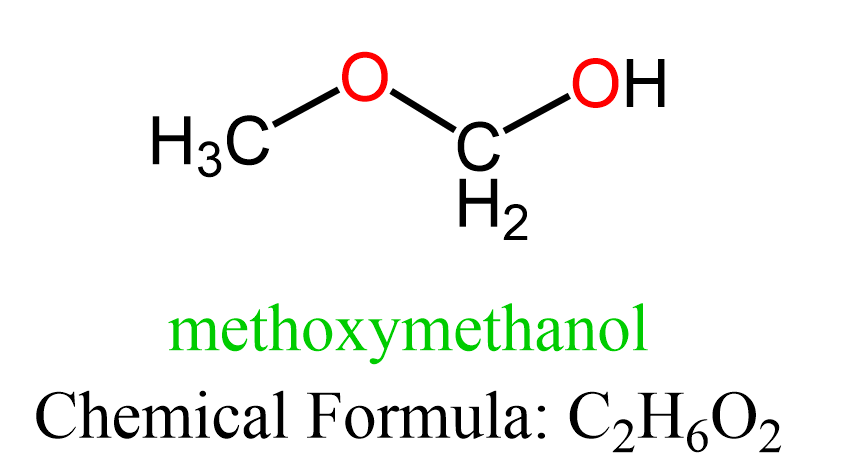
What we can do here is insert one oxygen atom between the two carbon atoms, giving an ether-type connectivity. This leads to one additional constitutional isomer when compared to the diol structures discussed earlier, such as methoxymethanol (HO–CH₂–O–CH₃), where one oxygen behaves as an ether linkage and the other as part of a hydroxyl group:
Peroxide Isomers with C₂H₆O₂ Molecular Formula
In the peroxide functional group, two oxygen atoms are directly connected by an oxygen-oxygen single bond:
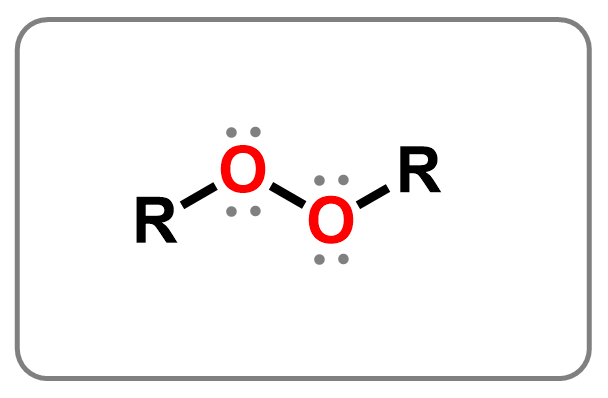
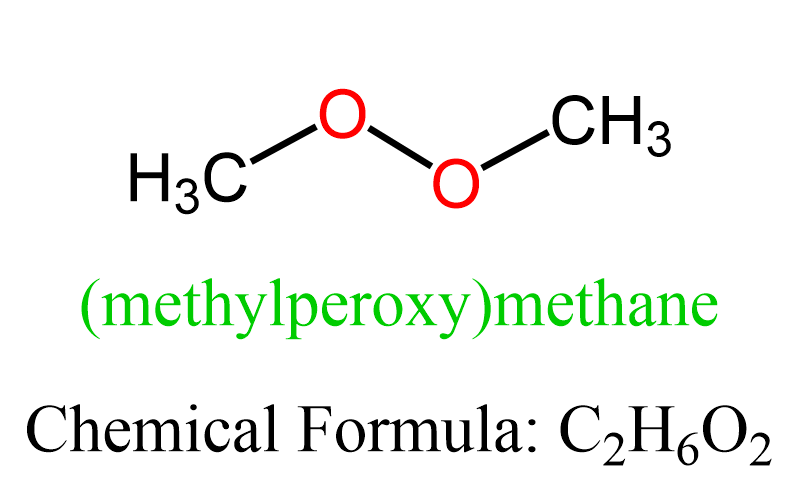
This introduces another possible type of connectivity not present in alcohols or ethers. One structure is where two methyl groups are connected through a peroxide linkage, giving dimethyl peroxide (CH₃–O–O–CH₃):
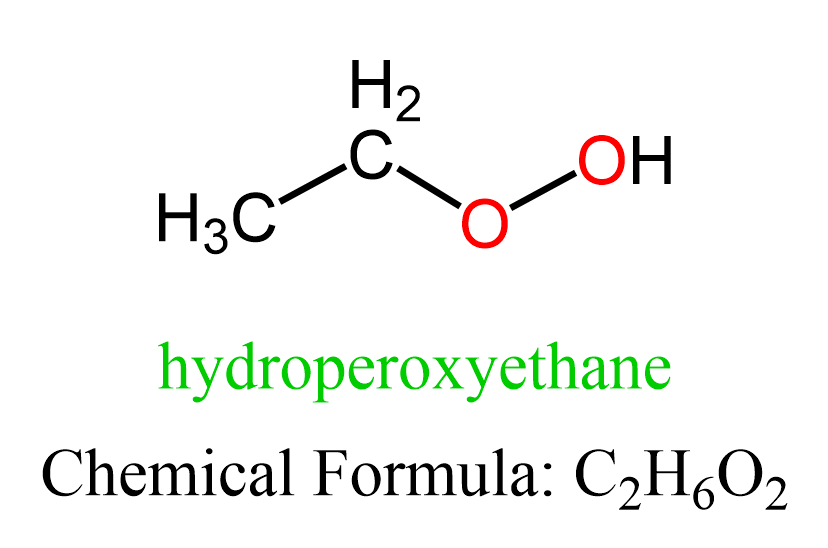
Alternatively, we can also consider mixed connectivities where carbon-oxygen fragments are attached to the peroxy unit, but these ultimately lead to the same constitutional framework of a peroxide bridge between two carbon-containing groups:
Summarizing the C2H6O2 Isomers
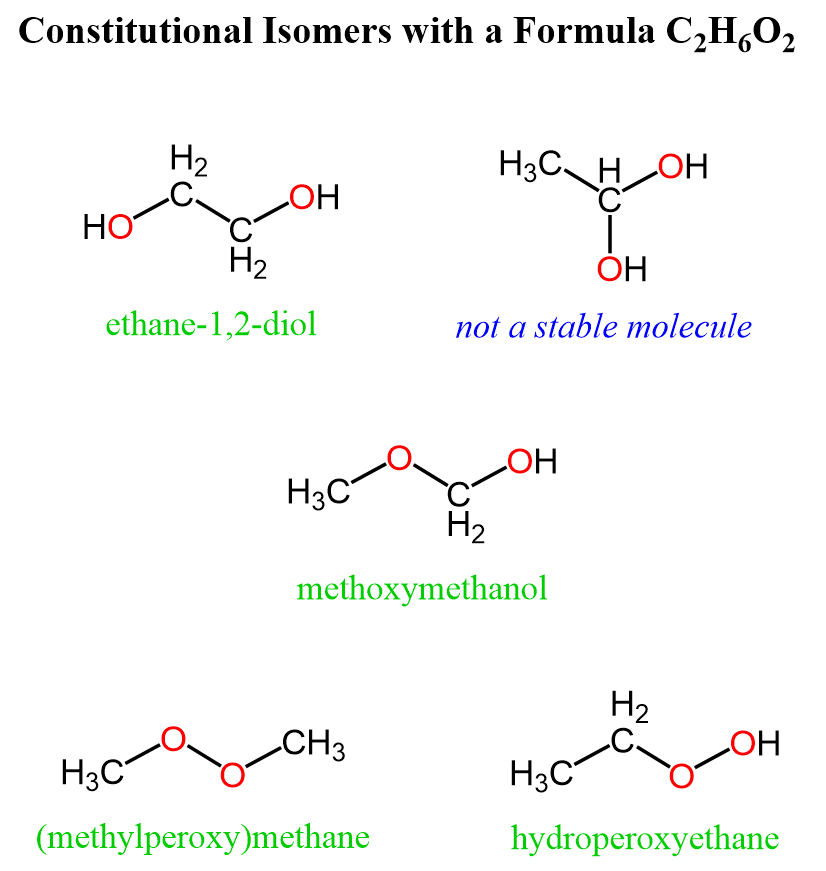
Summarizing the isomerism of molecules with the molecular formula C₂H₆O₂, we can see that all of the constitutional isomers are saturated compounds. Depending on how the oxygen atoms are connected, they can be classified as alcohols (diols), alcohol-ether hybrids, or peroxides:
Check Also
- Naming Alkanes by IUPAC Nomenclature Rules Practice Problems
- Naming Bicyclic Compounds
- Naming Bicyclic Compounds-Practice Problems
- How to Name a Compound with Multiple Functional Groups
- Primary, Secondary, and Tertiary Carbon Atoms in Organic Chemistry
- Constitutional or Structural Isomers with Practice Problems
- Degrees of Unsaturation or Index of Hydrogen Deficiency
- The Wedge and Dash Representation
- Sawhorse Projections
- Newman Projections with Practice Problems
- Staggered and Eclipsed Conformations
- Conformational Isomers of Propane
- Newman Projection and Conformational Analysis of Butane
- Newman Projection of Chair Conformation
- Gauche Conformation
- Gauche Conformation, Steric, Torsional Strain Energy Practice Problems
- Ring Strain
- Steric vs Torsional Strain
- Conformational Analysis
- Drawing the Chair Conformation of Cyclohexane
- Ring Flip: Drawing Both Chair Conformations with Practice Problems
- 1,3-Diaxial Interactions and A value for Cyclohexanes
- Ring-Flip: Comparing the Stability of Chair Conformations with Practice Problems
- Cis and Trans Decalin
- IUPAC Nomenclature Practice Problems
- IUPAC Nomenclature Summary Quiz
- Alkanes and Cycloalkanes Practice Quiz