
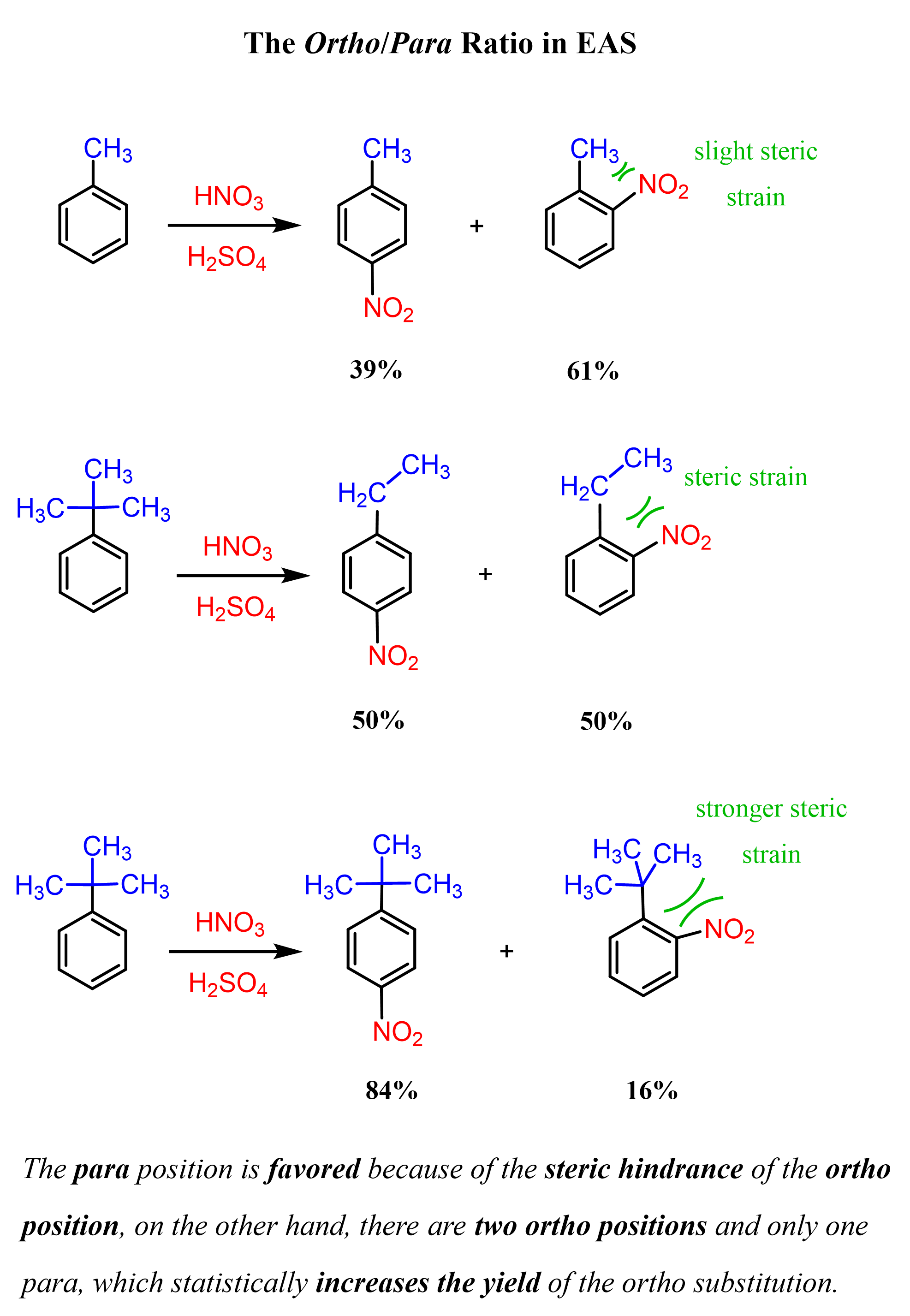
When learning about ortho, meta, and para substitution in electrophilic aromatic substitution, we have seen that the para position is generally preferred, especially when the activating group is bulky. For example, we can see how the ratio in favor of the para product increases with the size of the alkyl group on the benzene ring:
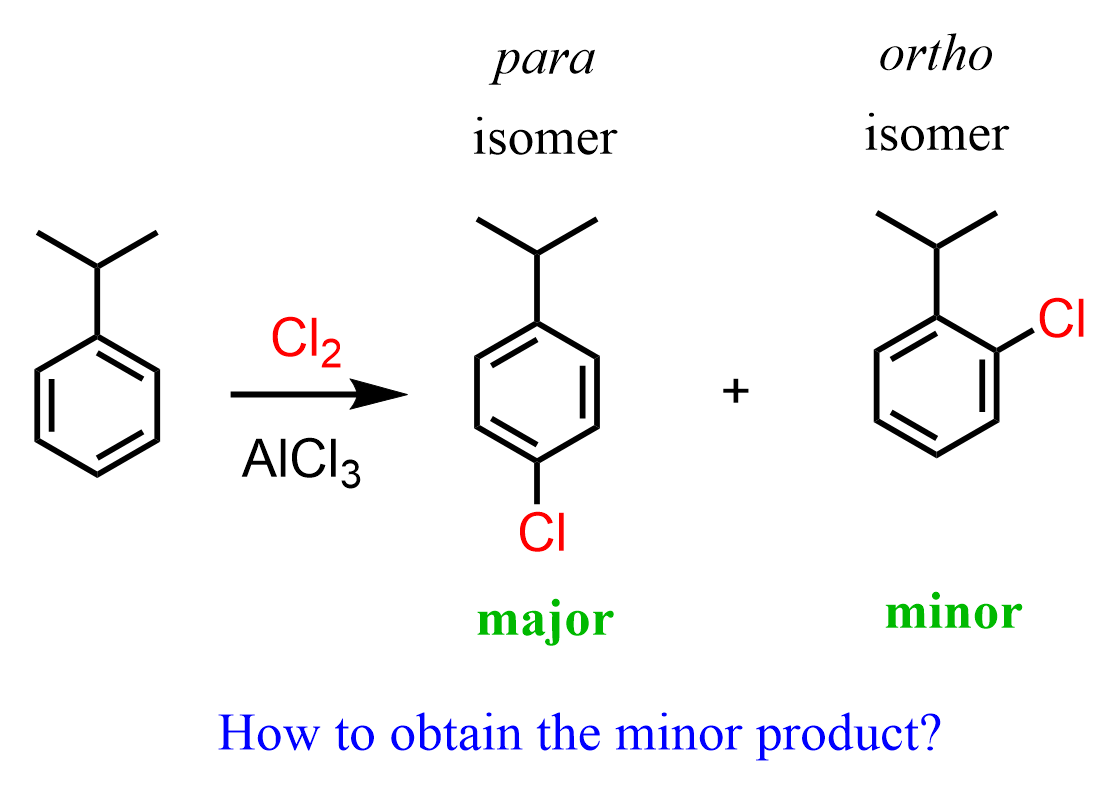
So, let’s think about how we can prepare ortho-chloropropylbenzene from isopropylbenzene, also known as cumene. The chlorination of the starting material will give the para product as the major product because the isopropyl group is blocking the two ortho positions:
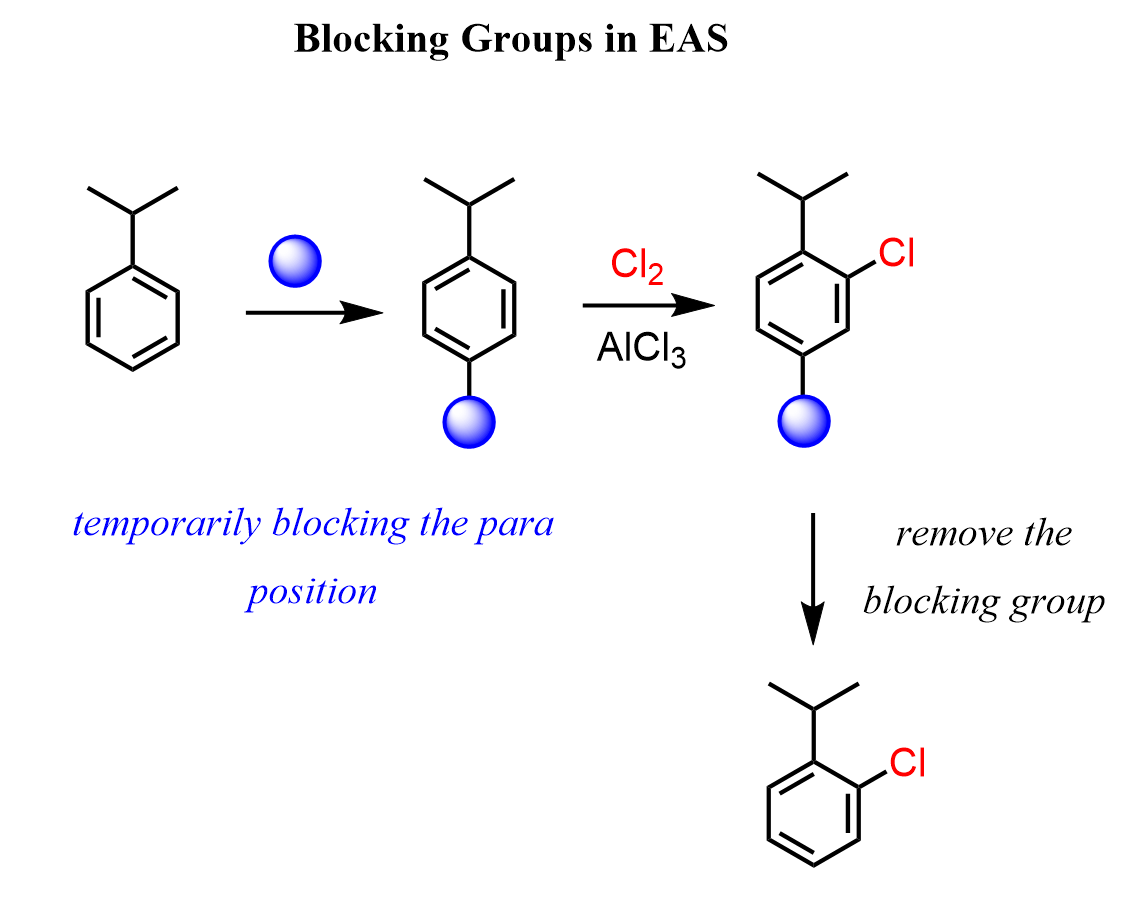
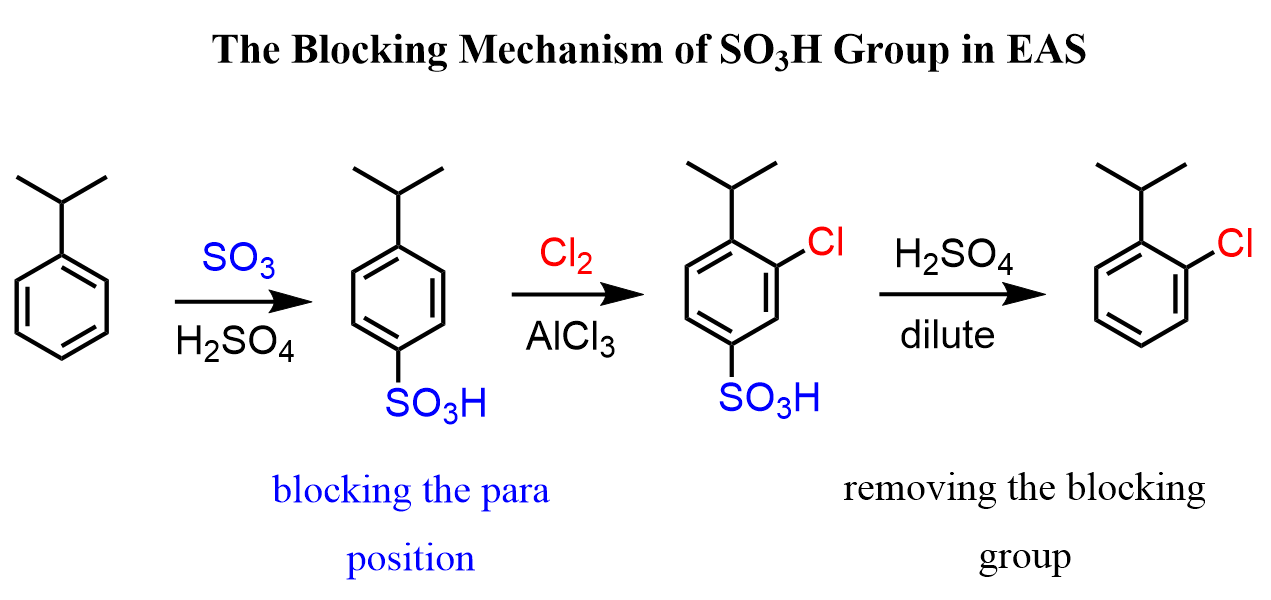
In these cases, we want to temporarily install a group on the para position, then bring in the desired electrophile to the ortho position, and finally remove the blocking group from the para position:
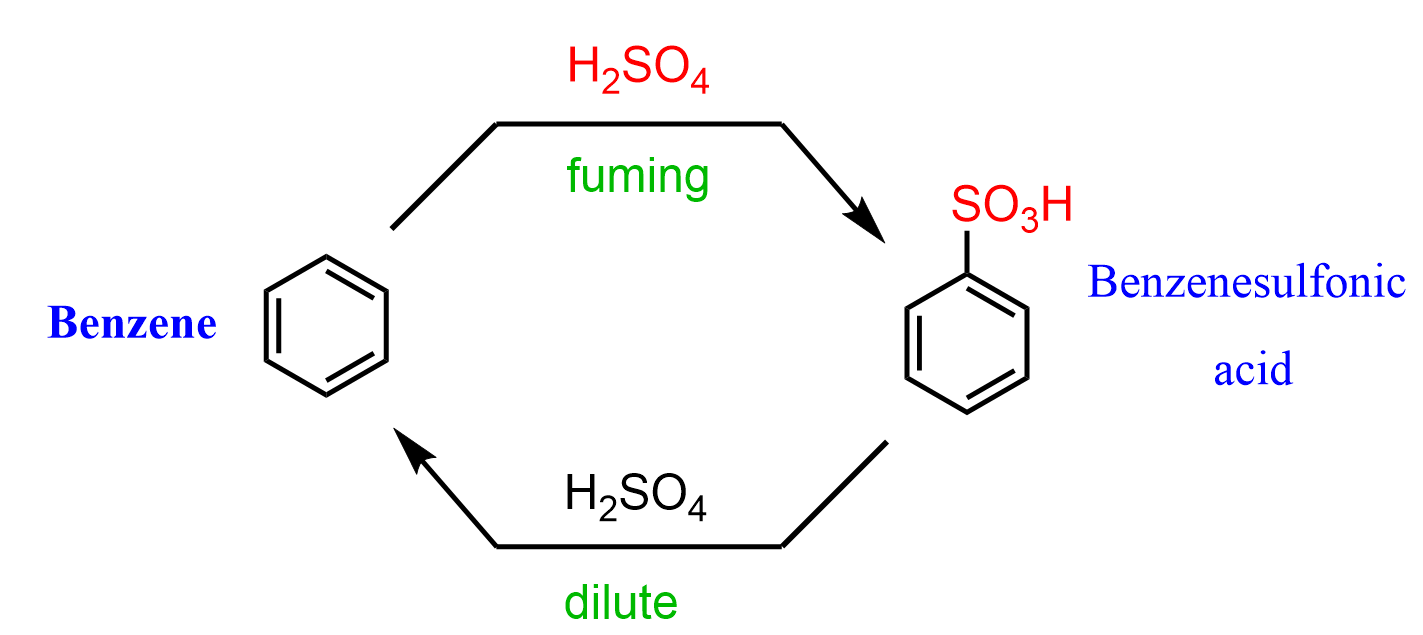
The good news is that there is a suitable reagent for this, and that is the sulfonation of benzene because it is a reversible process. We can add the SO₃H group by using concentrated sulfuric acid, and we can remove it by using dilute sulfuric acid:
So, for the purpose of synthesizing ortho-chlorocumene, we would first need to react cumene with concentrated H₂SO₄ to introduce the SO₃H group. We can then chlorinate the ring using a Lewis acid catalyst such as AlCl₃, which will direct the chlorine to the available ortho position. Finally, the SO₃H group can be removed by treating the product with dilute H₂SO₄, giving the desired ortho-chlorocumene:
Check Also
- Electrophilic Aromatic Substitution – The Mechanism
- The Halogenation of Benzene
- The Nitration of Benzene
- The Sulfonation of Benzene
- Activating and Deactivating Groups
- Friedel-Crafts Alkylation with Practice Problems
- Friedel-Crafts Acylation with Practice Problems
- The Wolff-Kishner and Clemmensen Reductions
- Vilsmeier-Haack Reaction
- The Alkylation of Benzene by Acylation-Reduction
- Ortho, Para, Meta in EAS with Practice Problems
- Ortho, Para, and Meta in Disubstituted Benzenes
- Why Are Halogens Ortho-, Para- Directors yet Deactivators?
- Is Phenyl an Ortho/Para or Meta Director?
- Limitations of Electrophilic Aromatic Substitution Reactions
- Orientation in Benzene Rings With More Than One Substituent
- Synthesis of Aromatic Compounds From Benzene
- Arenediazonium Salts in Electrophilic Aromatic Substitution
- Reactions at the Benzylic Position
- Benzylic Bromination
- Nucleophilic Aromatic Substitution
- Nucleophilic Aromatic Substitution Practice Problems
- Reactions of Phenols
- Reactions of Aniline
- Meta Substitution on Activated Aromatic Ring
- Birch Reduction
- Electrophilic Aromatic Substitution Practice Problems
- Aromatic Compounds Quiz
- Reactions Map of Aromatic Compounds