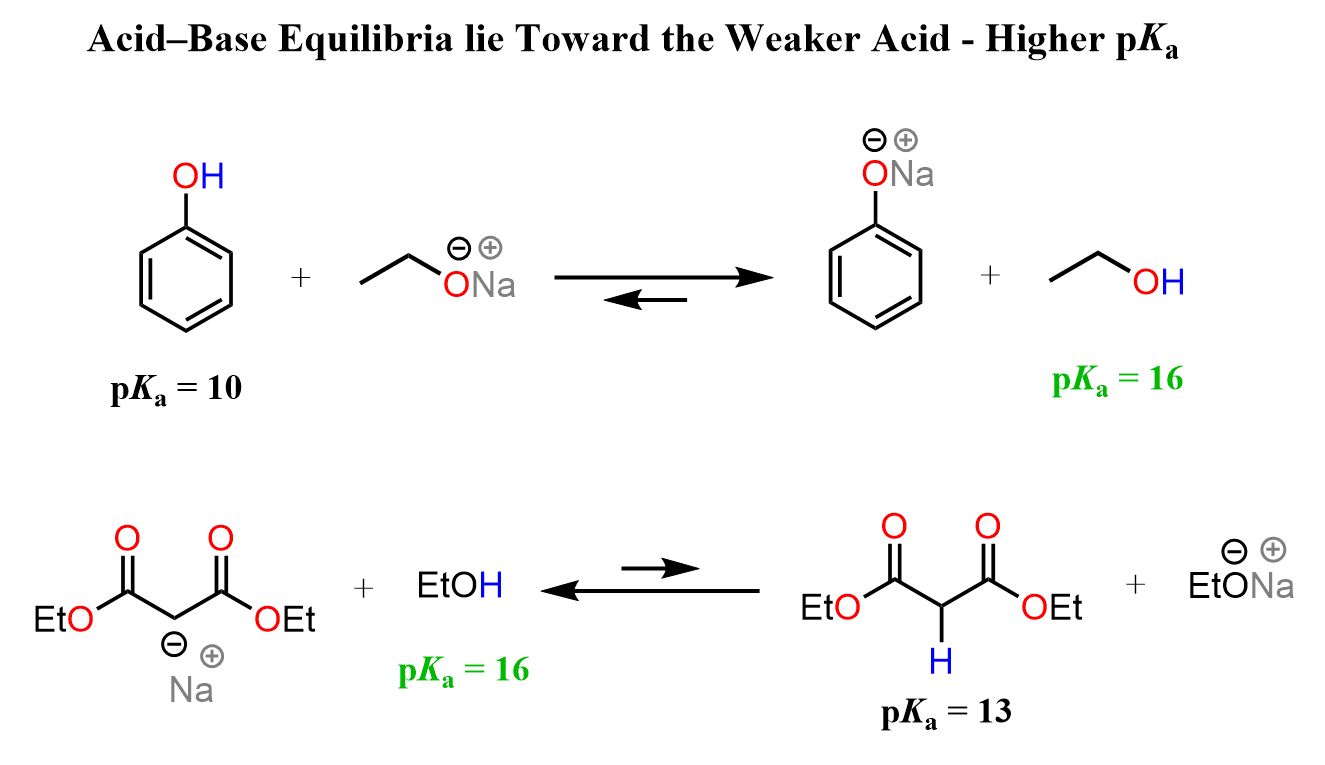
We have learned earlier that the pKa values can be used to predict whether the equilibrium of a given acid-base reaction lies to the right or to the left. In other words, we can compare the pKa values of the acid and conjugate acid of the base to predict if the products or reactants are favored.
In short, any acid-base reaction goes towards the formation of a weaker acid and a weaker base. In terms of pKa, we conclude that the pKa of the conjugate acid (the product acid) must be greater than the pKa of the reactant acid.
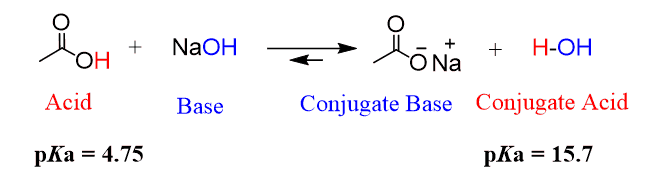
Now, another common exam question is to calculate the equilibrium constant of the acid-base reaction based on these pKa values.
For example, will sodium ethoxide deprotonate phenol? What would the equilibrium constant of this reaction be?
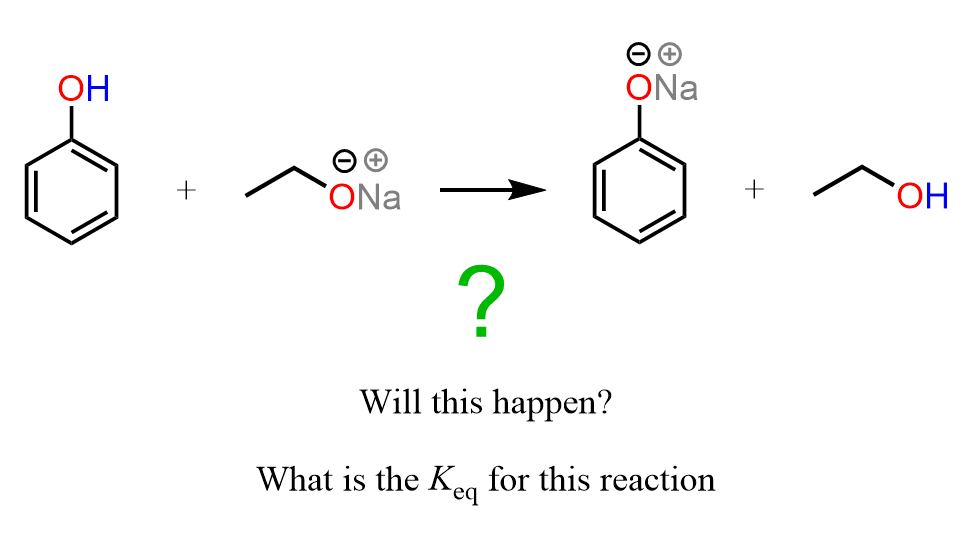
The equilibrium constant is a quantitative indicator of the acid-base equilibrium. So, instead of saying yes, this reaction would work – the base is strong enough to deprotonate this compound, and we actually calculate to what extent the reaction occurs.
This is done quite easily using the following formula correlating the equilibrium constant, K, with the Ka and pKa values of the acids:
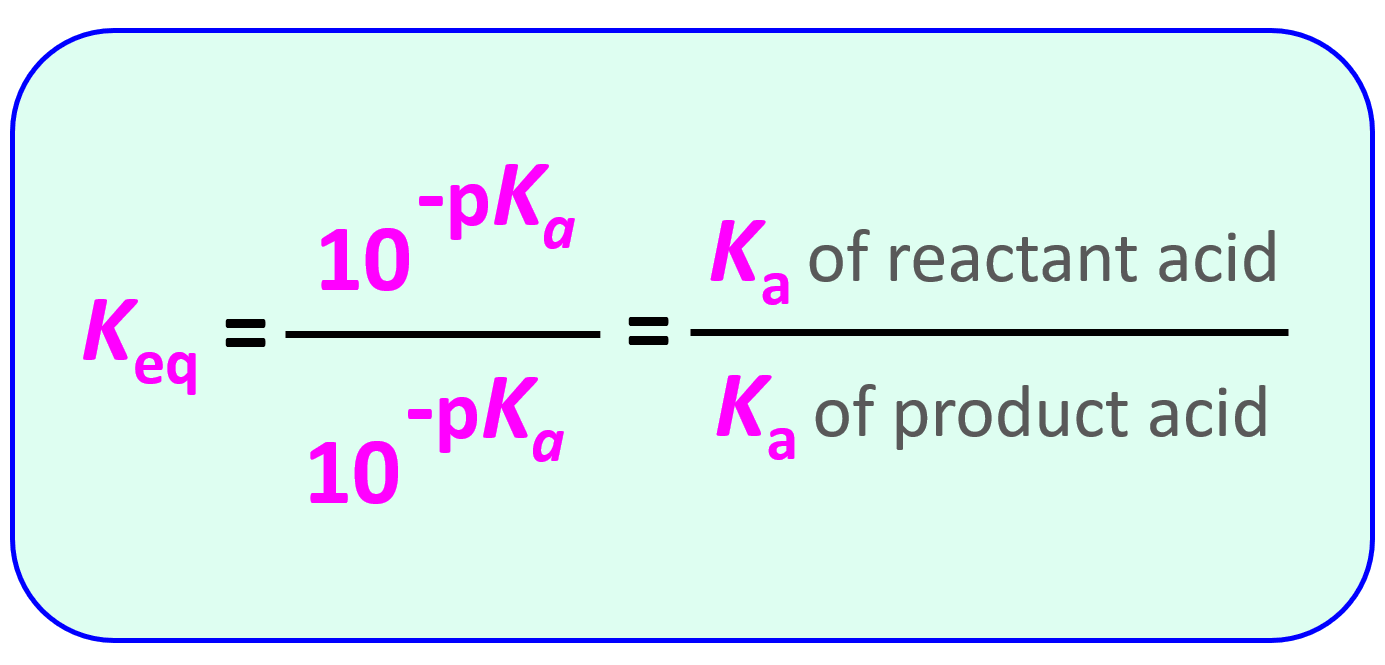
So, for our example of reacting phenol with sodium ethoxide, which is the conjugate base of ethanol, the equilibrium constant is calculated using the pKa of phenol (10), and the pKa of ethanol (16):
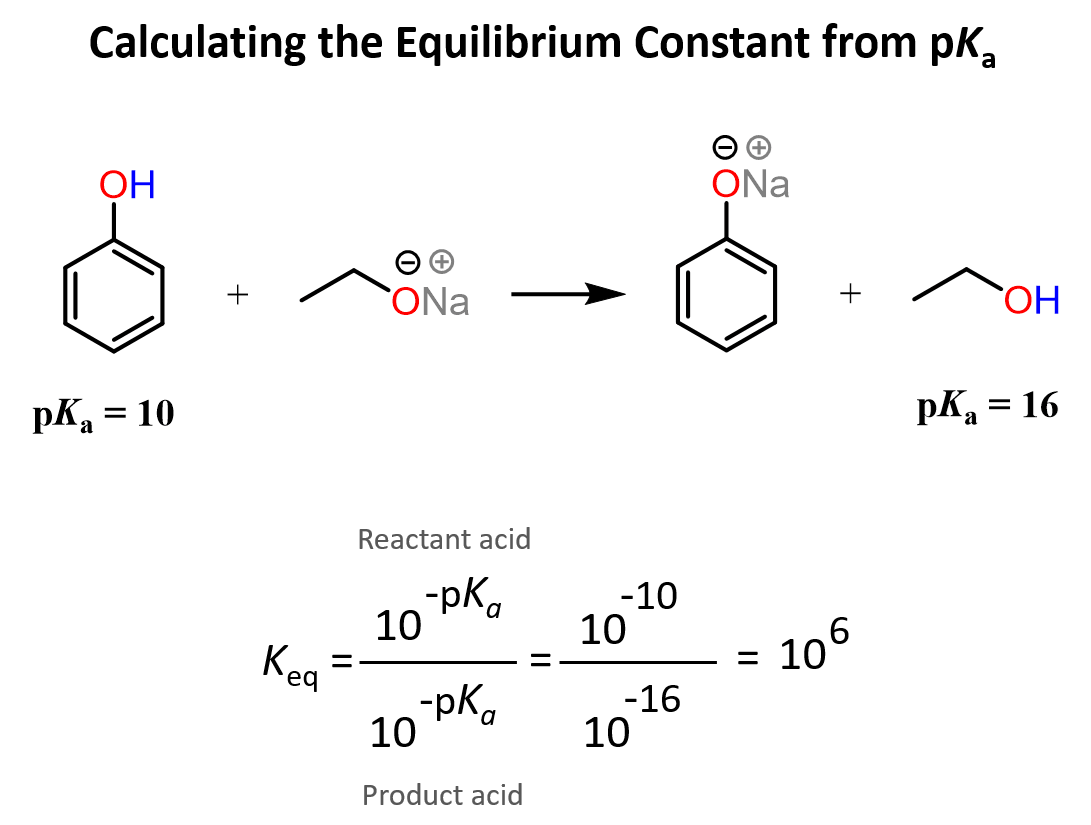
This huge value indicates that this is not really an equilibrium as such, and the reaction is almost exclusively favored on the product side.
Keq of Unfavored Acid-Base Reactions
Let’s also consider another scenario where the equilibrium constant is smaller than, so it tells us that the reaction won’t proceed as shown.
Suppose we want to run a reaction with the conjugate base of the diethyl malonate. For this, we first deprotonate it and react the conjugate base further with something else:
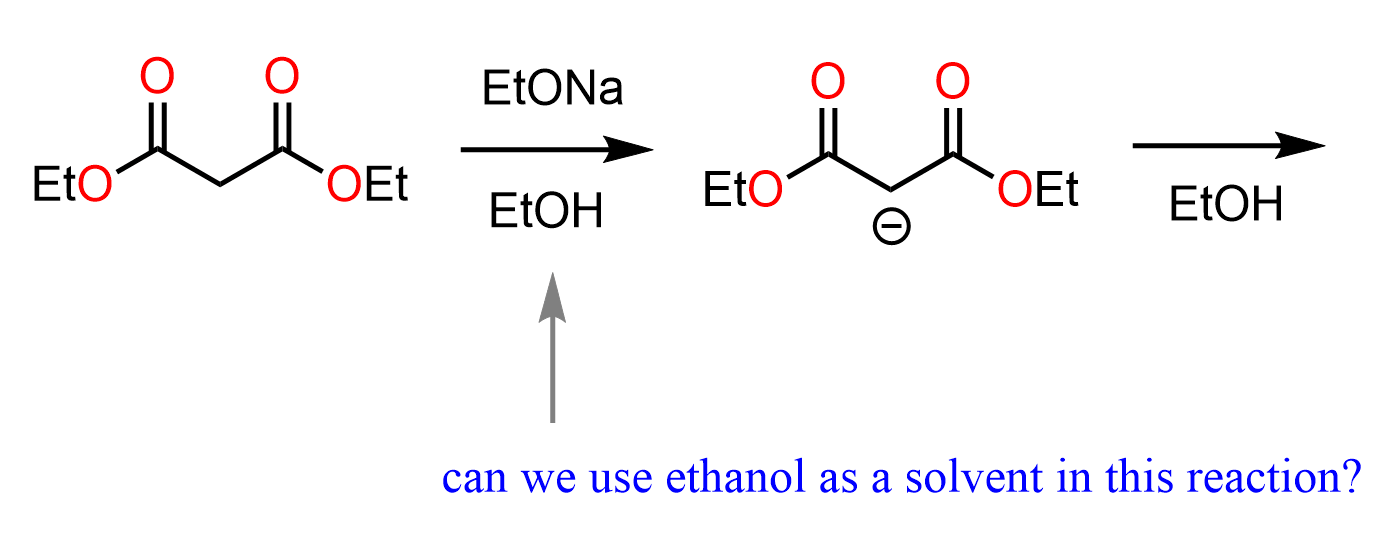
Can we run this reaction in ethanol? In other words, can we be sure that the negatively charged carbon of this tricarbonyl won’t get protonated if the molecule is in ethanol?
So, let’s write the equation for the deprotonation reaction of ethanol by the conjugate base of the malonate together with the corresponding pKa values and the formula we have just used:
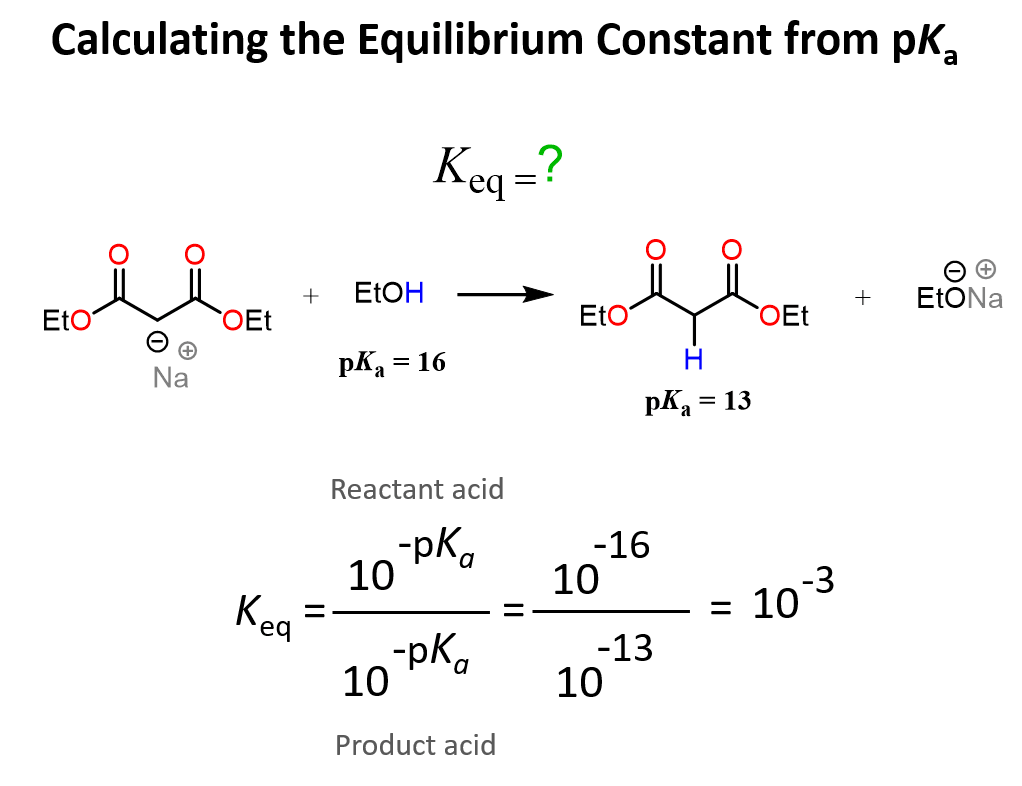
The equilibrium constant is smaller than 1; therefore, this reaction won’t occur to any significant degree. This indicates that we can indeed use ethanol as the solvent for deprotonating the malonic ester and using its conjugate base in further reactions.
At the end, I want to remind you that the direction of an acid-base reaction can be determined by comparing the pKa values of the reactant and product acids. You do not need to calculate the equilibrium constant for every acid-base reaction to determine whether a compound can be protonated or deprotonated with another species.
So, for our two examples, we could see that the first reaction occurs because the pKa of the product acid is larger (weaker acid), whereas the second reaction won’t occur because the pKa of the product acid is smaller (stronger acid) than that of the reactant acid.