
The Arndt-Eistert reaction is used for extending the carbon chain of carboxylic acids by one carbon atom:
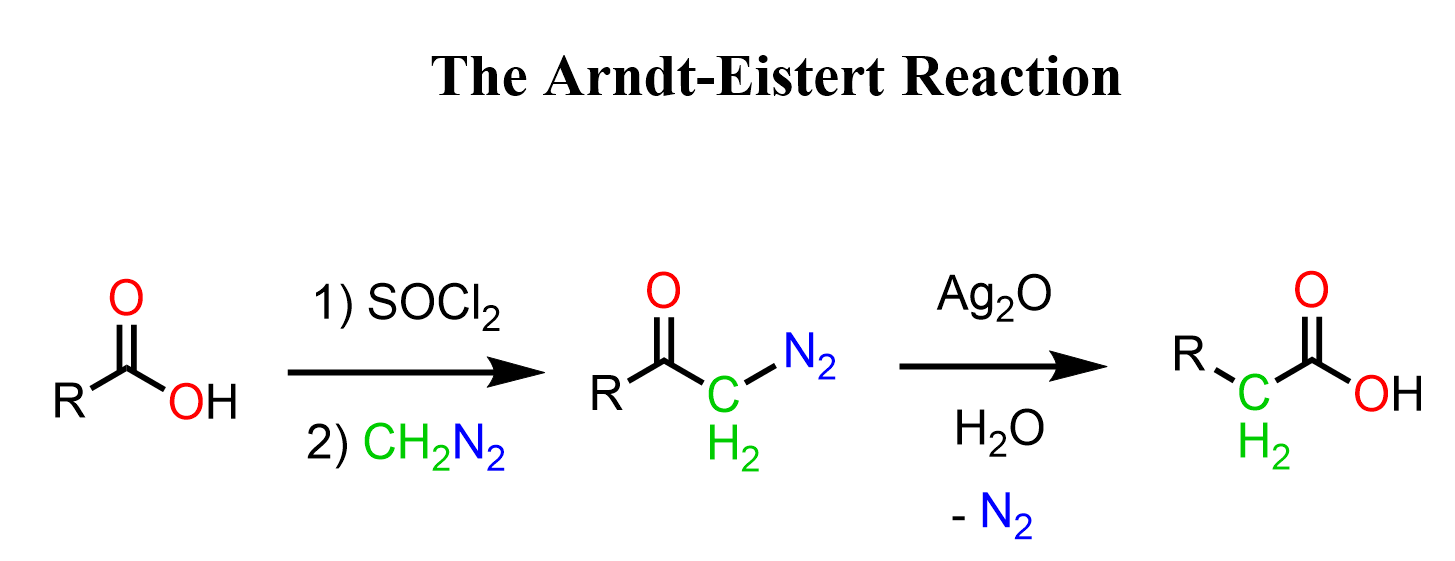
The extra carbon is introduced via diazomethane (CH2N2), which is quite nucleophilic and, upon reacting with an acid chloride, forms a diazoketone. The diazoketone is then converted to a ketene via Wolf rearrangement in the presence of Ag₂O and heat, and the ketene is reacted with water as a nucleophile to form the final carboxylic acid with an extra carbon atom:
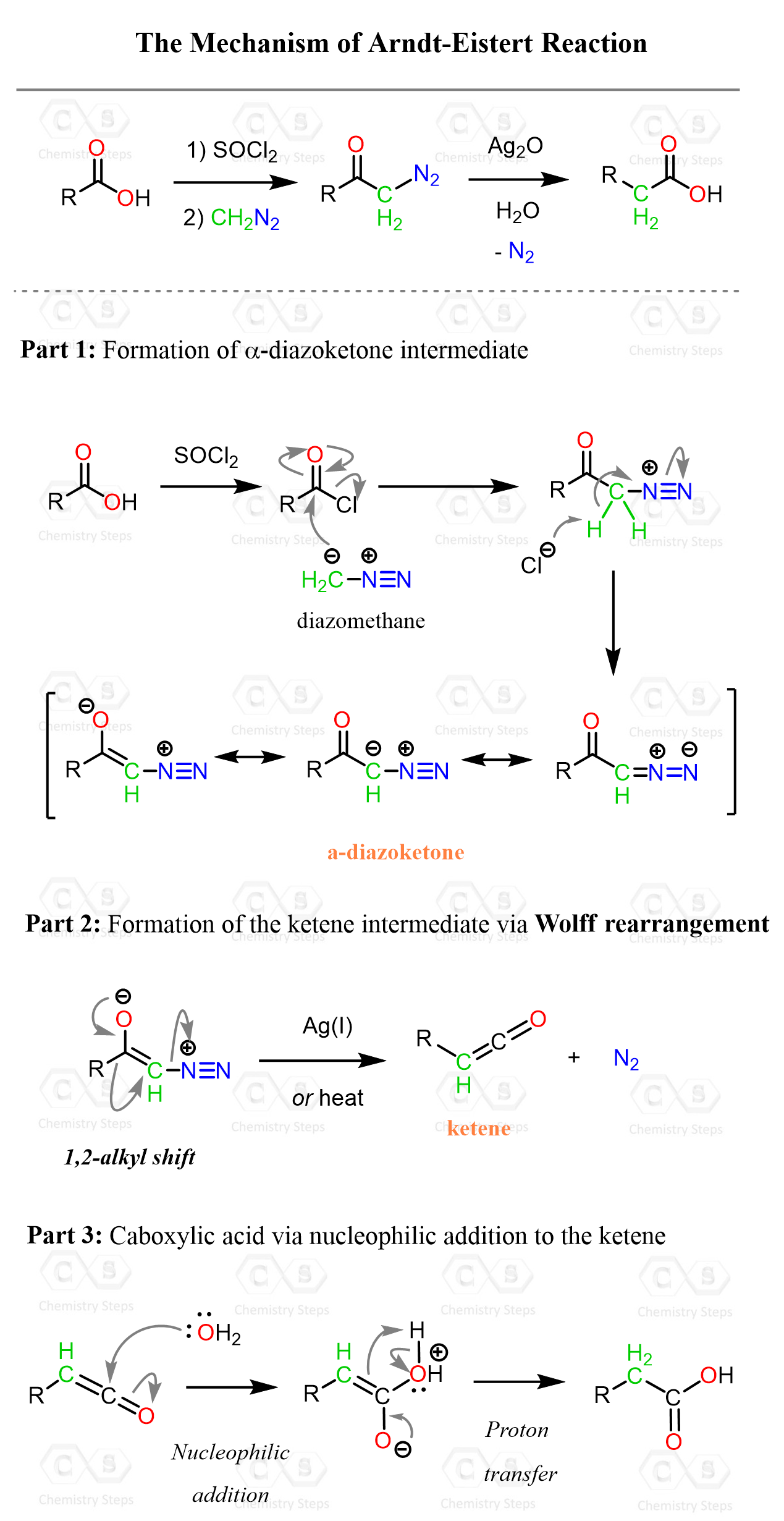
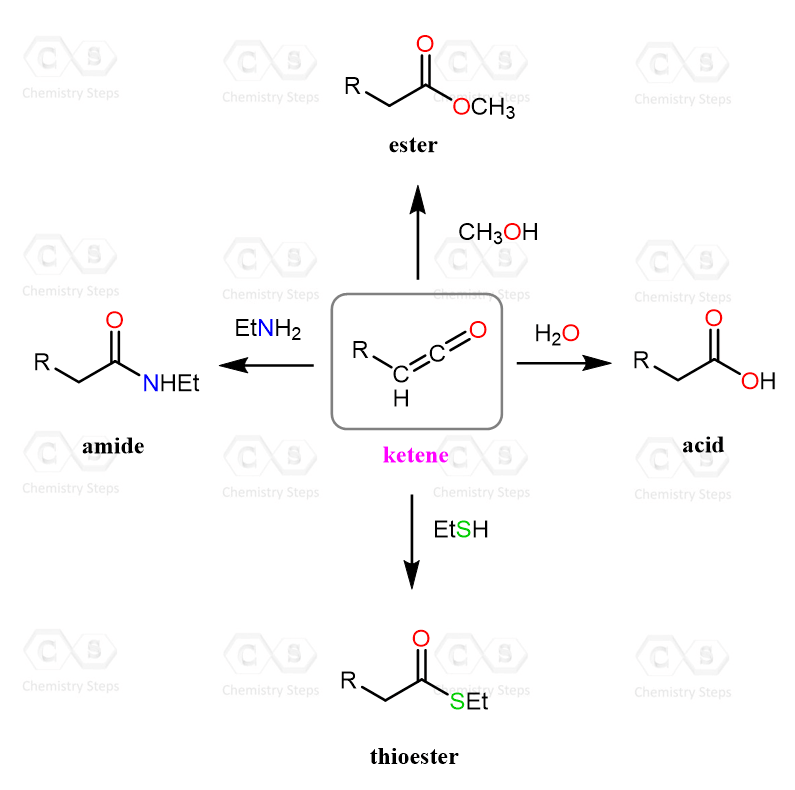
The conversion of ketenes to carboxylic acids occurs because ketenes are highly electrophilic and are known to react with a variety of nucleophiles such as water, alcohols, and amines.
In fact, ketenes are not stable enough to be stored and mainly occur as intermediates in organic synthesis.
At the end, I wanted to mention that the Arndt-Eistert reaction is a particular case of the Wolff rearrangement, which is the key and unique step in these sequences of conversions. You can read more about the Wolff rearrangement in this post.
For those of you interested in practice problems on organic synthesis, check out this page. Also, for registered students, we have a collection of practice problems based on the synthesis of essential drugs that you can find here.
References
- László Kürti and Barbara Czakó, Strategic Applications of Named Reactions in Organic Synthesis, 2005
Check Also
- Curtius Rearrangement
- Preparation of Carboxylic Acids
- Naming Carboxylic Acids
- Naming Nitriles
- Naming Esters
- Naming Carboxylic Acid Derivatives – Practice Problems
- The Addition-Elimination Mechanism
- Fischer Esterification
- Ester Hydrolysis by Acid and Base-Catalyzed Hydrolysis
- What is Transesterification?
- Esters’ Reaction with Amines – The Aminolysis Mechanism
- Ester Reactions Summary and Practice Problems
- Preparation of Acyl (Acid) Chlorides (ROCl)
- Reactions of Acid Chlorides (ROCl) with Nucleophiles
- R2CuLi Organocuprates – Gilman Reagent
- Reaction of Acyl Chlorides with Grignard and Gilman (Organocuprate) Reagents
- Reduction of Acyl Chlorides by LiAlH4, NaBH4, and LiAl(OtBu)3H
- Reduction of Carboxylic Acids and Their Derivatives
- Preparation and Reaction Mechanism of Carboxylic Anhydrides
- Amides – Structure and Reactivity
- Naming Amides
- Amide Hydrolysis: Acid and Base-Catalyzed Mechanism
- Amide Dehydration Mechanism by SOCl2, POCl3, and P2O5
- Amide Reduction Mechanism by LiAlH4
- Reduction of Amides to Amines and Aldehydes
- Amides Preparation and Reactions Summary
- Amides from Carboxylic Acids-DCC and EDC Coupling
- The Mechanism of Nitrile Hydrolysis To Carboxylic Acid
- Nitrile Reduction Mechanism with LiAlH4 and DIBAL to Amine or Aldehyde
- The Mechanism of Grignard and Organolithium Reactions with Nitriles
- The Reactions of Nitriles
- Converting Nitriles to Amides
- Carboxylic Acids to Ketones
- Esters to Ketones
- Synthesis and Reactions of Lactones and Lactams
- Carboxylic Acids and Their Derivatives Practice Problems
- Carboxylic Acids and Their Derivatives Quiz
- Reactions Map of Carboxylic Acid Derivatives