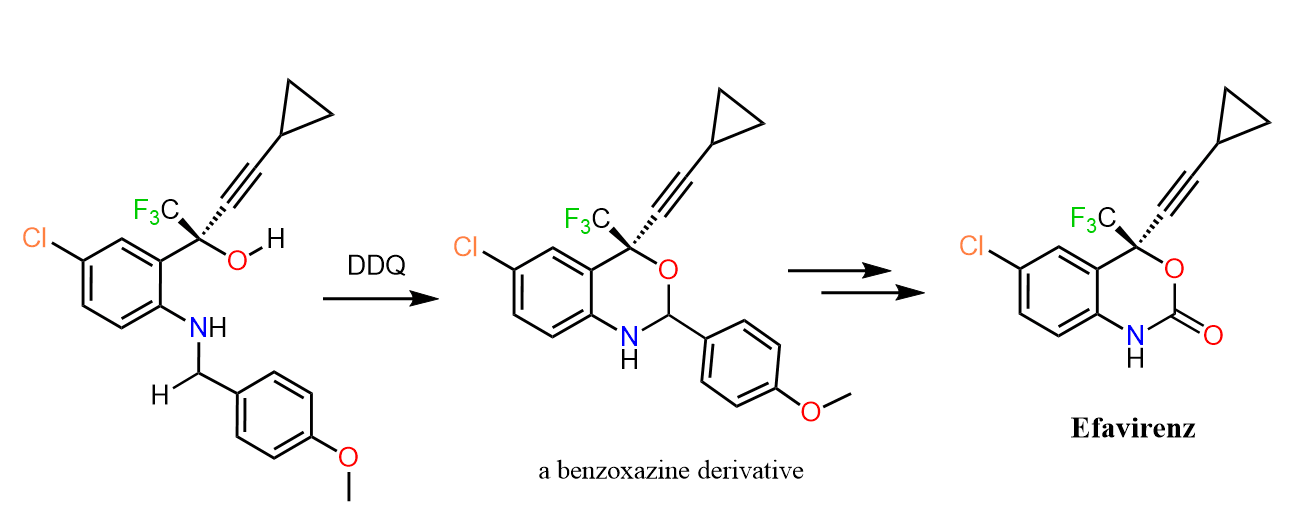
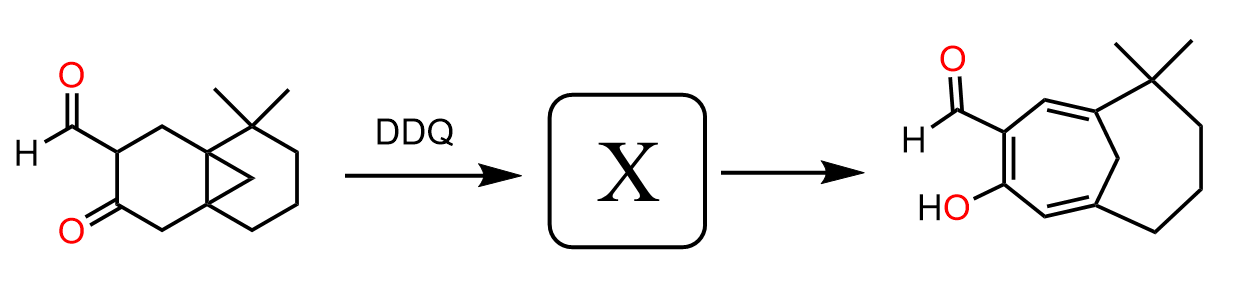
Although often omitted from undergraduate organic chemistry textbooks, DDQ (2,3-dichloro-5,6-dicyano-1,4-benzoquinone) is a versatile oxidizing agent used for the dehydrogenation of organic compounds, the aromatization of partially saturated rings, and the oxidation of activated C–H bonds. It can also promote oxidative cyclizations and other transformations.
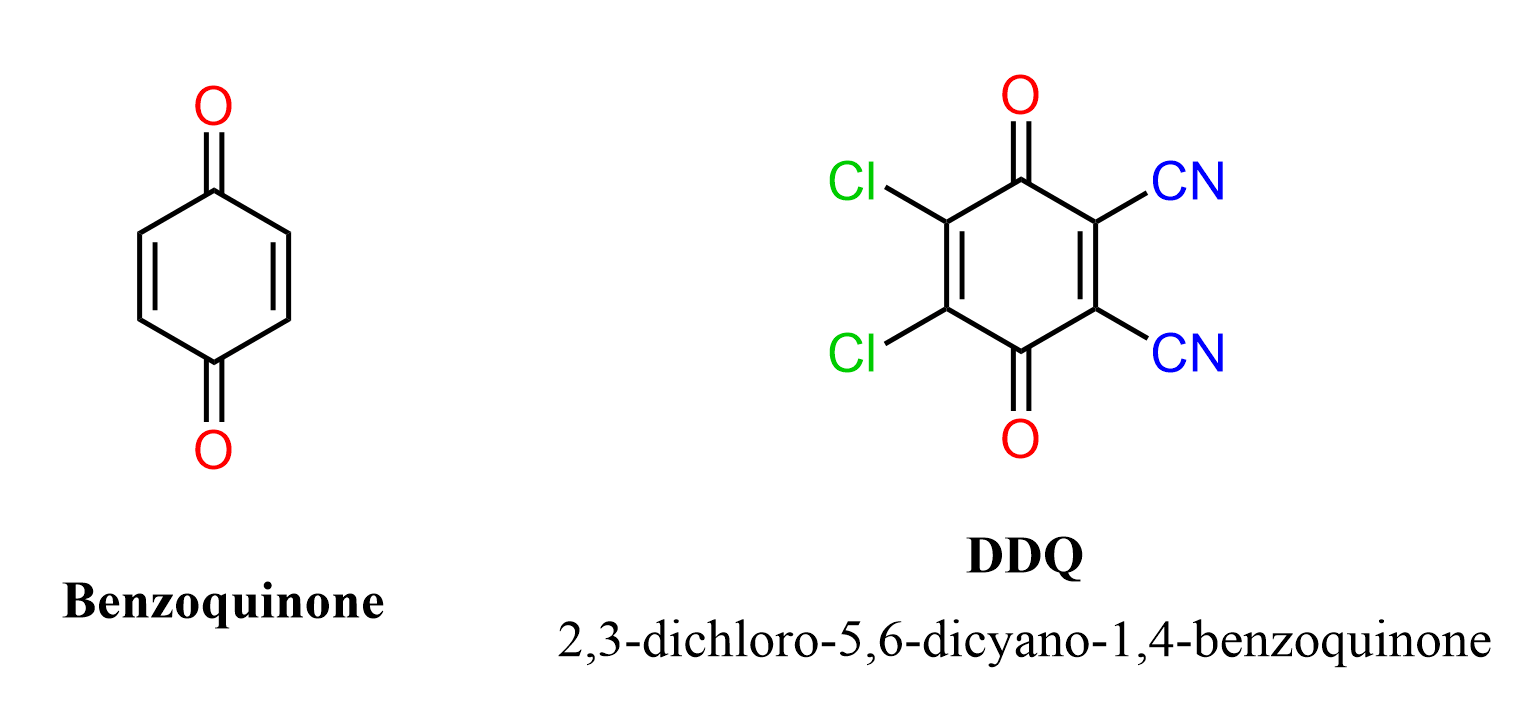
Before getting into the details of the mechanism, let’s examine what the structure of DDQ tells us. It contains four strongly electron-withdrawing groups attached to the ring: two carbonyl groups and two cyano groups (–CN).
I have not mentioned the chlorines because they also exert an electron-withdrawing inductive effect because chlorine is more electronegative than carbon. However, their lone pairs can also donate electron density into the ring through resonance.
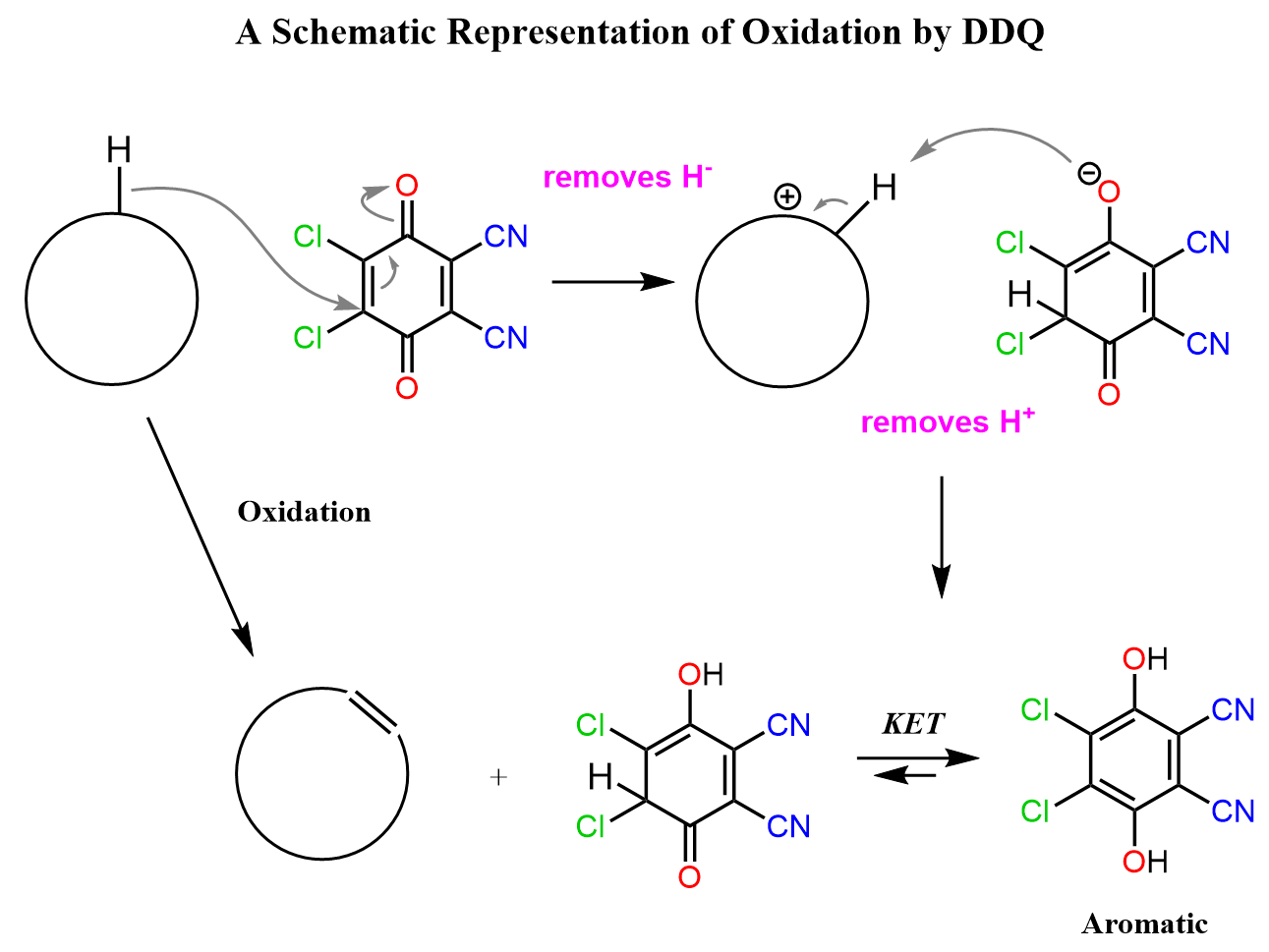
With these strongly electron-withdrawing groups, DDQ is very electron-deficient and thus highly electrophilic, so it readily accepts electrons and can accept a hydride ion (H⁻) from a suitable substrate:
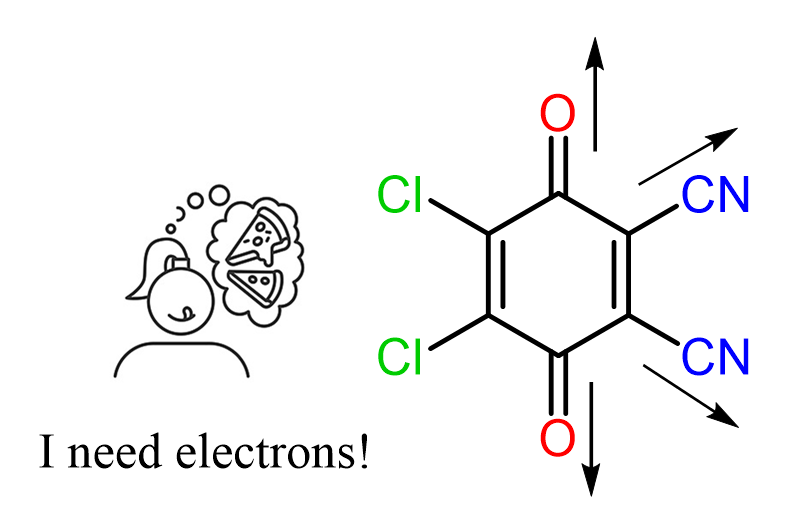
The big picture of many DDQ-mediated dehydrogenation reactions can therefore be understood in two steps:
1) Hydride transfer: DDQ accepts a hydride ion from the substrate, converting it to a carbocation intermediate.
2) Deprotonation: The reduced form of DDQ has a delocalized negative charge, and it acts as a base and removes a proton from a carbon adjacent to the carbocation, forming a new π bond and regenerating the neutral, dehydrogenated product.
One of the common applications of DDQ is the aromatization of partially saturated cyclic systems. For example, here is DDQ converting tetrahydroquinoline to quinoline:
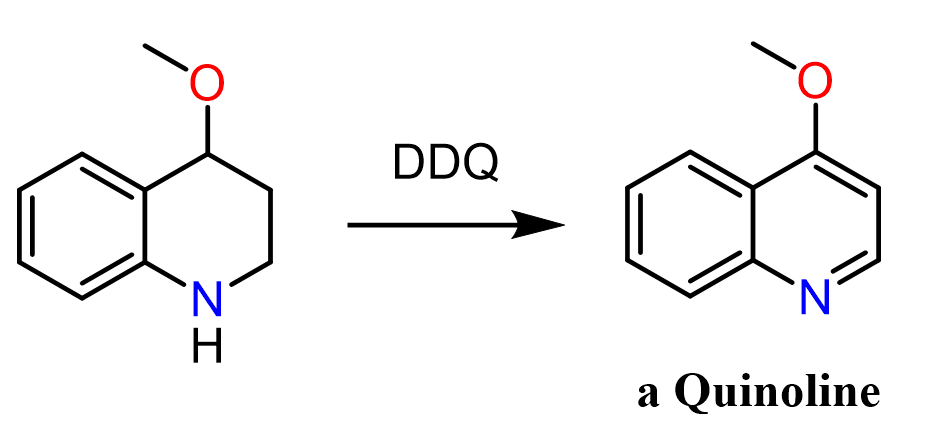
One of the reagents is DDQ, which we have mentioned is strongly electrophilic. The other reagent is the hydride donor. It is more accurate to say that DDQ is the hydride stealer/acceptor, etc., because it is not like tetrahydroquinoline is dying to lose a hydride ion under other circumstances.
So, we can show the mechanism of this oxidation as the nitrogen helping to kick out a hydride ion with its lone pair and DDQ accepting it. This forms a resonance-stabilized carbocation and a resonance-stabilized anion. In the next step, the reduced form of DDQ attacks the beta hydrogen next to the carbocation, forming the new C=C double bond. The cycle repeats once more to oxidize the other C–C bond:
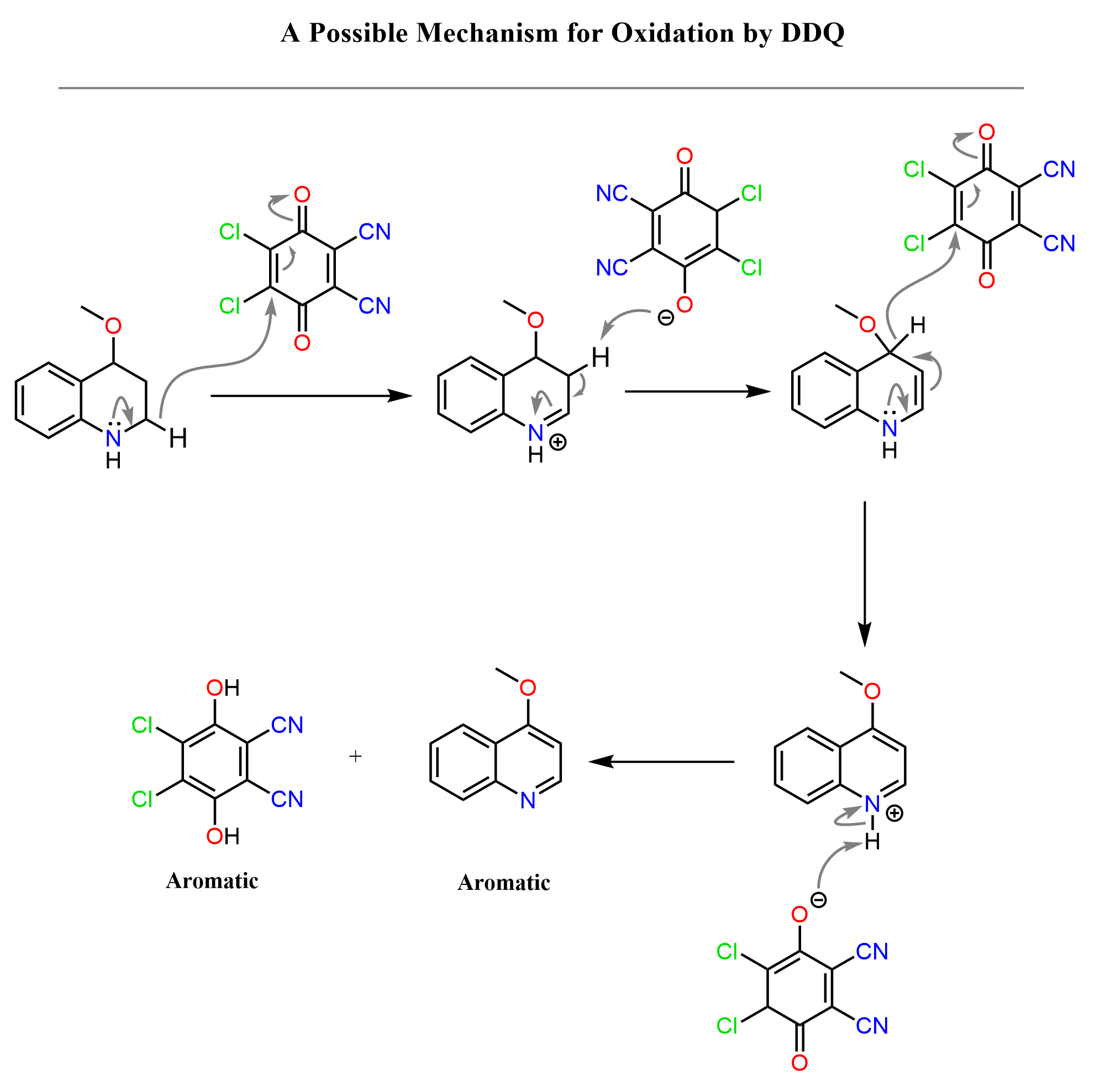
What is also important to note here is that both products of the reaction are aromatic. DDQ drives the oxidation toward these products because the formation of aromatic systems provides additional stabilization.
Quinoline is aromatic because its fused ring system has 10 π electrons in a continuous conjugated system, satisfying Hückel’s 4n+2 rule (n=2). The nitrogen contributes one electron from its p orbital, while its lone pair remains in an sp² orbital and does not participate in the aromatic π system.
Now, although electron-rich species are generally oxidized more readily by DDQ because of their greater tendency to lose a hydride ion, we should also mention that this is not an absolute requirement. For example, naphthalene can also be prepared by oxidation of the following benzene derivative using DDQ at elevated temperatures:
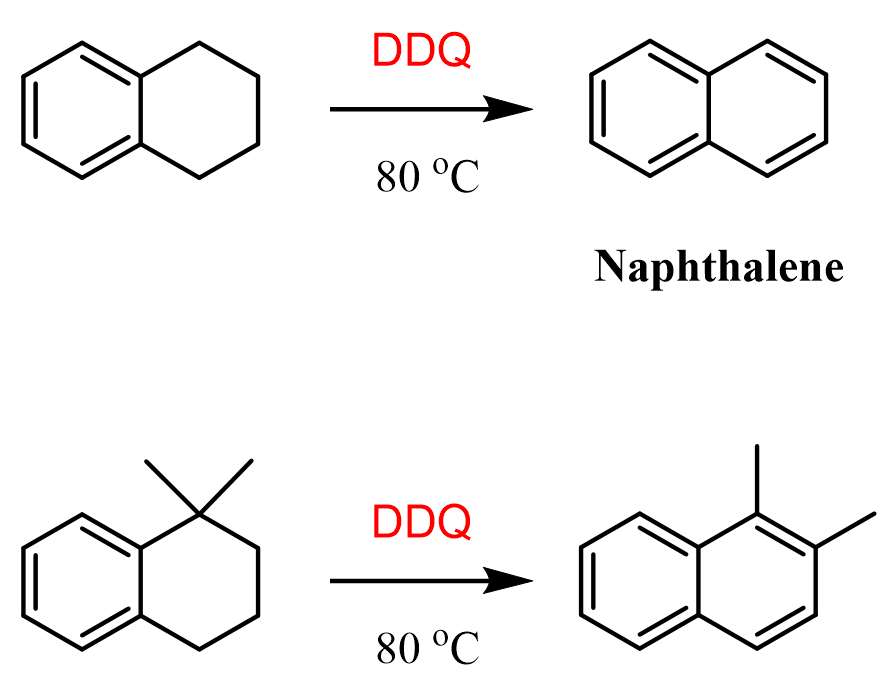
The key here is again the fact that two aromatic compounds are formed, which makes the reaction particularly favorable.
With this said, we cannot use DDQ to oxidize any simple hydrocarbon, like oxidizing a regular alkane to an alkene.
Note also the rearrangement in the second reaction, which occurs via a 1,2-methyl shift to form the intermediate carbocation.
Oxidation of Alcohols with DDQ
Let’s also see how DDQ can oxidize alcohols to carbonyl compounds. For example, in the following reaction, DDQ selectively oxidizes the benzylic alcohol to a carbonyl compound in the presence of a regular primary alcohol:
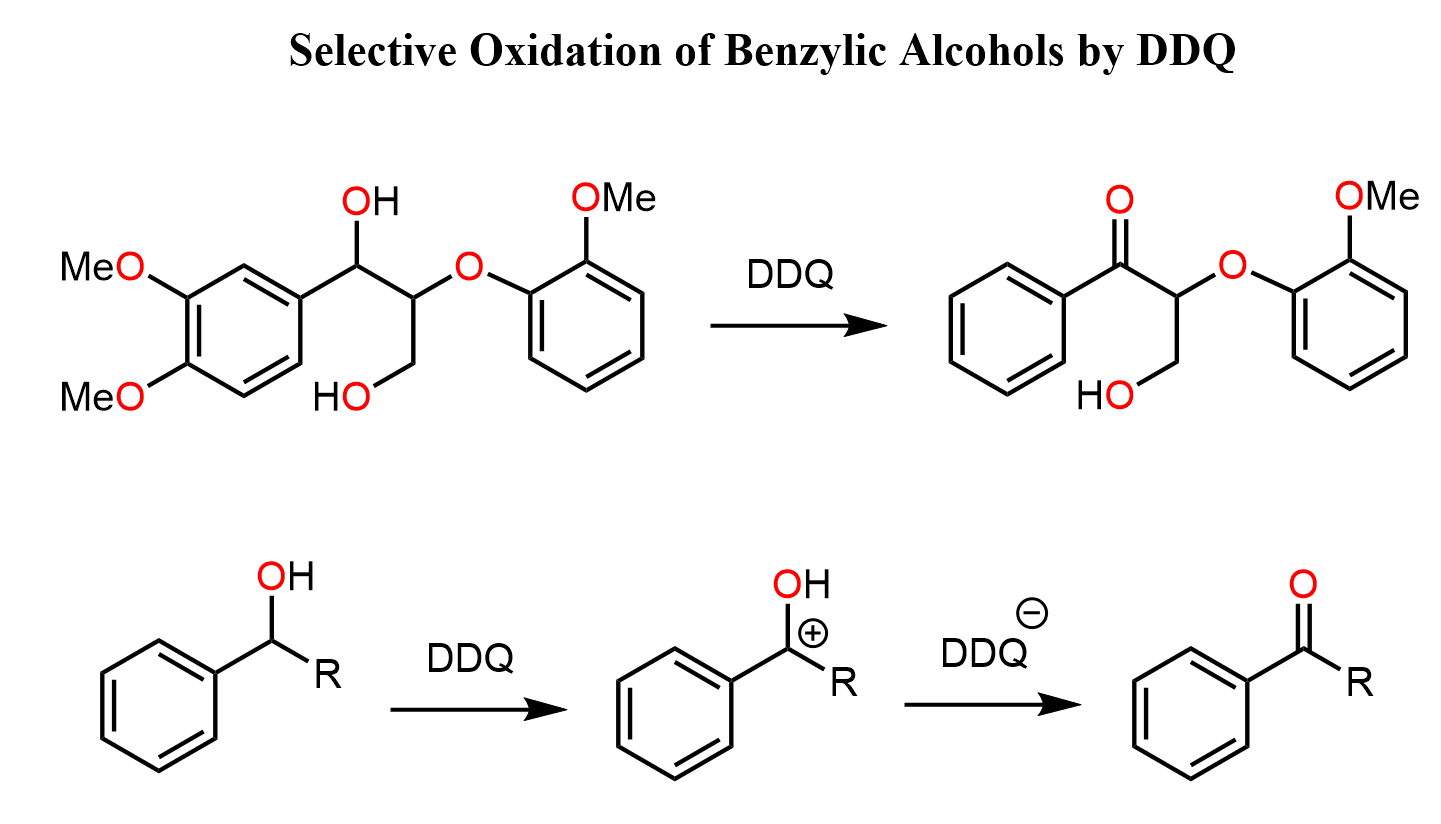
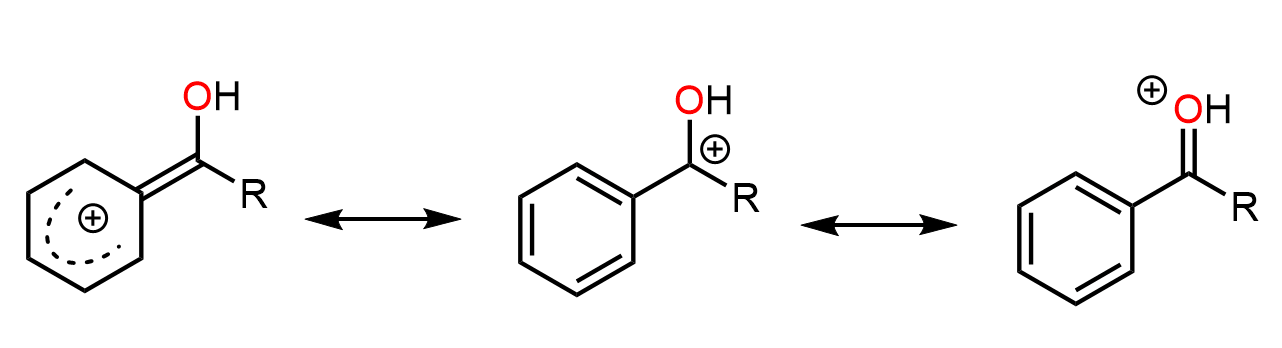
This supports the proposed mechanism of DDQ oxidation. The loss of a hydride ion from the benzylic position forms a benzylic carbocation, which is greatly stabilized by resonance delocalization through the aromatic π system. In addition, the lone pair on oxygen provides further resonance stabilization of the intermediate carbocation:
The Advantages of DDQ
At this point, you may be wondering how DDQ is better than other oxidizing agents, such as PCC, PDC, Dess-Martin periodinane, and chromate reagents. There are a few points worth mentioning.
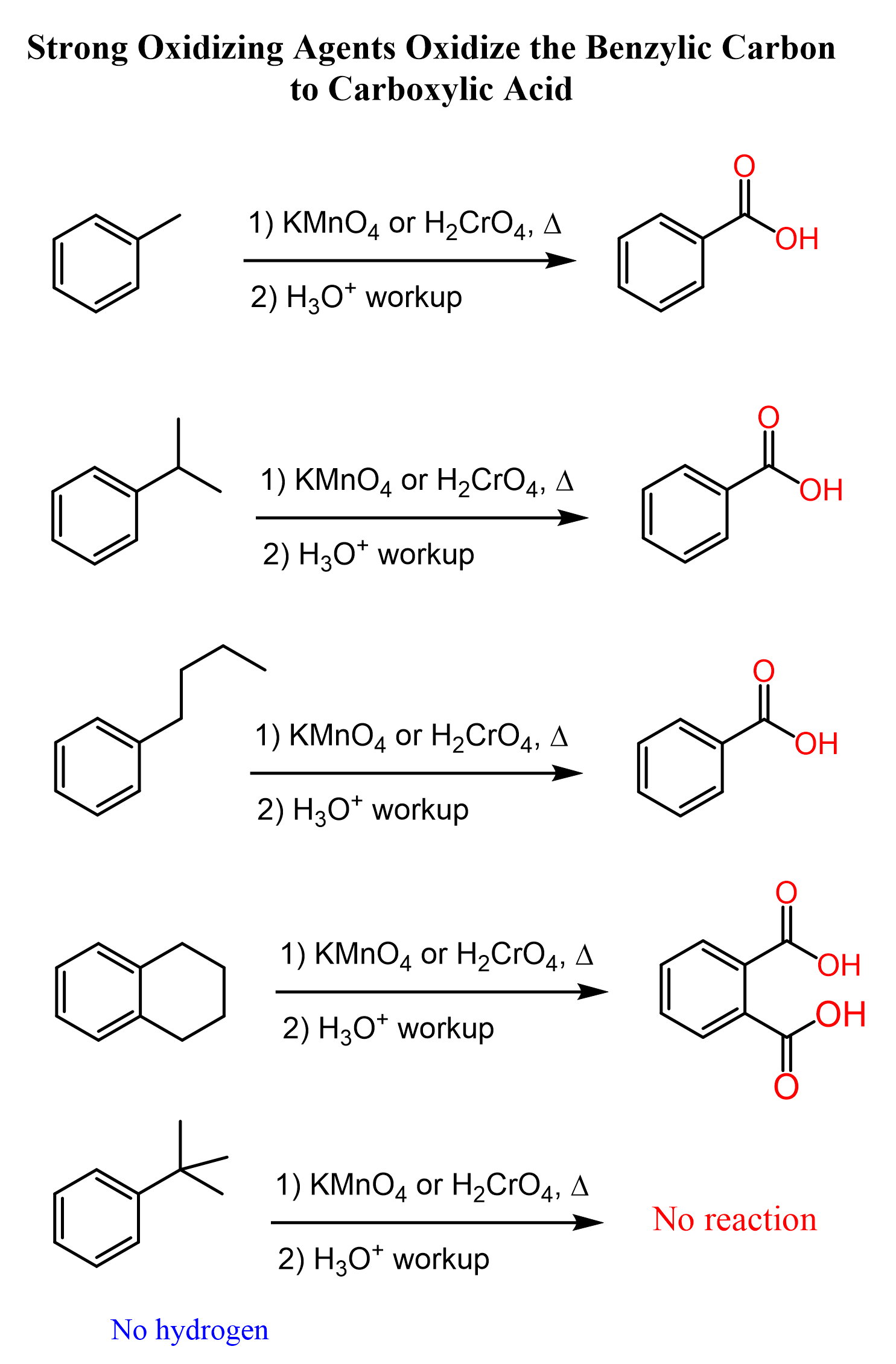
First, DDQ can offer greater selectivity for certain oxidation reactions. Regarding chromates, chromic acid, and Jones oxidation, the distinction is clear: these are strong oxidizing systems that can oxidize primary alcohols to carboxylic acids under suitable conditions. Remember, they can also oxidatively cleave the C–C bond adjacent to a benzylic carbon, producing benzoic acid derivatives regardless of the length of the original side chain:
On the other hand, conventional alcohol oxidants, such as PCC and Dess-Martin periodinane, are not generally used to dehydrogenate unactivated C–H bonds or promote the oxidative cyclizations and aromatizations for which DDQ is particularly useful.
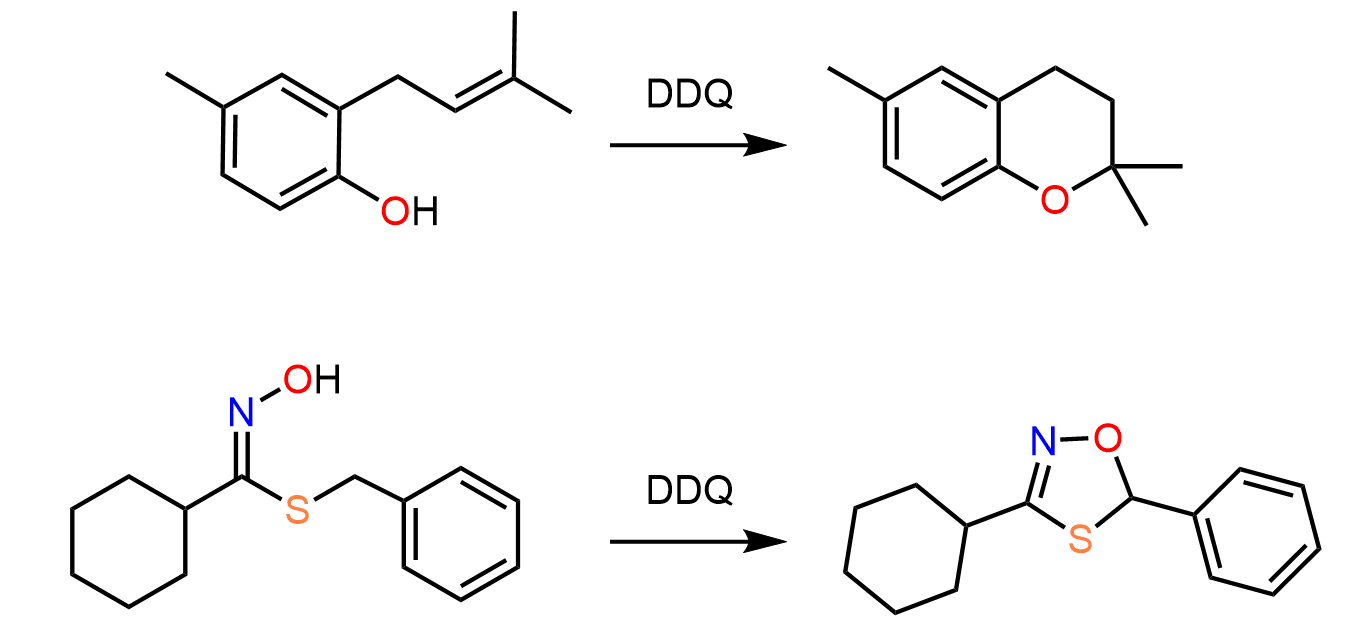
For example, the following compound undergoes cyclization when treated with DDQ, a transformation that would not typically be achieved using conventional alcohol-oxidizing reagents:
Although the conventional mechanism involving hydride transfer followed by deprotonation of the resulting carbocation is convenient for explaining many DDQ oxidations, it is not universal. DDQ can also promote oxidative cyclization and coupling reactions through single-electron transfer (SET), generating radical cations that undergo further reactions to form new bonds. This is particularly well established for reactions involving photoexcited DDQ, which is a stronger one-electron oxidant. Depending on the substrate and reaction conditions, DDQ-mediated transformations can therefore proceed through either cationic or radical pathways. [4, 5]
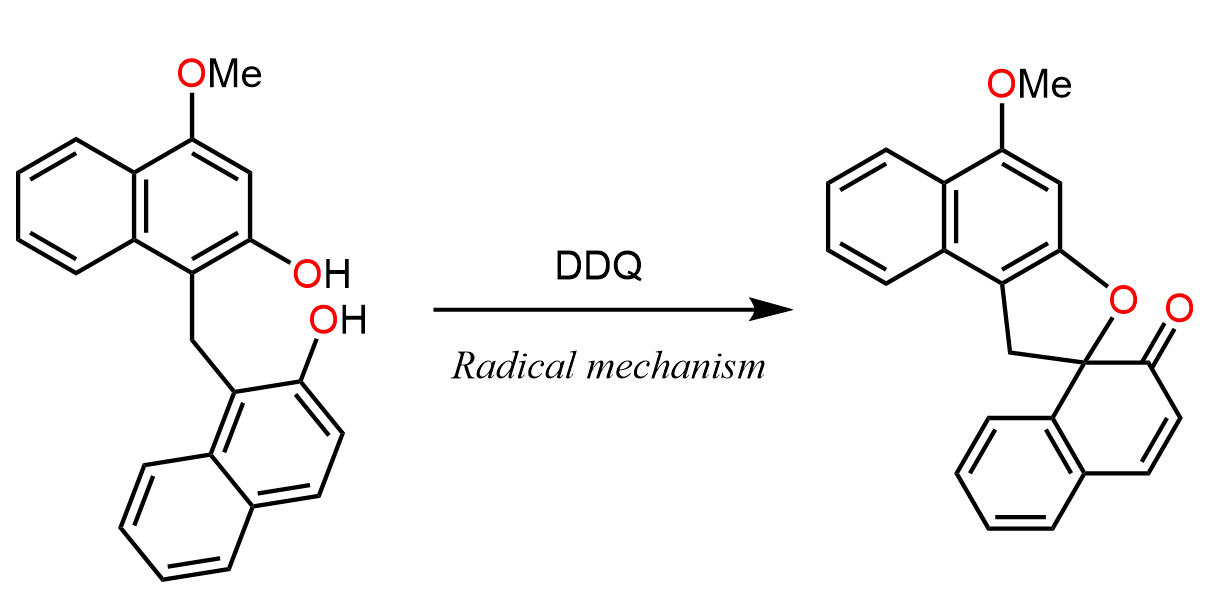
This is just one of the many examples in the literature where DDQ is used to promote oxidative cyclization.
Among many others, check the following article for more details and examples of using DDQ in organic synthesis:
Referecne
- Alsharif, M. A. et al. DDQ as a Versatile and Easily Recyclable Oxidant: A Systematic Review. RSC Adv. 2021, 11, 29826–29858. https://doi.org/10.1039/D1RA04575J.
- Cosner, C. C. et al. Selective Oxidation of Benzylic and Allylic Alcohols Using Mn(OAc)₃/Catalytic 2,3-Dichloro-5,6-dicyano-1,4-benzoquinone. Org. Lett. 2011, 13, 2071–2073. https://doi.org/10.1021/ol200441g.
- Walker, D.; Hiebert, J. D. 2,3-Dichloro-5,6-dicyanobenzoquinone and Its Reaction with Alcohols. Chem. Rev. 1967, 67, 153–195. https://doi.org/10.1021/cr60246a001.
- Lewis, J. R.; Paul, J. G. Oxidative Coupling. Part 11. Approaches to the Synthesis of Bikaverin. J. Chem. Soc., Perkin Trans. 1 1981, 770–775. https://doi.org/10.1039/P19810000770.