Schiff bases, first described by the German chemist Hugo Schiff in 1864, are imines in which the nitrogen atom is bonded to an organic group (alkyl or aryl) rather than hydrogen.
If you are familiar with imines and their synthesis, you can simply remember that Schiff bases are a subclass of imines in which the nitrogen atom is bonded to an alkyl or aryl group rather than hydrogen:
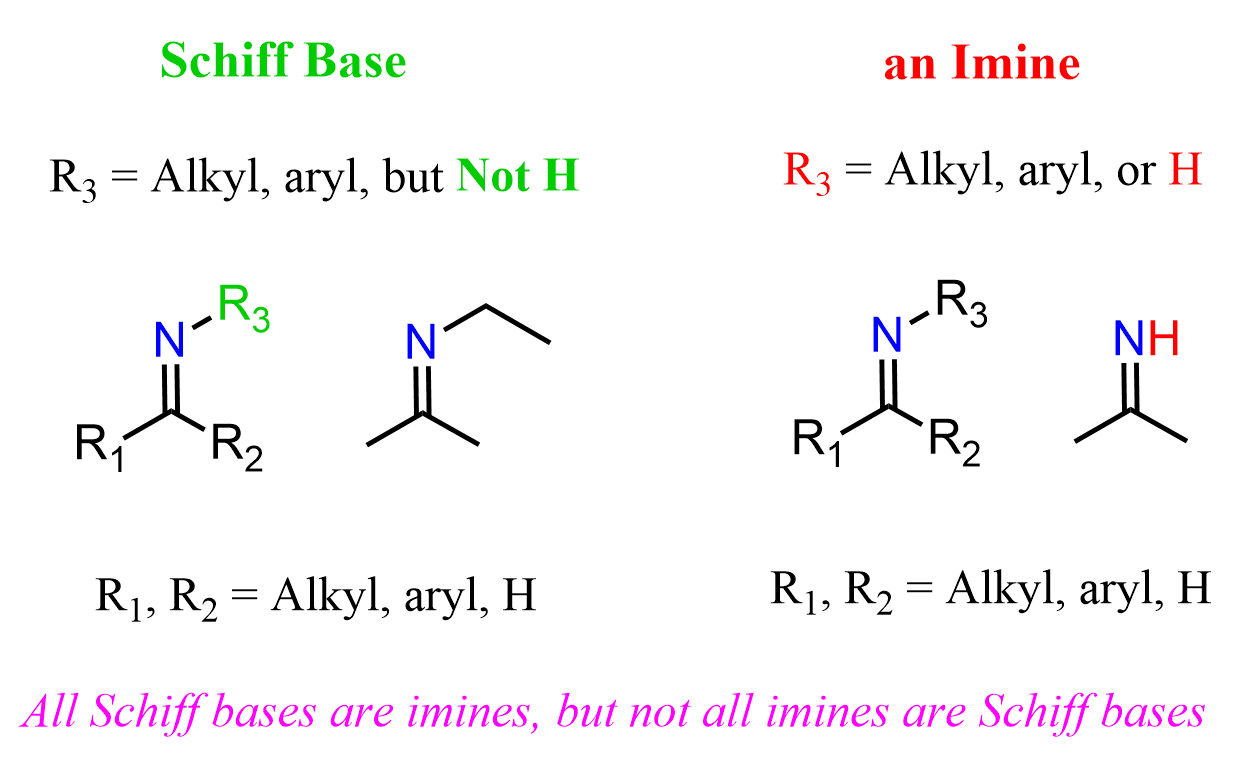
Here are the official IUPAC classifications of imines and Schiff bases, as defined in the IUPAC Gold Book:
- Imines: Compounds containing a carbon–nitrogen double bond (C=N), with the general structure R₂C=NR′, where R′ can be hydrogen or a hydrocarbyl group.
- Schiff bases: Imines in which the nitrogen atom is bonded to a hydrocarbyl group rather than hydrogen (R₂C=NR′, where R′ ≠ H).
The Preparation of Schiff Bases
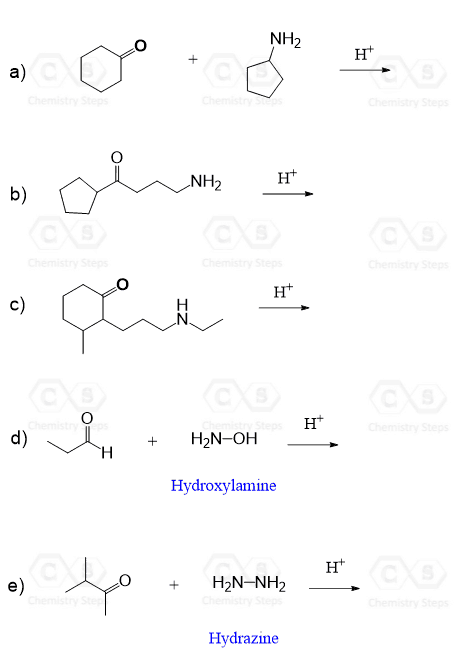
Schiff bases are prepared by reacting primary amines with aldehydes or ketones under mildly acidic conditions:
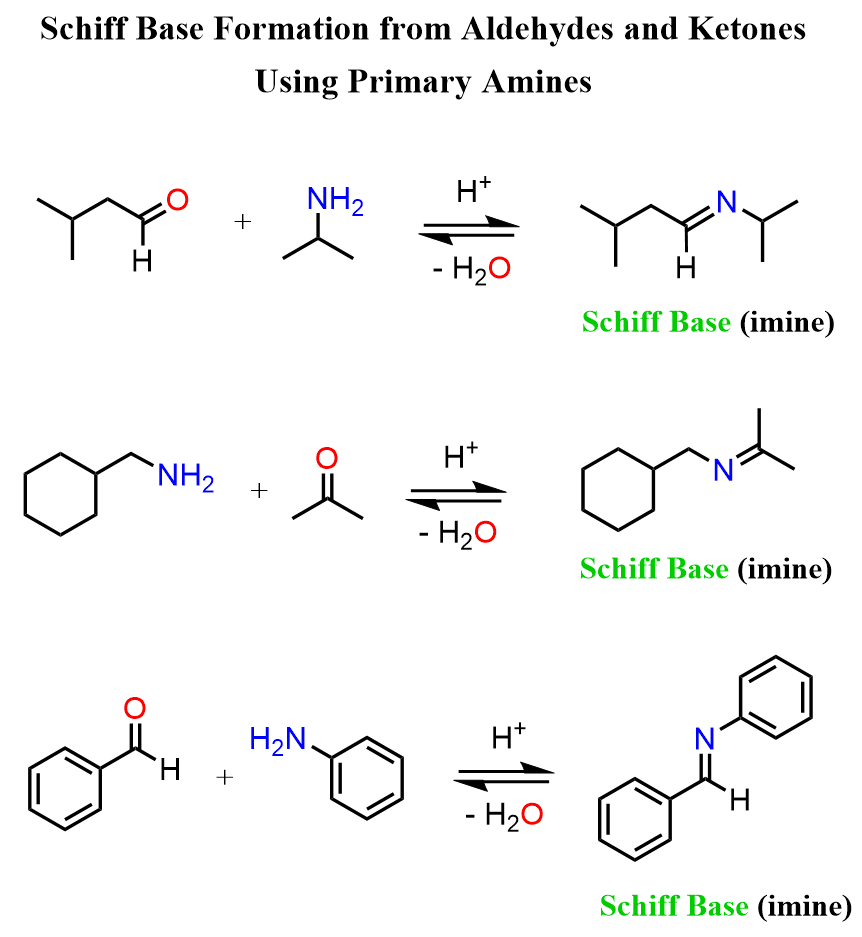
The reaction starts with a nucleophilic attack of the amine on the carbonyl carbon, followed by proton transfers to form a carbinolamine (also called a hemiaminal) intermediate. The hydroxyl group is then protonated, allowing water to leave and form an iminium ion. Finally, deprotonation of nitrogen produces the Schiff base (imine):

Notice that we mentioned only primary amines. The question is, why can’t secondary amines be used to prepare Schiff bases?
The reason is that the reaction of secondary amines with aldehydes or ketones generally produces enamines rather than imines. After the formation of the carbinolamine intermediate and loss of water, an iminium ion is formed. However, unlike primary amines, secondary amines have no N–H proton to lose to form a neutral imine. Instead, deprotonation occurs at the alpha carbon, producing an enamine, which contains a carbon–carbon double bond adjacent to the nitrogen atom:

We have a dedicated post on the synthesis of imines and enamines, where you can learn in more detail why the reaction of secondary amines with aldehydes and ketones produces enamines.
The Reactions of Imines and Schiff Bases
Imines are the nitrogen analogs of carbonyl compounds, with a C=N double bond instead of a C=O double bond. The carbon of the C=N bond is electrophilic, which means that imines undergo reactions similar to those of aldehydes and ketones.
The Reduction of Imines
Imines can be reduced to amines using hydride-reducing agents such as LiAlH₄ and NaBH₄. They can also be reduced by catalytic hydrogenation using H2 in the presence of a metal catalyst, such as Ni, Pd, or Pt:
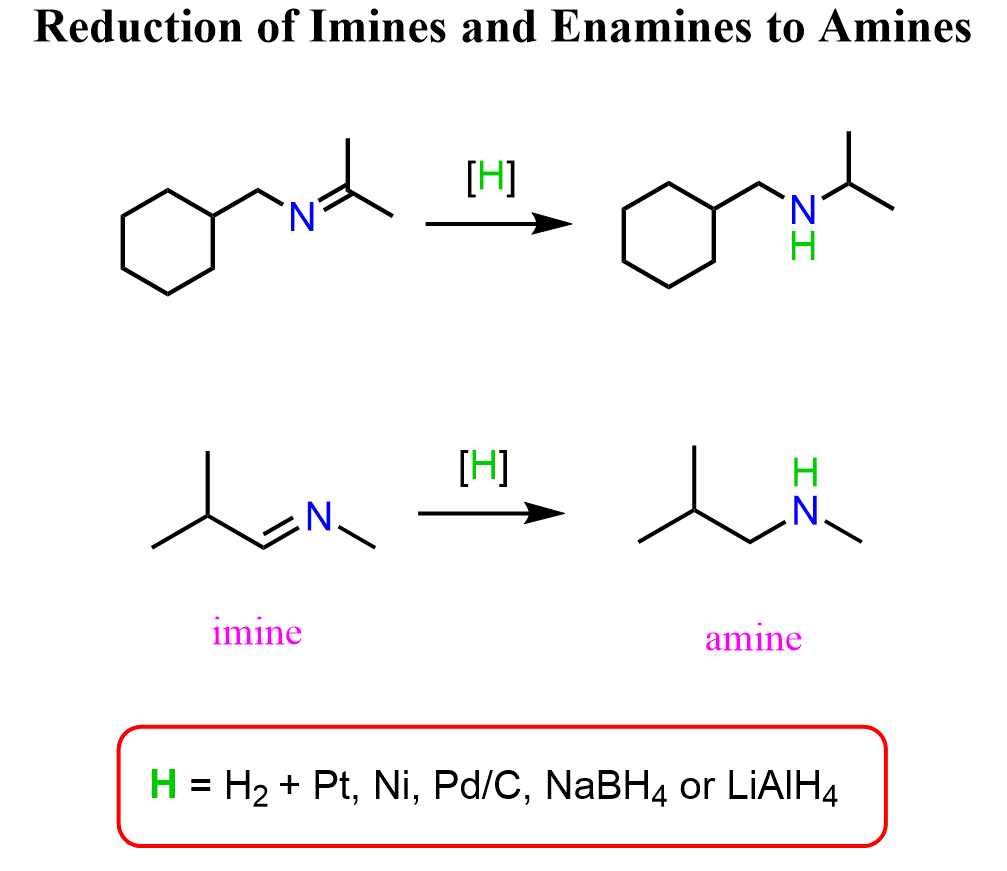
The hydride reduction follows a mechanism similar to those we have seen for the reduction of carbonyl compounds using hydride sources. Hydride attacks the electrophilic carbon of the C=N bond, followed by protonation of nitrogen to give the amine.
Reductive Amination
In reductive amination, aldehydes and ketones are reacted with ammonia or primary or secondary amines under mildly acidic conditions to form an amine. The key reagent here is sodium cyanoborohydride (NaBH3CN), without which we know the product would be an imine or enamine:

Although this is not a separate reaction of Schiff bases as such, since the starting materials are an amine and a carbonyl compound, it is worth mentioning because the reaction involves the formation and subsequent reduction of an imine or iminium ion intermediate in situ:

Check out our post on reductive amination for more details, examples, and practice problems.
Keto-Enol Tautomerization of Imines
Imines and enamines are the nitrogen analogues of ketones and enols, respectively, and they also undergo tautomerization:

Just like ketones are more stable than enols, imines are more stable than enamines, and whenever possible (that is, when there is a hydrogen on the enamine nitrogen), it is largely converted to an imine. So, both pathways of deprotonating the primary iminium ion lead to the formation of an imine:
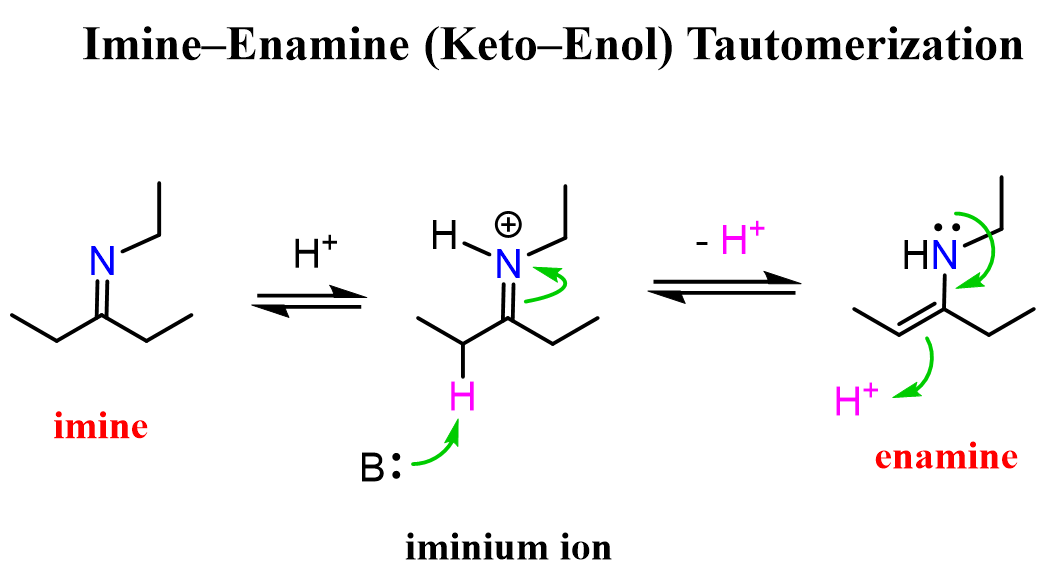
The relatively higher instability of enamines makes them great precursors in organic synthesis. The lone pair on the nitrogen is a resonance donor to the C=C bond, making it a nucleophilic center:
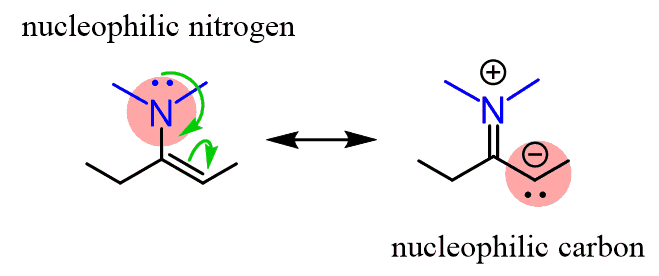
Enamines are particularly known for Stork Enamine Synthesis, which utilizes enamines as carbon nucleophiles to form new C–C bonds as a milder alternative to other condensation reactions. This is a topic for the chapter on Alpha Carbon Chemistry, so you don’t need to worry about it now.
The Hydrolysis of Schiff Bases
Both Schiff bases and other imines, as well as enamines, can be hydrolyzed to the corresponding carbonyl compound and amine under acidic conditions. Although the imine carbon is less electrophilic than the carbonyl carbon, protonation of the nitrogen activates it toward nucleophilic attack by water, pushing the reaction in the reverse direction:

Check the post on the hydrolysis of imines and enamines for more details about this reaction.