
Organic Chemistry
The only way of mastering any topic in Organic Chemistry is doing lots of practice problems. And I know, seeing my students, that starting to work on a practice problem may be the hardest part as you don’t know where to start. It is difficult to visualize what where the double bond would be moved if you follow the five curved arrows crammed in one step. Here is the trick:
We are always told to think before doing something. Fair enough. But let me tell you, it is also strangely enough, that in Organic Chemistry, it is often better to draw and then think about what you did (not in the lab though). It is much easier to have a structure in front of you and check for errors and improvements.
Do the first step, take the pencil and you will see that the ball gets rolling.
You have all these Organic Chemistry Practice Problems waiting to be solved!
Fischer Projections

What are the Fischer Projections? Fischer projections are just another way of drawing compounds containing chiral centers. They were initially proposed by Emil Fischer for making it easier to draw the structures of compounds containing multiple chiral centers, with the … Read more
Meso Compounds

In my teaching experience, I have noticed that conveying the message about meso compounds is a lot easier when Fischer projections are used. So, we will talk about it by drawing the Fischer projections of three isomers of 2,3-dichlorobutane: … Read more
Calculating Enantiomeric Excess from Optical Activity
Check Also in Stereochemistry: Enantiomeric excess (ee) Stereoisomerism Chirality and Enantiomers The R and S system to label chiral centers Diastereomers Optical Activity Calculating Enantiomeric Excess from Optical Activity Symmetry and Chiralty. Meso Compunds Fischer projection
Optical Activity

When we learned about enantiomers, we mentioned that they have identical physical properties – melting point, boiling point, and solubility. So, one question you may wonder about is how we distinguish enantiomers if they all seem to be identical. Yes, … Read more
Enantiomers, Diastereomers, Identical or Constitutional Isomers

Determine the Relationship of molecules Enantiomers, Diastereomers, Constitutional isomers, Same or no relationship? A question that covers so much for you to learn, yet a very important one as it lays the basis of understanding organic chemistry. Let’s put this … Read more
The R and S Configuration Practice Problems

In the previous post, we talked about the Cahn-Ingold-Prelog rules for assigning the R and S configuration. In the following practice problems, we will assign the R and S configuration for bond-line representations and use it to determine the relationship between … Read more
Chirality and Enantiomers

Chirality and Enantiomers Before talking about the enantiomers, let’s go over the concept of mirror images and particularly when it pertains to organic molecules. Any object has a mirror image. No tricks or magic here – just put a mirror … Read more
Enantiomers Diastereomers the Same or Constitutional Isomers with Practice Problems

One of the trickiest questions in Stereochemistry is the relationship between molecules. The reason for this the addition of the stereoisomers to the constitutional isomers and the possibility of being confused between different drawings of the same molecule. Stereoisomers, in turn, can … Read more
Formal Charges in Organic Chemistry
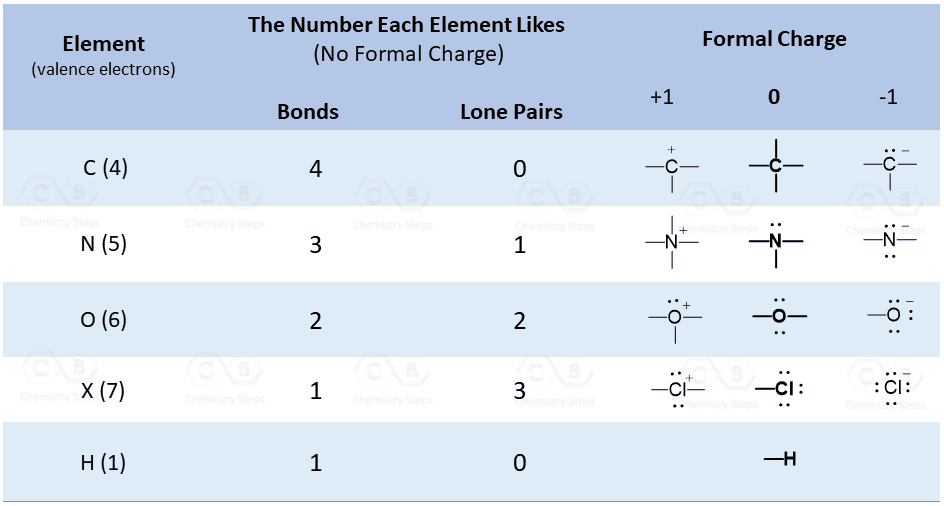
Check the updated version of this post here. What is Valency? Before getting to the Formal Charge, let’s recall the valency of elements in organic chemistry. Valency is the tendency of elements to make a certain number of bonds. … Read more