
Because the terminology and some aspects of this process can get pretty confusing, this post is going to explain alkene (olefin) metathesis in informal language. At least in the first part, so we can get a simplified introduction.
Alkene metathesis is connecting two alkenes together with a new double bond, which we can best see on the example of terminal alkenes:
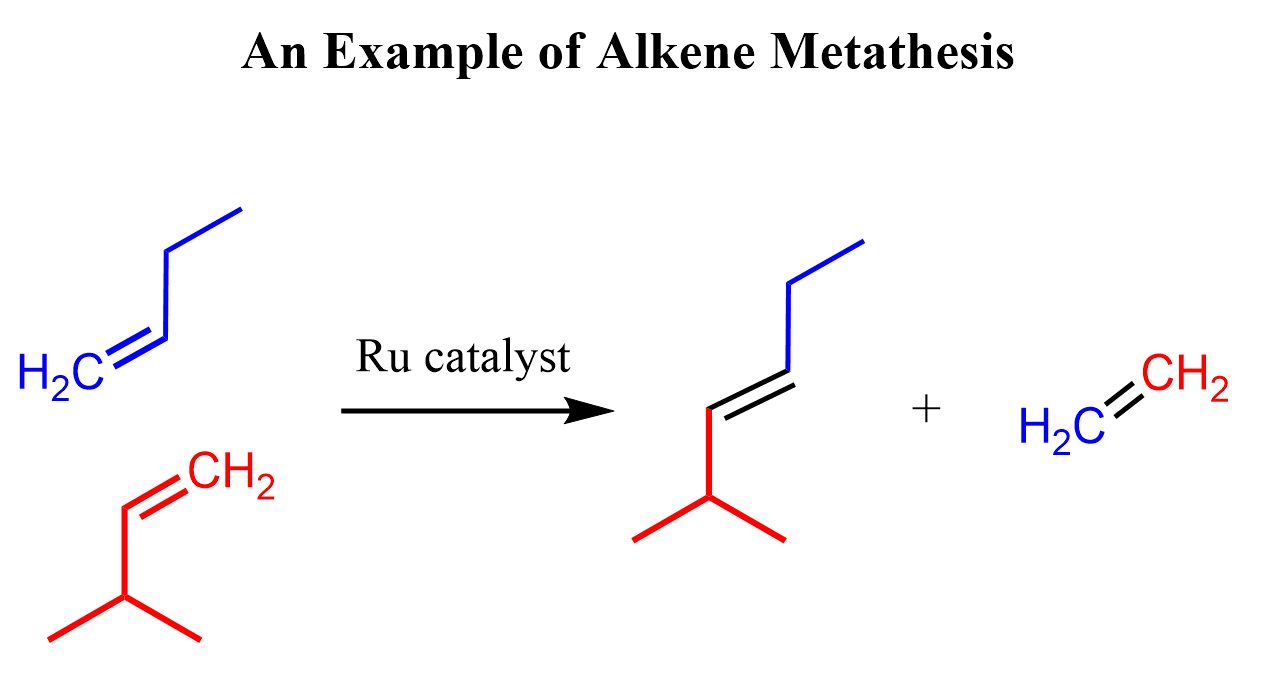
So, the two carbon fragments of the alkenes are connected by a new double bond while the terminal CH₂ groups are lost in the form of ethylene. You may also notice that the alkenes have swapped their groups – one side of the double bond from each alkene was connected with one side of the other alkene:
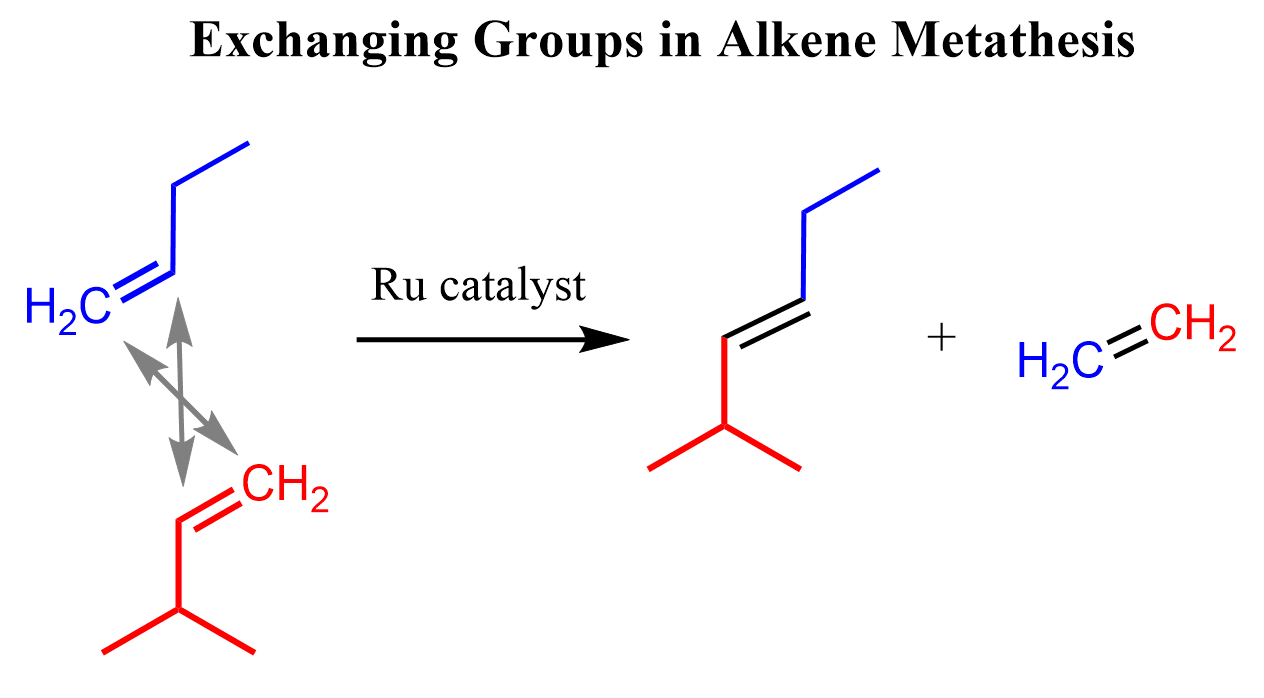
Therefore, in more scientific terminology, we can say that alkene metathesis is the exchange of alkene fragments between two alkenes. In fact, the term metathesis is derived from the Greek words meta (“change”) and thesis (“position”), referring to the redistribution, or change in position, of carbon-carbon double bonds during the reaction.
The catalyst used for alkene metathesis is a transition-metal carbene complex, most commonly based on ruthenium or molybdenum. The most widely used catalysts are the Grubbs catalysts, which are ruthenium-based carbene complexes known for their high functional group tolerance, air stability, and ease of handling.
Let’s place R groups on the double bonds of the alkenes and show a general representation of olefin metathesis using Grubbs catalyst:
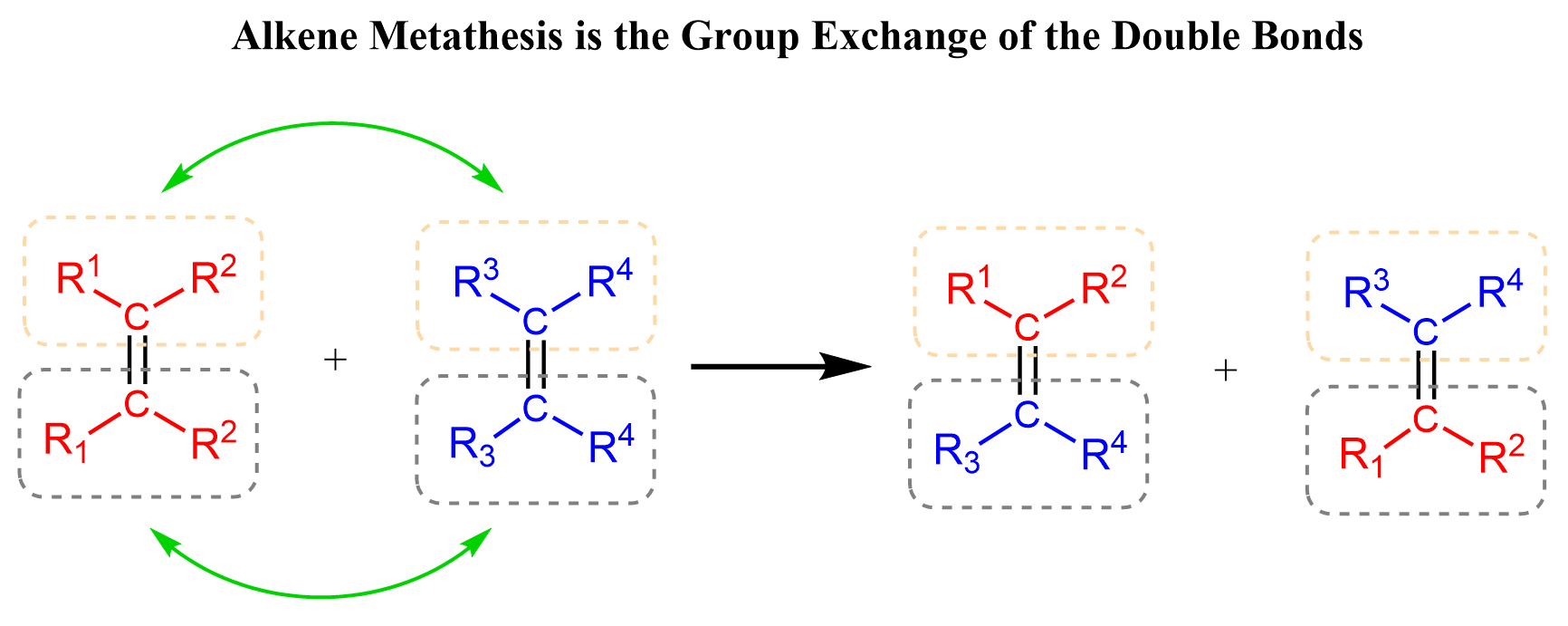
So, how does this exchange of groups happen in metathesis? This is what we are going to discuss in the mechanism of alkene metathesis.
The Mechanism of Alkene Metathesis
The alkene metathesis is composed of two main parts: [2+2] cycloaddition followed by cycloelimination fragmentation. To remind you about [2+2] cycloaddition, take a look at the mechanism of the Wittig reaction that we used for converting carbonyls to alkenes:

So, now imagine the two alkenes undergoing a [2+2] cycloaddition, forming a cyclobutane intermediate, which undergoes cycloelimination to form the new alkene and ethylene.
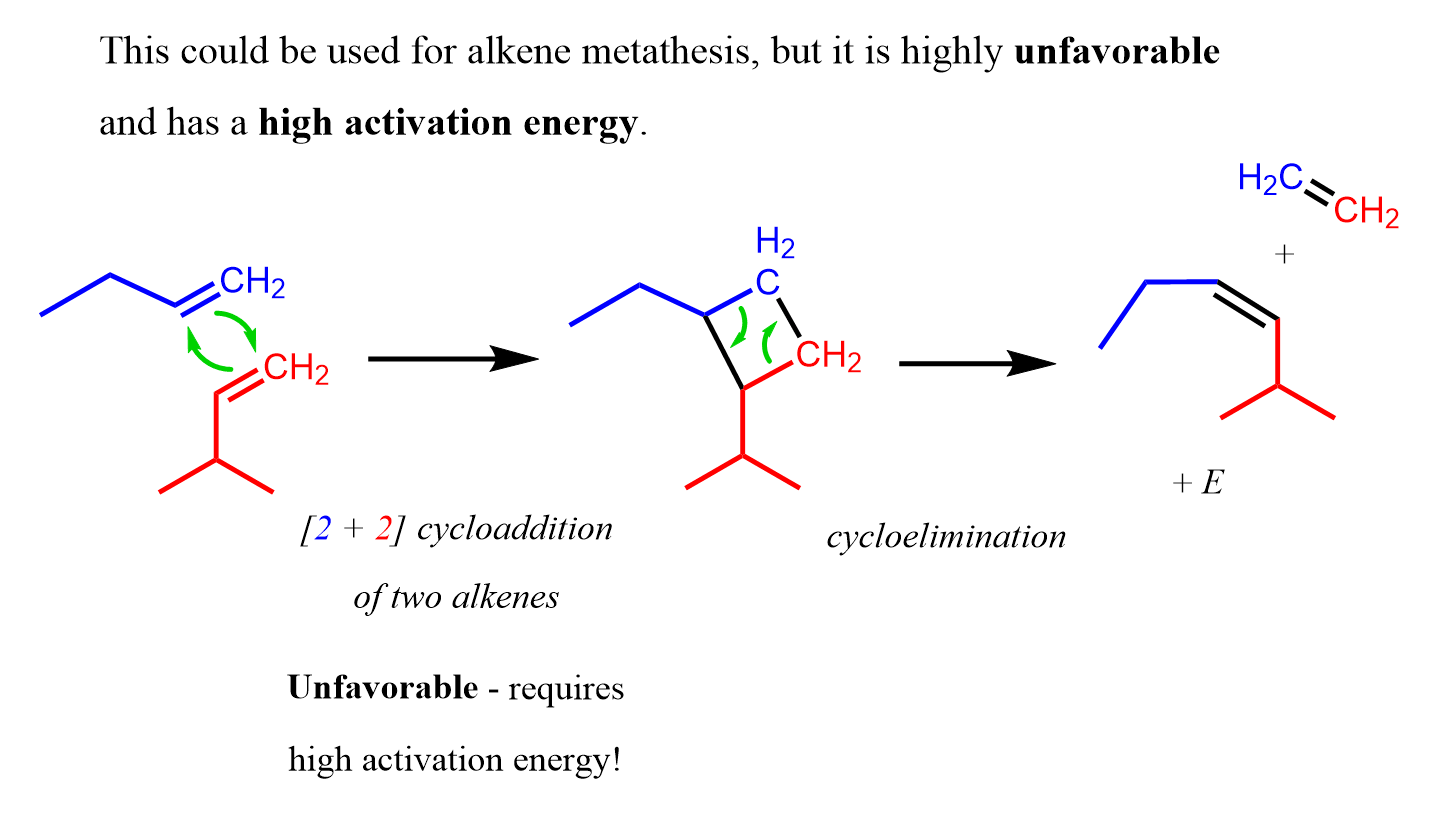
Alright, so this should give you an idea of what is going on in alkene metathesis. However, although this reaction between two alkenes is possible, it requires a very high activation energy because cycloaddition reactions are favorable for certain numbers of electrons, while not so much for others.
One such cycloaddition reaction is the Diels-Alder reaction, which is a [4+2] cycloaddition and is thermally allowed because it involves 6 π electrons (4 electrons from the diene and 2 electrons from the alkene):
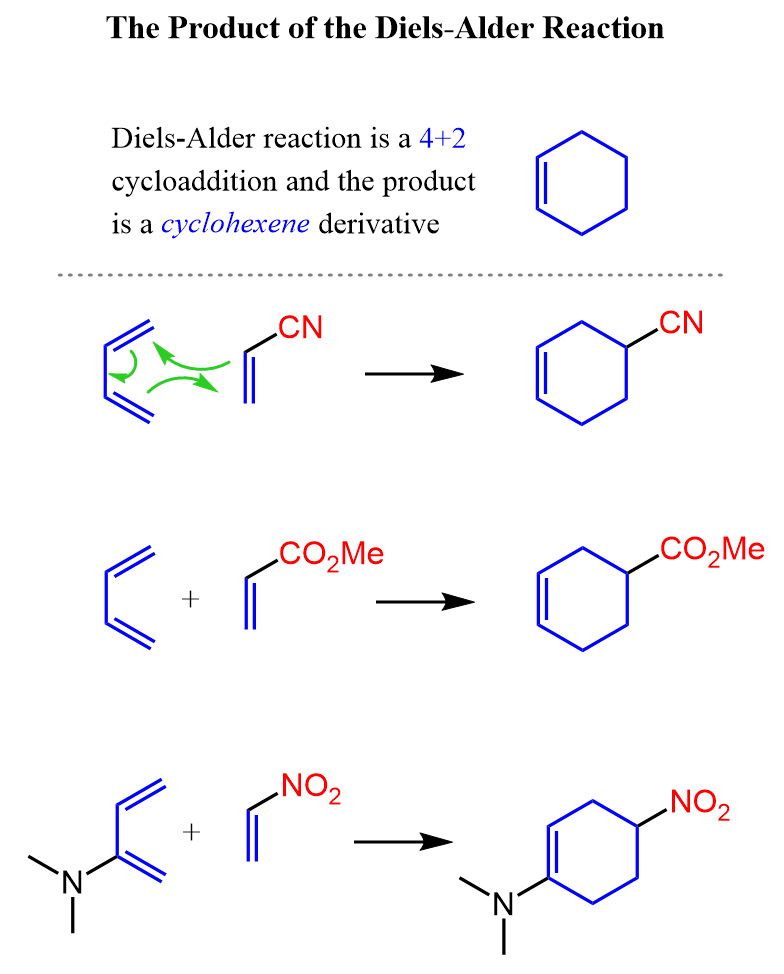
According to the Woodward-Hoffmann rules, [4+2] cycloadditions are thermally allowed because the electrons can interact in a favorable way during the reaction. In contrast, a [2+2] cycloaddition between two alkenes is not thermally allowed because the orbital interactions are unfavorable under thermal conditions.
For now, read the “thermally not allowed” as “not allowed”, which simply means you cannot make it happen by simply heating it up, which, in turn, means you typically need UV light.
One such example is the dimerization of the DNA nucleotide thymine via a [2+2] cycloaddition:
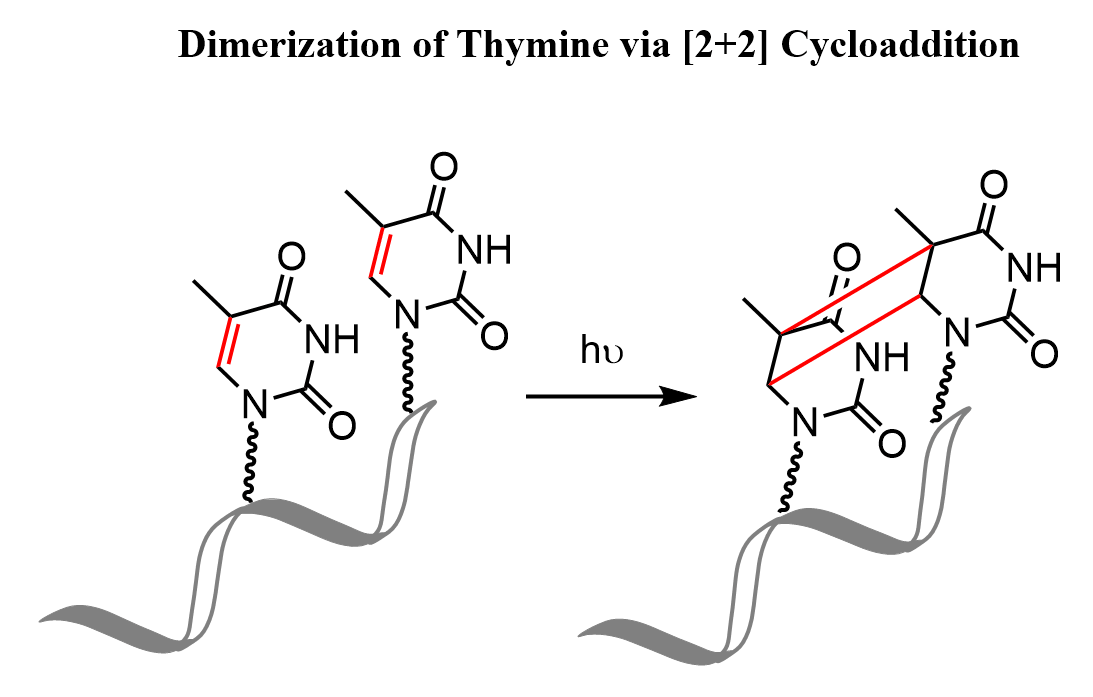
This reaction does not occur under normal thermal conditions because a thermal [2+2] cycloaddition is forbidden according to the Woodward-Hoffmann rules. However, UV light promotes the reaction by exciting one of the alkenes, allowing the cycloaddition to occur.
The resulting thymine dimers distort the DNA structure, interfere with DNA replication and transcription, and are one of the primary causes of UV-induced mutations and skin cancer.
So, all of this was to give you a general understanding of how alkenes interact during the metathesis and how the new C=C double bond is formed.
It may have already become clear to you why we use the Ruthenium catalyst for olefin metathesis. “All it does” is make the activation energy of this overall process lower, and next we will see how it does that.
The Catalysts in Alkene Metathesis Reactions
The main catalysts used for alkene metathesis are the Grubbs catalysts, which were developed by Robert H. Grubbs and his co-workers. He received the 2005 Nobel Prize in Chemistry for his work on the development of metathesis catalysts.
The catalyst contains a transition metal (ruthenium, Ru) that is double-bonded to a carbon atom (C=Ru). This metal-carbon double bond is called a metal alkylidene or a metal carbene, and it is the key reactive part of the catalyst that allows it to interact with alkenes and exchange alkene fragments:
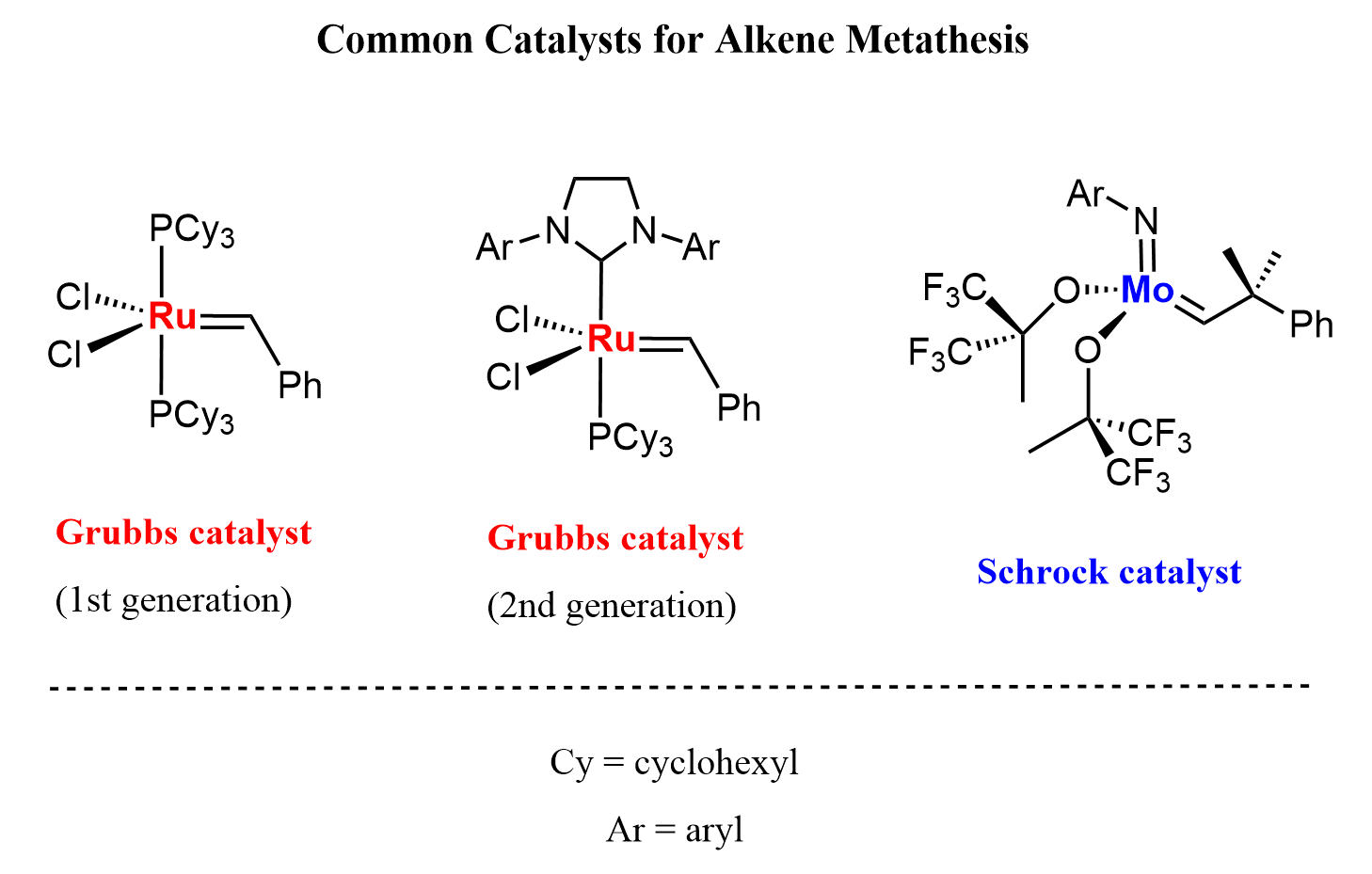
Other important alkene metathesis catalysts include Schrock catalysts, which are based on molybdenum (Mo), while Grubbs catalysts are based on ruthenium (Ru). Different ligands can be attached to these metal centers, which affect the activity and properties of the catalyst.
The Mechanism of Alkene Metathesis Reaction
In the first step, the Grubbs catalyst reacts with one of the alkenes via a [2+2] cycloaddition, forming a metallacyclobutane intermediate, which undergoes a cycloelimination to create a new Ru=C complex and a new alkene:
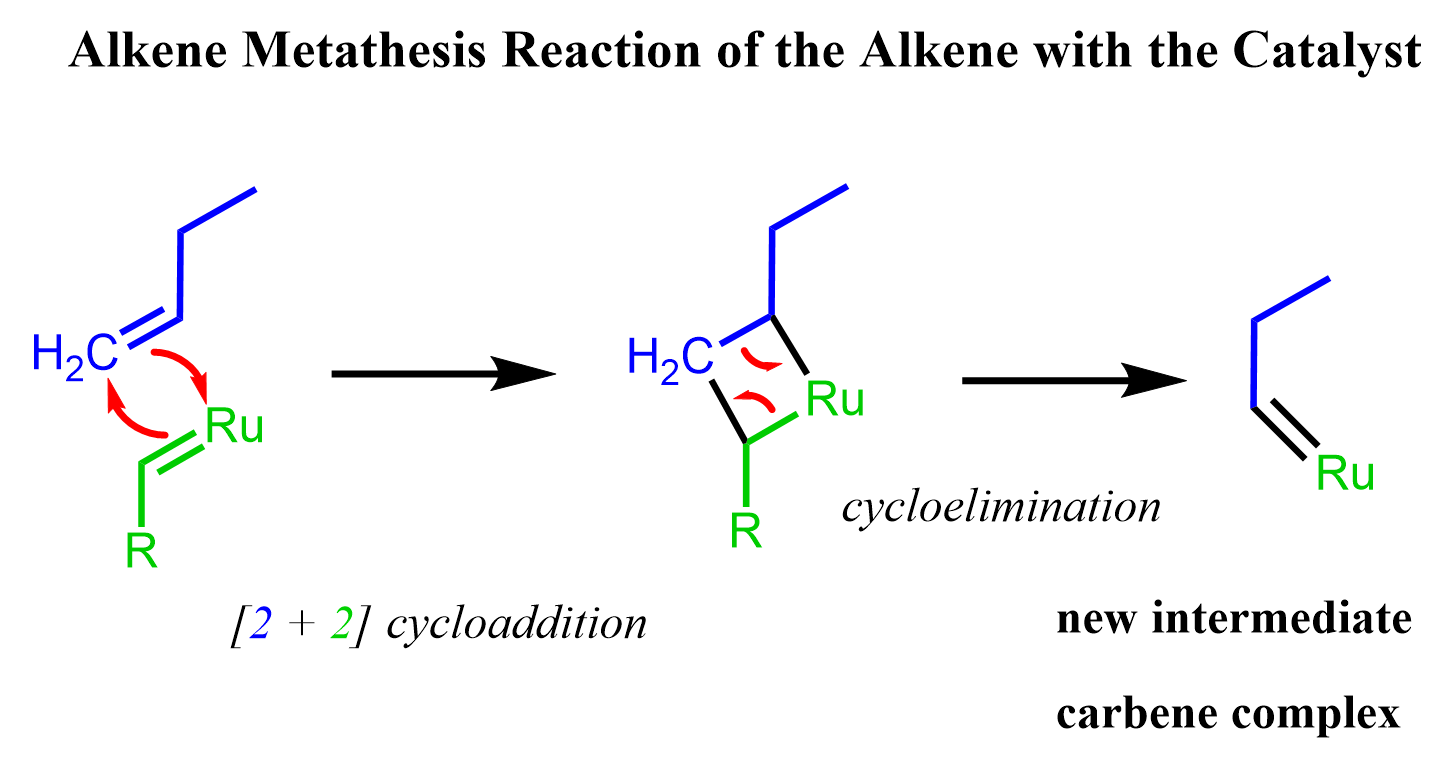
Next, the new intermediate acts like a catalyst and undergoes a [2+2] cycloaddition, and the target alkene is formed after the intermediate undergoes a fragmentation, as we have seen earlier:
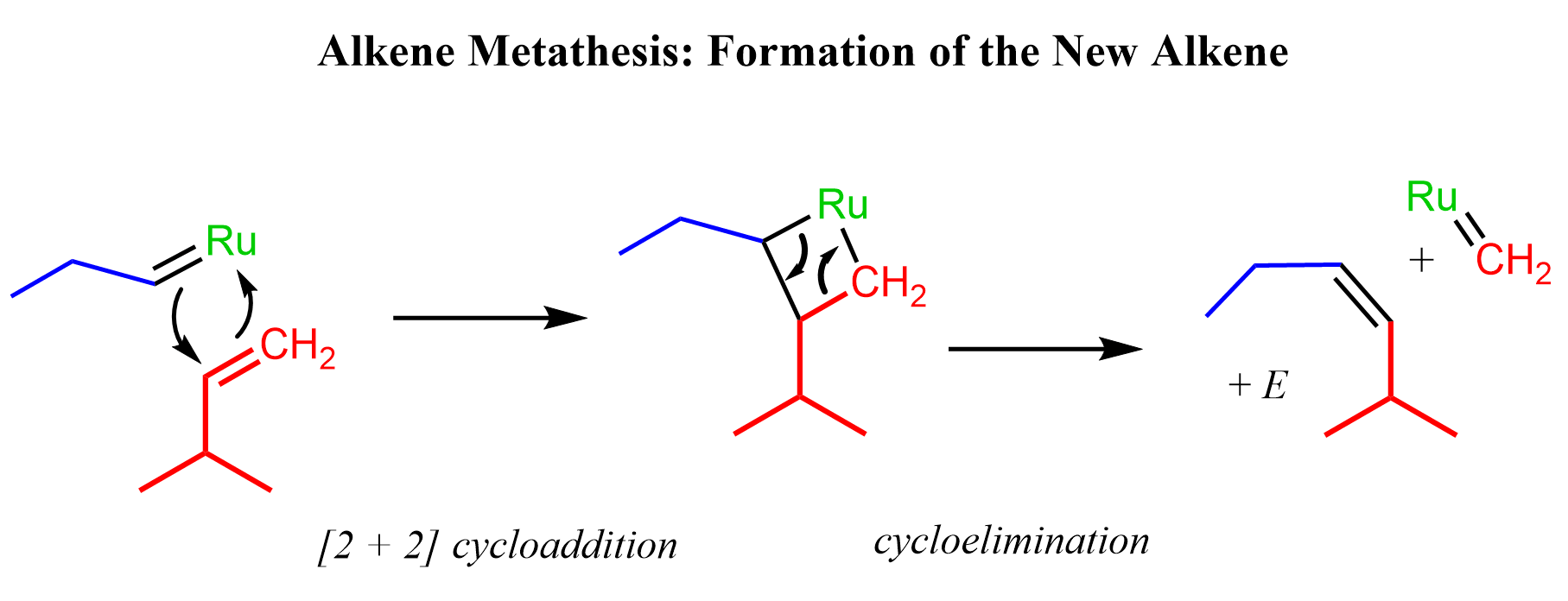
The resulting alkene is formed in both E and Z configurations. Notice that there is still a Ru=CH2 complex formed in this step, and this reacts again with the initial alkene, acting like a catalyst and keeping the cycle going:
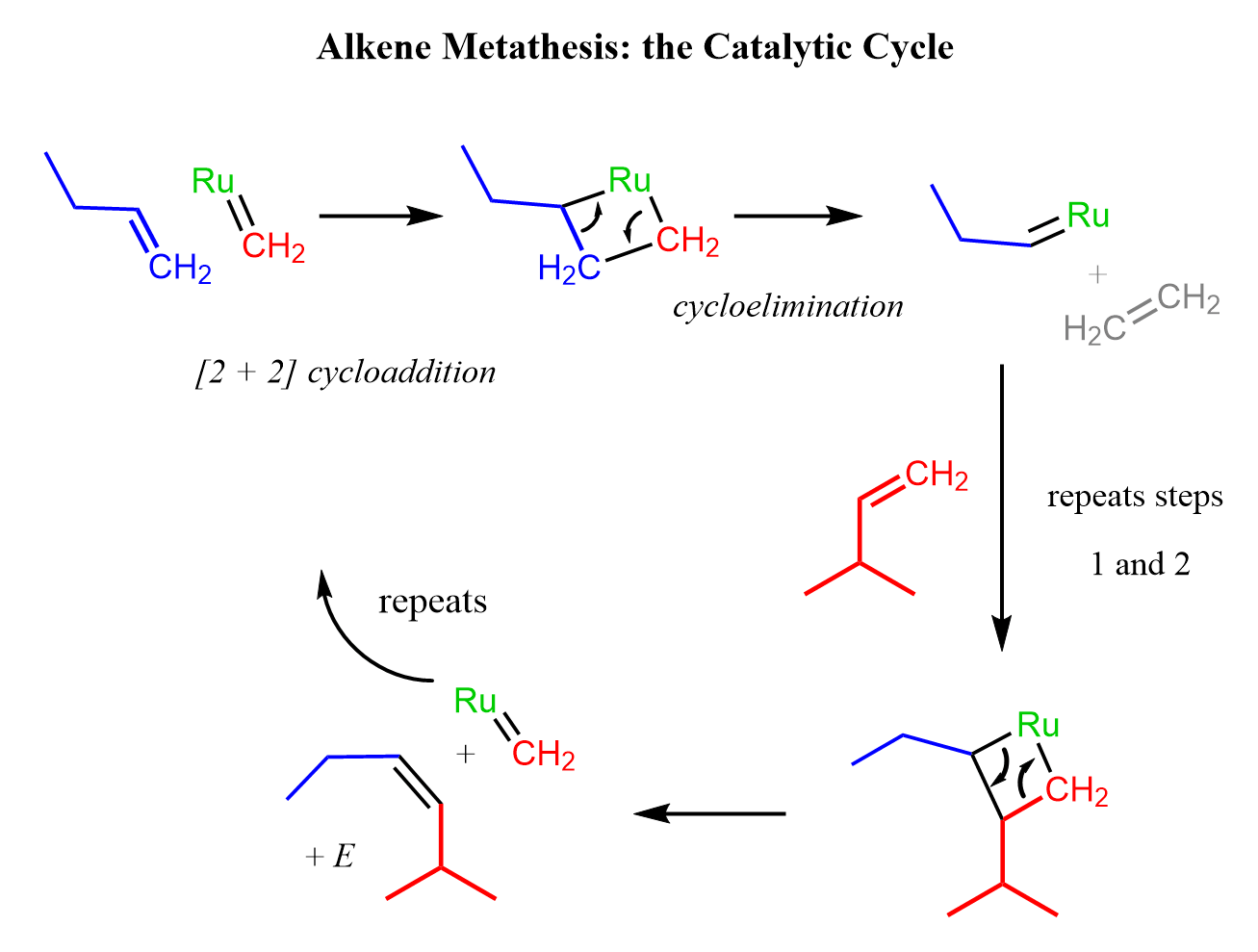
Let’s now put all the steps together and show the alkene metathesis mechanism in the conventional catalytic cycle that we often use for organometallic reactions such as the Suzuki, Heck, Stille, and Negishi couplings, because it shows how the catalyst is regenerated and how the individual steps are connected to complete the catalytic cycle:
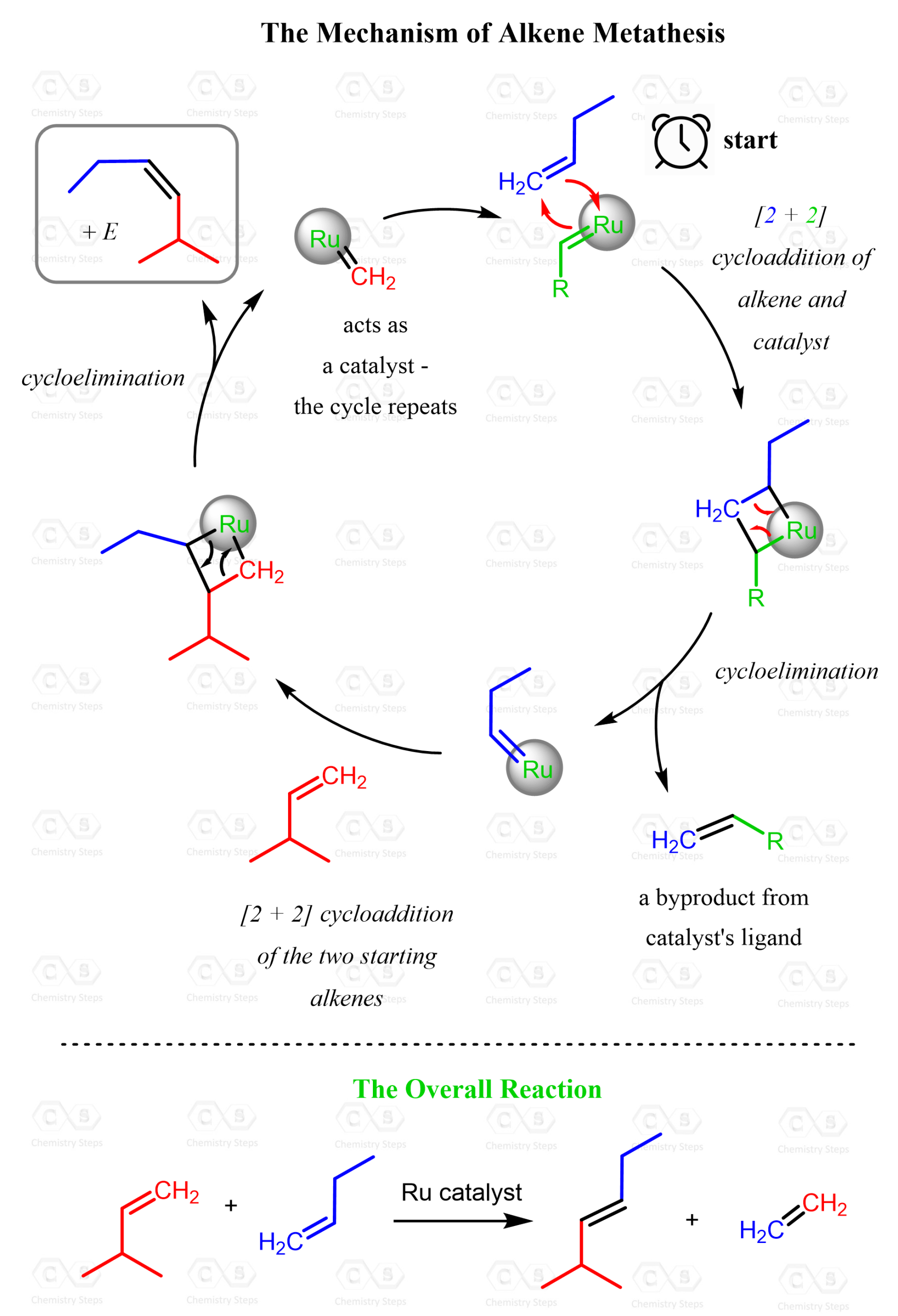
I also want to mention that we did not consider many of the nuances in the mechanism of alkene metathesis. For example, in the first step, the Ru catalyst can approach the alkene from the opposite direction, leading to a different orientation of the metallacyclobutane intermediate.
Likewise, E/Z alkene selectivity is more complicated than our simplified mechanism suggests, and steric and electronic effects also influence which products are formed preferentially. There are several additional mechanistic details that become important when studying alkene metathesis in depth.
So, if you are a graduate student, or in general studying these reactions in more detail, be sure to refer to your lecture notes and the primary literature. For our purposes, however, we don’t want to increase the dislike toward chemistry at this early stage. 🔇
The Shortcut to Alkene Metathesis
Most of the questions you will get on alkene metathesis are going to involve terminal alkenes, so the shortcut to determining the products of these reactions is to connect the more substituted carbon atoms of the double bonds. Here are a few examples of alkene metathesis catalyzed by Ru Grubbs catalysts:
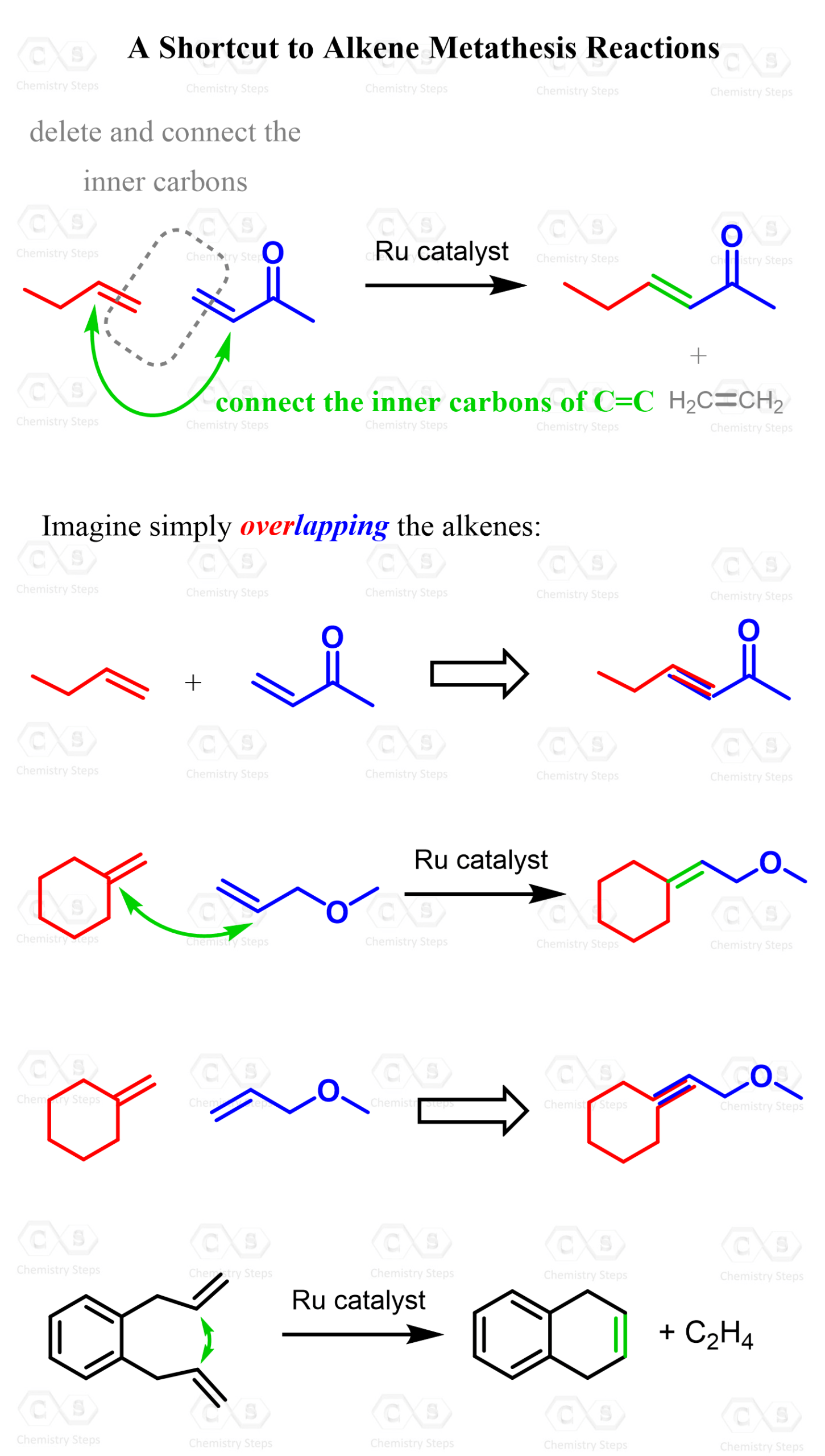
Ring-Closing Metathesis and Ring-Opening Metathesis
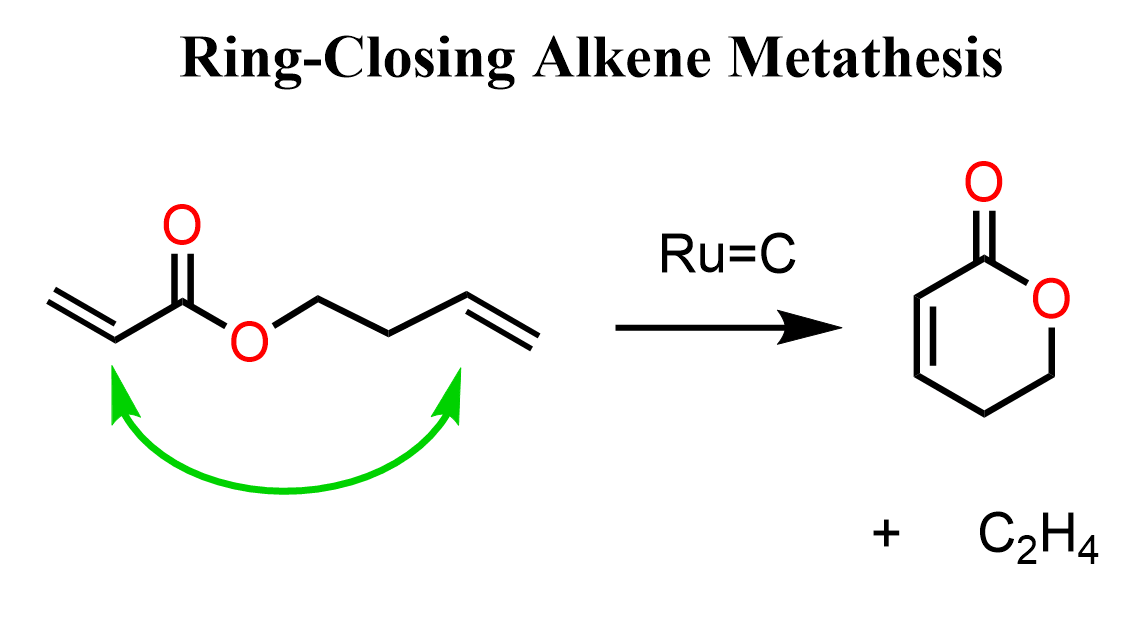
Intramolecular alkene metathesis reactions are also quite common, and the strategy is the same – identify the inner (more substituted) carbon atoms of the double bonds and connect them with a new double bond. The products of intramolecular metathesis are ring structures:
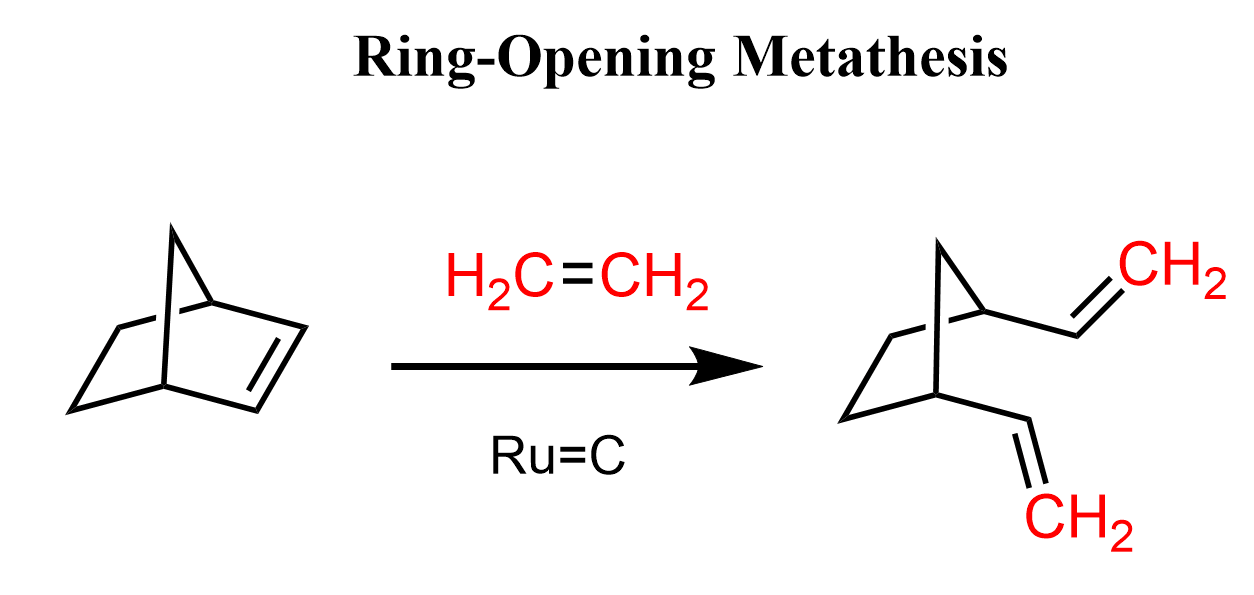
Similarly, ring-opening metathesis can be achieved by reacting a cycloalkene with ethylene in the presence of a metathesis catalyst. In this process, the ring is opened, producing a diene with two additional methylene (CH₂) groups introduced into the structure. For example, the following norbornene can be prepared by the intramolecular metathesis of 1,3-divinylcyclopentane:
Alkene metathesis is a great synthetic tool because it is also compatible with a wide range of functional groups, including ketones, aldehydes, esters, amines, amides, sulfonate esters, ethers, and alcohols. This broad functional group tolerance is one of the reasons why alkene metathesis is used in the synthesis of complex organic molecules, including natural products, pharmaceuticals, and advanced materials.
References
- Fu, G. C.; Grubbs, R. H. The Application of Catalytic Ring-Closing Olefin Metathesis to the Synthesis of Unsaturated Oxygen Heterocycles. Am. Chem. Soc. 1992, 114, 5426-5427.
- Connon, S. J.; Blechert, S. Recent Developments in Olefin Cross-Metathesis. Angew. Chem. Int. Ed. 2003, 42, 1900-1923.
- Ogba, O. M.; Warner, N. C.; O’Leary, D. J.; Grubbs, R. H. Recent Advances in Ruthenium-Based Olefin Metathesis. Soc. Rev. 2018, 47, 4510-4544.
- Patra, S. G.; Das, N. K. Recent Advancement on the Mechanism of Olefin Metathesis by Grubbs Catalysts: A Computational Perspective. Dalton Trans. 2022, 51, 1009-1032.
- Clayden, J.; Greeves, N.; Warren, S. Organic Chemistry, 2nd ed.; Oxford University Press: Oxford, 2012.
- László Kürti and Barbara Czakó, Strategic Applications of Named Reactions in Organic Synthesis, 2005
Check Also
- Pd-Catalyzed Cross-Coupling Reactions
- Heck Reaction
- Suzuki Reaction
- Negishi Reaction
- Stille Coupling
- Sonogashira Coupling