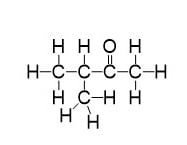
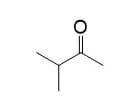
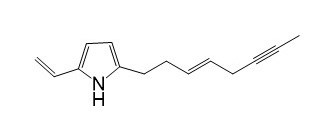
Bond-line Structures
One of the fundamental differences between Organic Chemistry and General Chemistry is the need for having a much better visualization and understanding of the molecular structures. This is because organic molecules are generally larger than inorganic ones, such as salts and bases we have seen in general chemistry classes.
This tendency of organic molecules to get larger is known as catenation – the ability of an element, especially carbon, to form long chains or rings by bonding to atoms of the same element.
Now, as the molecules get larger, the first thing we want to do is make them easier to draw and interpret. The most common way of representing organic molecules is the Bond Line (Zig zag) structure. The main idea and strength of bond line structures is the omission of hydrogens connected to carbon atoms. This trims off the molecule and makes it much neater and easier to represent.
Lewis structures are still valid, of course, but we are going to switch more toward bond line structures. This is why it is essential to be able to convert Lewis and condensed structures to bond bond-line representation.
Let’s first quickly summarize what Bond-Line (Zig-zag) structures are:
To interpret a bond-line structure, assume that:
1) There is a carbon at each junction (corner) and periphery.

2) Each carbon has enough hydrogens to have 4 bonds (unless there is a formal charge)

So, essentially in bond-line structures, we don’t show the hydrogens and carbons. All the heteroatoms (any atoms except Carbon) are shown, and the hydrogens on these heteroatoms are shown as well.
Converting a Condensed Structure to a Bond-line
Now, let’s say you need to convert the following condensed structure into a bond-line structure:
![]()
There is no formula or best approach for doing this, but we will follow the following strategy that will eliminate any possibility of making a mistake when converting to a bond-line structure.
Follow these steps:
1) Number all the atoms (except for H’s).
Note: Numbering atoms will help you immensely in doing any transformation in Organic Chemistry. It does not have to be in a particular order or follow the IUPAC rules.

2) Simply connect all the atoms from left to right.
Note that some connections may be wrong at this point. We will fix them in the next step.

Follow the table for standard valencies on the bottom-left to identify the wrong connections:

We can identify the following sections with incorrect valency of elements:

3) Rearrange the atoms such that they have the correct number of bonds: (It will be very beneficial to learn the functional groups at this point)

These are the only ways to have the correct number of bonds and lone pairs for the atoms in red boxes.
Knowing the functional groups will make it much easier to put the atoms in the right places.
4) Draw the carbon chain in a zig-zag form.
Putting the first atom up or down doesn’t matter as long as you keep the correct connectivity of atoms.

5) Erase the carbon atoms together with the hydrogens on them.
Keep all the heteroatoms (any atom except carbon) together with the hydrogens on them.

The table below shows some of the functional groups that often lead to a wrong connectivity pattern as it is not obvious to put the atoms correctly right from the beginning:

Once again, knowing the functional groups at this point will help you tremendously when converting Lewis or condensed structures to bond-line structures.

In the following practice problem, we will go over this important skill set.
Check this 60-question, Multiple-Choice Quiz with a 2-hour Video Solution covering Lewis Structures, Resonance structures, Localized and Delocalized Lone Pairs, Bond-line structures, Functional Groups, Formal Charges, Curved Arrows, and Constitutional Isomers.

Bond-line, Lewis and Condensed Structures with Practice Problems
Bond-line Structures
3) Rearrange the atoms such that they have the correct number of bonds: (It will be very beneficial to learn the functional groups at this point)
https://www.chemistrysteps.com/wp-content/uploads/2019/03/Conevrting-to-bond-line-example-numbered-red.png
sorry in the example on the right sight there is an error at the nitrogen atom drawn with two Lone pairs The correct number is one lone Pair !!!!
Thanks for catching that. Fixed.
Thanks for sharing very useful and interesting contents. I really appreciate your helpful texts.
The maleimide structure is not correct. Maleimide has a double bond in its structure.
Best regards
Glad to know it’s helpful. The double bond is there now. Thank you!