
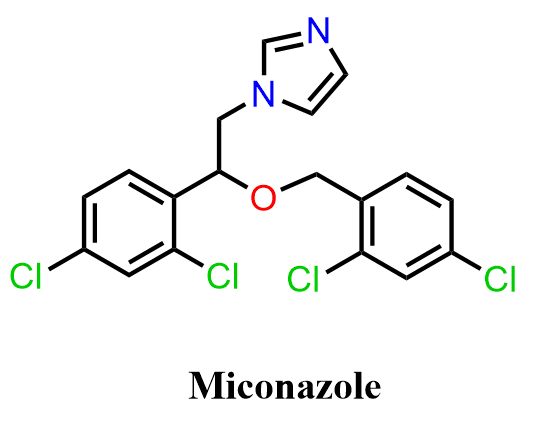
 Miconazole, an antifungal medication belonging to the azole class and specifically the imidazole subclass, is used to treat a variety of superficial fungal infections, including ringworm, athlete’s foot, jock itch, and yeast infections of the skin or vagina. It is typically applied topically as a cream or ointment, though formulations for oral or vaginal use also exist. The drug works by inhibiting the production of ergosterol, a key component of fungal cell membranes, which disrupts fungal growth and survival. Common side effects are usually limited to local irritation or itching at the site of application. First patented in 1968 and approved for medical use in 1971, miconazole is recognized as an essential medicine by the World Health Organization and is widely available in generic form.
Practice
Add the missing reagents and intermediates in the synthesis of Miconazole.
This content is for registered users only.
By joining Chemistry Steps, you will gain instant access to the answers and solutions for all the Practice Problems, including over 40 hours of problem-solving videos, Multiple-Choice Quizzes, Puzzles, Reaction Maps, and the powerful set of Organic Chemistry 1 and 2 Summary Study Guides.