
Let’s work through a common question: drawing all the isomers of C₄H₁₀O. The first thing you want to do is calculate the degree of unsaturation so that you know whether there are any π bonds or ring systems in these structures.
Using the following formula, we determine that there are zero degrees of unsaturation, which means the isomers are all saturated compounds containing an oxygen atom:

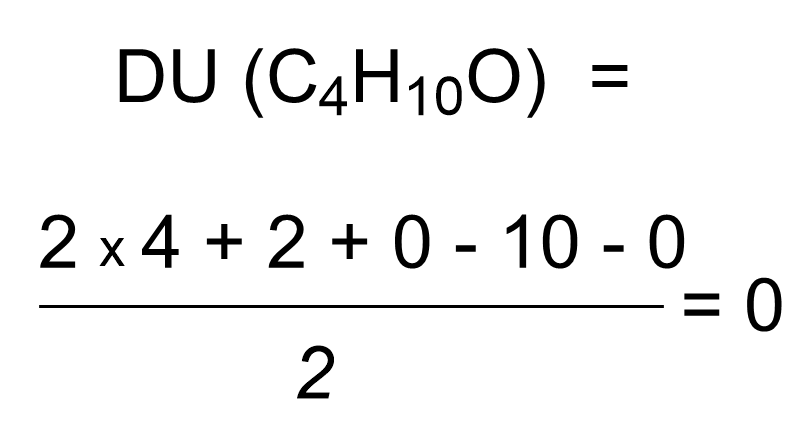
Since we already know the possible functional groups, this also tells us that the isomers are a combination of alcohols and ethers, because other functional groups, such as aldehydes, ketones, carboxylic acids, and esters, contain a carbonyl group, which has a π bond.
So, let’s start by drawing the alcohols with four carbon atoms.
Alcohol Isomers of C4H10O
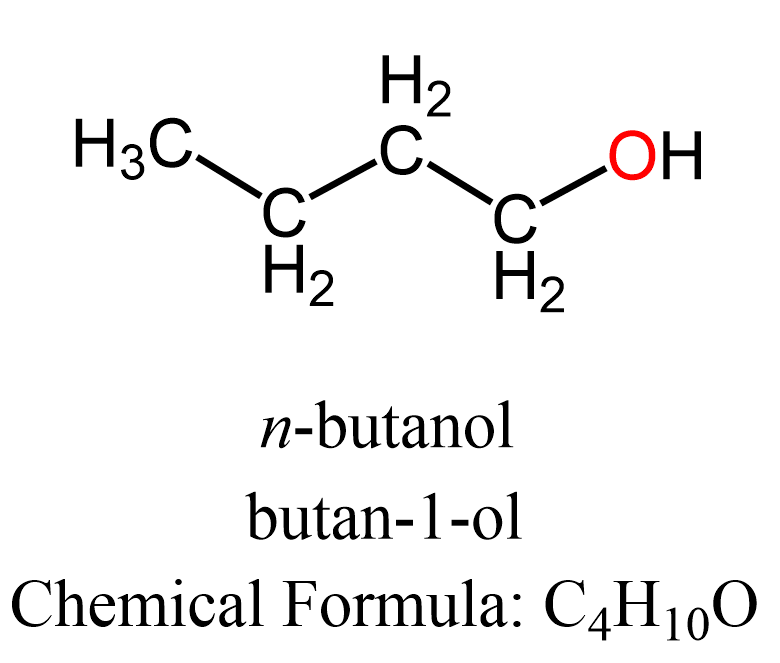
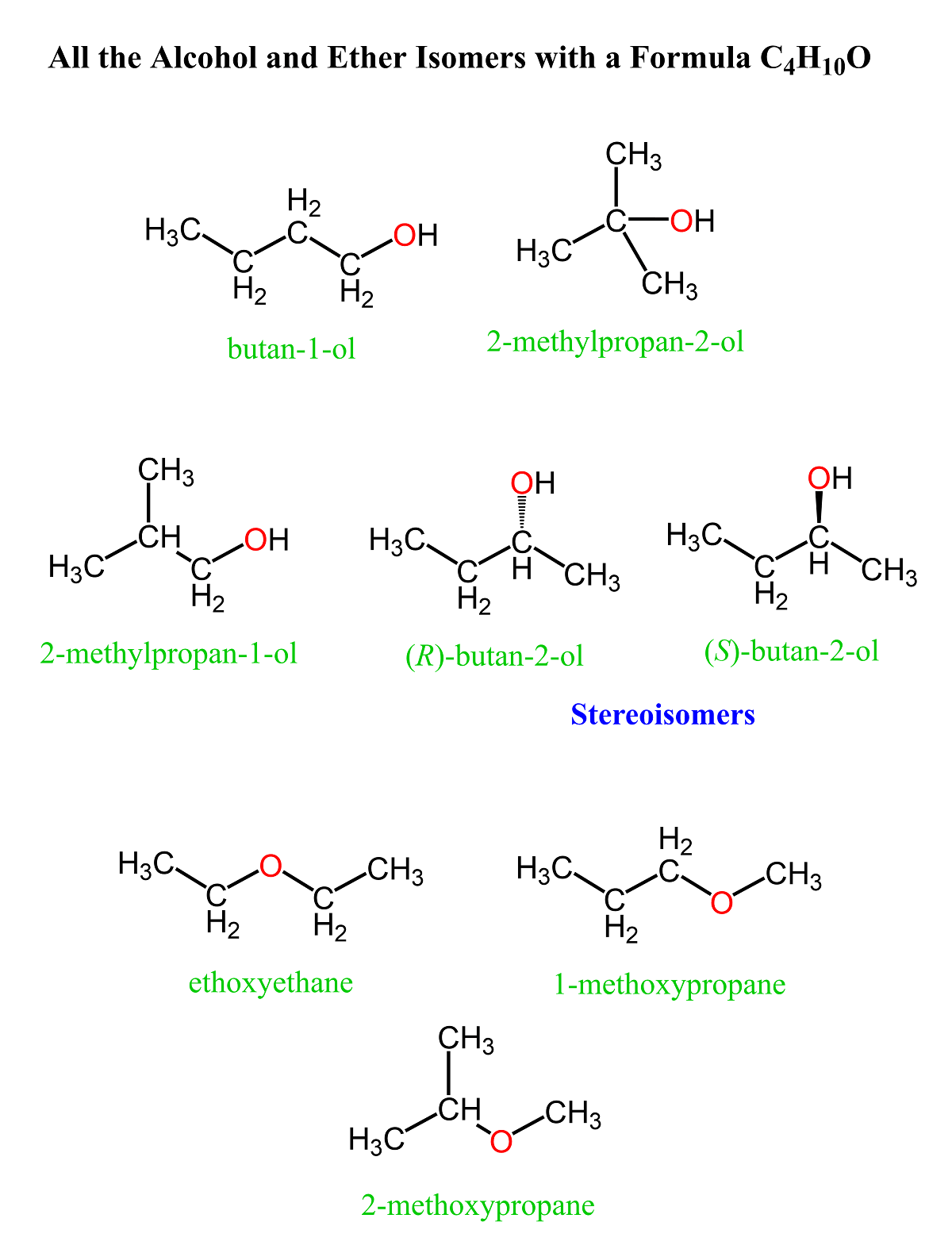
The first choice is naturally n-butanol, which has a straight chain of four carbon atoms and an OH group at the terminal position:
Next, we can move the OH group to one of the central carbon atoms, giving sec-butyl alcohol (2-butanol):
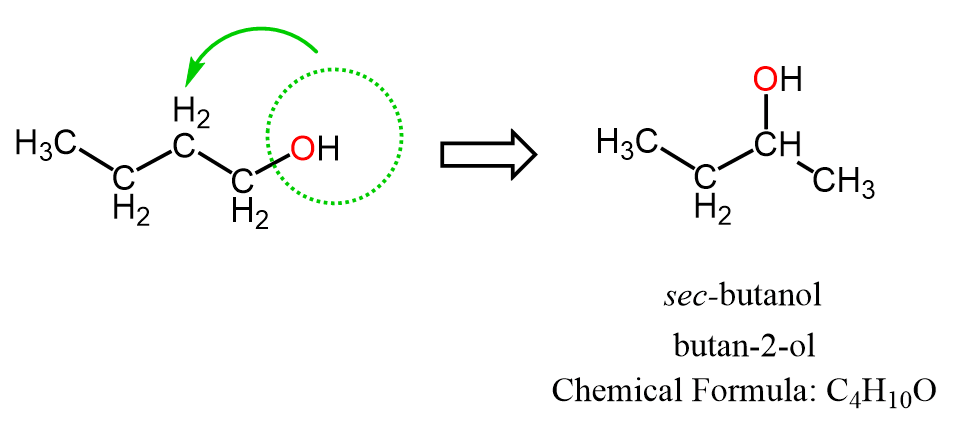
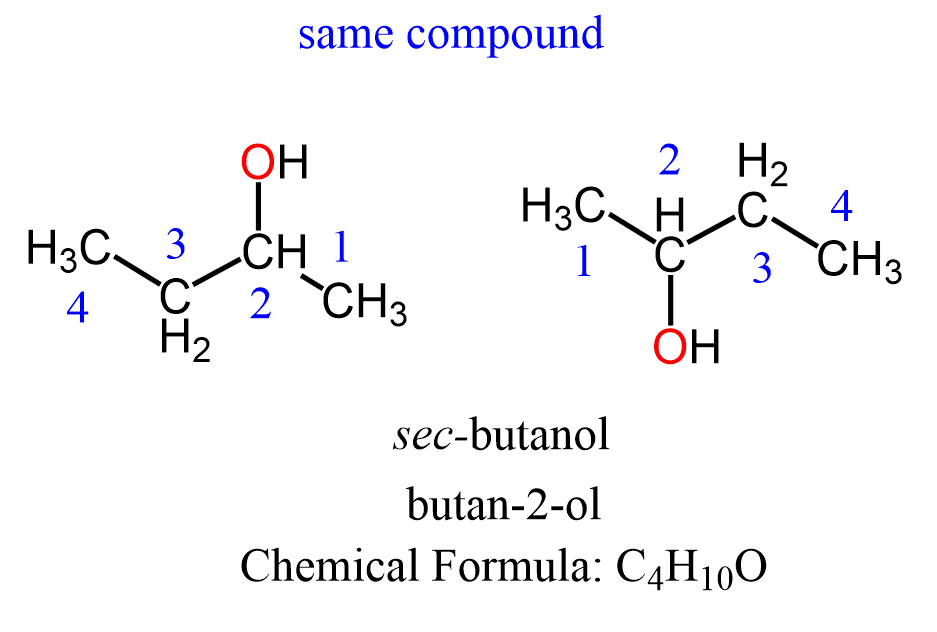
These are the only two possibilities as far as the position of the OH group is concerned. Placing it on the other central carbon gives the same compound. To avoid this mistake, always number the carbon chain. In both cases, the compound is 2-butanol:
If the terms n-, sec-, iso-, and tert- are confusing, be sure to check out this post on the common names of alkyl groups and the meaning of primary, secondary, and tertiary carbon atoms.

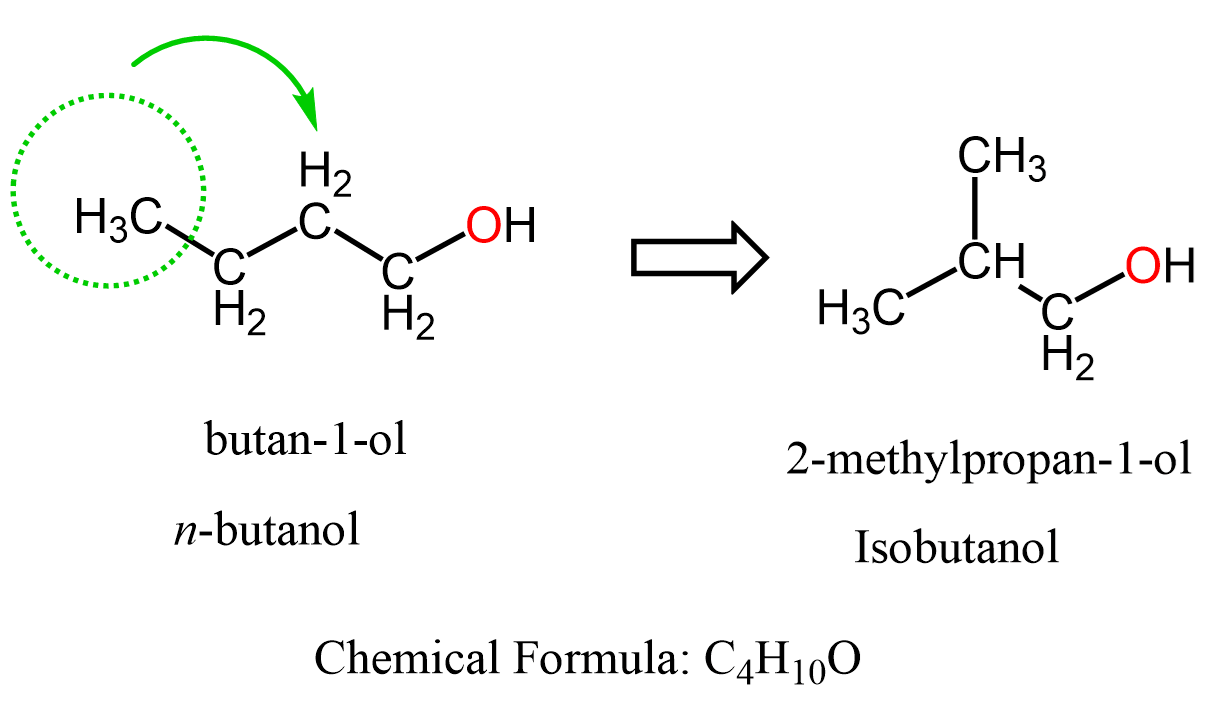
Next, we can change the connectivity of the carbon chain. Moving a CH₃ group from the end of the chain to the second carbon gives isobutanol, which is 2-methylpropan-1-ol according to the IUPAC nomenclature:
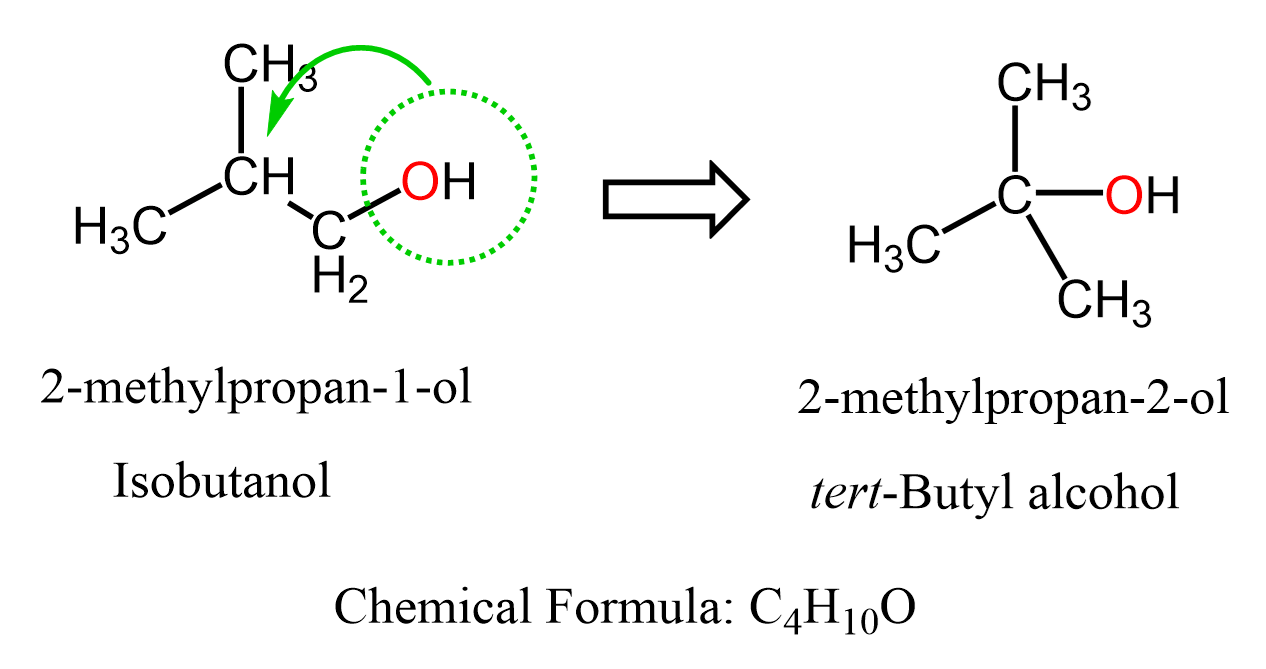
In this connectivity of the carbon atoms, we can also move the OH group to the central carbon, giving 2-methylpropan-2-ol (tert-Butyl alcohol), another constitutional isomer with the molecular formula C₄H₁₀O:
Ethers with a Molecular Formula of C₄H₁₀O
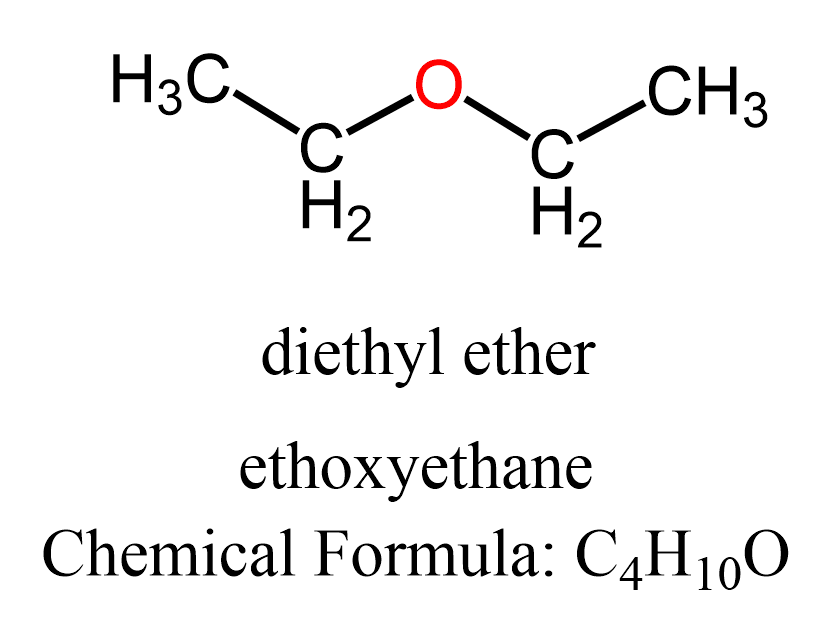
Let’s now identify the ethers with the molecular formula C₄H₁₀O. The most intuitive structure is to place the oxygen atom between two ethyl groups, giving diethyl ether:
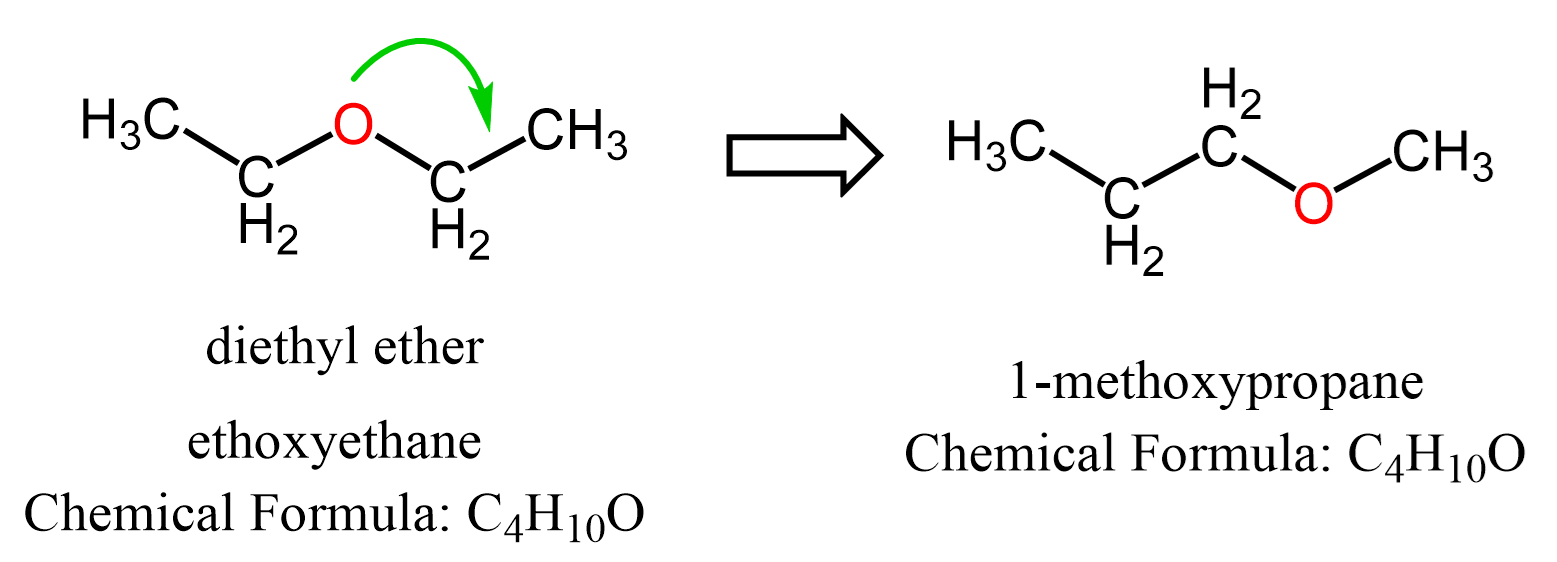
Next, we can connect the oxygen to a methyl group and a straight-chain propyl group, giving methyl n-propyl ether (1-methoxypropane):
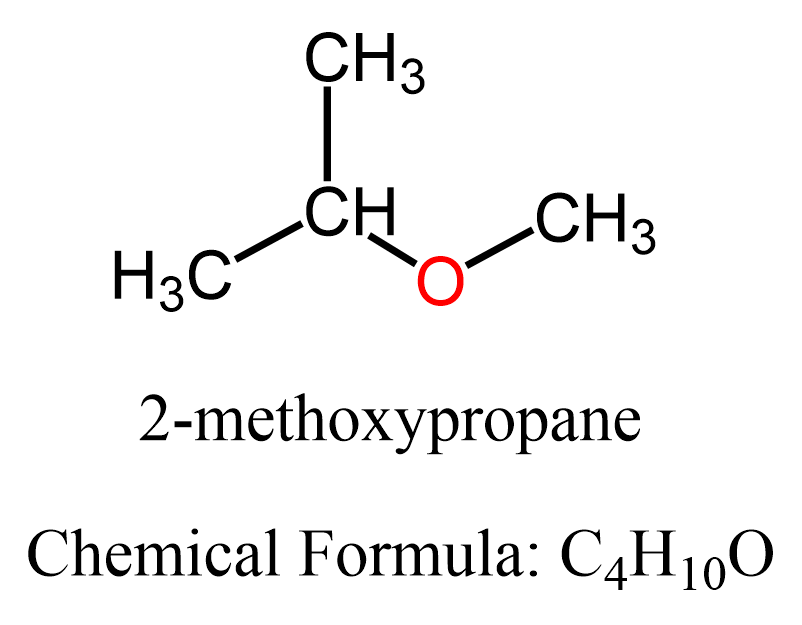
The last possibility is to connect the oxygen to a methyl group and an isopropyl group, giving methyl isopropyl ether (2-methoxypropane):
These seven compounds are all constitutional isomers with the molecular formula C₄H₁₀O.
At this point, we can also address the stereochemistry applicable to these isomers. The only possibility is the configuration of the carbon bearing the OH group in 2-butanol (sec-butyl alcohol). Depending on whether this stereogenic center has the R or S configuration, we obtain a pair of enantiomeric alcohols:
Check Also
- Naming Alkanes by IUPAC Nomenclature Rules Practice Problems
- Naming Bicyclic Compounds
- Naming Bicyclic Compounds-Practice Problems
- How to Name a Compound with Multiple Functional Groups
- Primary, Secondary, and Tertiary Carbon Atoms in Organic Chemistry
- Constitutional or Structural Isomers with Practice Problems
- Degrees of Unsaturation or Index of Hydrogen Deficiency
- The Wedge and Dash Representation
- Sawhorse Projections
- Newman Projections with Practice Problems
- Staggered and Eclipsed Conformations
- Conformational Isomers of Propane
- Newman Projection and Conformational Analysis of Butane
- Newman Projection of Chair Conformation
- Gauche Conformation
- Gauche Conformation, Steric, Torsional Strain Energy Practice Problems
- Ring Strain
- Steric vs Torsional Strain
- Conformational Analysis
- Drawing the Chair Conformation of Cyclohexane
- Ring Flip: Drawing Both Chair Conformations with Practice Problems
- 1,3-Diaxial Interactions and A value for Cyclohexanes
- Ring-Flip: Comparing the Stability of Chair Conformations with Practice Problems
- Cis and Trans Decalin
- IUPAC Nomenclature Summary Quiz
- Alkanes and Cycloalkanes Practice Quiz