
Organic Chemistry
The only way of mastering any topic in Organic Chemistry is doing lots of practice problems. And I know, seeing my students, that starting to work on a practice problem may be the hardest part as you don’t know where to start. It is difficult to visualize what where the double bond would be moved if you follow the five curved arrows crammed in one step. Here is the trick:
We are always told to think before doing something. Fair enough. But let me tell you, it is also strangely enough, that in Organic Chemistry, it is often better to draw and then think about what you did (not in the lab though). It is much easier to have a structure in front of you and check for errors and improvements.
Do the first step, take the pencil and you will see that the ball gets rolling.
You have all these Organic Chemistry Practice Problems waiting to be solved!

Frost Circle

This content is for registered users only. Click here to Register! By joining Chemistry Steps, you will gain instant access to the answers and solutions for all the Practice Problems, including over 40 hours of problem-solving videos, Multiple-Choice Quizzes, Puzzles, Reaction … Read more
Esters to Ketones
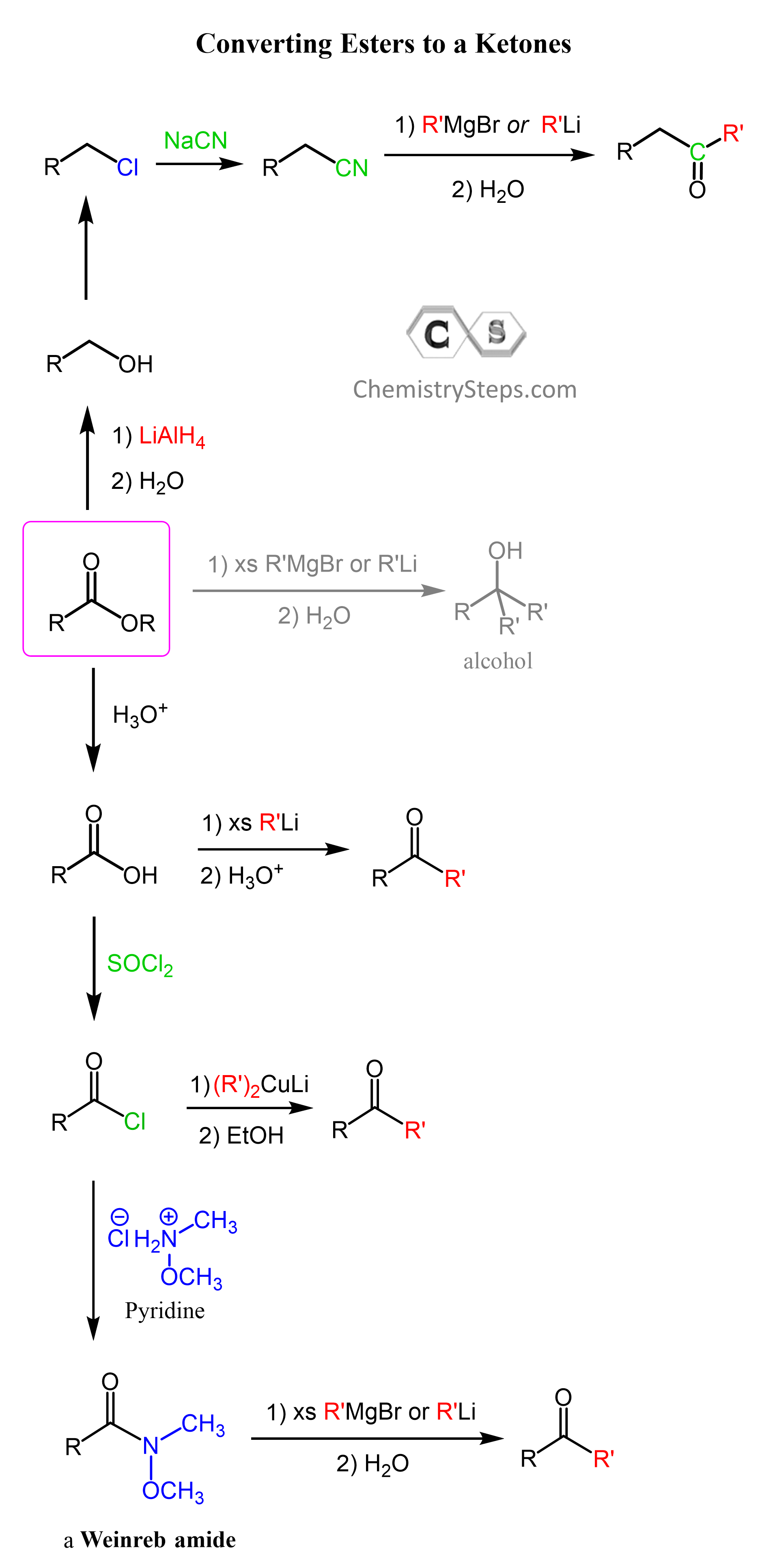
The Problems in Converting Esters to Ketones Esters are carbonyl compounds susceptible to nucleophilic additions, and one may think of converting them to ketones using Grignard, organolithium, or organocuprate reagents. However, the problem with those is that Grignard and organolithium … Read more
Sulfonation of Benzene

The sulfonation of benzene is typically achieved by reacting with fuming sulfuric acid, which is a mixture of H2SO4 and sulfur trioxide (SO3) known as oleum. The reaction follows an electrophilic aromatic substitution mechanism, producing benzenesulfonic acid. The … Read more
Halogenation of Benzene

In today’s post, we will talk about the chlorination and bromination of benzene via electrophilic aromatic substitution. Remember, in the introductory post about aromatic compounds, we mentioned that, unlike alkenes, dienes, and other conjugated systems, benzene does not react with … Read more
Nitration of Benzene

Nitration of benzene or its derivatives introduces a nitro (NO2) group into the aromatic system. The reaction is carried out with a mixture of nitric and sulfuric acids at temperatures above 50 oC. The role of sulfuric acid … Read more
Decarboxylation

Decarboxylation is the loss of carbon dioxide upon heating, typically characteristic of carboxylic acids with a β-carbonyl group. These are most often beta-keto acids, malonic acid, or its derivatives: Carboxylic acids by themselves are very stable and do … Read more
Carboxylic Acids to Ketones

Addition of Organolithiums to Carboxylic Acids One of the most common ways of converting carboxylic acids to ketones is their reaction with organolithiums. The first step is the deprotonation of the acid since organolithiums are also very strong … Read more
Aldehydes and Ketones to Carboxylic Acids

Aldehydes to Carboxylic Acids Aldehydes can be oxidized to carboxylic acids with a variety of oxidizing agents such as chromic acid, sodium dichromate, potassium permanganate, and sodium hypochlorite. Here is the summary of oxidizing agents we discussed in … Read more
How to Alkylate a Ketone
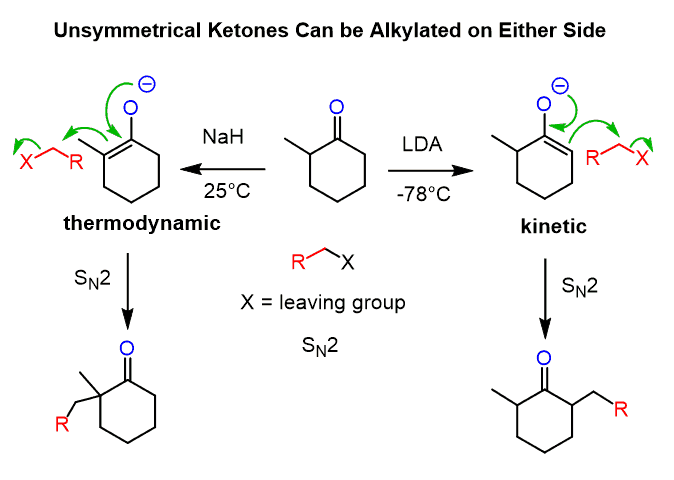
The alkylation of ketones is achieved through enolate intermediates, which are formed by deprotonating the alpha position (the carbon next to the carbonyl group): If you are still in the chapter on aldehydes and ketones, this may look … Read more